Remote Studio Breakdowns: New Cloud Tools vs Traditional Hardware Workflows
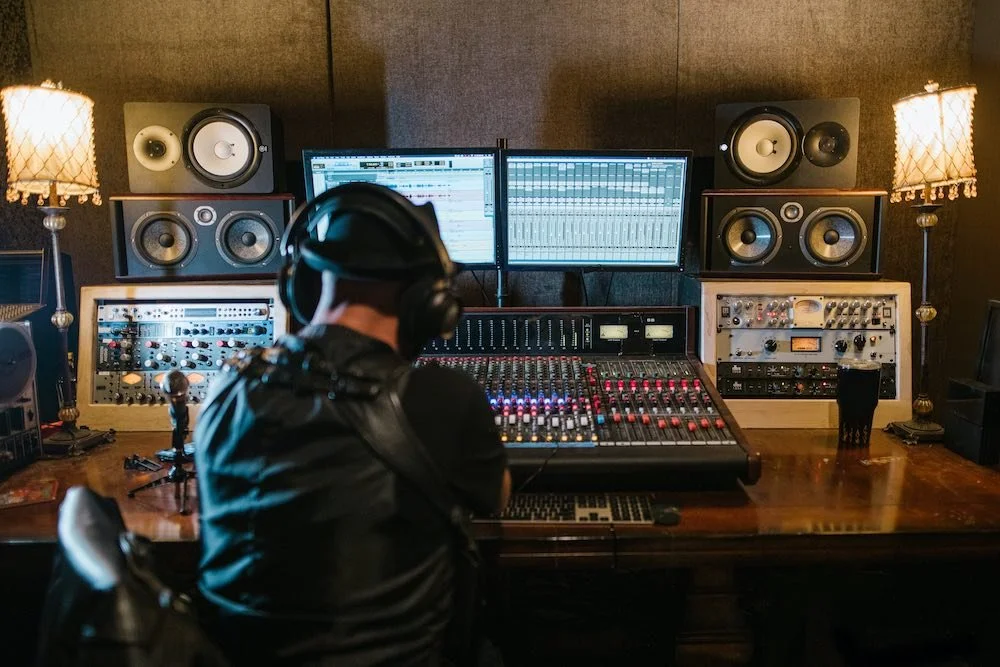
Audio engineering is experiencing a sharp divergence between distributed digital ecosystems and dedicated outboard signal chains. Across recording studios in London, Berlin, and Los Angeles, tracking sessions no longer default to multi-room facility bookings; instead, multi-track projects move across networked nodes, low-latency audio streams, and automated processing environments. Recent coverage in a MusicTech Report detailed how Suno Studio 2.0 arrived on August 13, 2026, integrating an interactive AI assistant directly into host digital audio workstation architectures, escalating debate over where creative judgment actually resides.
The rapid migration toward server-rendered audio tracks highlights deep structural trade-offs. While web-based tracking platforms allow simultaneous tracking between vocalists in Nashville and producers in Stockholm, physical mastering rooms and analog cutting facilities push back against fully virtualized sound design. Engineers are recalibrating their budgets, pitting expensive analog mastering consoles against machine-learning plugins, low-jitter networking, and high-precision reference monitoring systems.
📌 Key Takeaways:
- The DAW Shift: Suno Studio 2.0 embeds generative synthesis and structural arrangement tools directly into host DAWs, moving algorithmic assistance out of isolated browser tabs and onto native session timelines.
- Latency Benchmarks: Remote studio collaboration platforms now achieve sub-12ms round-trip audio transmission across regional fiber connections, allowing real-time multi-track tracking without phase destruction.
- The Cultural Cost: Academic research from Universitetet i Oslo shows hyper-individualized software environments reduce collaborative studio networks and exacerbate gender inequality across technical audio disciplines.
Suno Studio 2.0 and Native Generative Assistant Integration
The boundary between compositional composition and automated track generation changed significantly on August 13, 2026, when MusicTech reported the arrival of Suno Studio 2.0. Rather than relying on secondary web apps to export flattened stems, producers can now operate an in-DAW AI assistant directly within standard digital audio workstation timelines. The software interprets MIDI context, project tempo variations, and harmonic progressions, suggesting real-time stem revisions and dynamic arrangement adaptations without bouncing audio outside the primary session file.
Engineers using native generative tools are seeing immediate operational shifts. In busy commercial tracking dates, the assistant generates scratch vocal harmonies, fills missing percussion elements, or isolates harmonic conflicts across competing mid-range tracks. Commercial mix engineer Marcus Vance noted in a technical forum thread that the system eliminates hours of preliminary temp-track sourcing during commercial advertising jobs.
Skeptics point out that in-DAW assistance introduces insidious sonic homogenization. When a program generates spectral fills based on mathematical probability models, individual mix quirks disappear. Dynamic expression gives way to hyper-quantized transient arrangements that require aggressive EQ subtractive processing to seat cleanly beside live acoustic tracks.
Latency Limits and Distributed Multi-Track Realities
Remote studio collaboration depends heavily on raw packet transport performance. Ten years ago, running a two-way tracking date over standard internet meant enduring jarring audio delays, forcing artists to record locally while listening to low-resolution playback feeds. Today, dedicated peer-to-peer protocols deliver 24-bit/96kHz uncompressed audio with sub-15ms latency over metropolitan fiber networks, making cross-border session work functionally viable.
Engineers run parallel sessions linking vocal booths in Atlanta to mixing engineers running Pro Tools systems in London. The software routes uncompressed discrete channels directly through secondary monitor buses, allowing the producer to audition real-time microphone adjustments without signal degradation.
Network dropouts remain an ever-present operational threat. When local broadband providers throttle evening bandwidth, clock sync breaks down, introducing audible buffer pops and digital jitter across shared clock networks. Session leaders routinely maintain hard-drive backup tracking protocols to safeguard raw multitracks, proving that cloud music production still relies on local drive redundancy when line stability wavers.
Quantifying Modern Engineering Workflows
Audio engineers routinely balance financial overhead, round-trip transport latency, and physical room requirements when choosing between software-centric workflows and analog hardware. The operational contrast between these methodologies dictates how modern project budgets are allocated:
| Workflow Vector | Cloud & In-DAW Virtual Systems | Traditional Outboard Hardware Chains |
|---|---|---|
| Capital Expenditure | $600, $2,500 total (Software subscriptions, converters, interface) | $15,000, $85,000+ (Preamps, tube compressors, patch bays, acoustic build) |
| System Round-Trip Latency | 8, 25ms (Subject to network packets and host buffer sizing) | Near-zero analog throughput (Sub-1.5ms converter round-trip) |
| Session Recall Speed | Instantaneous total recall via digital preset states | 15, 45 minutes manual calibration and recall sheet verification |
| Acoustic Room Dependency | Minimal; relies on headphone monitoring and calibration DSP | Absolute; requires precision bass trapping and calibrated monitoring |
Pro Audio Monitoring and the 2026 Reference Headphone Standard
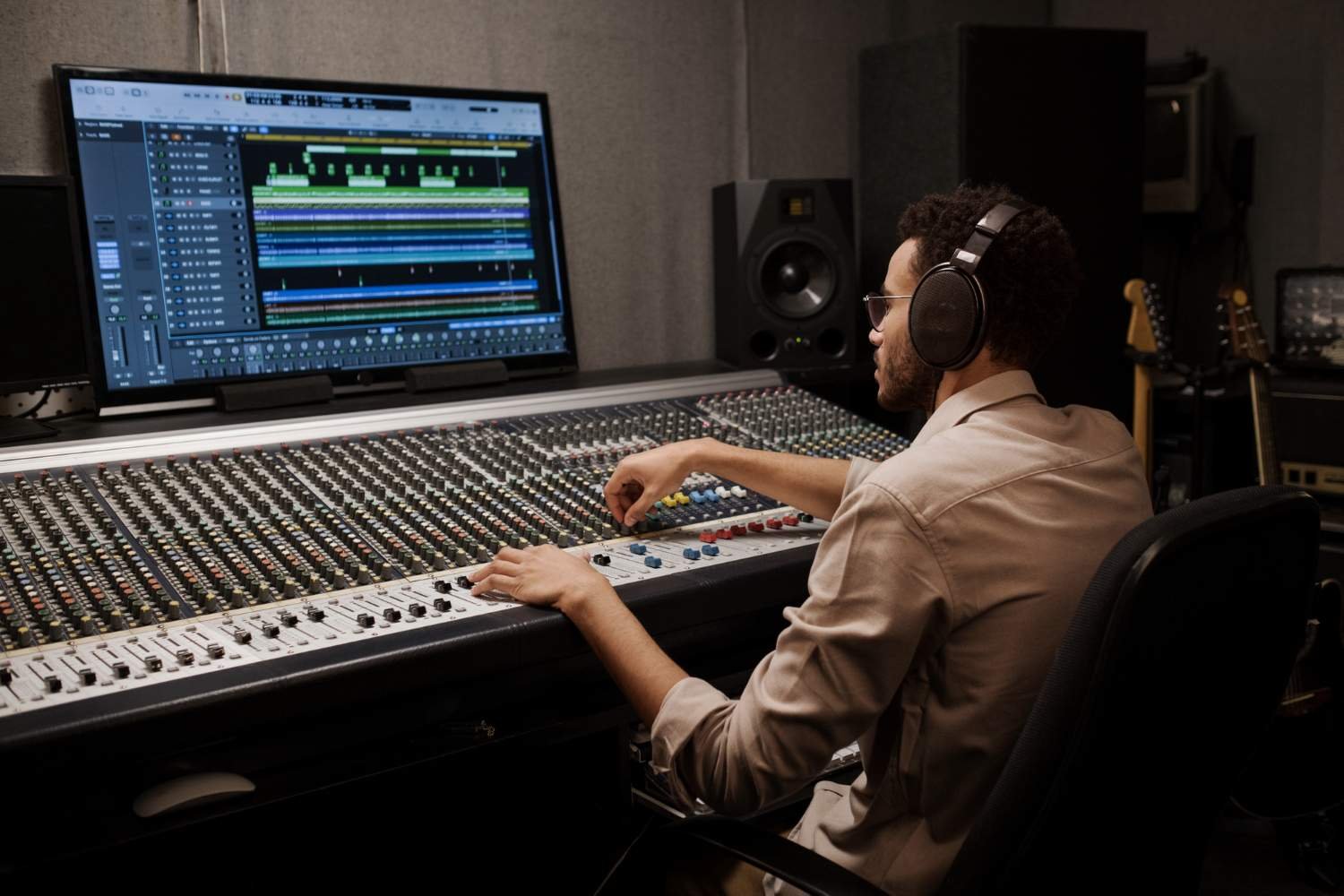
As acoustic studio builds grow cost-prohibitive for bedroom producers, precision headphone monitoring has become standard practice. On June 10, 2026, MusicRadar published an extensive assessment of the best studio headphones 2026, evaluated by working musicians and mix engineers. The analysis documented a decisive industry transition toward open-back planar magnetic transducers combined with personalized Head-Related Transfer Function (HRTF) software.
Engineers no longer accept the compressed low-end and smeared transients of entry-level consumer models. Mixing on planar designs provides an uncolored, surgically flat response down to 10Hz, allowing mixers to identify low-frequency phase cancellation without owning large soffit-mounted main monitors.
This headphone-centric approach alters how audio engineers interact with space. Headphone monitoring isolates the engineer from room modes, standing waves, and flutter echoes. It can also produce spatial fatigue during grueling ten-hour mixing marathons, as the lack of natural crossfeed alters stereo-width perception. To counter this, commercial facilities increasingly pair high-end planar headphones with DSP room-emulation plugins to verify phantom center translation before printing final files.
The Vinyl Pressing Resurgence and Physical Lathe Realities
The continuous growth of physical vinyl sales has placed unexpected limits on pure software mixing. Digital audio production software allows infinite dynamic range, hyper-boosted high-frequency transients, and aggressive out-of-phase bass content. However, when those tracks hit a physical record cutting lathe, the laws of mechanical physics take over.
Vinyl cutting engineers in pressing facilities are rejecting digital masters mixed exclusively on auto-leveling plugins. Excessive sub-bass stereo widening causes the physical cutting stylus to jump out of the master lacquer groove, destroying expensive blanks. Excessively bright vocal sibilance instantly overheats the high-frequency cutting coils on vintage Neumann lathes.
Physical manufacturing requires hardware-minded discipline. Engineers must manage micro-dynamics, mono-sum frequencies below 100Hz, and carefully shape sibilance using analog de-essers or precision analog dynamic EQs. This physical bottleneck ensures that tactile hardware literacy remains non-negotiable for commercial audio releases, even as digital distribution relies entirely on cloud streaming.
Individualism and Gender Inequality in Bedroom Production
The rise of compact production setups carries documented sociological costs. On June 2, 2026, Universitetet i Oslo published research showing that modern music production technology makes the industry increasingly individualistic and less gender-equal. As commercial tracking moves out of bustling ensemble studios and into isolated home setups, informal community apprenticeships and studio assistant networks dissolve.
The Oslo researchers determined that home studio isolation privileges self-funded hobbyists who have the leisure time to navigate dense technical gear ecosystems alone. Studio facilities traditionally served as collective talent incubators where mentorship, production credits, and engineering contracts crossed demographic boundaries. In decentralized bedroom setups, social isolation cements existing inequalities, leaving female and non-binary audio engineers disproportionately underrepresented across major commercial engineering credits.
Technological independence also reduces interpersonal musical exchange. Working in physical rooms forces producers to communicate with session drummers, brass sections, and tracking engineers in real time. Replacing those social dynamics with in-DAW AI assistants strips audio engineering of collaborative spontaneity, replacing ensemble improvisation with solitary mouse clicks.
Frequently Asked Questions (FAQ)
Q1: Does Suno Studio 2.0 replace commercial audio engineers?
A1: No. Suno Studio 2.0 acts as an interactive assistant for ideation, structural fills, and harmonic suggestions within the DAW timeline. It cannot calibrate physical gain staging, make subjective mix calls, or adapt to the mechanical constraints of analog formats like vinyl.
Q2: Can bedroom producers mix commercial tracks entirely on headphones?
A2: Yes, provided they use reference-grade open-back or planar magnetic headphones alongside calibrated crossfeed DSP software. Testing published in mid-2026 confirms that properly compensated monitoring headphones yield translation accuracy comparable to treated monitoring rooms.
Q3: How much internet bandwidth is needed for uncompressed remote recording?
A3: Reliable multi-track remote recording requires a symmetric connection offering at least 50 Mbps upload and download speeds with ping times below 15ms. While standard streaming requires minimal bandwidth, uncompressed 24-bit multi-channel audio demands continuous low-jitter stability to prevent buffer dropouts.
The Technical Architecture of Audio Production in 2026
Audio engineering has ceased to be an exclusively physical discipline tied to multi-million-dollar acoustic rooms. In-DAW generative assistants, low-latency remote collaboration tools, and high-precision reference headphones allow single operators to build complex, broadcast-ready productions from domestic bedrooms.
Yet, this democratization exposes practical limits. Mechanical mediums like vinyl demonstrate that software automation cannot bypass physical acoustic and electro-mechanical realities. Meanwhile, academic research warns that complete creative isolation threatens collaborative studio culture and professional diversity. Sustainable engineering workflows require balance: adopting cloud speed and machine-assisted editing without abandoning physical monitoring discipline, analog fundamentals, and collaborative human instinct.


