What Does 'You Are Like Papa' Actually Mean? The Lore and Truth Explained

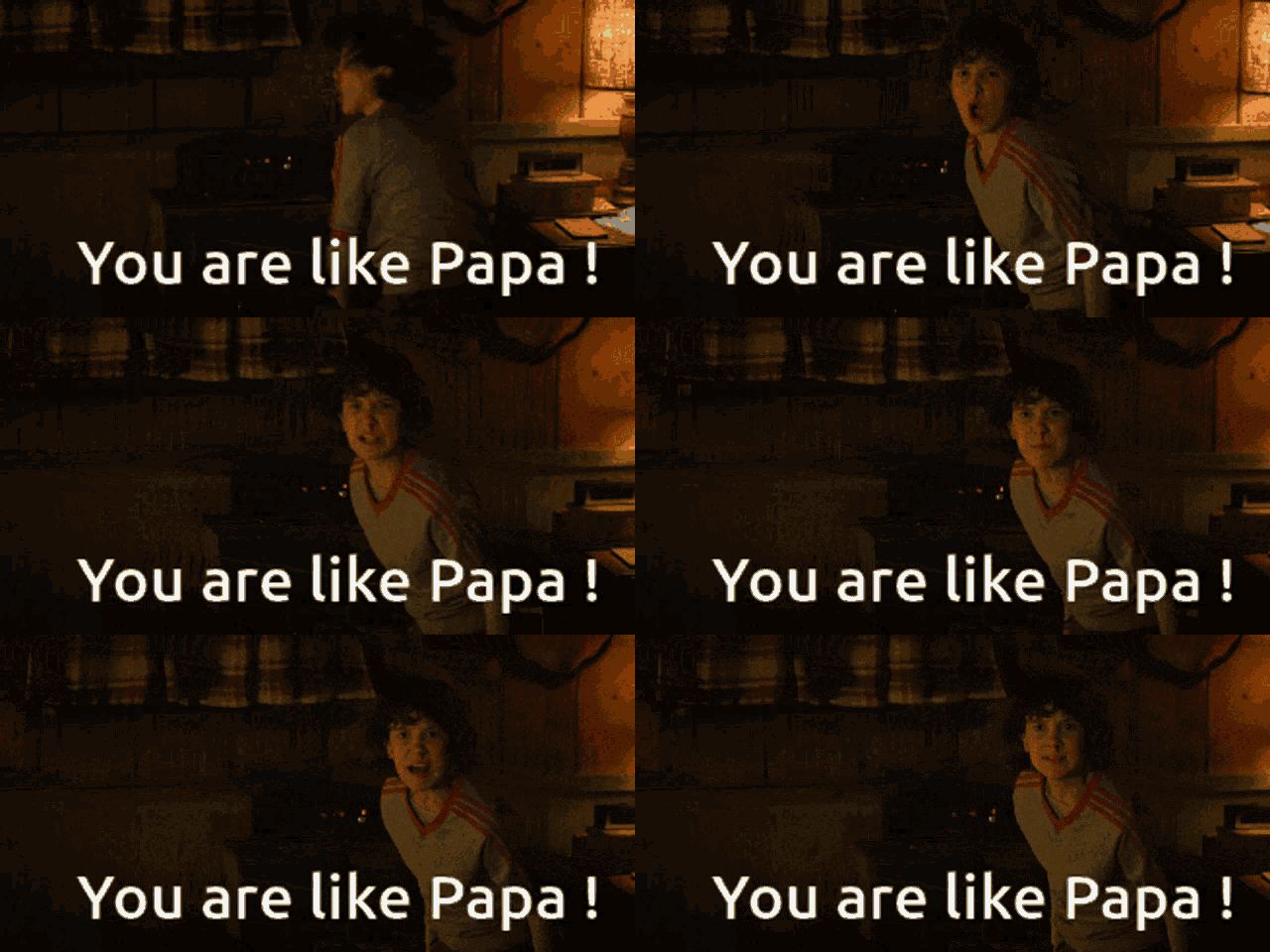
When four words spoken through tears and heavy breathing suddenly erupted across millions of smartphone screens, casual viewers were baffled. The soundbite, raspy, childlike, and trembling with betrayal, became one of the most recognizable audio clips on social media. As documented in a contemporary Yahoo Report tracking the phenomenon, the dialogue exploded into an inescapable viral sound origin that fueled sketches, pet parodies, and minor household dramas across TikTok. Yet behind the comedic meme context lies one of the darkest, most pivotal narrative fractures in modern television history.
The line traces directly to Stranger Things Season 4, marking the instant Millie Bobby Brown’s Eleven confronts the terrifying reality of her past. Far from an offhand insult, the phrase represents Eleven’s ultimate condemnation. To understand why those five syllables carry such devastating narrative weight, one must unravel decades of clandestine human experimentation, psychological conditioning, and the twisted paternal shadow of Dr. Martin Brenner.
📌 Key Takeaways:
- Scene Origin: Spoken by Millie Bobby Brown’s Eleven during the climactic flashbacks of Stranger Things Season 4, Episode 7 ("The Massacre at Hawkins Lab").
- Narrative Core: Eleven levels the accusation at Henry Creel (One / Vecna), realizing his hunger for domination mirrors the psychological abuse inflicted by Dr. Martin Brenner.
- The Internet Mutation: Social video creators stripped the dialogue of its traumatic gravity, transforming a story of institutional abuse into an ironic TikTok audio trend about everyday strictness.
The Scene Behind the Sound: Eleven’s Realization in the Rainbow Room
The dialogue occurs in the sensory deprivation tank of the Nina Project, an abandoned missile silo in the Nevada desert. Eleven spends the first volume of Season 4 submerged in water, forced to relive suppressed memories from 1979 to regain her lost telekinetic powers. For years, she believed that she had snapped and slaughtered the other test subjects at Hawkins National Laboratory in a fit of rage.
The truth proves far more sinister. Peter Ballard, the gentle orderly who befriended Eleven, reveals himself as Henry Creel, Subject 001. After Eleven uses her powers to remove the Soteria chip dampening his abilities, Henry systematically murders every doctor, nurse, and child in the facility. Standing among the corpses inside the Rainbow Room, Henry offers Eleven a partnership: combine their powers to remake humanity in their image.
Eleven’s response is not a battle cry. It is a quiet, horrified diagnosis. Staring at Henry’s blood-soaked hospital gown, she recognizes the chilling familiarity of his logic. Both men demand unconditional loyalty, justify mass violence under the guise of enlightenment, and view human beings as instruments to control. Her trembling declaration, "You are like Papa", strips away Henry’s delusion of moral superiority, prompting his violent rage and initiating the psychic duel that sends him straight into the Upside Down.
Dr. Martin Brenner’s Sinister Legacy at Hawkins National Laboratory
To understand why the comparison cuts so deeply, one must grasp what "Papa" actually represents. Portrayed with chilling restraint by Matthew Modine, Dr. Martin Brenner is not a snarling monster. He operates as an archetype of coercive control, dressing clinical cruelty in the gentle cadence of paternal love.
Operating under the umbrella of Project MKUltra during the height of the Cold War, Brenner abducted and conditioned gifted children. He subjected them to sensory deprivation tanks, electric shocks, psychological isolation, and forced psychic combat. Yet, he strictly forbade the children from viewing him as an overseer or warden. He commanded them to call him "Papa."
This forced nomenclature was an intentional tool of psychological warfare. By positioning himself as a loving father, Brenner ensured that any rebellion felt like filial disobedience rather than an escape from torture. He rewarded compliance with affection and punished failure with solitary confinement. For Eleven, "Papa" was not a title of endearment; it was the linguistic cage that bound her entire childhood.
From Brutal Trauma to Viral Comedy: The TikTok Trajectory
The migration of intense dramatic dialogue into bite-sized comedy has become a defining pattern of modern pop culture trends. In late July 2022, the audio snippet began circulating on short-form video platforms. The trend took off when users isolated Eleven’s breathless, accented delivery and juxtaposed it against trivial real-world conflicts.
Creators filmed themselves being told they could not order takeout, being denied permission to sleep in, or watching a house pet guard its food bowl. The punchline relied on absolute tonal dissonance: pairing genuine childhood horror with mundane, first-world grievances. In one video with over 4.2 million views, a creator applied the audio to a golden retriever growling protectively over a stolen sock. In another, a teenager lip-synced the line after being asked by an older sibling to turn down their bedroom television.
The platform’s algorithmic structure rapidly detached the soundbite from its grim context. For millions of viewers who had never streamed an episode of the Duffer Brothers' sci-fi series, the clip became just another funny quote used to describe an overbearing parent or a slightly strict boss.
Hawkins Lab Timeline: From MKUltra to the Nevada Bunker
The confrontation between Eleven and Henry Creel in 1979 represents the midpoint of a decades-long program of state-sponsored abuse. The timeline below illustrates how Brenner's experiments escalated and culminated in the fatal Nevada confrontation.
| Timeframe | Milestone Event | Narrative Significance |
|---|---|---|
| 1953, 1970s | Project MKUltra & Creel Acquisition | Brenner takes custody of young Henry Creel, installing the Soteria implant after finding him uncontrollable. |
| September 1979 | The Rainbow Room Massacre | Henry slaughters the lab subjects. Eleven utters the line, rejects his nihilism, and banishes him into the Upside Down. |
| November 1983 | The Demogorgon Breach & Lab Escape | Eleven flees Hawkins National Laboratory, meeting Mike Wheeler and discovering life outside institutional captivity. |
| March 1986 | The Nina Project & Brenner's Death | Brenner dies in the desert after attempting to re-imprison Eleven. She refuses to grant him forgiveness as he expires. |
The Weight of "Papa": Psychological Manipulation and Coercive Control
The enduring power of Matthew Modine’s performance rests on Brenner’s total refusal to view himself as an antagonist. Unlike conventional television villains who revel in their sadism, Brenner operates under a warped moral framework. He genuinely believes that his experiments are necessary to safeguard national security and unlock human potential.
In Episode 8 of Season 4, titled simply "Papa," Brenner’s philosophy is laid bare. Shot down by military snipers while carrying a collared Eleven across the desert sand, he spends his dying breaths pleading for absolution. He cups her cheek and whispers, "I only ever wanted to help you. To protect you."
Eleven’s reaction in that moment mirrors her earlier confrontation with Henry Creel. She does not scream, nor does she offer comfort. She shakes her head, steps back, and leaves him dying in the dust. By refusing to say "I understand" or call him "Papa" one last time, she dismantles the psychological hold he maintained over her entire life. Calling Henry "like Papa" in 1979 was her intellectual awakening; walking away from Brenner in 1986 was her actual liberation.
Frequently Asked Questions (FAQ)
Q1: Who is Eleven speaking to when she says "You are like Papa"?
Eleven is speaking directly to Henry Creel (Subject 001), who was disguised as Peter Ballard, the friendly lab orderly. The exchange takes place immediately following his massacre of the other children in the Hawkins Lab Rainbow Room.
Q2: In which episode does the line occur?
The scene occurs in Stranger Things Season 4, Episode 7, titled "Chapter Seven: The Massacre at Hawkins Lab." It serves as the dramatic climax of Volume 1.
Q3: Why did Dr. Martin Brenner force the test subjects to call him Papa?
Brenner used the term to engineer artificial emotional bonds, known clinically as coercive control or trauma bonding. By conflating parental affection with clinical experimentation, he made the children dependent on his approval and fearful of disobeying him.
Q4: Why did the audio go viral on TikTok?
Social media creators isolated Millie Bobby Brown’s high-stakes, breathless line reading and applied it to comedic, everyday scenarios, such as pet misbehavior or trivial disagreements with parents, creating humor through extreme contrast.
The Lasting Shadow Over Hawkins
The cultural journey of "You are like Papa" highlights the surreal friction between prestige television drama and modern digital culture. Within the narrative borders of Hawkins, Indiana, the phrase represents an abused child recognizing the cyclical nature of authoritarian violence. It exposed Henry Creel not as an enlightened liberator, but as a derivative copy of the very warden he hated.
Online, the line transformed into digital shorthand for anyone acting slightly too bossy before a camera. Yet that viral afterlife has done little to diminish the dramatic power of the original scene. When stripped of social video filters, the confrontation remains the emotional engine of the entire series: a clear-eyed rejection of tyrannical control, delivered by a survivor who finally saw her captors for what they truly were.


