Air Jordan 11 'Pearl' Price Crash: Full Market Breakdown and Resell Reality
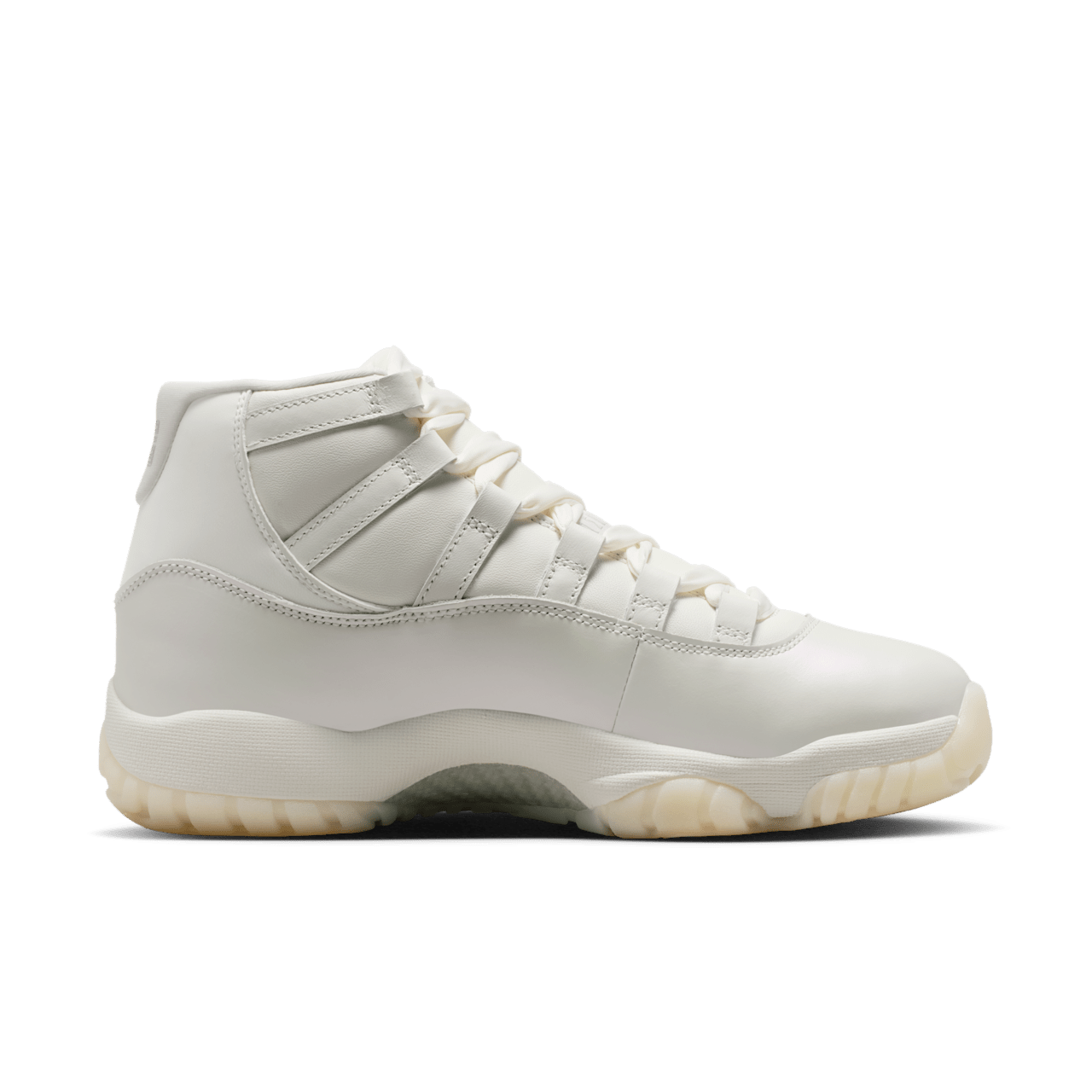
Speculative sneaker buyers holding inventory of the Air Jordan 11 with the distinct iridescent pearl sheen patent leather finish are waking up to a stark accounting balance. Secondary market liquidity across platforms like StockX and GOAT has thinned out rapidly, driving down average sale prices toward original retail tags. What looked like guaranteed collateral during the post-pandemic footwear boom now moves at razor-thin margins. Retail trackers, including reporting from the House of Heat° Report on high-volume Jordan releases, highlight an unmistakable trend: production volumes are climbing while casual collector budgets contract.
Rumors of a total market collapse circulate daily across Discord groups and Reddit threads like r/Sneakers. The reality is more structural than apocalyptic. The Air Jordan 11 Low and mid-cut seasonal variants are not going to zero, but they are undergoing an overdue correction. Decoupled from the mania of 2021, the silhouette has entered a buyer-friendly reality where patience pays off and middleman scalping hits a ceiling.
📌 Key Takeaways:
- The Pricing Reality: Average StockX resale pricing for the Jordan 11 Pearl line has declined roughly 22% from peak aftermarket quotes, stabilizing near the $190, $210 MSRP line.
- Supply Chain Realignment: Nike SNKRS release logistics and regional retailer restocks satisfied organic consumer appetite, leaving bulk secondary flippers holding unmovable stock.
- The Reseller Squeeze: Standard platform transaction commissions of 9% to 12% combined with payment handling fees have erased reseller profit margins on mid-tier sizes.
Tracking the Sudden Resale Dip on StockX and GOAT
Secondary sneaker market transaction charts show a clear trajectory over the past eighteen months. During the peak speculative window, special-edition finishes, particularly any Jordan 11 boasting an iridescent pearl sheen or unique patent leather finish, commanded instant 40% premiums on launch day. Pairs traded between $280 and $320 within hours of dropping. Today, the GOAT market index reveals a steady drift downward, with median transactions clustering around $195 to $225 depending on size availability.
The core catalyst comes down to transactional velocity. On StockX, bid-ask spreads have widened significantly. Casual buyers are placing lowball bids around $175, while sellers hold firm asks at $220 to break even after packaging and seller fees. Because buyers refuse to budge, transactions sit dormant. The psychological floor dropped the moment collectors realized they did not need to participate in high-stress digital queues to secure pairs for personal rotation.
Size runs tell an even clearer story. While outlier women's sizing and select extended men's cuts retain modest single-digit premiums, core sizes (US 9 through US 11) have settled flat against retail. Liquidity has dried up for speculators who treated storage lockers full of orange and black Nike boxes like high-yield dividend funds.
How Nike SNKRS Inventory Broke the Artificial Scarcity Loop
Nike changed its allocation playbook. For years, Jordan Brand manufactured scarcity by tightly metering stock at tier-one boutiques and deploying narrow lotteries via the Nike SNKRS release channel. That strategy maintained sky-high secondary market hype, but it left millions of dollars on the table for third-party sellers to capture.
Starting in late 2023 and continuing through 2026, supply patterns shifted. Production runs for seasonal additions to the Jordan Brand retro collection expanded noticeably. Instead of 60,000 pairs allocated globally for a niche women's exclusive or low-top launch, supply estimates cited by industry distribution monitors put recent comparable seasonal runs well north of 140,000 units. Pairs made their way to physical storefronts, local regional chains, and repeated second-chance digital draws.
When prospective buyers discover they can walk into a suburban retail outlet on a Tuesday afternoon and find their size sitting on a shelf, aftermarket premiums evaporate instantly. The fear of missing out, which historically propped up deadstock valuation, lost its grip on the general footwear community.
Patent Leather Hype Versus Real Liquidity: The 2024, 2026 Valuation Shift
To understand why the Jordan 11 Pearl experienced this repricing, one must examine how the underlying sneakerhead investment trends shifted across the broader category. The era of blind speculation on every retro iteration ended as macroeconomic pressures forced consumers to prioritize staple, versatile colorways over experimental finishes.
| Market Metric | Speculative Era (2021, 2023) | Correction Era (2024, 2026) | Structural Consumer Impact |
|---|---|---|---|
| Average Sale Price (StockX) | $275, $330 | $190, $215 | Direct return to MSRP pricing |
| Stock Allocation Run Size | 50,000, 80,000 units | 130,000, 175,000 units | Scarcity premiums virtually erased |
| Seller Net Margin (Post-Fees) | +$60 to +$110 per pair | -$15 to +$8 per pair | Casual resellers exiting market |
| Time-to-Liquidity (Average) | 2, 4 days post-delivery | 28, 45 days | Capital locked up in physical inventory |
The numbers show that consumer demand did not evaporate entirely. People still buy the shoe. What changed is their refusal to pay an arbitrary middleman tax for aesthetic variants that are not original, game-worn Chicago Bulls colorways like the "Concord" or "Bred."

Margin Compression: The Hidden Math Crushing Secondary Resellers
Professional re-sellers operate on cold unit economics. A standard pair of Air Jordan 11 Lows carries a retail price of approximately $190. In states with an average 8% sales tax, the true acquisition cost reaches $205.20 out of pocket.
Selling that pair on an authenticated platform introduces substantial friction. Consignment and transaction platforms charge tier-dependent commission rates ranging between 8% and 10%, plus a 3% payment processing fee and flat shipping charges. If a seller lists an Air Jordan 11 Pearl at $220, their net payout lands near $193. The transaction results in a net financial loss of over $12 per box before accounting for packing materials and the time required to drop off parcels.
This negative margin profile led to an influx of "panic sales." Part-time sellers attempting to free up revolving credit lines dumped inventory simultaneously in late 2025 and early 2026. This dynamic triggered the exact pricing drop now visible on secondary aggregators. Market prices did not fall because the shoe is poorly designed; they fell because sellers were forced to liquidate.
Broader Shifts in the Jordan Brand Retro Collection Lifecycle
The cooling around the Pearl colorway reflects a broader industry realignment rather than an isolated misstep. Across the industry, the sneaker price correction has recalibrated how modern footwear enthusiasts build their collections. Five years ago, consumer sentiment favored buying every numbered Jordan variant that dropped on a Saturday morning.
Current buyers demonstrate far greater discipline. They prioritize silhouettes with genuine heritage, classic OG color blocking, or premium everyday materials that age predictably. While the pearlized patent leather finish delivers an eye-catching aesthetic on social media feeds, everyday wearability can be challenging. Creasing along iridescent surfaces shows micro-fractures faster than standard coated leather, making buyers hesitate before committing premium dollars to deadstock pairs.
Nike Inc. has responded to this shift by diversifying its lifestyle lineup. Instead of banking entirely on retro basketball iterations, the brand is reallocating factory capacity toward retro runners, technical trail shoes, and low-profile terrace silhouettes. The Jordan Brand retro collection remains a multibillion-dollar foundation, but it is no longer treated as an infinite money printer by executive suites or street-level speculators.
Who Benefits Most From the Modern Price Correction
Market corrections always produce winners and losers. For the casual collector or dedicated fan of the Air Jordan 11 silhouette, this deflationary cycle is the best development in a decade. Gone are the days of setting multiple alarms, running automated bots, or paying triple-digit markups to secondary dealers just to wear an attractive pair of sneakers to a summer barbecue.
Conversely, the environment is inhospitable for speculative micro-investors. Those who treated sneaker boxes like alternative investment assets without understanding market cycles have absorbed heavy losses. The secondary sneaker market is resetting into what it originally was: a peer-to-peer exchange for passionate hobbyists seeking rare pairs, rather than an unregulated trading floor for mass-produced footwear.
Frequently Asked Questions (FAQ)
Q1: Is the Air Jordan 11 Pearl still worth buying in 2026?
A1: Yes, if your goal is personal wear. The shoe features solid construction, signature carbon fiber spring plating, and a distinct aesthetic finish. However, buying pairs as a financial investment with expectations of rapid value appreciation carries significant downside risk.
Q2: Why are prices for the Jordan 11 Low Pearl dropping faster than mid-top models?
A2: Mid-top Jordan 11s generally hold stronger nostalgic status and benefit from holiday marquee marketing. Low-top iterations are viewed by casual consumers as lifestyle substitutes, making their secondary market prices far more sensitive to inventory oversupply.
Q3: Will deadstock valuations for the Pearl colorway rebound in the long term?
A3: Long-term price appreciation depends on eventual scarcity. Because Nike produced healthy inventory runs and the colorway lacks the historical cultural significance of original 1995, 1996 releases, any price recovery will likely be slow and track general inflation rather than historic hype cycles.
Where the Air Jordan 11 Market Heads in 2026
The narrative that the Jordan 11 market has collapsed misses the larger point. Demand remains robust, but pricing power has decisively transferred from speculative middlemen back to everyday consumers. Nike achieved its objective by increasing product availability, driving top-line revenue directly into company coffers rather than letting independent sellers extract the margin.
As the secondary sneaker market finds its new baseline throughout 2026, buyers can celebrate the return of reasonable pricing. The Air Jordan 11 Pearl now sits right where an accessible seasonal release belongs: readily available on retail shelves, moderately priced on secondary exchanges, and worn on the street rather than locked away inside cardboard containers.


