Allegri's Tactical Masterpiece: Inside Kevin-Prince Boateng's Unlikely AC Milan Role
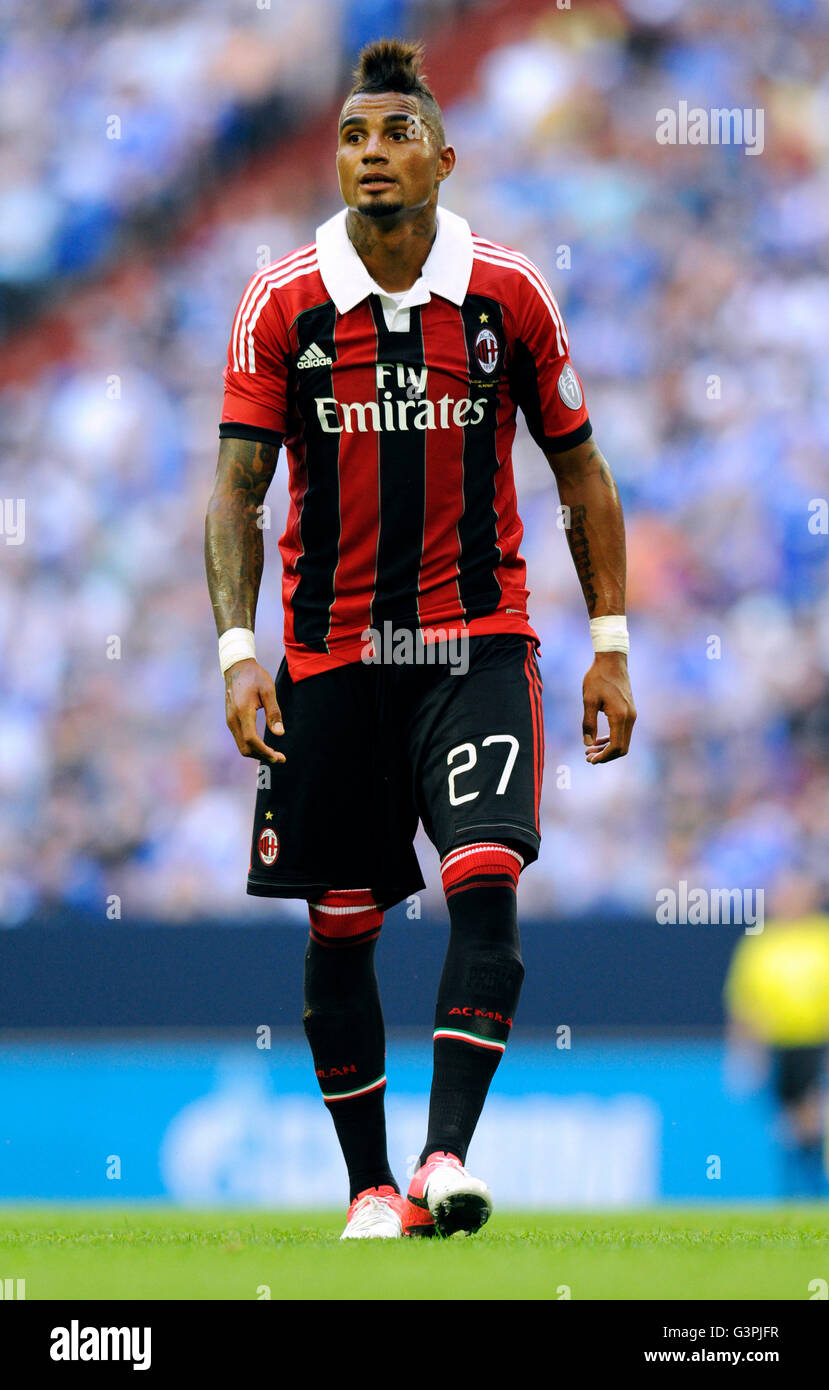
When Kevin-Prince Boateng arrived at Milanello in August 2010, Italian sports dailies treated the transfer as an eccentric afterthought. Fresh off relegation with Portsmouth and an intriguing World Cup campaign with Ghana, the midfielder landed in Lombardy courtesy of a convoluted co-ownership deal engineered by Genoa and Milan CEO Adriano Galliani. Most observers viewed him as raw squad depth, a physical rotational piece for an aging locker room.
Instead, Massimiliano Allegri turned the conventional wisdom of Italian football on its head. As documented in a retrospective sempremilan.com Report exploring Allegri’s career-long penchant for radical positional conversions, Boateng became the tactical axis of an unexpected championship run. Rather than benching the combative midfielder, Allegri thrust him into the sacred *trequartista* position, a move that secured the Rossoneri's first league crown in seven years.
📌 Key Takeaways:
- The Tactical Mutation: Allegri replaced the traditional, silky playmaker with an athletic, destructive attacking midfielder at the tip of a 4-3-1-2 diamond.
- Ibrahimović Synergy: Boateng’s violent vertical runs complemented Zlatan Ibrahimović’s habit of dropping deep, disorienting Serie A backlines.
- The Pressing Paradigm: His defensive harrying protected Milan's veteran midfield core, Gattuso, Pirlo, and Seedorf, from transitional exposure.
The Summer Transfer Nobody Saw Coming
The summer of 2010 was supposed to belong exclusively to Zlatan Ibrahimović and Robinho. Silvio Berlusconi wanted headline glamour to halt Internazionale’s post-treble momentum, pouring capital into high-profile forward additions. Boateng entered through the back door. Genoa purchased his rights from Portsmouth for roughly €5.7 million before immediately loaning him to Milan in an intra-league co-ownership maneuver.
Pundits questioned where the Berlin-born brawler would fit. Milan already possessed an embarrassment of creative riches, alongside veteran midfield enforcers like Gennaro Gattuso and Massimo Ambrosini. Boateng was neither an orthodox defensive anchor nor an aristocratic ball distributor. He carried a reputation for volatility and raw, unfocused energy. Allegri, arriving from Cagliari with pragmatic ideas, saw something else entirely: unmatched vertical thrust.
Dismantling the Myth of the Classical Italian Trequartista
San Siro had spent decades worshiping the refined, slow-tempo attacking midfielder. Gianni Rivera, Manuel Rui Costa, and Kaká had defined the role with delicate touches, vision, and gliding counter-attacks. Placing a bruising box-to-box runner into that sanctum bordered on sacrilege for traditionalists.
Allegri did not care about aesthetic purity. Italian football in 2010 was accelerating; defensive midfielders were squeezing deep-lying playmakers out of matches. Rather than stationing Clarence Seedorf or Ronaldinho behind the strikers, where they often stalled possession, Allegri converted Boateng into an anarchic pressing weapon. The objective was simple: harass the opposing *regista*, win the ball forty yards from goal, and explode into the penalty box before defenses could reset.
Boateng possessed rare aerial strength and aggressive acceleration. When opposing teams attempted to play out from the back, he suffocated them. When Milan attacked, he operated like an auxiliary center-forward, crashing into half-spaces cleared by Ibrahimović’s wide drifting.
The 4-3-1-2 Blueprint That Clinched the 2010, 11 Scudetto
The tactical architecture of Milan's eighteenth Scudetto hinged on balance. Leonardo’s previous iteration of Milan had leaked goals due to an open 4-3-3 shape. Allegri installed a compact 4-3-1-2, creating a narrow central block that choked the life out of opposing counter-attacks.
| Tactical Role | Primary Personnel | Strategic Function |
|---|---|---|
| Trequartista (Hybrid Tip) | Kevin-Prince Boateng | High pressing, direct line-breaking runs, second-ball recovery. |
| Twin Strikers | Zlatan Ibrahimović, Alexandre Pato / Robinho | Focal hold-up play, drawing center-backs, lateral channel runs. |
| Midfield Trio (Base) | Gattuso, Van Bommel / Pirlo, Seedorf / Ambrosini | Positional shielding, tempo modulation, perimeter containment. |
| Central Defense | Thiago Silva, Alessandro Nesta | High-line anticipation, aerial dominance, recovery pace. |
Milan conceded just 24 goals across 38 Serie A matches in 2010, 11. That defensive record was built far up the pitch. Boateng’s relentless closing down allowed Thiago Silva and Alessandro Nesta to defend on the front foot without risking footraces toward their own net. The Rossoneri marched to 82 points, leaving Inter six points adrift.
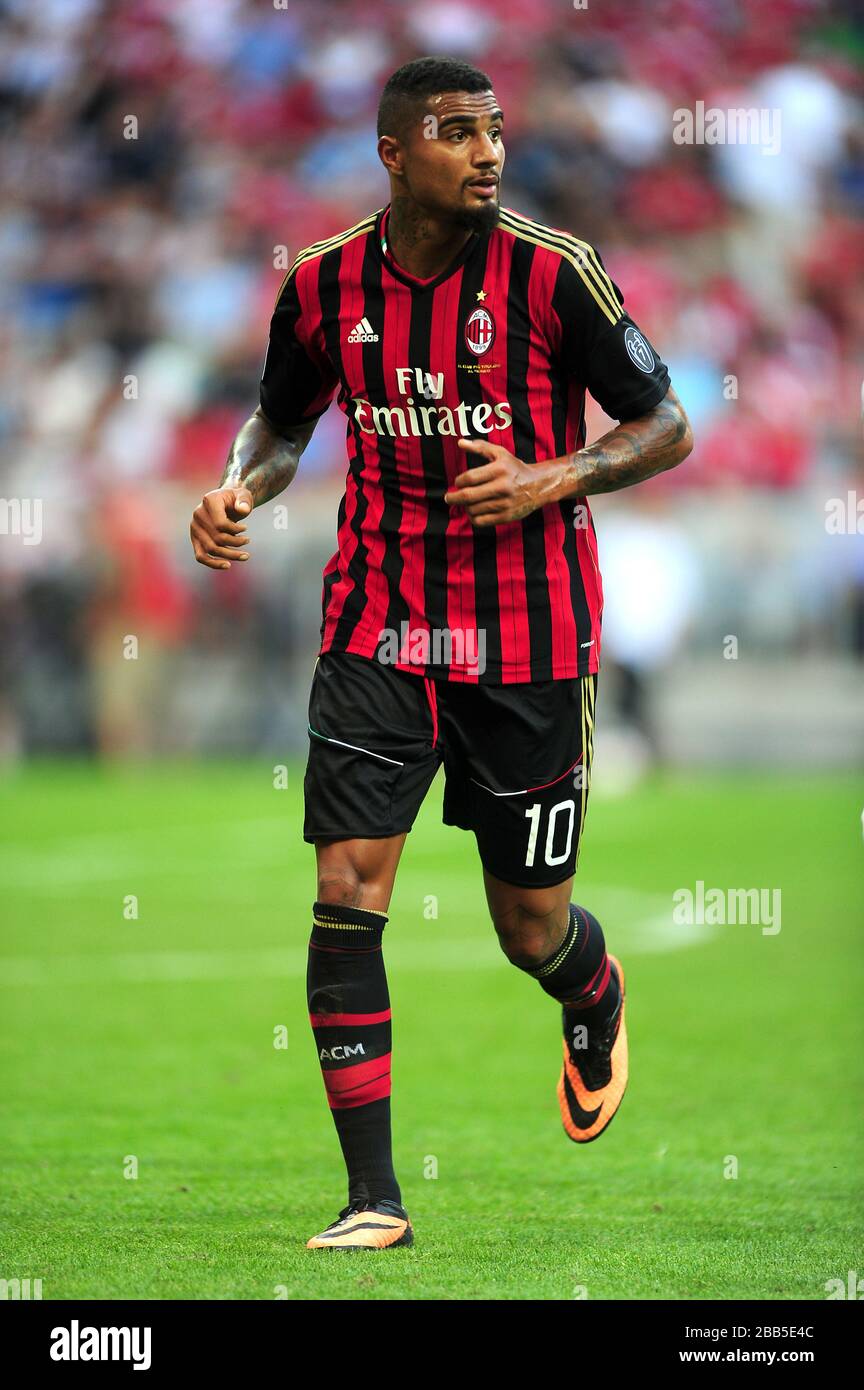
Symbiosis with Zlatan Ibrahimović and the Frontline Engine
The partnership between Boateng and Ibrahimović worked precisely because of their complementary instincts. Strikers usually demand service from their playmakers; Ibrahimović frequently provided it. The Swedish forward loved dropping into the midfield pocket, dragging elite center-backs with him.
That movement vacated enormous corridors behind defensive lines. Boateng attacked those gaps at full tilt. Instead of orchestrating with intricate short passes, Boateng functioned as a blunt instrument. His thunderous strikes from distance and aerial battles disrupted organized low blocks.
Their understanding crystallized in decisive moments: the 3-0 demolition of Inter in the Derby della Madonnina and the title-clinching weeks of spring 2011. While Alexandre Pato provided surgical finishing and Robinho supplied Brazilian dribbling, Boateng provided raw adrenaline. When Milan celebrated the Scudetto at San Siro, Boateng’s moonwalk in full Michael Jackson regalia captured the joyful chaos of his breakout year.
Gazzetta Dello Sport’s Verdict and the Modern Pressing Template
Contemporary Italian coverage quickly recognized the evolution. Analysis from La Gazzetta dello Sport that season tracked how Boateng regularly covered over 11 kilometers per 90 minutes, leading Milan in high-intensity sprints. Tactical analysts christened the role the *guastatore*, the saboteur.
He was not deployed to create magic; he was deployed to ruin the opposition’s structure. By stripping opponents of time, Boateng allowed technical veterans like Seedorf and Pirlo to conserve energy and play forward without back-tracking constantly. When Mark van Bommel arrived in January 2011 to anchor the base of midfield, the spine was complete. Milan became an iron wall with an explosive tip.
Allegri replicated this structural logic later in his career, deploying Mario Mandžukić as a grueling left winger at Juventus. The underlying philosophy remained unchanged: match intelligence begins with functional role adaptation, not rigid ideological dogmatism.
Frequently Asked Questions (FAQ)
Q1: Why did Massimiliano Allegri play Kevin-Prince Boateng as a trequartista?
Allegri wanted physical power, pressing intensity, and vertical runs rather than a slow, possession-heavy playmaker. Boateng disrupted opposing defensive midfielders and attacked empty spaces created by Zlatan Ibrahimović.
Q2: How many goals did Boateng score during Milan’s 2010, 11 title season?
Boateng scored 3 goals in 26 Serie A appearances during the 2010, 11 domestic campaign, but his true tactical value came through high turnovers won, defensive work rate, and opening spaces for Ibrahimović, Pato, and Robinho.
Q3: Did Boateng remain in that attacking role throughout his Milan career?
Yes, through the 2011, 12 and 2012, 13 seasons, Boateng frequently operated behind the strikers or as an unorthodox winger. He produced iconic moments in the role, including a legendary Champions League strike against Barcelona at San Siro in November 2011.
The Tactical Evolution That Reshaped Italian Midfields
Kevin-Prince Boateng's Milan tenure fundamentally altered how Serie A managers viewed central playmakers. For decades, Italian tactical orthodoxy insisted that the player wearing the number ten jersey had to be an artist with flawless technical pedigree. Allegri proved that athletic destruction could be just as potent as vision.
Modern European midfields are filled with hybrid athletes who press, carry, and crash boxes from advanced zones. In 2010, doing that inside the cathedral of San Siro felt revolutionary. Boateng arrived as an unheralded budget signing and left as a Scudetto winner because a pragmatic manager dared to rethink the geometry of Italian football.