Archaeologists Disprove 'All Roads Lead to Rome' Myth: Meaning and Timeline Explained
When people say "all roads lead to Rome," they mean that many different methods, routes, or strategies can yield the exact same outcome. For centuries, speakers have leaned on the expression to suggest that regardless of where you start or which trajectory you choose, your destination remains fixed. In modern conversations, managers use it to approve alternative workflows, mathematicians use it to explain distinct proofs reaching an identical answer, and philosophers quote it to argue that distinct spiritual traditions seek the same truth.
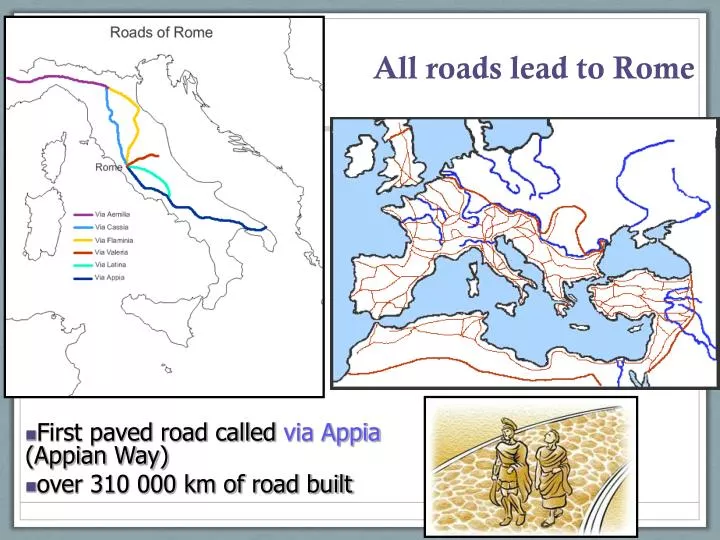
Yet history and archaeology present a completely different reality. A comprehensive spatial analysis mapping over 300,000 kilometers of ancient Roman transportation arteries reveals that the empire's physical network never functioned as a singular funnel toward the Italian peninsula. According to findings highlighted in a Türkiye Today Report, east-bound networks converged far more heavily around Eurasian gateways like Constantinople and Ankara than Rome itself. The proverb survives as a masterclass in figurative language, even as modern geospatial data dismantles its literal premise.
📌 Key Takeaways:
- Idiom Definition: The phrase is a popular idiom asserting that different paths lead to the same result or unavoidable conclusion.
- Literary Origin: The phrase did not originate in antiquity; French theologian Alain de Lille first coined it in Latin around 1175 CE, and Geoffrey Chaucer popularized it in English two centuries later.
- Archaeological Reality: Advanced computational network modeling proves that Eastern nodes like Constantinople (modern Istanbul) and Ancyra (modern Ankara) functioned as significantly more interconnected transport hubs than Rome.
Idiom Definition: How the Metaphor Operates Today
In contemporary English, "all roads lead to Rome" functions as an idiom denoting equifinality: the principle that end states can be reached through diverse beginnings and varying operational paths.
Speakers rely on the idiom across three primary everyday scenarios:
First, it resolves procedural disputes. If two engineers propose fundamentally different software architectures that achieve identical benchmark speeds, an executive might remark that all roads lead to Rome to signal that the stylistic route matters far less than the finished deliverable.
Second, it frames inevitability. Economists use the phrase when warning that unchecked fiscal patterns will eventually force debt restructuring regardless of which administration handles the tax levers.
Third, it expresses philosophical convergence. Religious scholars and cross-cultural anthropologists frequently cite the adage to suggest that distinct moral philosophies often land on universal virtues such as reciprocity and honesty.
Monks, Emperors, and Chaucer: The True Origin of the Proverb
Popular culture often attributes the saying to the Roman legionaries who paved the Via Appia in 312 BCE, or to Caesar Augustus, who became Rome’s first emperor and transformed its public works. That assumption is historically false. No classical Roman general, historian, or poet ever wrote or spoke the proverb.
The phrase first appeared in print in 1175 CE, roughly seven centuries after the Western Roman Empire collapsed. French poet and theologian Alain de Lille penned the sentence in his Latin collection Liber Parabolarum:
"Mille viae ducunt homines per saecula Romam."
(A thousand roads lead men forevermore to Rome.)
De Lille did not write about municipal engineering or imperial tax collection. He wrote an allegory about Catholic penitence. During the Middle Ages, Rome represented the spiritual apex of Western Christendom and the seat of the papacy. A pilgrimage to Rome promised absolute plenary indulgence for sins. De Lille meant that any Christian, through countless acts of penance or personal stations in life, could find their way to God and papal absolution.
Two centuries later, English author Geoffrey Chaucer brought the phrase into vernacular English literature. In his 1391 technical tract Treatise on the Astrolabe, Chaucer wrote to his son: "Right as diverse pathes leden diverse folk the righte way to Rome." Over subsequent centuries, oral tradition compressed Chaucer’s observation into the punchy, universal proverb used today.
Caesar Augustus and the Golden Milestone That Built the Legend
While the phrase itself is medieval, classical Rome did leave behind a monument that inspired the underlying myth. In 20 BCE, Emperor Caesar Augustus erected the Milliarium Aureum (the Golden Milestone) in the Roman Forum, near the Temple of Saturn.
Cast in gilded bronze, the column served as the symbolic starting point for the Italian peninsula's main arteries. Official imperial records measured travel distances from this central point. Whenever imperial surveyors placed a stone milestone alongside the Via Flaminia, the Via Aurelia, or the Via Salaria, the etched numbers related conceptually to the Golden Milestone in the Forum.
The physical roads, however, did not literally tie into the pillar. Augustus built the monument as political theater. It broadcast that administrative authority, civil engineering, and military power radiated directly from his personal office. When travelers moved outward from Rome, the milestone marked how far the emperor's reach extended into the provinces. The monument created an enduring optical illusion: that Rome was the literal navel of the global transport grid.

Archaeologists Map 300,000 Kilometers: How Connectivity Actually Worked
In recent research published across journals and archaeological news platforms, researchers dismantled the idea of a Rome-centric layout. By mapping 300,000 kilometers of mapped stone, gravel, and dirt roads across modern Europe, North Africa, and the Middle East, researchers ran sophisticated network centrality algorithms to measure where travel actually converged.
The computational models revealed a decentralized system driven by military defense, grain distribution, and local commercial exchanges rather than a monolithic highway pointing back toward Italy.
| Hub City | Regional Zone | Network Role | Relative Centrality Metric |
|---|---|---|---|
| Rome | Central Italy | Political capital; heavy inbound sea cargo imports via Ostia | Moderate overland connectivity |
| Constantinople (Istanbul) | Thrace / Bosphorus | Eurasian land bridge connecting the Danube frontier with the Levant | Highest systemic overland transit node |
| Ancyra (Ankara) | Central Anatolia | Junction point for legions deploying east toward Persian frontiers | High regional overland junction |
| Lugdunum (Lyon) | Gaul | Crossroads linking the Rhine frontier, Atlantic coast, and Mediterranean | High Western European junction |
| Antioch | Syria | Commercial terminal linking Silk Road tributaries to Mediterranean shipping | High Eastern trade connectivity |
As the data proves, the highest-density overland intersections converged around Eastern hubs. When Emperor Constantine moved the administrative capital eastward in 330 CE, Constantinople quickly became the absolute nexus of travel. If a merchant moved across the empire by foot, horse, or carriage, their routes were far more likely to route through Thrace or Anatolia than through central Italy.
Furthermore, Rome relied overwhelmingly on maritime transport. Bulk goods such as grain, olive oil, and marble traveled by cargo ships along Mediterranean sea routes into Rome’s port at Ostia Antica. Moving heavy grain wagons over 100 kilometers of paved stone cost more in oxen feed and draft labor than sailing the entire length of the Mediterranean. The overland roads were primarily built to march Roman legions quickly, carry official imperial dispatch couriers (cursus publicus), and administer regional taxation.
Why the Phrase Endures Despite Historical Inaccuracy
Idioms do not require geographical accuracy to remain useful. Metaphors persist when they describe psychological or operational truths that humans recognize in daily life.
The concept of multiple paths yielding the same outcome remains an essential communicative shortcut. In project design, it tells team members that procedural orthodoxy is secondary to results. In psychology, it encourages flexibility, reassuring individuals that a non-linear career path or an unconventional education can still land them at their desired career destination.
The phrase also endures because Roman civil engineering still captures the modern imagination. More than two millennia after Roman legions laid basalt pavers over mortar beds, thousands of kilometers of those original corridors form the foundations of modern European thoroughfares. Drivers navigating the A1 motorway in Britain or the Via Emilia in northern Italy are steering vehicles directly over Roman alignments. The physical endurance of the stone reinforces the psychological stickiness of the proverb.
Frequently Asked Questions (FAQ)
Q: What does the idiom "all roads lead to Rome" mean?
A: It means that multiple methods, approaches, or paths can lead to the identical end goal or result. It is used when the process can vary widely, but the ultimate destination or solution remains unchanged.
Q: Did all roads actually lead to Rome in the ancient world?
A: No. Archaeological mapping shows that the Roman road network was decentralized. Many roads connected frontier garrisons directly to each other without passing through Rome, and Eastern administrative centers like Constantinople and Ancyra had higher overland network connectivity than Rome itself.
Q: Who first said "all roads lead to Rome"?
A: French theologian Alain de Lille first recorded the concept in Latin in 1175 CE, writing about Christian spiritual redemption rather than civil road engineering. Geoffrey Chaucer later introduced it to the English language in 1391.
The Persistence of Rome as a Cultural Destination
Proverbs outlive the stone monuments that spark them. Even though modern archaeology proves that ancient roads prioritized regional garrisons, eastern border frontiers, and sea ports over a direct path to the Italian peninsula, the proverb remains linguistically indispensable.
The phrase captures an eternal human reality: the journey can take many forms, but the final outcome often stands firm. Whether you examine the logistics of the Roman Empire or the code pipelines of a modern engineering team, human systems eventually converge on common destinations. Alain de Lille may have written to encourage medieval pilgrims, but the phrase he inspired continues to articulate our shared journey through life's many paths.


