Are the Hens Actually Happy? Examining the Claims, Lawsuits, and Farm Reality Behind Vital Farms

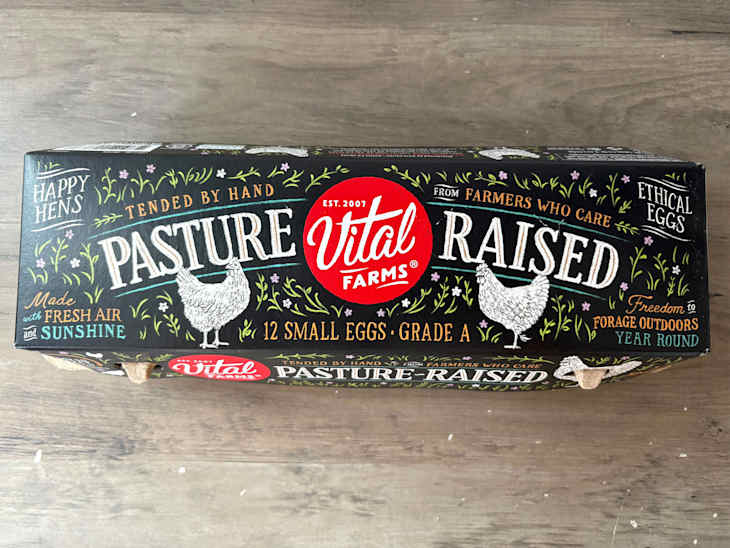
Walk through the dairy aisle of any major American grocery store, and the matte black carton with folksy chalkboard lettering immediately catches your eye. Vital Farms turned pasture-raised eggs into a Wall Street success story by selling shoppers an uncompromised ethical trade-off: pay $7 to $10 a dozen, and you fund a life of rolling green hills, clover, and sunlight for laying hens. But that idyllic pastoral narrative faces unprecedented scrutiny following escalating regulatory complaints, deceptive marketing lawsuits, and a high-profile investigation documented in a recent People for the Ethical Treatment of Animals (PETA) Report.
The friction between commercial agriculture and consumer expectation has erupted into the open. As activist groups challenge the brand's ubiquitous "happy hens" branding and reports surface regarding severe welfare failures across its network of independent contract growers, consumers are left questioning whether pasture-raised commercial production can truly match the story told on the packaging.
📌 Key Takeaways:
- Core Controversy: Consumer class actions and animal advocacy groups allege Vital Farms markets an unattainable bucolic lifestyle while relying on industrial contract-farming practices.
- The Trigger Event: Fresh activist campaigns and scrutiny intensified after allegations surfaced detailing a supplier shed collapse where surviving birds were reportedly depopulated via gas.
- Regulatory Reality: While Vital Farms maintains third-party Certified Humane standards, the gap between consumer perceptions of free-roaming birds and commercial flock behavior remains wide.
The Pasture-Raised Promise and Industrial Scale
Vital Farms was founded in Austin, Texas, in 2007 on a single plot of land. Over the subsequent two decades, it transformed into a publicly traded powerhouse supplying over 24,000 grocery stores nationwide. The brand carved out market dominance by elevating the conversation beyond standard "cage-free" designations, which often confine tens of thousands of birds inside massive, windowless barns, to "pasture-raised."
To satisfy this claim, the company relies on the standards established by Humane Farm Animal Care (HFAC). Under the Certified Humane pasture-raised standard, laying hens must receive a minimum of 108 square feet of outdoor space per bird, along with rotational fields and fresh vegetation. For suburban shoppers seeking ethical options, this standard served as an easily digestible seal of approval. The company's revenues soared past $400 million, driven by buyers willing to pay double or triple the price of conventional eggs.
Cracks in this pastoral image appeared as the enterprise scaled. Vital Farms does not own most of the land or birds supporting its supply chain; it contracts with a decentralized network of more than 300 family farms across the Midwestern "Pasture Belt." Maintaining uniform welfare standards across hundreds of autonomous contractors is a formidable logistical hurdle. What works on a pilot farm in central Texas encounters brutal frictions when converted into an industrialized, high-throughput commercial pipeline.
The "Happy Hens" Marketing Lawsuit and Deceptive Claims
The core legal challenge confronting Vital Farms is not simply agricultural; it is semantic. In consumer protection lawsuits filed across multiple federal districts, plaintiffs alleged that the brand engaged in deceptive practices by peddling an imagery of bird autonomy that diverges sharply from commercial realities.
Court filings targeted phrases printed across millions of cartons, including assertions that hens roam outdoors freely 365 days a year and live genuinely contented lives. Animal protection attorneys brought forward photographic and video evidence collected from contract operations. Their findings documented tens of thousands of hens clustered inside barns, reluctant to venture through small pop-holes into muddy or bare transition runs. In heavy winds, freezing temperatures, or high heat, the birds remain entirely indoors for weeks at a time.
Plaintiffs also pointed out basic commercial procedures omitted from sunny promotional packaging:
- Like virtually all commercial egg enterprises, Vital Farms sources its laying pullets from industrial hatcheries that routinely destroy male chicks shortly after hatching.
- Flocks frequently undergo infrared beak conditioning at the hatchery stage to curb cannibalism and feather pecking in dense housing.
- Laying hens face slaughter or mechanical depopulation at approximately 70 to 80 weeks of age, the point at which egg production drops below peak economic yield.
While these practices are standard baseline realities across commercial egg production, critics argue that Vital Farms charges a premium precisely by implying it operates outside that industrial framework.
The Supplier Shed Collapse and Crisis Depopulation
Scrutiny reached a boiling point following reports that a structural collapse occurred at a supplier facility housing thousands of laying hens. According to reporting and formal complaints filed by PETA, when an agricultural shed housing laying birds suffered a partial roof collapse at an affiliated farm, the operational solution chosen was wholesale flock depopulation using carbon dioxide gassing.
Advocates voiced outrage, demanding to know why surviving birds were not evaluated, treated, or rescued. The incident exposed the stark divergence between artisanal animal husbandry and scaled contract farming. When a poultry facility suffers an infrastructure casualty, commercial producers default to standard emergency mass euthanasia protocols to mitigate biosecurity, disease, and structural hazards.
The optics proved catastrophic for a brand whose identity centers on radical transparency. While company spokespersons consistently emphasize that independent contract producers are expected to follow strict biosecurity and animal care guidelines, emergency depopulation demonstrates the brutal economics governing modern livestock farming. When systemic accidents happen, commercial calculations inevitably override individualized animal welfare.
Comparing Egg Production Standards Across Grocery Aisles
Understanding the controversy requires stripping away pastoral imagery and comparing verified industry metrics. Egg labeling regulations in the United States contain major discrepancies between marketing language and legal mandates.
| Production Standard | Indoor Space Allocation | Outdoor Access Requirements | Average Price per Dozen |
|---|---|---|---|
| Conventional Caged | 67, 86 sq. in. per bird | Zero outdoor access | $2.00, $3.50 |
| Cage-Free (USDA) | 1.0, 1.5 sq. ft. per bird | Zero outdoor access required | $3.50, $5.00 |
| Free-Range (HFAC) | 1.5, 2.0 sq. ft. per bird | 2.0 sq. ft. per bird outdoors | $4.50, $6.50 |
| Vital Farms (Certified Humane) | 1.5, 2.0 sq. ft. per bird | 108 sq. ft. per bird (rotational) | $7.50, $9.99 |
The data confirms that pasture-raised standards provide exponentially more outdoor physical acreage than conventional or cage-free baselines. Yet the contentious point remains flock behavior: prey animals like chickens instinctively avoid open, exposed ground without heavy overhead tree canopy or physical cover. As a result, having 108 square feet assigned on paper does not guarantee every bird utilizes that acreage consistently.
Corporate Pressures and the Greenwashing Debate
The wider debate surrounding Vital Farms centers on whether modern consumers are falling prey to greenwashing or if ethical branding has simply hit an inevitable ceiling. Since completing its initial public offering on Nasdaq in August 2020, Vital Farms has answered directly to institutional shareholders demanding steady margin gains and quarterly volume growth.
Balancing public corporate profitability with small-scale biological ethics creates inherent operational stress. True regenerative, free-roaming poultry operations struggle to scale because land acquisition, predator management, and climate variations inject massive volatility into production costs. When companies transition from regional outfits into multinational supermarket staples, production must standardize.
This structural reality forces a pivot toward contract models where independent farmers bear capital expenditures for sheds and feed machinery. If a local contract farmer cuts corners to manage labor costs or protect yields during harsh weather, the central distributor faces direct reputational liability. Consumers paying a steep premium feel misled when they discover that their eggs come from massive poultry complexes that resemble commercial operations far more than family homesteads.
Frequently Asked Questions (FAQ)
Are Vital Farms eggs truly pasture-raised?
Yes. Vital Farms eggs meet the HFAC Certified Humane pasture-raised standard, meaning farms designate 108 square feet of pasture space per hen. However, legal challenges argue that many hens spend substantial portions of their lives inside sheds and that flock realities differ significantly from cartoon carton illustrations.
What was the outcome of the deceptive marketing lawsuit?
Vital Farms has vigorously defended its marketing practices, arguing that its packaging accurately reflects its Certified Humane certifications and third-party farm audits. The litigation triggered intense judicial debate over whether terms like "happy hens" constitute actionable factual misrepresentations or legally permissible marketing puffery.
Why don't all pasture-raised hens go outside constantly?
Chickens are natural prey species descended from jungle fowl. In open pastures devoid of natural canopy, birds often perceive broad daylight and open sky as predatory hazard zones. Extreme weather, mud, and state-mandated avian flu quarantine orders also force contract growers to keep flocks enclosed indoors for prolonged periods.
How do pasture-raised eggs differ nutritionally from conventional eggs?
Agricultural studies indicate eggs from hens with genuine foraging access typically show higher concentrations of vitamin D, vitamin E, and omega-3 fatty acids, along with darker orange yolks due to carotenoids found in fresh grass and insects. However, those nutritional benefits correlate with how much forage birds actually consume versus standard grain rations.
Consumer Realism in the Ethical Grocery Market
The controversy surrounding Vital Farms cuts through the commercial mythology of modern food marketing. It demonstrates that agricultural production cannot easily escape the compromises of scale. Pasture-raised eggs remain a clear structural improvement over battery cages and crowded industrial aviaries, granting birds fresh air access and vastly expanded physical acreage.
Yet high retail prices do not purchase an agrarian utopia. Vital Farms functions as a large-scale agricultural business governed by contractual farming arrangements, automated hatcheries, and standard end-of-life culling. Consumers seeking entirely cruelty-free or uncompromised food must realize that carton illustrations are designed to soothe consciences as much as describe farming realities. Navigating the grocery store requires looking past marketing slogans and judging food systems by their concrete industrial parameters.


