Are Viral Brands Like Skims Actually Worth It for H Cups? Testing the Hype Against Heritage Lingerie
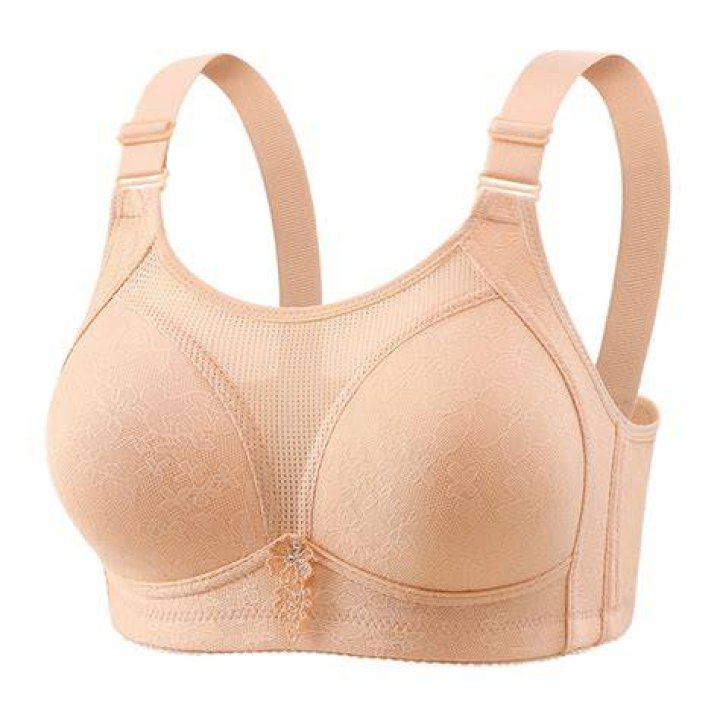
Direct-to-consumer lingerie labels dominate social feeds with seamless aesthetics and promises of weightless hold. Yet for anyone shopping for an H cup bra, marketing claims frequently collapse under the physical realities of tissue volume and gravity. Extensive wear trials by consumer publications, including a recent Women's Health report analyzing the brand's best-selling styles, highlight a persistent tension between viral minimalism and the architectural demands of fuller bust lingerie.
When breast tissue weighs several pounds per side, cut-and-sewn engineering outperforms single-ply stretch fabrics. Viral brands pitch sleek loungewear as everyday armor. Meanwhile, traditional bra makers rely on decades of pattern grading, rigid channeling, and multi-part cups to carry the load.
📌 Quick Summary:
- The Structural Gap: Viral brands rely heavily on elastic tension, whereas heritage fuller bust brands distribute weight across three-part and four-part cut-and-sewn cups.
- The Sizing Trap: A US 34H represents an 8-inch difference between bust and underbust, while a UK 34H accommodates an 11-inch difference, leading to frequent online sizing errors.
- The Longevity Divide: Seamless bonded edges and thin elastics degrade within three to six months under heavy bust support, compared to multi-hook heritage bands lasting several years with proper care.
The Social Media Promise Versus Everyday Gravity
Social media feeds present a streamlined aesthetic: micro-fiber bralettes, razor-thin shoulder straps, and invisible underwires promising effortless lift up to an H cup. The reality in the fitting room tells a different story. Molded foam cups designed for smaller volumes do not scale up linearly. When scaled to larger sizes without altering their basic geometry, single-layer foam tends to flatten projected tissue against the ribcage rather than lifting it upward.
This compression creates sweat traps along the inframammary fold, pushes breast tissue into the armpits, and transfers sheer weight straight to the shoulders. The result is chronic neck fatigue and slipping bands. Heritage fuller bust lingerie relies on an entirely different discipline: load distribution. An authentic H cup requires an architectural frame where 80% of the support originates from a rigid back band, roughly 15% from the underwire and cup construction, and only 5% from the shoulder straps. Viral loungewear labels routinely reverse this ratio by asking stretchy elastics to do the work of structural seams.
Sizing Confusion: The UK Versus US Engineering Divide
Much of the frustration around extended-size bras stems from a lack of sizing standardization. American and British brands treat the alphabet differently once cup volume passes a DD. In the United States, cup progression typically climbs D, DD, DDD (F), G, H. An American H cup corresponds to an 8-inch differential between your ribcage measurement and the fullest point of your bust.
British brands step through a denser grading scale: D, DD, E, F, FF, G, GG, H. A UK H cup accommodates an 11-inch differential.
| Sizing System | Inches Over Underbust | Typical Construction Method | Average Price Band |
|---|---|---|---|
| US Extended (e.g., Skims, ThirdLove) | 8 inches (US H) | Molded single-piece foam, bonded wings | $48, $68 |
| UK Heritage (e.g., Panache, Elomi, Freya) | 11 inches (UK H / US K equivalent) | 3- to 4-part cut-and-sewn, laminated side slings | $65, $88 |
| European Luxury (e.g., PrimaDonna) | 8.7, 9.5 inches (EU H) | Multi-layer embroidered tulle, spring-steel wires | $130, $175 |
When a buyer accustomed to UK-engineered bras purchases an American H cup from an Instagram label, the cup is three full volumes too small. The underwires rest directly on sensitive breast tissue rather than anchoring against the rib cage, while the center gore floats inches away from the sternum.
Underwire Geometry: Center Gore Fit and Projected Cups
Support in larger cup sizes comes down to the shape of the cup and the stiffness of the wire. Molded cups produce a shallow profile: wide across the chest, but flat against the ribs. Natural H-cup tissue, however, is typically projected, sitting forward from the torso.
When projected tissue encounters a shallow molded cup, it pushes the entire bra away from the body. The center gore, the fabric bridge between the cups, cannot lie flush against the sternum. Instead, it hovers in mid-air, transferring the load to the shoulder straps and causing the band to ride up in back.
Heritage lingerie brands like Panache, Elomi, and Fantasie solve this issue by cutting cups from three or four separate fabric sections. A horizontal seam establishes forward projection, an upper stretch-lace panel accommodates fluctuating tissue volume, and side support panels guide tissue away from the underarms toward the front.
Furthermore, the underwires in these designs use tempered spring steel. Viral brands often opt for lighter zinc or flexible plastic wires. Those softer materials bow under heavy bust support, causing the wire tips to poke into sensitive armpit tissue within an hour of wear.
Strapless Bras and the Wireless Lift Dilemma
Finding a functional strapless bra for large busts remains one of the hardest challenges in lingerie. Viral brands frequently address this with silicone tape along the inner hem and ultra-tight elastic bands. Yet tests by fashion publications show that relying purely on elastic friction fails over an eight-hour workday. Gravity pulls the elastic down, folding the cup edges in half.
Effective strapless support for an H cup requires structural vertical boning along the side wings and high-density foam cups that resist collapsing under outward pressure. Styles like the Curvy Kate Luxe or the Wonderbra Ultimate Strapless rely on interior plastic finger supports inside the cup walls to push tissue upward without relying solely on shoulder straps.
Wireless lift presents similar physical boundaries. Recent tests across 13 wireless styles by beauty editors highlight that while soft bras can comfortably enclose large breasts, they cannot duplicate the crisp separation or vertical clearance of an underwire. Wireless styles for H cups must use crossed-cradle sling designs, reinforced underbust bands, and high-gauge powernet meshes to generate lift through compression rather than suspension.
Durability Realities: Wide Bands, Straps, and Fabric Fatigue
Consumer evaluations across hundreds of wear cycles reveal substantial gaps in long-term durability. Viral labels often build bras using heat-bonded seams and micro-denier polyesters to create an invisible, smooth profile under clothing. While comfortable on day one, heat adhesives quickly weaken under the high shear stress that an H-cup band undergoes.
Wide band smoothing in heritage bras relies instead on mechanical stability:
- Multi-Row Closures: True H-cup bras feature three or four rows of hook-and-eye closures set into reinforced plush tape, distributing pulling forces across the spine.
- High-Gauge Powernet: High-denier mesh in the back wings retains elasticity after dozens of wash cycles, preventing the band from sagging upward.
- Cushioned Bra Straps: Wide, padded straps protect the trapezius muscle, preventing deep shoulder grooves without relying on unsightly elastic webbing.
- Channeling Enclosures: Triple-stitched plush underwire channeling prevents steel wires from popping through the fabric during daily movement.
Bonded viral styles may survive thirty gentle wash cycles before the band loses its tension and stretches out by two full inches. High-grade cut-and-sewn designs typically withstand two to three years of weekly rotation when washed in cold water and air-dried.
Who Viral Brands Actually Serve (And Who Should Avoid Them)
Viral brands are not useless, but shoppers need clear expectations about what they can and cannot do.
Who Can Wear Viral Extended Sizes:
- Wearers with shallow tissue distribution who want a relaxed chest profile rather than dramatic lift.
- Shoppers looking strictly for at-home loungewear or sleep support where strict separation and posture alignment are not required.
- People whose measurements fall within the US H range (an 8-inch bust-to-rib differential) rather than the UK H range (an 11-inch differential).
Who Should Stick to Heritage Fuller Bust Brands:
- Anyone experiencing upper back, neck, or shoulder tension caused by heavy busts.
- Wearers with significant projection who need a firm center gore fit against the sternum to avoid chafing between the breasts.
- Consumers seeking strapless designs that will stay securely in place through long events without manual adjustment.
- Buyers who want bras that will retain their shape and elastic recovery over years rather than months.
Frequently Asked Questions (FAQ)
Q1: Why does the center gore of my H-cup bra float instead of resting flat against my chest?
A1: A floating gore almost always indicates the cups are too small or too shallow. When breast tissue does not have enough volume or forward room in the cup, it pushes the entire bra outward, pulling the center wire away from the sternum. Sizing up in the cup or switching from a molded t-shirt bra to an unlined multi-part cut-and-sewn style usually fixes this issue.
Q2: How do I translate my bra size between US and UK brands?
A2: Look directly at the cup progression on the manufacturer tag. If the cup sequence includes double letters after D (such as FF, GG, and HH), the brand uses the UK sizing scale. If you wear an H cup in American brands, your UK equivalent is typically a FF cup. If you measure as a UK H cup, you will need to look for a US K or L cup to achieve the same internal volume.
Q3: Can a wireless bra give an H cup real lift without flattening the tissue?
A3: A wireless bra can provide comfortable everyday support, but it cannot create the distinct vertical lift and center separation of an underwire. Wireless styles work through compression and broad-band shelf support, which naturally yields a softer, rounder profile rather than forward projection.
Choosing Support That Lasts
Viral lingerie labels have successfully expanded mainstream conversations around size inclusion and minimalist aesthetics. Yet clever marketing cannot outmaneuver the structural requirements of heavy bust support. For an H cup, lightweight unseamed fabrics inevitably compromise on lift, durability, and ergonomic distribution.
If your goal is casual lounging at home, viral styles offer accessible, unstructured ease. However, for dependable all-day posture support, lasting underwire comfort, and clean garment profiles, heritage fuller bust lingerie remains the standard. Investing in cut-and-sewn engineering, rigid back bands, and proper UK cup sizing delivers the durable lift that social media elastics simply cannot sustain.


