Beyond the State Fair: How Deep-Fried Pizza Conquered Regional Menus and Viral Feeds

When the Canadian National Exhibition opened its gates in late August 2026, the longest lines did not form at the vintage roller coasters or agricultural showcases. Crowds surged toward the concession pavilion for a collision of campfire nostalgia and commercial deep fryers: battered, flash-fried pizza wedges coated in melted marshmallow, crushed graham crackers, and milk chocolate. As documented in a Trend Hunter Report on Pizza Pizza's debut of the sweet-and-savory s'mores slice at the CNE, what started decades ago as a carnival stunt has turned into a high-visibility culinary enterprise.
The dish has broken through the boundaries of summer midways. Propelled by street food culture and an insatiable Gen Z appetite for extreme comfort food, deep-fried pizza has secured steady real estate across East Coast boardwalks, urban food halls, and late-night independent kitchens. Transforming leavened dough through rolling baths of boiling oil is no longer just a spectacle designed for social algorithms; it represents a serious, highly profitable shift in how operators approach dough architecture, texture, and regional tradition.
📌 Key Takeaways:
- The Lineage: Modern fried slices draw from two distinct histories, the rustic, century-old Neapolitan pizza fritta and the working-class Scottish "pizza crunch" born in Edinburgh chip shops.
- The East Coast Turn: Mid-Atlantic and New England seaside towns turned fairground novelty into permanent brick-and-mortar operations, leaning heavily on customized batter ratios and warm marinara dipping sauce.
- The Technical Threshold: Consistent execution requires rigid control over deep fryer oil temperature, holding oil between 365°F and 375°F to prevent greasy dough saturation.
From Neapolitan Alleys to Scottish Fryers: The Dual Origins of Fried Dough
Long before state fair concessionaires dropped cold pepperoni slices into funnel cake vats, frying leavened dough was an act of economic survival. In post-World War II Naples, bombed-out bakeries lacked wood-fired brick ovens. Neapolitan home cooks stretched scrap dough, sealed it around pockets of humble ricotta, pork ciccoli, and basil, and dropped the parcels into cauldrons of boiling lard. The resulting pizza fritta, celebrated on film by Sophia Loren in Vittorio De Sica's 1954 classic The Gold of Naples, remains a pillar of Italian street food, relying on rapid steam inflation inside the dough rather than direct fat immersion of the ingredients.
A thousands miles north, mid-century Scottish "chippies" engineered a radically different interpretation. Seeking cheap, high-calorie sustenance for shipyard workers and pub patrons, Scottish chip shops took pre-baked, commercial mini-pizzas, submerged them without topping modifications into standard fish-and-chip batter, and fried them until dark gold. Known across Glasgow, Fife, and Edinburgh as the "pizza crunch," this variety stripped away Neapolitan refinement in favor of heavy, shatter-crisp armor served alongside malt vinegar and chips.
These two historical currents laid the groundwork for contemporary American iterations. U.S. street operators took the folded mechanics of the Italian pocket and fused it with the reckless indulgence of the Scottish chippy, producing a distinct culinary hybrid that bridges artisan bread-making and pure carnival indulgence.
State Fair Concessions and the East Coast Boardwalk Migration
Throughout the early 2000s, deep-fried pizza occupied the same cultural territory as fried butter and bacon-wrapped candy bars: temporary fairground novelties engineered for local morning news spots. Concession trailers at the Texas State Fair, Iowa State Fair, and the Big E in Massachusetts treated the item as an exercise in extremes. Slices were chilled, skewered, drowned in buttermilk batter, and fried to order.
The pivot occurred when seasonal operators along the Jersey Shore, the Rhode Island coastline, and outer-borough New York neighborhoods realized the item carried margins north of 78%. Instead of packing up fryers after two-week fair runs, storefronts in Wildwood, Seaside Heights, and coastal Connecticut installed dedicated dual-tank fryers permanently. They stopped using generic fair batters and began formulating specialized cornstarch-flour washes that protected the pizza crust while yielding a distinct, glass-like exterior crackle.
The presentation also matured. Boardwalk shops began offering flash-fried calzone pockets and battered triangles served over white butcher paper, paired with house-made, garlic-heavy marinara dipping sauce to cut through the richness of the rendered cheese. What had been a dare evolved into an expected comfort staple for beachgoers, night-shift hospital workers, and college crowds looking for maximal texture at an accessible price point.
Deep-Fried Pizza Styles Across the Atlantic: Ingredients, Heat, and Form
Understanding deep-fried pizza requires recognizing that the term encompasses fundamentally different structural philosophies across distinct culinary regions:
| Style / Tradition | Core Construction | Fry Technique | Typical Pricing |
|---|---|---|---|
| Neapolitan Pizza Fritta | Raw, high-hydration dough (65%, 70%) sealed around ricotta, provolone, and cured meats. | Naked immersion in clean oil; steam cooks interior in 90, 120 seconds. | $11.00, $16.00 |
| Scottish Pizza Crunch | Cheap par-baked cheese pizza halves dredged directly in wet flour-and-water batter. | Heavy immersion in beef dripping or vegetable oil until crust turns amber brown. | £4.50, £7.00 |
| Fairground Batter Slice | Fully baked triangle slice, chilled, skewered, and dipped in sweet pancake or beer batter. | Flash-fried for visual puff; high oil retention around outer batter shell. | $9.00, $14.00 |
| East Coast Boardwalk Pocket | Proofed pizza dough folded around low-moisture mozzarella, flash-sealed, and dusted with Pecorino. | Submerged at high heat; served immediately alongside warm marinara dipping sauce. | $7.50, $12.50 |
The Thermal Boundary: Deep Fryer Oil Temperature and Dough Mechanics
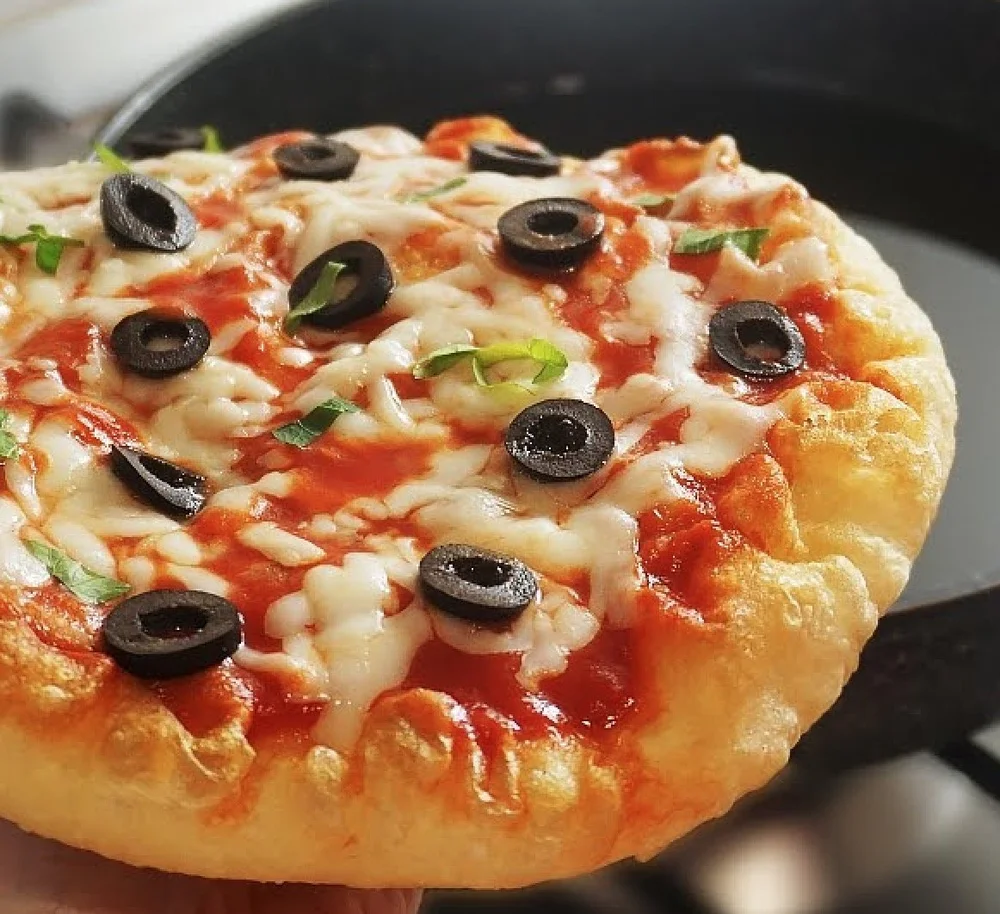
Frying raw or par-baked pizza dough is an exercise in thermal physics. The single most common point of failure in commercial kitchens is oil temperature drop. When a cold, cheese-laden dough portion enters the fryer, the oil temperature can plummet by 25°F to 40°F if the equipment lacks sufficient recovery power.
Professional pizza operators maintain a strict deep fryer oil temperature between 365°F and 375°F (185°C to 190°C). At this exact threshold, moisture on the dough's surface instantly flashes into expanding steam. This outward vapor pressure acts as a barrier, preventing hot fat from penetrating the interior crumb. The starch molecules gelatinize almost instantaneously, building a micro-thin, crispy crust that stays crunchy for up to twenty minutes after plating.
Drop the oil to 330°F, and that protective steam barrier fails. The dough absorbs oil like a sponge, turning the interior soggy and rendering the cheese an oily sludge. High-volume operators now rely on high-efficiency, multi-burner commercial gas fryers or induction vats equipped with digital pulse thermostats, ensuring rapid thermal recovery during heavy weekend dinner pushes.
Viral Food Trends and the Rise of Dessert Pizza Mashups
The spread of deep-fried pizza across North America over the past two years has been accelerated by short-form video algorithms. Crispy, cheese-pull cross-sections generate astronomical engagement on TikTok and Instagram, driving young diners to seek out physical storefronts that serve high-impact comfort food.
This dynamic pushed commercial corporate pizza brands to enter the ring. Major regional players have recognized that modern consumers, particularly Gen Z, show a measurable preference for intensely textural, fried comfort items over standard oven-baked variations. Dessert pizza mashups represent the most recent wave of this trend. By taking stretched dough rounds, flash-frying them until blistered, and applying dessert toppings, brands blur the line between pastry and savory slice.
The S'mores deep-fried pizza slice rolled out at the CNE served as a stress test for commercial scalability. By pairing sweet dough with chocolate drizzle, torched marshmallow cream, and crispy batter shards, operators discovered a high-margin dessert vehicle that utilizes existing kitchen equipment without requiring new prep lines. The success of these sweet-and-savory concepts indicates that the category has completely detached from its old fairground stigma, emerging as a permanent category of experimental dessert cuisine.
Operational Realities: High Margins Versus Kitchen Bottlenecks
For independent restaurant operators, integrating fried pizza onto an active menu involves complex trade-offs. The financial incentives are straightforward. Dough scraps and standardized cheese blends carry food costs consistently below 22%, allowing operators to price fried slices or pockets at $8.00 to $13.00 with exceptional contribution margins.
Kitchen logistics present a steeper hurdle. Deep fryers dedicated to pizza cannot easily share oil with battered fish or chicken wings without severe flavor transfer. Furthermore, high-moisture mozzarella rapidly degrades frying oil through free fatty acid accumulation. Operators running high volumes must filter fryer oil twice daily and replace expensive vegetable or canola blends every 3 to 5 days to avoid bitter, smoking fat.
Kitchens that succeed with the concept treat it either as an exclusive late-night specialty or invest in dedicated, high-speed automated fryers that manage temperature recovery without relying on manual line-cook intervention.
Frequently Asked Questions (FAQ)
Q1: What is the primary difference between Italian pizza fritta and American deep-fried pizza?
Neapolitan pizza fritta uses raw, high-hydration yeast dough sealed around fresh fillings (like ricotta and cured pork) and fries naked without batter, relying on steam to cook the interior. American variations usually take an already baked slice or folded pocket, coat it in seasoned batter or cornstarch washes, and submerge it to achieve an extra-crunchy shell.
Q2: Why does deep-fried pizza often come with marinara sauce on the side?
Frying sealed pizza pockets with cold sauce inside slows heat transfer to the cheese and creates excess internal steam, which can blow open dough seams in the fryer. Serving hot marinara dipping sauce on the side preserves the crispy exterior while providing the acidic punch necessary to balance the rich, melted cheese.
Q3: Can standard home fryers replicate commercial deep-fried pizza?
Standard home electric fryers rarely possess the wattage needed to recover heat quickly when cold dough enters the vat. To achieve commercial results at home, use a heavy Dutch oven filled with peanut or canola oil, use a clip-on digital thermometer to hold heat steady at 370°F, and fry small dough portions one piece at a time.
The Permanent Imprint of Flash-Fried Dough on Modern Menus
The transition of deep-fried pizza from summer carnival midways to permanent restaurant menus marks a real shift in comfort dining. Rather than a passing internet curiosity, the style has secured a foothold by solving a fundamental craving: delivering absolute contrast between an ultra-crispy exterior and an airy, molten center.
As corporate chains expand experimental pilots and seaside boardwalk mainstays continue drawing record late-night queues, the discipline surrounding deep-fried dough continues to refine itself. Supported by precise oil management, diverse culinary styles spanning Naples to Scotland, and an expanding range of savory and dessert formats, this culinary heavyweight has firmly retired its identity as a novelty act, taking its rightful place in contemporary street cuisine.