Brake Cleaner vs MAF Cleaner: The Costly Myth Damaging Modern Engines
A five-minute garage shortcut is quietly turning into a $400 repair bill across thousands of driveways. Modern internal combustion and hybrid powertrains depend on sub-milligram precision to balance stoichiometric air-fuel ratios, yet an enduring DIY myth insists that harsh workshop degreasers are interchangeable with specialized electronics wash. As detailed in an authoritative Family Handyman Report on sensor maintenance, using the wrong chemical strip-cleans more than road grime, it dissolves protective resin housings and fractures microscopic sensing wires within seconds.
The misconception persists because dirty sensors mimic mechanical engine faults. When road film coats the sensor's measurement channel, the engine control unit (ECU) misreads incoming air volume, triggering immediate driveability problems. Reaching for whatever aerosol can sits closest on the garage shelf, however, represents a fundamental misunderstanding of modern electronic fuel injection.
📌 Key Takeaways:
- The Chemical Hazard: Aggressive solvents like brake cleaner contain acetone and toluene that melt composite plastics and shatter thin-film measurement resistors.
- The Diagnostic Tell: A contaminated sensor skews long-term fuel trim values well past acceptable margins, illuminating a check engine light with fault codes like P0101.
- The Safe Protocol: Restoring performance requires a dedicated, residue-free solvent paired with a strictly hands-off cleaning technique that avoids all physical wiping.
How Backyard Mechanics Normalized a Destructive Habit
For decades, seasoned home mechanics tackled carburetors and mechanical linkages with chlorinated degreasers designed to dissolve baked-on engine oil. When electronic fuel injection took over the market, that heavy-duty mentality lingered. Drivers assumed metal was metal and solvent was solvent.
That assumption fails completely inside the intake tract of a 2026 vehicle. The mass air flow unit is not a simple mechanical valve. It functions as an analytical laboratory mounted inside your engine bay. Suspended directly in the oncoming airstream behind the air filter box, the assembly uses a microscopic hot wire element, often a platinum wire thinner than human hair or a microscopic ceramic thermistor, heated to roughly 200°C above ambient air temperature.
As incoming air rushes past, it cools this element. The engine computer measures the exact electrical current required to keep that wire at its target temperature, translating current fluctuations into air mass calculations down to the gram per second. When fine atmospheric soot, crankcase vapor, or over-oiled aftermarket cotton filters deposit a microscopic film on this wire, heat dissipation slows. The sensor reports less air than the cylinders actually ingest. The engine stumbles, runs lean under load, and drives vehicle owners straight to the parts counter for an aggressive can of spray.
The Chemical Fallout of Brake Cleaner and Rubbing Alcohol
The persistent impulse to grab brake cleaner stems from its reputation as a rapid, blast-away degreaser. Yet brake cleaner formulations rely on harsh chemical cocktails: acetone, toluene, heptane, and occasionally chlorinated solvents designed to leave bare cast-iron brake rotors squeaky clean.
Expose an air metering module to these aggressive agents, and disaster follows. The intense cold produced by rapid acetone evaporation creates violent thermal shock, cracking the fragile platinum filament or ceramic substrate. Beyond the thermal shock, industrial degreasers degrade the potting epoxy and composite plastics securing the internal electronics, producing permanent internal short circuits.
Rubbing alcohol (isopropyl alcohol) appears gentler, but it carries a different set of hazards. Standard drugstore rubbing alcohol contains between 10% and 30% purified water. Water dries slowly, leaves mineral and moisture traces inside the circuit housing, and induces micro-corrosion on gold-plated terminals.
Worse, internet tutorials frequently advise dipping cotton swabs in alcohol to physically wipe the wire. Touching a modern hot wire or thin-film element with a cotton applicator is catastrophic. The slightest lateral pressure bends or snaps the microscopic suspension mounts, turning an intact sensor with minor dust buildup into irreversible electronic scrap.
Solvent Chemistry Compared: What Actually Touches the Wire
To understand why dedicated formulations are non-negotiable, examine how common workshop chemicals interact with delicate engine bay plastics, potting resins, and platinum micro-elements:
| Solvent Type | Primary Chemical Base | Residue & Evaporation Rate | Sensor Housing Safety | Component Risk Level |
|---|---|---|---|---|
| Non-Chlorinated Brake Cleaner | Acetone, Heptane, Toluene | Violent evaporation; leaves zero oil but causes extreme thermal shock | Severe damage; dissolves epoxies, clouds clear plastics, melts housing | Extreme (Guaranteed Damage) |
| Rubbing Alcohol (70%, 91% Isopropyl) | Isopropanol, Deionized Water | Slow evaporation; water content leaves spotty residue and promotes oxidation | Moderate; generally safe on plastic but corrosive to internal circuitry | High (Risk of Wire Breakage) |
| General Carburetor / Choke Cleaner | Xylene, Methanol, Acetone | Moderate to fast; leaves heavy chemical film tailored to dissolve varnish | Severe damage; chemically attacks rubber gaskets and sealing O-rings | Extreme (Circuit Breakdown) |
| CRC MAF Sensor Cleaner | High-Purity Isohexanes, Decafluoropentane | Controlled, ultra-fast evaporation; 100% residue-free chemical delivery | Total compatibility with sensitive electrical plastics and potting gels | Zero Risk (Engineered Standard) |
A purpose-built residue-free solvent flushes particulates away without leaving any chemical glaze. If a solvent evaporates and leaves behind a microscopic boundary layer, that layer acts as thermal insulation. The wire stays hotter than it should, the ECU under-calculates air density, and the vehicle leaves the driveway in worse shape than when the hood went up.
Diagnosing Sensor Contamination: From P0101 to Trim Imbalance
How do you distinguish between a physically broken unit, an intake leak, and a simply dirty air meter? The vehicle's onboard diagnostics tell the story long before total engine failure occurs.
When a sensor's readings drift out of manufacturer tolerance, the ECU illuminates the check engine light, typically registering a P0101 trouble code (Mass Air Flow Circuit Range/Performance Problem), or accompanying codes like P0171 (System Too Lean, Bank 1) and P0102 (Low Input).
Drivers experience this data mismatch as concrete physical symptoms:
- Hesitation and surging during hard acceleration
- Persistent rough idling that shakes the steering column at red lights
- Unexplained drops in fuel mileage amounting to 10% to 20% poor fuel economy
- Transmission gear shifts that feel harsh or mistimed due to torque estimation errors
Live diagnostic scans reveal the smoking gun through fuel trim imbalance. While monitoring Short Term Fuel Trims (STFT) and Long Term Fuel Trims (LTFT) on a standard OBD-II scanner, healthy engines display trim figures bouncing closely between -5% and +5%. A dirty sensor telling the computer that less air is entering forces the engine into a lean condition; the ECU tries to compensate by pushing fuel trims past +12% or +15%.
Before stripping the intake down, isolate the sensor from adjacent systems. Carbon crusting around the throttle body valve plate produces identical rough idling symptoms. Cleaning a pristine air flow sensor when the throttle plate is physically sticking from PCV oil deposits will solve nothing. Check the intake tract systematically.
The Zero-Tolerance Protocol for Sensor Maintenance
Cleaning an air meter requires light-touch technique and zero physical friction. If you touch the internal elements with a brush, rag, or fingers, the sensor is finished.
First, turn off the ignition and switch off all auxiliary power. Disconnecting the negative battery cable is standard practice to prevent accidental voltage spikes. Locate the unit mounted in the primary air intake duct between the engine air filter housing and the throttle body.
Gently release the locking tab on the electrical connector harness. Modern automotive plastics embrittle under engine bay heat cycling; squeeze the retaining clip with your thumb rather than prying with a steel screwdriver. Remove the two mounting screws, frequently security Torx fasteners (T20 or T25), and pull the sensor housing straight out of its intake bung without twisting.
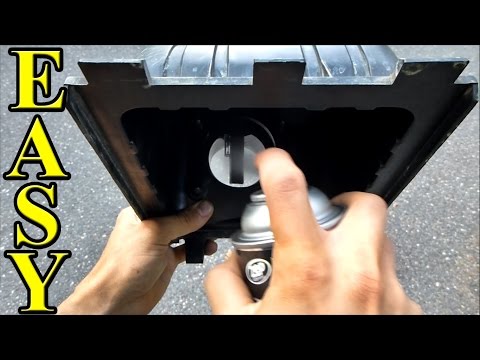
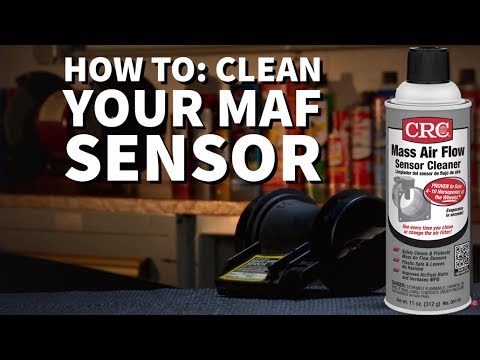
Hold the sensor body carefully, pointing the sampling port downward so loosened contaminants drain out rather than washing into the internal electronics chamber. Take a can of dedicated CRC MAF sensor cleaner and fit the plastic extension straw.
Hold the spray nozzle approximately 4 to 5 inches away from the target wires. Deliver 10 to 15 short, concentrated pulses directly across the hot wire and the ambient temperature thermistor teardrop. Avoid soaking the upper circuit board housing.
Allow the unit to sit undisturbed on a clean, lint-free surface for a minimum of 10 to 15 minutes. The specialized solvent evaporates rapidly at ambient temperature. Do not accelerate drying with compressed shop air; a 90-PSI blast from an air hose will instantly snap the platinum sensor wire.
Inspect the rubber O-ring gasket along the base. If it shows flat spots or cracking, replace it immediately; unmetered false air leaking past a dry O-ring triggers the exact same lean codes as a dirty sensor. Reinstall the sensor into the intake duct, torque the mounting screws snug to manufacturer specs (typically around 2 to 3 Newton-meters), plug the electrical harness back into place until it clicks, and reconnect the battery.
Frequently Asked Questions (FAQ)
Q1: Can I use generic electrical contact cleaner instead of specialized MAF cleaner?
A: Proceed with extreme caution. While generic electrical contact cleaners are residue-free, many use solvents engineered for durable copper switches and contacts. These harsher carrier chemicals can dissolve the internal silicone potting compounds or soften the proprietary plastic composite housing of the airflow assembly. Dedicated MAF cleaners use gentle, highly refined hydrocarbons that guarantee material compatibility with aerospace-grade sensing elements.
Q2: How often should the mass air flow sensor be cleaned on a daily-driven car?
A: Under standard driving conditions, clean the sensor every 25,000 to 30,000 miles, or ideally whenever you replace your engine's dry air filter. If you operate in severe, dusty environments or run an oiled cotton aftermarket intake filter, inspect and clean the sensor every 10,000 to 15,000 miles to prevent oil mist from baking onto the measuring wire.
Q3: Will cleaning the sensor immediately turn off my check engine light?
A: Not instantaneously. While the sensor will begin reporting accurate air mass immediately, the ECU needs to complete several drive cycles to verify that fuel trim values have stabilized within normal parameters before automatically clearing a stored P0101 trouble code. You can accelerate this by using an OBD-II scanner to manually clear pending codes and reset adaptive fuel trims back to baseline.
Precision Electronics Demand Chemical Discipline
Automotive engineering operates on tolerances that leave no room for mid-century garage shortcuts. The mass air flow sensor remains one of the most hardworking, finely calibrated electronic measuring instruments under the hood, sampling hundreds of kilograms of incoming atmospheric air every single drive.
Brake cleaner, carburetor wash, and rubbing alcohol have distinct and valuable roles across the workshop workbench, but modern engine bays punish chemical misuse. Sacrificing a $250 factory sensor to avoid buying an $11 can of dedicated cleaner makes zero financial sense. Approaching modern vehicle maintenance with proper chemical discipline protects sensitive microelectronics, guarantees correct combustion data, and keeps engine management operating precisely as factory calibration engineers designed.


