Butter Wrapper Markings Decoded: Visual Guide to Measuring Exactly 1/3 Cup
Precision in the kitchen separates balanced culinary execution from greasy failure, particularly when emulsifying pan sauces or engineering laminated pastry dough. A recent culinary showcase highlighted in a CTV More Report on chef Craig Wong's soy-butter lemongrass shrimp demonstrates how rapidly dairy fats define flavor profiles; misjudge your base fat ratio by even an ounce, and a high-heat sauce breaks immediately into pooled oil. Yet home cooks routinely stall at one specific recipe instruction: 1/3 cup of butter.
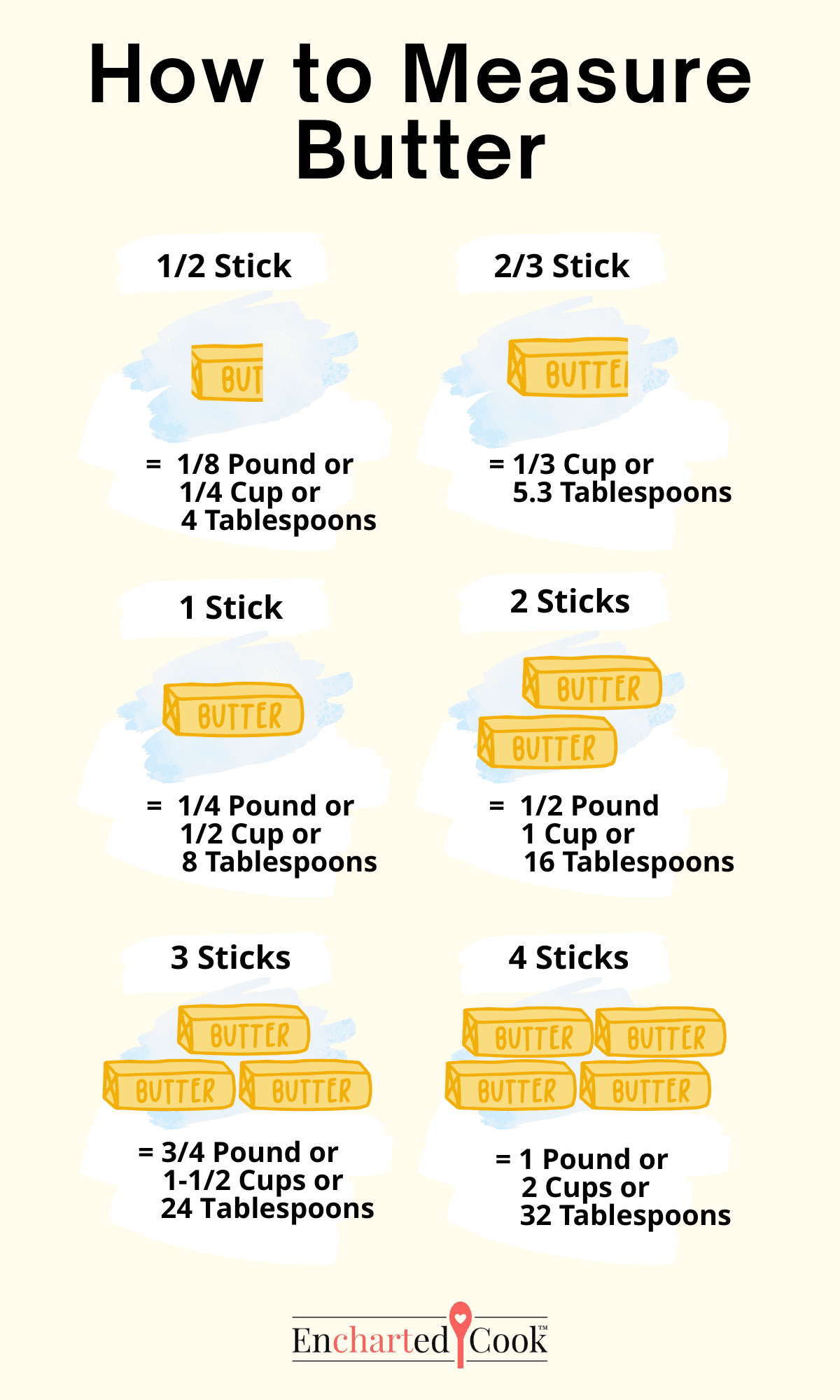
American butter sticks do not carry a clean printed line for one-third of a cup. Instead, manufacturers print tablespoon ticks that leave cooks guessing where fractional thirds fall along the block. The math, however, is straightforward once broken down into standard units.
💡 At a Glance:
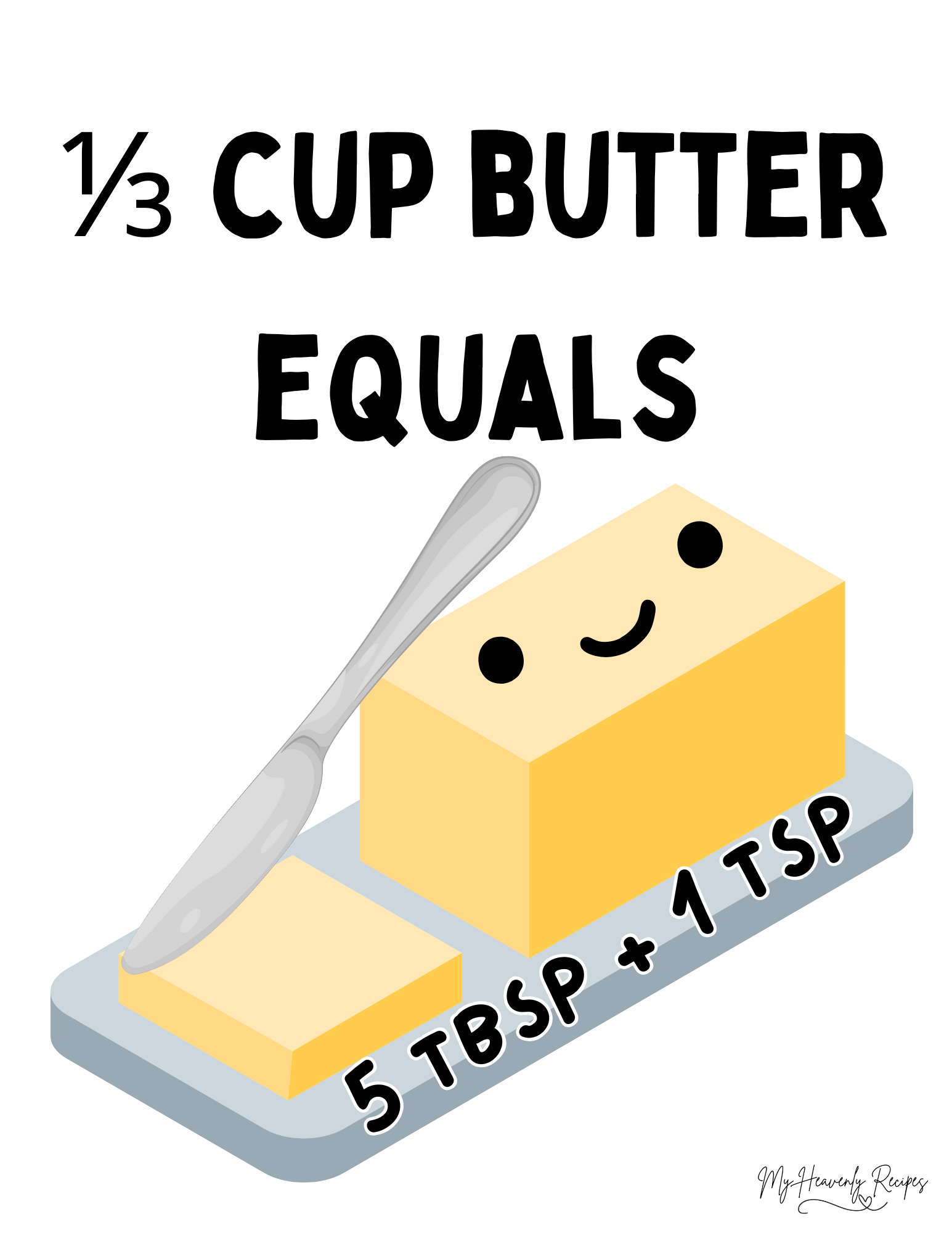
- The Exact Volume: One-third cup of butter equals exactly 5 tablespoons plus 1 teaspoon (or 5.33 tablespoons).
- The Weight Benchmark: In weight, 1/3 cup translates to 75.6 grams (2.67 ounces), which eliminates wrapper printing errors entirely.
- The Stick Reference: Because one full stick equals 8 tablespoons (1/2 cup), 1/3 cup represents two-thirds of an entire stick, or one half stick plus an extra 1 1/3 tablespoons.
The Arithmetic Behind the 16 Tablespoons per Cup Rule
American culinary math relies on an imperial volume framework that occasionally clashes with base-10 intuition. The standard baseline is the 16 tablespoons per cup rule. Because volume doubles predictably across common culinary measurements, dividing a single cup yields practical fractions: 8 tablespoons make a half cup, while 4 tablespoons make a quarter cup.
Problems arise when recipes call for thirds. Divide 16 tablespoons by 3, and the result is 5.333 tablespoons. Since measuring spoons do not feature decimal points, you convert the remaining 0.333 fraction into teaspoons. With 3 teaspoons in a single tablespoon, one-third of a tablespoon equals exactly 1 level teaspoon. To measure 1/3 cup using basic spoons, measure out 5 level tablespoons plus 1 level teaspoon.
Whether using salted or unsalted butter, this volume remains identical. The presence of roughly 1.5 percent dissolved salt in salted varieties does not measurably shift the physical displacement of the fat solids and water emulsion at standard room temperature.
Reading Butter Stick Wrapper Markings Without Costly Guesswork
Most commercial butter sold in the United States arrives in quarter-pound sticks wrapped in wax-coated or foil-lined parchment. The wrapper print divides the 4-ounce stick into eight distinct tablespoon increments. To cut 1/3 cup directly from an intact stick, locate the line marked for 5 tablespoons, then slice approximately one-third of the distance toward the 6-tablespoon marker.
Factory printing machinery introduces significant variance. Wrappers shift during high-speed packaging runs, meaning lines printed along the outer edge can sit up to 4 millimeters out of alignment with the actual dairy block inside. Relying blindly on printed lines without verifying the wrapper edges often introduces an 8 to 12 percent measurement error.
To eliminate wrapper slip, press the paper tight against both square ends of the stick before making your incision. Score the line lightly with a paring knife through the paper, peel back the wax sheet, and inspect the butter directly. If the end cap was hollow or deformed during the extrusion process, adjust your knife cut slightly inward to compensate for the missing volume.
Baking Conversion Chart: Volume vs. Weight Equivalents
Professional test kitchens calculate dairy fats by weight rather than volume. Butter contains around 80 to 82 percent milkfat, 16 to 18 percent water, and roughly 1 to 2 percent milk solids. Scooping or cutting by eye invites variability that alters baking hydration and crumb structure.
| Measurement (Volume) | Tablespoon Equivalent | Weight (Grams) | Fluid Ounces |
|---|---|---|---|
| 1/4 Cup | 4 tbsp (1/2 stick) | 56.7 g | 2.0 fl oz |
| 1/3 Cup | 5 tbsp + 1 tsp (5 1/3 tbsp) | 75.6 g | 2.67 fl oz |
| 1/2 Cup | 8 tbsp (1 whole stick) | 113.4 g | 4.0 fl oz |
| 2/3 Cup | 10 tbsp + 2 tsp (10 2/3 tbsp) | 151.2 g | 5.33 fl oz |
| 1 Cup | 16 tbsp (2 full sticks) | 226.8 g | 8.0 fl oz |
When converting European styles like Kerrygold or Plugrá, keep in mind that European butter contains 82 to 84 percent fat. While the weight remains 75.6 grams for a 1/3-cup equivalent, the higher fat-to-moisture ratio will produce a slightly crisper pastry crust or a richer emulsion than standard commodity dairy products.
Dry Measuring Cups vs. Liquid: Avoiding Common Kitchen Pitfalls
A frequent mistake during recipe prep involves mashing solid butter into dry measuring cups. Forcing chilled butter into a nested metal or plastic 1/3-cup vessel inevitably traps air pockets in the corners. You end up with 10 to 15 percent less butter than specified.
Softening butter completely to force it into a measuring cup compromises its crystalline structure. In laminated pastries, pie doughs, and cookies, butter must remain cold and solid. Creaming warm butter allows moisture to escape early, collapsing steam pockets during baking and creating dense, greasy textures. Melting butter in a liquid measuring cup introduces an opposite hazard: liquid butter expands slightly when warm, and the meniscus makes exact level readings notoriously difficult.
Using a digital scale bypasses these mechanical issues entirely. Placing a piece of parchment on a scale, hitting tare, and slicing cold butter until the display reads 76 grams guarantees exact hydration without melting, packing, or scraping stubborn fat from plastic cups.
Regional Packaging Variations: Eastern Pack vs. Western Squat
Geography affects how you view these increments across North America. East of the Rocky Mountains, standard butter adheres to the "Elgin" format: long, slender sticks measuring roughly 4.8 inches long and 1.3 inches wide. West of the Rockies, dairy plants historically used "Western stubby" or "squat" packaging: shorter, thicker blocks measuring 3.1 inches long and 1.5 inches wide.
Both shapes weigh exactly 113.4 grams (4 ounces) and contain 8 tablespoons. However, the spacing between individual tablespoon tick marks on a Western squat stick is nearly 35 percent narrower than on an Elgin stick. Slicing that extra 1/3 tablespoon increment requires greater knife control on Western sticks. A sharp, straight-edged chef knife should be used rather than a serrated blade, which tears the paper and drags cold dairy fat across the cutting board.
Frequently Asked Questions (FAQ)
Q1: Can I just round 1/3 cup of butter down to 5 tablespoons?
A1: For casual stovetop cooking or pan-frying, rounding down to 5 tablespoons won't harm your dish. In pastry baking, pie crusts, and delicate sponge cakes, dropping the remaining teaspoon cuts fat content by roughly 6 percent, which causes dry textures, premature gluten development, or reduced spreading.
Q2: How many fluid ounces of butter are in 1/3 cup?
A2: There are exactly 2.67 fluid ounces in 1/3 cup of butter. Fluid ounces measure liquid volume rather than dry mass. If you are weighing the butter on a dry kitchen scale, look for 2.67 dry ounces (roughly 76 grams).
Q3: How much of a single stick is 1/3 cup?
A3: One-third cup equals precisely two-thirds (66.7%) of a standard 4-ounce stick. A whole stick is 1/2 cup (8 tablespoons), so cutting away two-thirds leaves 2 tablespoons and 2 teaspoons behind.
Culinary Precision in Daily Kitchen Practice
Mastering fractional volume conversions eliminates hesitation at the prep station. Standard dairy packaging may never include a designated line for 1/3 cup, but memorizing the 5 tablespoons plus 1 teaspoon rule ensures seamless execution when working strictly with measuring spoons.
For repeatable success across demanding baking formulas and high-heat pan sauces, rely on weight rather than wrapper ink. Setting your kitchen scale to 76 grams removes the guesswork of shifted wrappers, regional packaging formats, and packed measuring cups, ensuring your dishes bake and reduce exactly as the recipe developer intended.