Consumer Watchdogs Target Drug-Free Pain Patches: The 2026 Signal Relief Verdict
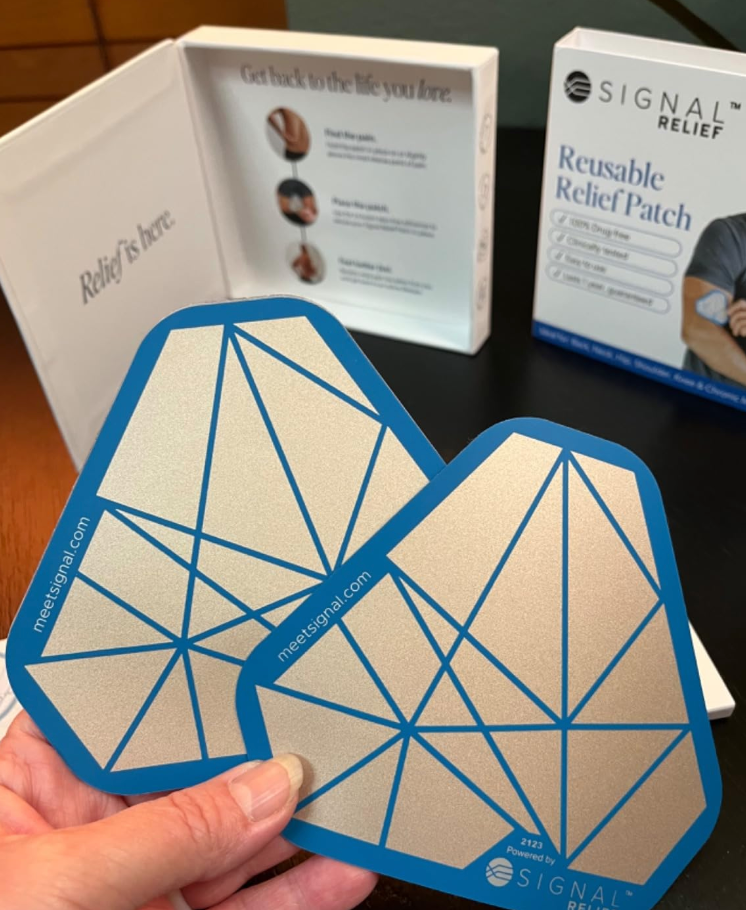
Online advertisements promise immediate, non-invasive relief from chronic agony without pills, cables, or batteries. The product at the center of this social media blitz is Signal Relief, a flexible, triangular patch marketed as a breakthrough in nanotechnology pain relief. But as consumer complaints accumulate regarding aggressive digital subscription models and denied warranty claims, independent evaluators have stepped in to scrutinize the device's technical claims. A major ConsumerLab.com Report evaluated whether these drug-free pain patches deliver genuine physiological intervention or simply repackage the power of suggestion at premium retail prices.
The tension between bold marketing and biological reality has made the device a focal point for consumer protection groups. Shoppers seeking alternatives to opioids or nonsteroidal anti-inflammatory drugs (NSAIDs) routinely pay between $120 and $170 for a single reusable patch, expecting a permanent solution to musculoskeletal pain. Instead, public records from watchdog agencies reveal an escalating pattern of customer refund complaints, disputed restocking fees, and dermatological side effects.
📌 Key Takeaways:
- Independent Testing: Laboratory analyses confirm the patch contains microscopic dielectric capacitors, but objective clinical trials proving pain reduction beyond a placebo effect remain negligible.
- Billing Disputes: Regulatory registries document widespread frustration surrounding return shipping costs and restrictive refund policies that disqualify opened adhesive packs.
- Skin Safety Concerns: Users report localized contact dermatitis from prolonged use of the proprietary adhesive strips, offsetting the benefits of the non-chemical premise.
The Marketing Blitz Behind Neuro-Capacitive Pain Claims
Signal Relief’s rapid rise began on video-sharing platforms and lifestyle blogs. Promoted heavily to demographics battling lower back stiffness, arthritis, and post-surgical discomfort, the product relies on a technical explanation termed "neuro capacitive coupling." The company claims its patented multi-layer array absorbs and reroutes aberrant electrical noise traveling along peripheral nerve pathways, interrupting pain messages before they register in the brain.
The pitch appeals directly to consumers weary of prescription side effects or liver damage from over-the-counter analgesics. Unlike traditional transcutaneous electrical nerve stimulation (TENS) machines, this wearable pain device requires no charging, produces no electrical tingling, and hides completely beneath everyday clothing. Company materials highlight that the device works purely through passive biophysical principles, describing it as an everlasting shield against inflammatory distress.
Yet neurobiology researchers caution that human nerve conduction does not mirror loose wiring in household electronics. Action potentials inside human axons propagate through electrochemical ion exchange, specifically sodium and potassium channels across cellular membranes. While metallic micro-particles can influence ambient radiofrequency fields, medical consensus holds that passive exterior capacitance lacks the field strength required to disrupt depolarization within deep somatic nerves.
ConsumerLab Findings and the Gap in Clinical Evidence for Pain Patches
Independent evaluators have systematically pulled apart the device's scientific assertions. Testing published by ConsumerLab raised fundamental doubts about whether Signal Relief operates as an active therapeutic instrument. Physical teardowns confirm that the patch consists of thin polyimide films encasing a matrix of copper and dielectric particles. Mechanically, it functions as an unpowered capacitive sheet, similar to materials used to shield sensitive microchips from external electromagnetic interference.
Clinical verification from rigorous double-blind trials is conspicuously absent from major peer-reviewed medical databases. While the manufacturer points to small company-sponsored observational assessments, independent researchers note that these internal studies routinely lack sham controls. When patients with chronic pain are handed an expensive, high-tech patch and told it will quiet their nerves, subjective improvement rates routinely hit 30% to 40% purely through expectancy bias.
Without rigorous, randomized, double-blind trials conducted by unaffiliated academic medical centers, health analysts classify the device's performance as indistinguishable from an elaborate placebo. The physical pressure of an applied patch can also stimulate large-diameter tactile nerve fibers, activating the gate control theory of pain through simple light touch rather than complex electrical cancellation.
| Core Feature | Manufacturer Claims | Verified Testing & Consumer Records |
|---|---|---|
| Mechanism of Action | Neuro capacitive coupling intercepts electrical pain signals | Passive capacitive substrate; no demonstrated cellular nerve modulation |
| Retail Pricing | One-time investment of $120, $170; lasts multiple years | Recurring costs of $15, $25 for proprietary double-sided adhesive refills |
| Clinical Proof | Patented technology validated by user trials and clinical white papers | Zero independent, randomized, placebo-controlled trials in indexed journals |
| Return Policy | Risk-free 30-day money-back guarantee | Restricted exclusions; customer-paid return postage and non-refundable fees |
Mounting Disputes: Better Business Bureau Ratings and Return Policies
Discontent outside of laboratory evaluations centers squarely on business practices. An analysis of consumer protection databases, consumer alert boards, and Better Business Bureau ratings shows clear frustration with the company's return process. Customers seeking refunds under the advertised 30-day trial frequently encounter strict administrative hurdles.
Buyers report that while the main silicone-and-copper patch can be sent back, the accompanying medical adhesive packs are classified as non-refundable sanitary goods. Shipping costs, processing fees, and mandatory return authorization tracking numbers often whittle down the final refund by $25 to $40. For older adults living on fixed incomes, this fine print turns an ostensibly risk-free trial into an expensive gamble.
Digital marketing practices have also drawn scrutiny. Several buyers described being enrolled in automatic replenishment shipments for medical adhesive strips after unintentionally clicking bundled checkout prompts. Resolving these recurring charges requires navigating automated customer service scripts, leading many to seek chargebacks through their credit card issuers.
Physical Limitations and Adhesive Skin Irritation
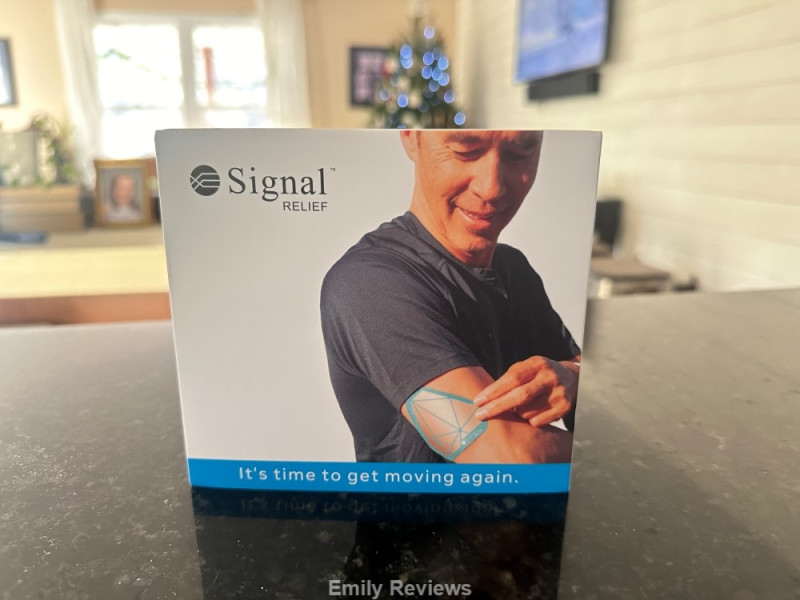
Beyond customer service battles, the physical usability of the patch poses real hurdles for everyday wearers. The patch requires direct contact with the body to function as intended, relying on proprietary double-sided medical adhesives to stay fixed to shoulders, knees, or spinal joints.
Dermatological reports collected across patient forums highlight frequent adhesive skin irritation. Users with thin, sensitive, or aging skin frequently develop erythema, itchy welts, or superficial epidermal peeling after wearing the patch for several consecutive hours. While the device does not rely on harsh synthetic chemical agents, the occlusive nature of strong adhesives traps sweat against the dermal layer, causing localized contact dermatitis.
Mobility adds another complication. Sweating during light yard work or exercise rapidly loosens the adhesive backing, causing the patch to shift or peel away from the joint. Because the manufacturer insists that the patch must be positioned precisely over specific nerve junctions to produce results, minor displacement nullifies any reported effect. Many buyers find that keeping the patch in place requires wide wraps of athletic tape, undermining the discreet utility highlighted in advertisements.
Untangling the Science: What Consumers Should Know Before Buying
Determining whether Signal Relief is a genuine therapeutic tool or an overpriced novelty requires evaluating how it fits alongside proven pain management strategies. The device does not inject toxic chemicals, deliver thermal burns, or emit harmful radiation. It is physically safe. But the risk for patients with chronic pain is practical: spending substantial sums on unproven physics while delaying evidence-based medical interventions.
If you are considering purchasing this device, separate marketing promises from verified mechanics:
- Ideal Candidates for Trial: Patients dealing with persistent muscular or joint ache who have failed to find relief with conservative physical therapies, cannot take NSAIDs due to renal or gastrointestinal ulcers, and possess the disposable income to absorb non-refundable shipping and supply fees if the patch proves ineffective.
- Who Should Avoid It: Anyone managing diagnosed structural nerve compression (such as advanced cervical radiculopathy or severe spinal stenosis), consumers with known allergies to industrial medical adhesives, and shoppers expecting a guaranteed 100% money-back refund on opened packages.
True chronic pain management demands multifaceted care: physical rehabilitation, targeted strength work, guided pharmacology, and clinical procedures overseen by licensed medical providers. Relying entirely on passive capacitive foils to turn off systemic neuropathic pain signals oversimplifies the human nervous system.
Frequently Asked Questions (FAQ)
Does Signal Relief contain any active pharmaceutical ingredients?
No. The patch contains zero drugs, herbs, or transdermal medications. It uses thin metallic films and dielectric particles to influence capacitive fields rather than absorbing chemicals into the bloodstream.
Can the patch be worn safely near pacemakers or implanted electronic medical hardware?
Because the device is passive and lacks internal batteries, it emits no current. However, individuals with implanted cardiac defibrillators or neurostimulators must consult their attending cardiologist before placing capacitive materials over their chest or spine.
How long do the reusable patches typically hold up with regular use?
The triangular core patch can endure for several years if washed with mild soap and handled gently. The double-sided adhesive strips, however, must be discarded after one or two applications, creating ongoing supply costs for consistent users.
Evaluating Wearable Pain Relief in 2026
Consumer advocacy evaluations have demystified Signal Relief's high-tech claims. The patch represents an interesting application of passive capacitive materials, but it lacks the empirical scientific backing needed to validate its sweeping neurological promises. When evaluating expensive, non-invasive pain solutions online, the burden of proof rests on the manufacturer. Until rigorous, sham-controlled clinical trials corroborate that this device consistently outperforms the human mind's innate placebo response, buyers should treat aggressive digital marketing with healthy skepticism and read every line of a warranty before purchasing.


