Does Earth Really Have More Than One Moon? The Truth Behind Viral Claims
Every few months, headlines announce that astronomers have discovered a "second moon" circling our planet, setting off social media frenzies and late-night stargazing alerts. The astronomical reality is far more nuanced: Earth has exactly one permanent natural satellite, the Moon, which has anchored our tides and axial tilt for 4.5 billion years. Yet according to an ABC News report on quasi-moons, the space around our planet is frequently occupied by temporary companions, cosmic hitchhikers, and orbital illusionists that challenge textbook definitions of what counts as a moon.
📌 Key Takeaways:
- The Definitive Count: Earth possesses exactly one permanent natural satellite, while all other objects labeled "second moons" are transient asteroids trapped in passing orbital resonances.
- Orbital Mechanics: Objects like mini-moons undergo temporary gravitational capture, whereas quasi-satellites orbit the Sun rather than Earth, creating an optical illusion of co-orbiting.
- Scientific Utility: These low-velocity near-Earth asteroids serve as prime targets for sample-return missions, offering accessible insights into the early solar system without deep-space travel.
Why Social Media Keeps Discovering "Second Moons"
Automated sky surveys are reshaping modern observational astronomy. Facilities like the Asteroid Terrestrial-impact Last Alert System (ATLAS) in Hawaii and South Africa, alongside the Pan-STARRS telescopes on Haleakalā, sweep millions of square degrees of sky each night. They log faint space rocks down to 22nd magnitude that went unnoticed a generation ago. When an algorithm flags a tiny chunk of rock whose trajectory briefly matches Earth's path, university press releases quickly convert technical ephemerides into viral headlines.
The public reaction follows a predictable pattern. Amateurs pull out backyard binoculars expecting to see a twin orb glowing beside the crescent Moon, only to learn that these visitors are faint specks requiring large-aperture CCD cameras to detect. The sensationalism obscures the genuine orbital mechanics at play: our solar neighborhood is not an empty vacuum containing two isolated bodies, but a dynamic web of gravitational perturbations where small bodies constantly drift in and out of Earth's neighborhood.
Mini-Moons: When Asteroids Get Caught in Earth's Gravity
A true mini-moon occurs through temporary gravitational capture. When a near-Earth asteroid approaches our planet at a very low relative speed, typically under 1 kilometer per second, it crosses into Earth's Hill sphere, the region where planetary gravity overpowers the gravitational pull of the Sun. For a span lasting from several weeks to nearly two years, the interloper enters a geocentric Earth orbit.
These visits are brief. The asteroid loops around Earth in an unstable, chaotic trajectory before being tugged back into heliocentric space by solar gravity and lunar tides. The first confirmed mini-moon was 2006 RH120, a 3-meter boulder that orbited Earth from September 2006 to June 2007. More recently, 2020 CD3 spent nearly three years in an erratic geocentric path before escaping in March 2020. In late 2024, the asteroid 2024 PT5, measuring approximately 10 meters across, executed a roughly 57-day horseshoe-shaped flyby around our planet, sparking a fresh wave of second-moon coverage before escaping back into an orbit around the Sun.
Quasi-Satellites and the Illusion of Lunar Companionship
Quasi-moons operate under a completely different physical mechanism. Unlike mini-moons, a quasi-satellite is not gravitationally bound to Earth. Its primary gravitational master remains the Sun. It occupies a 1:1 orbital resonance, completing one revolution around the Sun in precisely the same amount of time as Earth: approximately 365.25 days.
Because its orbit has a slightly different eccentricity and inclination, the asteroid appears to circle Earth when plotted from a geocentric viewpoint. This relative motion produces a wide, looping path known as a horseshoe orbit. As reported by Northeastern Global News, astrophysicists have identified at least six quasi-moons currently sharing Earth's orbital period. If Earth were removed from the solar system tomorrow, a mini-moon's path would be altered fundamentally, but a quasi-satellite would continue circling the Sun largely unbothered on its original trajectory.
| Orbital Classification | Primary Gravitational Anchor | Typical Duration | Prominent Example |
|---|---|---|---|
| Permanent Natural Satellite | Earth | Billions of years | The Moon (Luna) |
| Temporary Satellite (Mini-Moon) | Earth (Temporary capture) | Weeks to ~3 years | 2020 CD3, 2024 PT5 |
| Quasi-Moon (Quasi-Satellite) | The Sun (1:1 resonance) | Decades to centuries | 469219 Kamoʻoalewa |
| Trojan Asteroid | Sun-Earth Lagrange Points | Thousands of years | 2010 TK7, 2020 XL5 |

The Case of Kamoʻoalewa: A Lunar Ejection in Disguise
Among all known co-orbital objects, asteroid 469219 Kamoʻoalewa stands apart. Discovered in April 2016 by Pan-STARRS 1 atop Haleakalā, this 40-to-100-meter body travels in a synchronized dance with Earth that has persisted for roughly a century and will continue for centuries more. It approaches no closer than about 9 million miles (14.5 million kilometers) from Earth, roughly 38 times the distance between Earth and the Moon.
The real surprise emerged during physical characterization studies conducted at the Large Binocular Telescope in Arizona. Spectroscopic analysis revealed that Kamoʻoalewa does not resemble typical carbonaceous or silicaceous near-Earth asteroids. Its reflectance spectrum matches lunar silicates returned by NASA's Apollo 14 mission almost perfectly. Dynamical simulations published by celestial mechanics specialists indicate that Kamoʻoalewa was likely blasted off the lunar surface during an energetic impact millions of years ago, escaping the Moon's gravity and settling into a stable quasi-satellite resonance. In a literal sense, Earth's most stable quasi-satellite is an exiled piece of our original Moon.
Lagrange Points and the Hidden Dust Moons
Beyond distinct rocky bodies, celestial mechanics dictates regions of gravitational equilibrium where matter naturally collects. The Sun-Earth system features five Lagrange points where gravitational attractions and orbital centrifugal forces balance out. The L4 and L5 points, situated 60 degrees ahead of and behind Earth in its orbital path, serve as gravitational collection zones.
Two Earth Trojan asteroids have been verified in these stability pockets: 2010 TK7, measuring roughly 300 meters across, and 2020 XL5, a kilometer-wide rock discovered in 2020 that will hold its L4 position for at least 4,000 years. Closer to home, the Earth-Moon system boasts its own L4 and L5 points. In the late 1950s, Polish astronomer Kazimierz Kordylewski detected faint, diffuse dust clouds lingering in these regions. The presence of the Kordylewski clouds was confirmed by polarimetric imaging in 2018. While far too tenuous to be called true moons, these enormous dust swarms represent another layer of orbital mass permanently accompanying our planet.
Why Mining and Exploring Mini-Moons Matters
The study of temporary satellites is rapidly transitioning from observational astronomy into applied aerospace engineering. Propelling a spacecraft out of Earth's deep gravity well to rendezvous with a standard near-Earth asteroid demands significant fuel expenditure (delta-v). Mini-moons and quasi-satellites provide a low-energy shortcut. Because their orbital velocities relative to Earth are remarkably low, spacecraft require substantially less propellant to match orbits, land, and collect samples.
China's Tianwen-2 mission targets Kamoʻoalewa for an automated sample return. Retrieving pristine material from this co-orbital body will confirm whether it is an impact fragment ejected from Giordano Bruno crater on the lunar far side. Beyond planetary geology, private space ventures evaluate these mini-moons as proof-of-concept testing grounds for in-situ resource utilization (ISRU), the practice of mining water ice, iron, and volatile compounds directly in space to support future orbital infrastructure.
Frequently Asked Questions (FAQ)
Q1: Does Earth have a second moon visible in the night sky right now?
No. Earth has only one permanent natural satellite: the Moon. Objects referred to as mini-moons or quasi-satellites are small, dim asteroids requiring specialized research telescopes to observe; none are visible to the unaided human eye.
Q2: What is the difference between a mini-moon and a quasi-moon?
A mini-moon is an asteroid pulled directly into a temporary geocentric orbit by Earth's gravity, behaving as a true satellite for a brief period. A quasi-moon orbits the Sun in a 1:1 orbital resonance alongside Earth; it is not gravitationally bound to our planet, though it appears to circle it from our perspective.
Q3: How many moons do other planets in our solar system have?
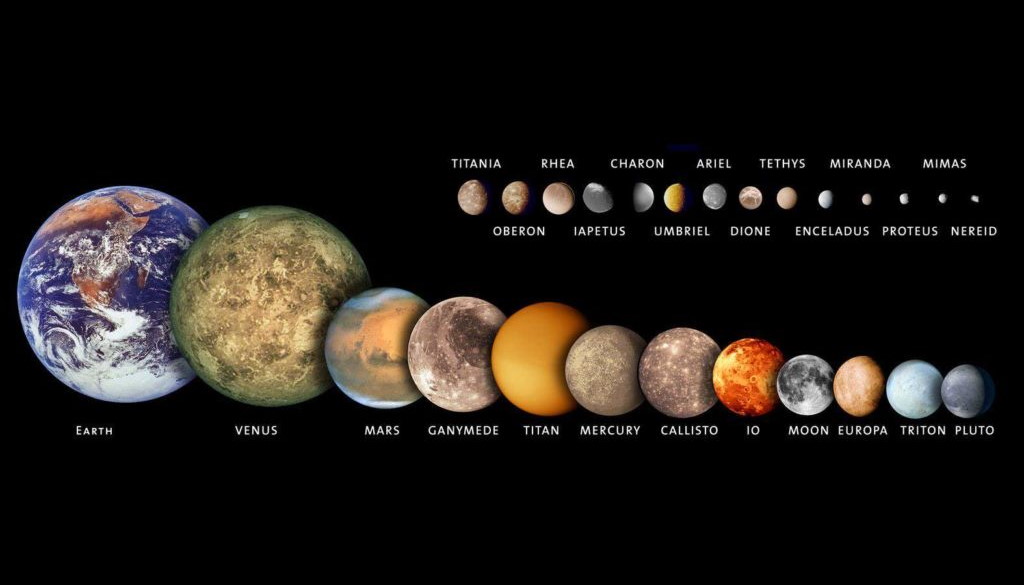
Earth's single moon is an anomaly among the outer planets but typical for the inner rocky planets. Mercury and Venus have zero moons, while Mars has two tiny captured asteroids (Phobos and Deimos). By contrast, gas giants host dozens: Jupiter has 95 recognized moons, while Saturn leads the solar system with 146 confirmed satellites.
The Changing Boundaries of Earth's Orbit
The standard textbook question, "How many moons does Earth have?", still carries a clear answer: exactly one. The Moon remains our only permanent, massive natural satellite. Yet framing Earth as an isolated sphere flanked by a single companion misses the dynamic reality revealed by modern wide-field observatories.
Our planet moves through an active field of interplanetary material. At any given moment, faint near-Earth asteroids are making brief passes through our gravitational well, co-orbital bodies are matching our pace around the Sun, and ancient dust clouds are drifting through gravitational null points. As survey observatories grow more sensitive, astronomers will catalog dozens of these fleeting companions, proving that Earth's orbital neighborhood is far more crowded than human eyes can see.