Examining the Quotes: What JD Vance Actually Said About Faith and Divine Calling in 'Communion'
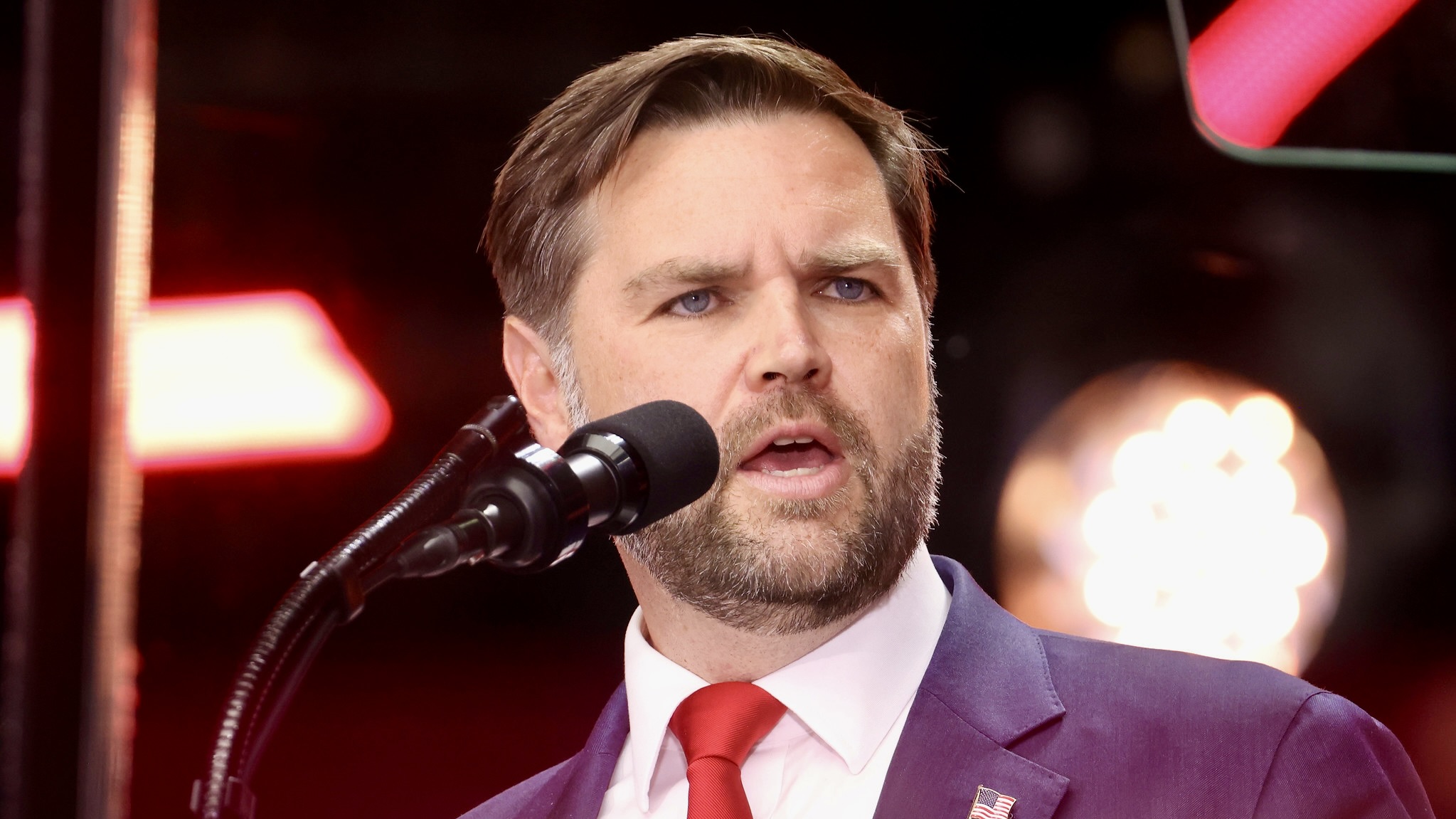
Viral posts across social media ignited a fierce theological argument this month, claiming Vice President JD Vance explicitly wrote "God chose me" to redeem American politics in his new spiritual memoir, Communion. The assertion ricocheted across cable networks, drawing immediate scrutiny from secular commentators and Christian leaders alike. As critics picked apart the book's ideological underpinnings, The Atlantic Report highlighted the intense cultural friction surrounding Vance’s self-described path from Appalachian skepticism to high-office Catholic traditionalism.
The controversy centers on whether the junior statesman crossed the delicate line between private spiritual devotion and messianic self-appointment. Reading the actual passages reveals a more complicated reality. While the text never contains the crude, four-word soundbite circulating online, Vance outlines an unapologetically providential worldview that treats personal political power as a weight assigned by divine will rather than mere secular ambition.
📌 Key Takeaways:
- The Fact Check: Vance never wrote the explicit sentence "God chose me" in Communion; viral clips flattened his complex theological arguments into an easily weaponized soundbite.
- The Direct Quotes: The memoir argues that "God is always trying to speak to us" through adversity, framing political leadership as an inescapable moral cross rather than personal glory.
- The Voter Impact: The book cements Vance's alignment with traditionalist Catholic intellectuals while navigating the skeptical theological terrain of mainstream evangelical voters.
The Viral Claim: Did JD Vance Declare a Divine Mandate?
Social media feeds flattened hundreds of pages of dense intellectual reflection into a single inflammatory quote. The phrase "God chose me" trended widely following the mid-June release of Communion, with detractors framing the memoir as evidence of unrestrained hubris. Commentators argued that Vance viewed his rapid rise from freshman senator to vice president as an anointed crusade.
A rigorous review of the full text disproves the viral claim. Vance never writes that God personally selected him over others to lead the country. Instead, the rumor arose from a misreading of a chapter detailing his discernment process during the 2024 campaign trail. In that passage, Vance discusses the classical Christian doctrine of vocation, suggesting that every believer occupies an assigned station within history that demands moral responsibility.
Online summaries stripped Vance’s writing of its traditional Catholic vocabulary. By turning an Augustine-inspired meditation on duty into a blunt assertion of divine entitlement, online partisans produced an effective caricature. Vance’s actual argument is subtler, though no less provocative for readers who favor a strict divide between faith and statecraft.
Inside ‘Communion’: Examining Vance’s Actual Faith Quotes
The text of Communion functions as a sequel to Hillbilly Elegy, shifting its gaze from sociology to sacramental theology. Vance documents his 2019 conversion to Catholicism, citing Saint Augustine, René Girard, and Peter Thiel as key intellectual milestones. Rather than claiming unique celestial favoritism, Vance describes an agonized search for internal discipline amid political chaos.
In an interview with the Christian Broadcasting Network following the release, Vance expanded on the central thesis of the memoir, observing that "God is always trying to speak to us" through everyday suffering, family collapse, and civic breakdown. The challenge, according to Vance, is quieting personal pride long enough to hear that guidance. In the memoir, he writes:
"We mistake our ambitions for our callings. True providence does not hand you a crown to glorify your ego; it hands you an obligation that terrifies your comfort. If grace placed me in the arena, it did so to test my obedience to truth, not to validate my righteousness."
This passage sits at the heart of the misunderstanding. Vance operates within a providential worldview where events do not occur by random coincidence. To secular ears, describing a political post as an assignment from grace sounds like an arrogant assertion of divine election. Within Christian scholastic traditions, however, it represents a standard expression of providential stewardship.
Media Fallout and the Critical Response Across Major Publications
The release of Communion opened a fierce debate across the American press. Major media outlets split dramatically over whether Vance’s prose represented genuine spiritual reflection or a calculated ideological manifesto for post-liberal conservatism. While conservative outlets embraced the memoir as an honest defense of Christian public life, national publications questioned the emotional and political motives running through the pages.
On June 18, 2026, Vox argued that the memoir exposed Vance’s deep-seated resentments against secular institutions. The following day, The New Yorker characterized the volume as a contemptuous conversion account, asserting that Vance weaponized religious tradition to settle scores with cultural elites. By the weekend, The New York Times published a symposium featuring three opinion writers who diagnosed Vance as wrestling with deep personal anxiety and unresolved class trauma.
| Publication | Publication Date | Primary Editorial Angle |
|---|---|---|
| The Atlantic | June 17, 2026 | Critiques Vance's spiritual rationalizations as an attempt to retroactively sanctify his political evolution. |
| Vox | June 18, 2026 | Highlights the unintended revelations about the author's internal insecurity and distrust of secular modernity. |
| The New Yorker | June 19, 2026 | Frames the text as a pugilistic, contemptuous attack disguised as traditional Catholic piety. |
| The New York Times | June 20, 2026 | Analyzes Vance's prose as reflecting an anxious personality trying to square raw ambition with theological submission. |
| CBN News | June 22, 2026 | Profiles Vance’s testimony as an authentic, encouraging example of modern Christian faith thriving in high public office. |
Catholic Conversion Versus the Evangelical Coalition
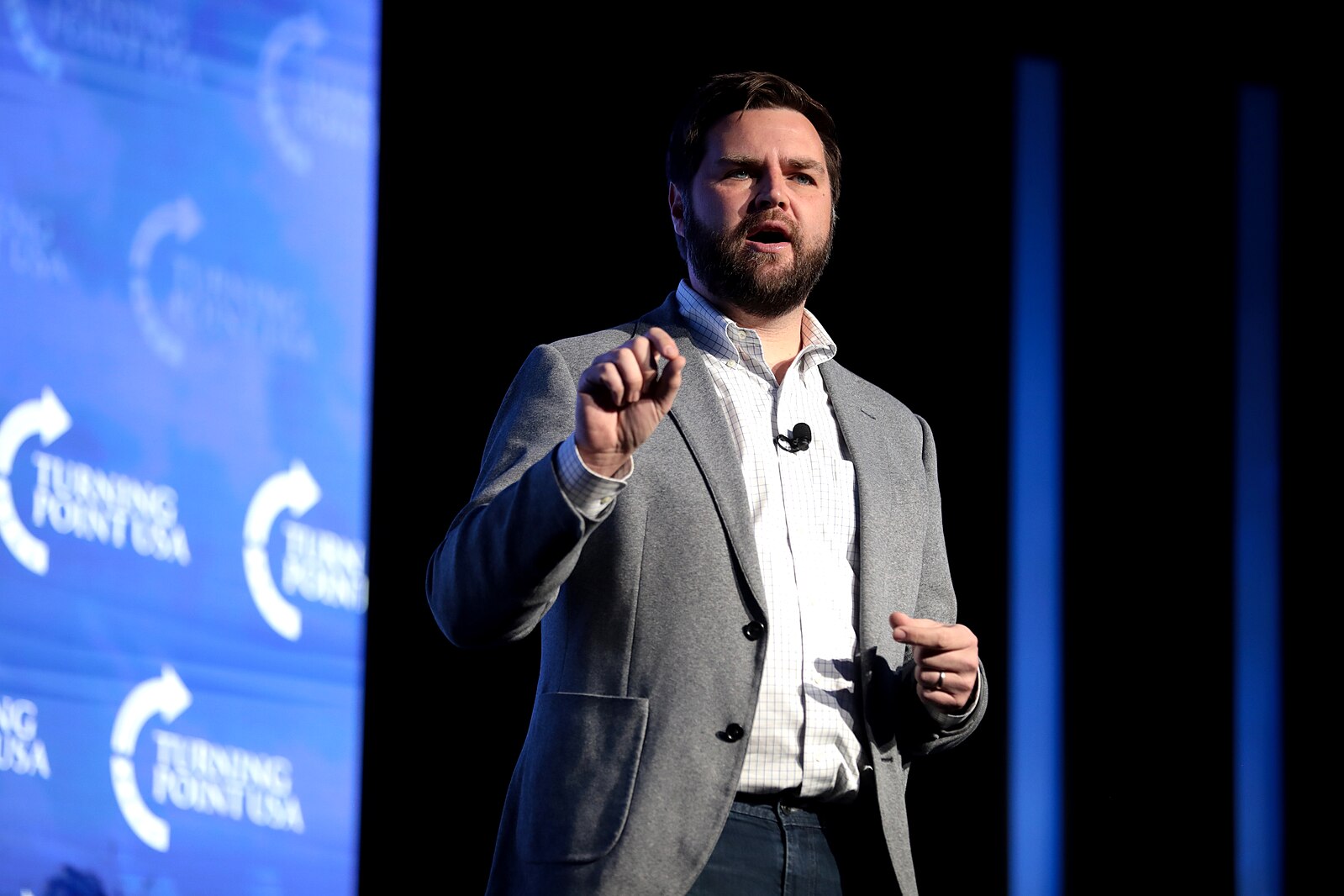
Vance’s religious journey creates a unique puzzle for the conservative movement. Raised amid the unstructured folk Protestantism of southwest Ohio and eastern Kentucky, his formal entry into the Catholic Church in 2019 placed him within a distinct intellectual orbit. He embraces a post-liberal Catholic philosophy that views individualist free markets with skepticism and champions state action to protect family life.
This creates natural friction with traditional Republican voting blocs. White evangelical Protestants make up roughly 30% of the conservative electorate, relying on personal conversion narratives and biblicist theology. Vance’s writing relies heavily on sacramental realism, papal encyclicals, and monastic traditions that can feel foreign or suspect to low-church Protestant communities.
Recognizing this gap, Vance uses Communion to bridge the divide. He frequently invokes his grandmother’s fiery, plainspoken faith alongside passages from Saint Thomas Aquinas. The result is an attempt to reassure evangelical voters that his moral convictions mirror their own, even if his liturgical home features incense and Latin liturgy.
Political Theology: How Vance Blends Providence and Power
The central controversy of Communion is political theology. American political rhetoric has always invoked God, from Abraham Lincoln’s second inaugural address to Martin Luther King Jr.’s letters. Vance operates in that stream, but his tone reflects the sharper edge of contemporary conservative thought.
Vance rejects the modern consensus that religious conviction should remain strictly private. He contends that a statesman who divorces policy from eternal moral truths inevitably surrenders governance to technocratic drift. In chapter seven, he argues that political power is inherently moral:
"To act as if policy is morally neutral is cowardice. You either govern according to a vision of the good, or you surrender the field to whoever holds the rawest levers of financial power. Faith does not grant me infallibility, but it demands that I do not pretend justice is an arbitrary social consensus."
This stance alarms secular observers who see it as an open embrace of Catholic integralism, where civil law bends to church teaching. To his supporters, it marks a courageous rejection of secular compromise. By asserting that moral law supersedes bureaucratic process, Vance places himself at the vanguard of a broader philosophical realignment on the American right.
Frequently Asked Questions (FAQ)
Q1: Did JD Vance write "God chose me" in his memoir 'Communion'?
No. Vance never uses the phrase "God chose me" in the book. The quote went viral as an oversimplified summary of his reflections on divine providence, Christian duty, and personal vocation.
Q2: When did JD Vance convert to Catholicism?
Vance was baptized and received into the Roman Catholic Church in August 2019 at the Priory of St. Gertrude in Cincinnati, Ohio, choosing Saint Augustine as his confirmation patron.
Q3: What does Vance mean when he says "God is always trying to speak to us"?
In his interview with CBN and throughout Communion, Vance explained that God reveals moral truths and personal responsibilities through adversity, family struggles, and cultural challenges, requiring humility to listen.
Q4: Why has 'Communion' drawn criticism from both secular and religious writers?
Secular critics view his integration of faith and power as a threat to pluralistic governance, while some religious writers argue that the memoir uses theological arguments to justify partisan political battles.
The Evolving Role of Faith in Vance’s Political Horizon
The uproar over Communion reveals the deep anxieties surrounding religion in contemporary public life. As Vance navigates executive governance, his spiritual writings will serve as an intellectual roadmap for his allies and a catalog of grievances for his critics. The memoir demonstrates that his faith is not an electoral accessory adopted for convenience, but an organizing philosophy that dictates how he views authority, family, and the nation.
Whether voters view Vance’s providential reflections as profound devotion or calculated ideology depends largely on their own cultural vantage point. The text does not claim an exclusive heavenly mandate, but it makes one thing certain: JD Vance has no intention of softening his theological convictions to satisfy the secular norms of Washington.