Fact Check: What Did Rob Reiner Actually Say About Charlie Kirk Amid Trump's Backlash?
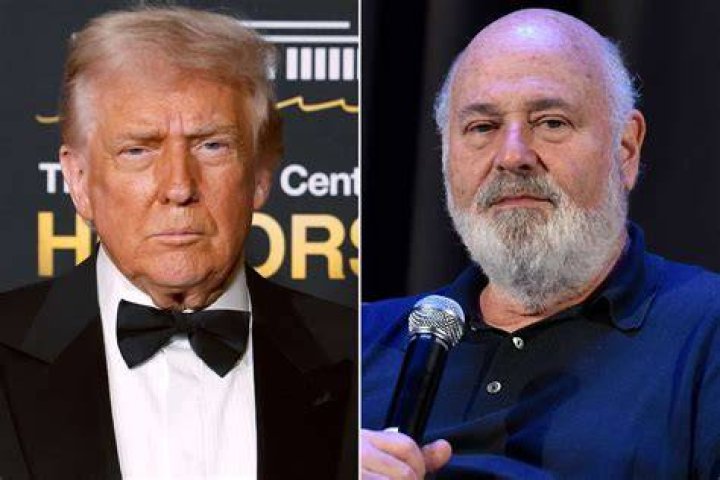
Hours after the shocking killing of veteran filmmaker and political activist Rob Reiner in mid-December 2025, Donald Trump ignited an intense social media controversy with incendiary Truth Social comments mocking the slain Hollywood director. The reaction was immediate. Lawmakers, cultural commentators, and media figures across the political spectrum issued swift bipartisan condemnation, rebuking the former president for attacking a homicide victim before investigators even concluded preliminary forensics. Amid the fallout, critics surfaced past statements from Reiner regarding conservative commentator Charlie Kirk, presenting them as a direct foil to Trump's rhetoric.
As documented in an Axios Report, public scrutiny quickly centered on how Reiner handled intense disagreements with his fiercest ideological rivals. Examining the public record reveals a sharp divergence in conduct: while Trump leveraged a sudden tragedy to settle old scores, Reiner repeatedly drew boundaries between aggressive political opposition and basic human decency when right-wing figures faced threats of violence.
📌 Key Takeaways:
- The Core Finding: Rob Reiner repeatedly rejected political violence against ideological adversaries, including conservative commentator Charlie Kirk, insisting that sharp policy disagreements should never translate into celebrated harm.
- The Spark: Donald Trump's inflammatory Truth Social post mocking Reiner immediately after the director's killing triggered widespread blowback from both Democrats and mainstream Republicans.
- The Rhetorical Contrast: Critics and journalists highlighted Reiner's previous measured public demeanor toward conservative figures to underscore the erosion of norms in current presidential-level commentary.
The Firestorm Over Trump's Truth Social Post
The tragedy unfolded on December 15, 2025, when news broke that Rob Reiner, the acclaimed director of A Few Good Men and The Princess Bride, had been killed. Reiner spent decades serving as an influential liberal fundraiser and vocal critic of MAGA politics. While Hollywood and political leaders posted tributes honoring his creative career and philanthropic work, Donald Trump struck an entirely different note.
Posting to Truth Social within hours of the announcement, Trump launched an unrestrained political attack on the deceased filmmaker. Rather than offering customary condolences to the family, Trump derided Reiner’s longstanding opposition to his movement, characterizing the director through hostile labels and mocking his legacy. The response was brutal and immediate. Lawmakers from both chambers of Congress criticized the post as fundamentally unbefitting of leadership. Veteran conservative commentators expressed disbelief, pointing out that weaponizing the murder of an American icon crossed established boundaries of political decency.
The White House faced mounting questions from the press corps during briefings, with reporters demanding to know whether such remarks represented acceptable public discourse. While Trump's staunchest online defenders attempted to downplay the language as characteristic defiance against Hollywood elites, the post alienated moderate allies and unified opponents.
The Verified Record: What Rob Reiner Said About Charlie Kirk
As the debate intensified, observers began digging into Reiner’s media appearances and online commentary to examine how he handled high-profile conservative targets like Turning Point USA founder Charlie Kirk. Online rumors claimed Reiner once celebrated violence against conservative pundits. A comprehensive fact check proves those claims false.
When discussions around Kirk surfaced during heated political debates over campus speech and national polarization, Reiner maintained sharp, uncompromising policy critiques. He openly described Kirk’s rhetoric as dangerous to democratic norms. Yet Reiner repeatedly maintained a clear distinction between attacking an ideology and wishing violence upon an individual. During public panels and podcast appearances discussing threats against conservative figures, Reiner emphasized that physical harm against conservative activists was completely unacceptable.
Reiner's public record shows he explicitly rejected the normalization of political violence across multiple broadcast segments. He argued that cheering for the assault or assassination of ideological opponents would accelerate the collapse of American civic life. When right-wing commentators faced security scares, Reiner refused to amplify vitriol, framing ideological battles as contests to be won at ballot boxes rather than through street violence or public celebration of tragedy.
A Direct Rhetorical Contrast: Statements, Timing, and Fallout
The clash between Reiner's documented past stances and Trump’s posthumous broadside highlights two divergent approaches to political hostility. Below is a structured breakdown of the key events, statements, and institutional responses surrounding the controversy.
| Event & Timeline | Primary Rhetoric / Action | Public & Institutional Reaction |
|---|---|---|
| Reiner on Conservative Figures (Past Broadcasts) | Offered harsh critique of Kirk's ideology; unequivocally condemned physical violence or threats against right-wing speakers. | Viewed as standard partisan combat that remained within conventional ethical guardrails. |
| Reiner Homicide Reported (Dec 15, 2025) | Authorities confirmed the killing of the 78-year-old filmmaker at his Southern California residence. | Widespread tributes from the entertainment industry, civil rights groups, and national political leaders. |
| Trump Truth Social Post (Dec 15, 2025) | MOCKED Reiner's political career, labeling him an enemy and dismissing the tragedy of his violent death. | Prompted swift bipartisan condemnation; criticized by news anchors, editorial boards, and congressional delegates. |
| Charlie Kirk Reaction & Media Discourse (Dec 16, 17, 2025) | Commentators compared Reiner’s civic restraint with Trump’s lack of sympathy, re-examining Kirk's past interactions with Reiner's rhetoric. | Intense debate across X and broadcast networks regarding standards of decency for public leaders. |
How Lawmakers and Conservative Voices Reacted to the Rhetoric
Trump’s attack did not just draw predictable fury from Democrats. It triggered visible unease within conservative media circles. Editorial desks that routinely back Trump found themselves struggling to defend a post aimed at a slain cultural figure whose body was barely cold. Several center-right commentators publicly broke ranks, noting that celebrating or trivializing the violent death of an American citizen degrades the entire conservative movement.
On Capitol Hill, moderate Republican senators addressed the comments directly. While acknowledging that Reiner was a partisan opponent who frequently funded their electoral rivals, they noted that basic human sympathy in the wake of homicide is an essential cultural norm. Congressional Democrats went further, calling the comments depraved and arguing that they demonstrated an inability to separate personal political grievances from basic moral responsibility.
The episode quickly spilled over onto social media platforms. On Reddit and X, users circulated side-by-side clips of Reiner’s past interviews alongside screenshots of Trump’s post. Many participants pointed out that while Reiner often engaged in tough partisan rhetoric, he never used his platform to gloat over bloodshed.
The Erosion of Civility and Posthumous Political Attacks
Posthumous political attacks are not unprecedented, but their velocity and visibility have accelerated drastically. Historical political conflicts occasionally saw bitter eulogies, yet standard practice in modern American history required public leaders to maintain formal respect when an opponent died unexpectedly, especially by violent means.
Trump’s willingness to discard those boundaries reflects an intentional strategy: total ideological warfare where death provides no truce. For his base, this unapologetic posture is framed as authentic defiance against elite Hollywood institutions. For critics and constitutional institutionalists, it represents a collapse in civic standards that threatens social cohesion.
By contrasting Trump’s remarks with Reiner’s prior public treatment of conservative adversaries like Charlie Kirk, media analysts underscored an uncomfortable reality. Partisan warfare has shifted from debates over governance, taxes, and judicial appointments into personal bloodsports where opponents are treated as enemies unworthy of basic grief.
Frequently Asked Questions (FAQ)
Q1: Did Rob Reiner ever wish harm on Charlie Kirk?
No. While Reiner was an outspoken critic of Kirk's ideology and Turning Point USA, public records and interview archives confirm that Reiner consistently condemned political violence and never advocated or celebrated harm against Kirk or other conservative organizers.
Q2: Why did Donald Trump attack Rob Reiner immediately after his death?
Trump and Reiner maintained a bitter public feud for years. Reiner was one of Hollywood’s most prominent voices calling for Trump’s accountability and defeat, and Trump chose to continue their ideological feud on Truth Social rather than observing traditional protocols of condolence.
Q3: How did conservative media respond to Trump’s comments about Reiner?
The response was deeply split. While hardline populist influencers defended Trump's right to speak freely, several prominent conservative journalists, lawmakers, and editorial boards openly condemned the post as tasteless, unnecessary, and damaging to civic norms.
The Lasting Precedent for Political Discourse
The controversy surrounding Rob Reiner, Charlie Kirk, and Donald Trump highlights an escalating breakdown in American rhetorical boundaries. Facts matter when public memories are being rewritten in real time. The verified record confirms that while Rob Reiner fought tenaciously against conservative policies, he drew a firm line at celebrating the misfortune or violent injury of political opponents.
Trump’s post abandoned that standard entirely. By turning a murder into fodder for an online grievance machine, the former president established a hostile precedent that reverberates well beyond a single news cycle. As the country navigates deep political divides, the contrast between Reiner's civic restraint and Trump's posthumous attacks serves as an enduring reminder of what is at stake when basic human empathy is discarded for partisan applause.