Fact-Checking Rap Boy and Robin: The Real Inspiration Behind the Satirical Duo

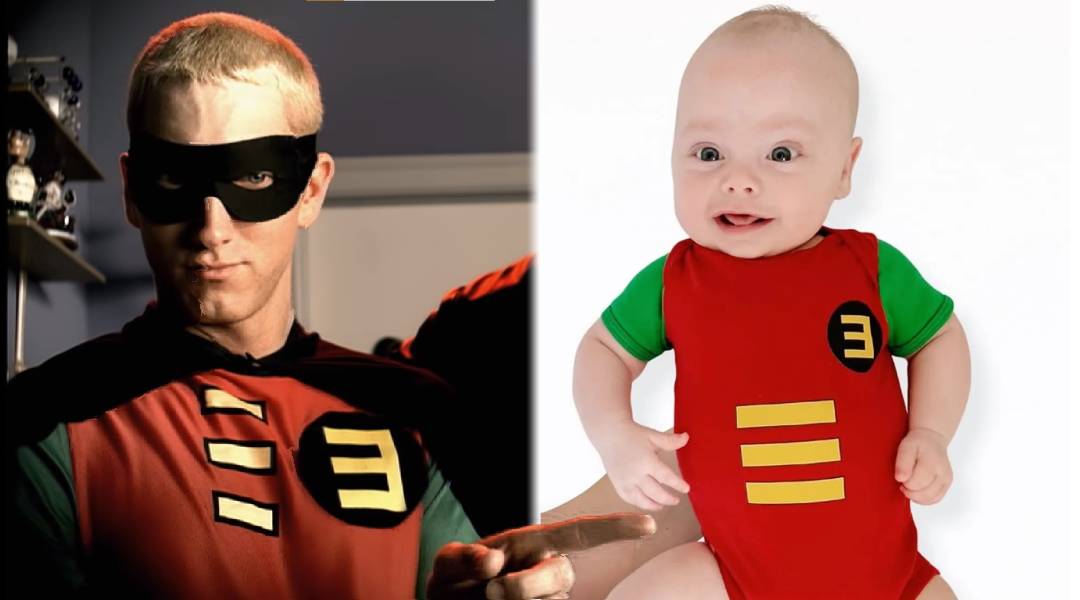
When Marshall Mathers bolted across television screens in May 2002 wearing a red-and-green spandex bodysuit, a yellow cape, and a black domino mask, MTV was experiencing peak TRL-era hysteria. The lead single from The Eminem Show, "Without Me," was not merely a radio smash; it established one of hip-hop's most memorable visual satires. Positioned squarely at the center of the spectacle was Rap Boy, Eminem's irreverent, high-strung riff on DC Comics' iconic Boy Wonder, flanked by Dr. Dre in full, grim Batman regalia. More than two decades later, that campy persona has clawed its way back into the pop-culture lexicon, resurrected in the visual campaign for The Death of Slim Shady (Coup de Grâce).
The reappearance of the costume in modern streaming rotations has sparked fresh curiosity among younger listeners and longtime hip-hop historians alike. Online discourse often confuses the character's exact legal status, its cinematic inspirations, and why Mathers chose to portray the sidekick rather than the Dark Knight himself. Unpacking the origins of Rap Boy reveals a deliberate collision between Golden Age comic aesthetics, aggressive media satire, and the calculated mythmaking of early-2000s Shady Records.
📌 Key Takeaways:
- The Direct Inspiration: Rap Boy was engineered as an explicit homage to Burt Ward's campy 1966 Robin, balancing Dr. Dre's stoic Adam West-style Batman to critique American moral panics.
- Legal Tightrope: Shady Records and director Joseph Kahn relied on strict parody fair-use defenses to sidestep copyright infringement claims from DC Comics and Warner Bros.
- The Modern Comeback: The persona returned in the record-shattering 2024 "Houdini" visual directed by Rich Lee, transforming a vintage novelty into a narrative tool for closing the Slim Shady storyline.
Joseph Kahn and the Birth of Rap Boy
The spring of 2002 was a fraught period for Eminem. Facing intense scrutiny from the Federal Communications Commission (FCC), conservative family organizations, and political pundits, Mathers needed a visual concept that turned his villainous media narrative inside out. He hired veteran music video director Joseph Kahn, known for high-octane, hyper-stylized storytelling, to helm the visual for "Without Me."
Kahn did not want a standard rap video featuring luxury cars and club scenes. Instead, he pitched a sprawling parody of Saturday-morning television, infomercials, and mid-century comic strips. Mathers arrived on set ready to skew his own public image. The premise cast Mathers and his mentor, Dr. Dre, as costumed vigilantes racing through city streets in a parody Batmobile. Their mission was absurdly mundane: stopping a suburban kid from purchasing and listening to an explicit, parental-advisory-stamped copy of The Eminem Show.
The costume itself was custom-built by Kahn's wardrobe department under intense production deadlines. Featuring an oversized yellow "R" emblazoned across a red vest, bright green sleeves, and a fluttery golden cape, the suit immediately signaled low-budget superhero satire. Mathers leaned into physical comedy, puffing out his chest, striking theatrical kung-fu poses, and scaling the exterior of apartment buildings on a visible harness. Rather than portraying an untouchable rap titan, Eminem willingly made himself look ridiculous to sharpen his critique of performative censorship.
Burt Ward's Blueprint and DC Comics Fair Use
Pop-culture critics frequently debate whether Rap Boy derived from modern graphic novels or vintage television. The visual evidence points squarely to the 1966 ABC television series Batman, starring Adam West and Burt Ward. Director Joseph Kahn explicitly modeled the visual language, complete with tilted camera angles, saturated primary colors, and physical slapstick, on the campy 1960s production.
Burt Ward's Robin was earnest, athletic, and perpetually secondary to Batman's fatherly authority. Mathers mirrored that dynamic down to the hurried stride and wide-eyed hand gestures. By styling Rap Boy as Robin rather than Batman, Eminem visually communicated his artistic lineage: Dr. Dre remained the architect and mentor, while Eminem functioned as the chaotic, hyperactive lieutenant carrying out lyrical strikes.
The homage required careful legal handling. DC Comics held rigorous protections over the Batman and Robin trademarks, including specific color configurations and the iconic chest emblem. Kahn and the production legal team made slight structural modifications to the suit to ensure it qualified as transformative parody under federal copyright law. The standard "R" insignia utilized a distinct typography, the cape material deliberately lacked official DC insignia, and the narrative context was purely critical satire. The risk paid off; DC Comics never filed an injunction, recognizing that the video functioned as a massive, affectionate cultural advertisement rather than a commercial counterfeit.
Dr. Dre as the Dark Knight: The Dynamic Duo Dynamic
The visual chemistry of "Without Me" hinged on Dr. Dre's willingness to play against type. In 2002, Andre Young commanded immense respect across the music industry as the stone-faced architect of West Coast G-funk. Convincing Dre to don a black rubber cowl, synthetic leather cape, and chest insignia required deliberate creative persuasion.
Dre's performance in the video remains deliberately understated. Behind the wheel of the retrofitted cruiser, Dre stares forward with deadpan intensity, ignoring Rap Boy's manic posturing in the passenger seat. This contrast mirrored their real-world studio partnership. In the control room, Dre provided rigorous sonic discipline, while Mathers delivered wild, unfiltered vocal performances.
The duo cemented this visual triumph at the 2002 MTV Video Music Awards at Radio City Music Hall. Winning four Moonmen that evening, including Video of the Year, Eminem embraced the comic-book aesthetic as a core brand pillar. Shady Records subsequently leaned into comic books as an official marketing medium, eventually producing an official 2009 Marvel Comics collaboration, Eminem/The Punisher, which confirmed Mathers' deep personal roots in comic collecting.
Evolution of Shady's Superhero Lore: 2002 to Present
Over two decades, Rap Boy transformed from a one-off video gag into central lore within the Eminem catalog. Below is the historical trajectory of the persona across major releases and live events.
| Release Era | Primary Visual Appearance | Production Role | Narrative Purpose |
|---|---|---|---|
| May 2002 | "Without Me" Music Video | Joseph Kahn (Director) | Direct parody of FCC and parental outrage surrounding explicit lyrics. |
| August 2002 | MTV Video Music Awards Stage | MTV Stage Production | Public consolidation of Eminem's status as pop culture's premier provocateur. |
| June 2009 | Eminem/The Punisher #1 (Marvel) | Fred Van Lente & Salvador Larroca | Crossover cementing Marshall Mathers inside canon comic-book publishing. |
| May 2024 | "Houdini" Music Video | Rich Lee (Director) | Time-travel device pitting mature Marshall against the toxic 2002 Slim Shady. |
The "Houdini" Resurgence: Why the Costume Returned
When the lead single for The Death of Slim Shady (Coup de Grâce) debuted in late spring 2024, the opening bassline borrowed heavily from Steve Miller Band's 1982 classic "Abracadabra," but the visual language pulled straight from 2002. Directed by longtime visual collaborator Rich Lee, the "Houdini" video opens with a FaceTime call from Dr. Dre alerting Eminem that a temporal portal has opened in Detroit, releasing the bleach-blonde, 2002-era Slim Shady into the modern landscape.
To confront his offensive past self, present-day Marshall opens a hidden wardrobe cabinet and pulls on the vintage Rap Boy suit. The modern sequence was not simply nostalgic fan service. It served as a narrative device: the modern, sober 51-year-old artist had to don his most self-deprecating uniform to battle the destructive monster he created at age 29.
The return generated massive engagement numbers. The video crossed 100 million views within weeks of release, fueled by generational sharing on TikTok and Instagram. Fans compared side-by-side frames of Eminem in the 2002 costume against the 2024 fitting, dissecting how the suit's construction had been modernized with higher-grade textiles while preserving the campy silhouette. The viral impact demonstrated how deeply burned the Burt Ward homage remains in global music memory.
Frequently Asked Questions (FAQ)
Did DC Comics ever file a lawsuit against Eminem or Interscope over Rap Boy?
No formal litigation was ever filed. Warner Bros. and DC Comics recognized the character as legal parody protected under fair-use doctrines. The obvious comedic intent, lack of commercial toy merchandising at the time, and slight alterations to the costume design shielded the production from trademark infringement claims.
Who designed the original Rap Boy costume worn in the "Without Me" video?
The suit was developed by the wardrobe and styling crew under the direction of Joseph Kahn for the April 2002 video shoot in Los Angeles. The goal was to build a suit that looked authentic from a distance but intentionally cheap up close, referencing low-budget 1960s television costumes.
Why did Eminem choose to parody Robin instead of Batman?
Eminem structured the video around his real-world relationship with Dr. Dre. Casting Dre as Batman preserved Dre's authoritative stature as the founder and mastermind, allowing Eminem to lean into the energetic, unruly, and insubordinate role of the sidekick.
Is the costume seen in the 2024 "Houdini" video the original 2002 suit?
No. The suit used in the Rich Lee-directed "Houdini" video was a newly tailored recreation. The original 2002 suit was preserved in the Shady Records archives, but production needed an updated version fitted specifically for the video's dynamic stunt choreography and high-definition digital cameras.
The Cultural Endurance of Shady's Anti-Hero
Hip-hop has always maintained a symbiotic relationship with comic book mythology. From Grandmaster Flash sampling themes to Wu-Tang Clan channeling kung-fu serials and comic antiheroes, emcees frequently adopt alternate identities to project power. Eminem took the inverse route with Rap Boy: he used superhero tropes to deflate his own legendary status.
By stepping into Robin's brightly colored boots, Mathers disarmed his fiercest critics during the peak of American culture wars. It was impossible to characterize him solely as a dangerous social corruptor when he spent his weekends swinging on visible wires in a yellow cape next to Dr. Dre. Decades later, as Eminem concludes the narrative arcs that built his career, Rap Boy stands as proof that the sharpest weapon against controversy is relentless, self-aware absurdity.


