Fact-Checking the 1998 World Cup Final: Medical Truths, Rumors, and Lasting Myths
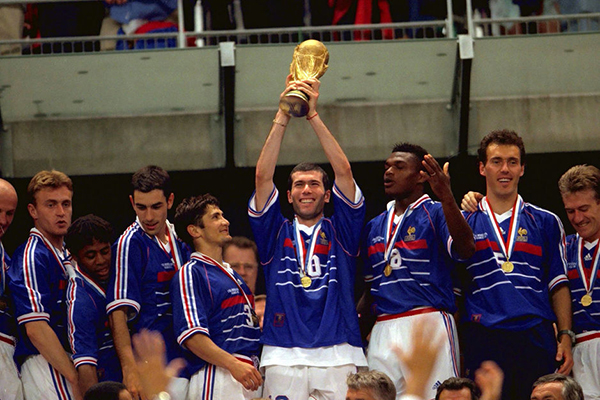
Twenty-eight years after France lifted its first FIFA World Cup trophy on home soil, the night of July 12, 1998, remains the most scrutinized ninety minutes in football history. The official record books document an emphatic 3, 0 French victory over Brazil, powered by two first-half Zinedine Zidane headers and a breakaway Emmanuel Petit stoppage time goal. Yet the athletic display at the Stade de France was instantly overshadowed by what unfolded behind closed doors during the four hours preceding kickoff. Millions of spectators watched Ronaldo Nazário, then the undisputed premier striker on the planet at age 21, wander across the pitch looking disoriented, pale, and entirely detached from the match.
Wild rumors filled the information vacuum almost immediately. Suspicions pointed toward corporate coercion, clandestine locker-room sabotages, and pharmaceutical errors. Decades later, with disinformation still clouding historical sports coverage, independent reviews like the Eurovision News Spotlight Report continue to track how sensational narratives take root during high-stakes athletic milestones. Untangling what occurred at Brazil’s base camp requires separating documented clinical diagnostics from cultural folklore.
📌 Key Takeaways:
- The Acute Event: Ronaldo suffered a sudden loss of consciousness accompanied by convulsions in his hotel room roughly four hours before kickoff, witnessed directly by roommate Roberto Carlos.
- The Lineup Reversal: Brazil submitted an official starting team sheet listing Edmundo as the starting forward at 7:48 PM, only to replace him with Ronaldo at 8:15 PM after the striker arrived from neurological examinations at the Lilas clinic.
- The Medical Consensus: Modern re-evaluations by prominent cardiologists suggest Ronaldo suffered a vagal-induced cardiac pause rather than an epileptic seizure, meaning the sedatives administered by team doctors likely depressed his motor function on the pitch.
- The Political Fallout: A high-profile Brazilian congressional inquiry subpoenaed players, coaches, and corporate executives, finding zero legal evidence of a corporate cover-up or match-fixing plot.
The Afternoon Collapse at Château de Grande Romaine
The crisis started in Room 290 of the Château de Grande Romaine hotel in Lésigny, Brazil’s secluded tournament base southeast of Paris. It was roughly 4:00 PM. The squad had finished lunch, and players had retired to their rooms for a mandatory pre-match rest. Ronaldo lay in bed alongside his roommate, fullback Roberto Carlos. Without warning, the striker began shaking violently, foaming at the mouth, and thrashing his limbs against the furniture.
Roberto Carlos panicked. He sprinted into the hallway screaming for medical personnel. Midfielder César Sampaio was the first to enter the room. He found Ronaldo unresponsive, with his jaw clenched shut in a severe spasm. Sampaio wedged his fingers into Ronaldo’s mouth to prevent the striker from swallowing his tongue, enduring bites in the process. The team doctors, Lídio Toledo and Joaquim da Mata, arrived within seconds to stabilize him.
Ronaldo fell into a heavy, unresponsive sleep once the convulsions subsided. When he woke up around 5:00 PM, he had no memory of the episode. He walked down to tea complaining of general fatigue and heavy limbs. His teammates, however, were visibly shaken. Defender Leonardo insisted that Ronaldo be told the truth about what had occurred. Toledo and Da Mata immediately pulled Ronaldo aside, explaining that he needed comprehensive diagnostic imaging before setting foot inside a stadium.
The 72-Minute Team Sheet Drama Inside the Stade de France
The Brazilian team bus departed for Saint-Denis without its star player. Toledo escorted Ronaldo to the Lilas medical clinic in northeastern Paris for an urgent battery of tests, including an electroencephalogram (EEG), an electrocardiogram (ECG), and a neurological scan. Back at the Stade de France, manager Mário Zagallo faced an unprecedented tactical dilemma. With kickoff scheduled for 9:00 PM, official FIFA regulations dictated that match sheets had to be handed to the press and match commissioner 75 minutes prior.
At 7:48 PM, accredited journalists received the official teamsheet. The press box erupted. Ronaldo was not listed in the starting eleven. In his place wore the number 21: Edmundo, the fiery forward nicknamed "The Animal." Global broadcast feeds scrambled to explain the absence. Pundits openly speculated about a recurrence of the chronic patellar tendon inflammation that had plagued Ronaldo throughout the tournament.
Everything changed at 8:10 PM. Ronaldo walked into the locker room holding an envelope of clinical results. The Lilas medical staff had discovered no abnormal brain activity or structural trauma. Toledo presented the test clearances to Zagallo. Ronaldo looked directly at his manager and demanded to play. "I’m fine, the tests are clear, I want to be out there," he told the coaching staff. At 8:15 PM, Zagallo handed tournament officials a revised team sheet restoring Ronaldo to the lineup and relegating Edmundo back to the bench. It was a staggering logistical reversal executed just 45 minutes before the opening whistle.
A Step-by-Step Breakdown of the July 12 Crisis
The sequence of events on July 12, 1998, unfolded with relentless speed across two locations in the Paris suburbs. The table below outlines the confirmed actions, documentation, and operational shifts during the six hours leading up to the match.
| Time (CET) | Location | Event & Direct Clinical / Tactical Impact |
|---|---|---|
| 4:00 PM, 4:15 PM | Château de Grande Romaine | Ronaldo suffers convulsions and loses consciousness; César Sampaio clears the airway; striker falls into a deep sleep. |
| 5:15 PM, 5:45 PM | Château de Grande Romaine | Ronaldo wakes without memory of the fit; team doctor Lídio Toledo arranges urgent transport to Clinique des Lilas. |
| 6:15 PM, 7:30 PM | Clinique des Lilas (Paris) | Comprehensive testing (EEG, blood work, neurological scans). Tests show normal baseline; clearance issued. |
| 7:48 PM | Stade de France Media Center | First official FIFA team sheet released naming Edmundo as starter alongside Bebeto. Global press descends into chaos. |
| 8:10 PM, 8:15 PM | Stade de France Dressing Room | Ronaldo arrives with clinical discharge papers; insists on playing. Zagallo issues revised team sheet to match officials. |
| 9:00 PM, 10:55 PM | Stade de France Pitch | Match played. France dominates 3, 0; Ronaldo completes 90 minutes with zero shots on target and a collision with Barthez. |
Ninety Minutes of Disconnect: Barthez, Zidane, and the 3, 0 Scoreline
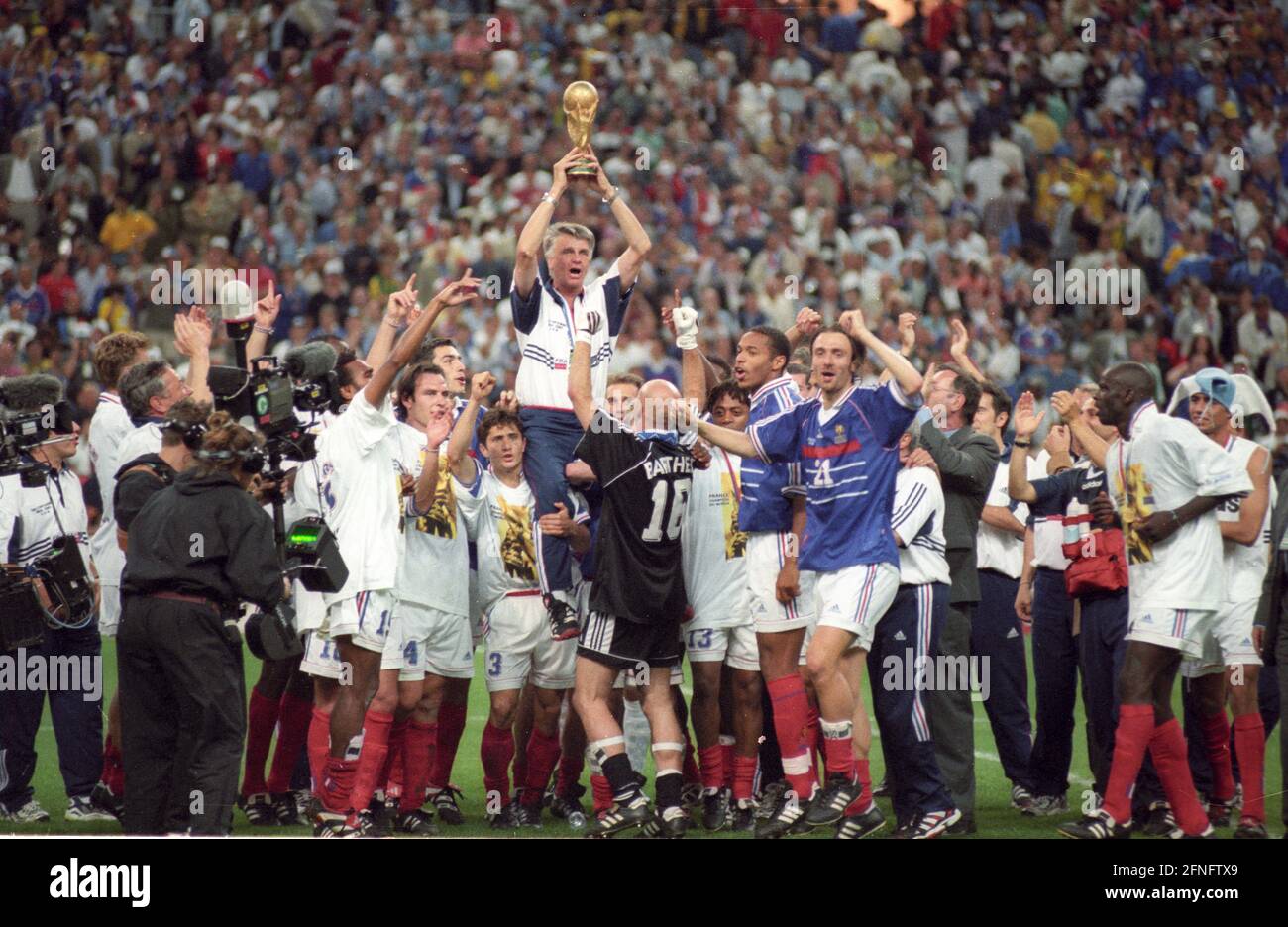
The match itself revealed a Brazil side completely stripped of emotional equilibrium. The psychological toll of watching their talisman convulse hours earlier was written across the faces of Dunga, Cafu, and Rivaldo. France sensed the hesitation immediately. Aimé Jacquet’s midfield trio of Didier Deschamps, Christian Karembeu, and Emmanuel Petit seized control of the central zones, smothering Brazil's distribution lanes.
Zinedine Zidane exploited poor marking off corner kicks in the 27th minute and again in first-half stoppage time, driving two powerful headers past Cláudio Taffarel. Brazil’s attacking flow was nonexistent. Ronaldo drifted along the French defensive line, unable to produce his trademark explosive accelerations. His balance was sluggish, his reaction times dull.
The starkest moment of physical jeopardy arrived in the 56th minute. Chasing a lofted pass into the penalty area, Ronaldo collided violently with charging French goalkeeper Fabien Barthez. Barthez launched his knees forward to win the ball, catching Ronaldo hard in the chest and face. In any standard match, the collision would have triggered furious arguments from Brazilian attackers. Instead, Ronaldo lay flat on the turf, blinking into the Parisian night while both medical teams rushed over. He finished the contest, but France held absolute command, even after Marcel Desailly’s 68th-minute red card. Petit’s counterattacking strike in the 93rd minute confirmed the 3, 0 final score.
The $160 Million Nike Conspiracy and the Parliamentary Inquiry
Brazil’s public refused to accept that their national heroes could lose a World Cup final so decisively on purely athletic terms. Within forty-eight hours, an elaborate corporate conspiracy theory swept across Latin American sports pages and early internet message boards. The narrative alleged that Nike, who had signed a landmark 10-year, $160 million sponsorship deal with the Brazilian Football Confederation (CBF) in 1996, forced Zagallo to field Ronaldo against the team’s wishes to protect global television advertising revenues.
Other rumors alleged that Brazil had "sold" the title to France in exchange for favorable FIFA treatment, or that French medical staff intentionally dosed the striker's lunch with neurotoxins. The national outcry grew so intense that the Brazilian Chamber of Deputies opened an official parliamentary inquiry (CPI) in November 2000. Lawmakers in Brasília hauled Zagallo, team doctors, and Ronaldo himself into congressional hearing rooms.
Under oath, Zagallo stood firm against accusations of corporate interference:
"If Nike ran the team, I wouldn't be the manager," Zagallo testified during the legislative hearings. "The medical team cleared him, the player looked me in the eye and said he could play. If I had left the best player in the world on the bench after he had been medically cleared, and Brazil lost 3, 0, the whole country would have crucified me anyway."
Ronaldo corroborated Zagallo’s testimony before the committee, stating clearly that he personally lobbied the technical staff to play after leaving the Lilas clinic. The inquiry combed through CBF banking records, player contracts, and the Nike agreement. The committee discovered extensive financial mismanagement inside the federation, but found no evidence that any corporate entity dictated starting lineups on July 12.
What Modern Medicine Concluded: The Cardiac Theory
For more than a decade, the accepted explanation was an idiopathic epileptic seizure caused by extreme emotional stress. Yet that diagnosis never fully satisfied international neurologists. Neurological seizures typically produce extended post-ictal states characterized by confusion, disorientation, and prolonged speech impairment, symptoms inconsistent with Ronaldo’s demeanor when demanding his starting spot two hours later.
In 2012, Dr. Bruno Carbone, a renowned Italian cardiologist and former president of the Italian Society of Cardiology, re-examined the clinical documentation alongside Dr. Piero Volpi, Inter Milan’s chief team physician. Carbone’s findings pointed to a different organ system: the heart.
Carbone argued that Ronaldo suffered a classic case of carotid sinus hypersensitivity or an intense vagal reflex. Lying in bed with his neck positioned awkwardly, combined with crushing psychological anxiety, Ronaldo likely triggered a sudden, severe drop in blood pressure and heart rate. According to Carbone's analysis, the striker’s heart rate may have dropped drastically, starving the brain of oxygen and causing the involuntary convulsions that Sampaio and Roberto Carlos witnessed.
The critical diagnostic error occurred afterward. French doctors treated the episode primarily as an epileptic fit. Hospital records reviewed during medical debates revealed that Ronaldo was administered Gardenale (phenobarbital), a powerful barbiturate routinely prescribed for epilepsy. While effective at dampening seizure activity, phenobarbital heavily depresses the central nervous system. If Ronaldo had suffered a cardiac event rather than an epileptic seizure, the drug served only to slow his motor responses, blur his peripheral vision, and drain his reflexes. He stepped onto the Stade de France pitch sedated by the very medication meant to protect him.
Frequently Asked Questions (FAQ)
Q1: Did Nike force Brazil to play Ronaldo in the 1998 World Cup final?
A1: No. A formal Brazilian congressional inquiry (CPI) subpoenaed financial records, contracts, and player testimonies, concluding that Nike had no contractual authority over tactical lineups. Zagallo and Ronaldo both testified under oath that the decision was made strictly between the player and the coaching staff following clinical clearance.
Q2: Why was Ronaldo cleared to play if he had just suffered a seizure?
A2: The neurological tests conducted at Paris's Clinique des Lilas, including an EEG and standard reflex exams, showed no residual electrical abnormalities in his brain. Because the scans were clear and Ronaldo insisted he felt healthy, team doctor Lídio Toledo could not find a diagnostic reason to bar him from playing once the player demanded to start.
Q3: What did the Italian medical investigation discover in 2012?
A3: Italian cardiologist Dr. Bruno Carbone concluded that Ronaldo likely experienced a severe vagal episode that caused an acute drop in heart rate, rather than an epileptic seizure. His analysis revealed that the phenobarbital administered to Ronaldo post-collapse acts as a powerful sedative, which explained his sluggish, detached performance during the final.
The Lingering Lessons of Saint-Denis
The events of July 12, 1998, reshaped elite sports medicine. The amateurish process of clearing a concussed or convulsing player within hours of a catastrophic neurological or cardiac event has vanished from top-tier football. Modern concussion protocols and FIFA return-to-play mandates require strict multiday evaluation periods that would prevent any athlete from stepping onto a pitch after losing consciousness, regardless of a player's stature or the magnitude of a final.
Ronaldo earned his redemption four years later in Yokohama, scoring both goals in the 2002 World Cup final against Germany to deliver Brazil its fifth title. Yet the 1998 final endures as a vivid case study in medical uncertainty. When extreme physical stress meets institutional pressure, bad decisions compound quickly. The truth behind Ronaldo’s performance was never a backroom financial plot. It was the simple, heartbreaking reality of a 21-year-old athlete whose body buckled under pressure, treated with the wrong medication, and sent onto football’s biggest stage because nobody had the courage to tell him no.


