Final Girl Board Game Hands-On Breakdown: Components, Killers, and Replayability Tested
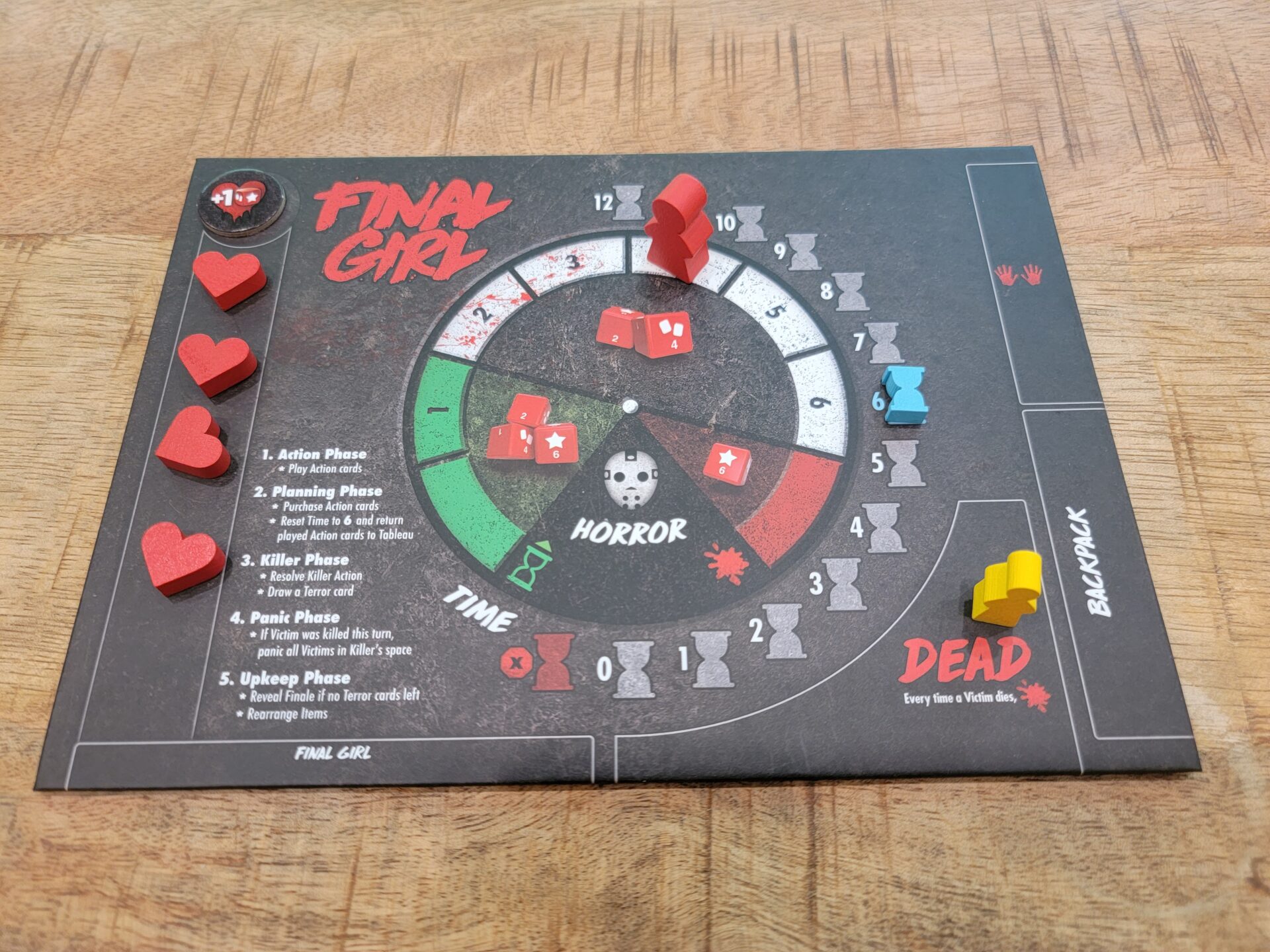
Van Ryder Games pulled off an uncommon feat in tabletop design when it launched Final Girl, transforming what could have been a disposable 1980s slasher homage into one of the most mechanically robust solo gaming ecosystems on the market. By splitting the experience across an inexpensive base set and dozens of interchangeable expansions, designers A.J. Porfirio and Evan Derrick turned modular survival horror into an addictive, collectible pipeline. According to a detailed breakdown by an IGN Report, the system's aggressive release cadence, spanning multiple feature film seasons and all-in collection packages, demands that players understand precisely how the component ecosystem functions before spending heavily.
Solo tabletop survival horror frequently collapses under its own ambitions, drowning players in maintenance phases or reducing terrifying antagonists to dry accounting exercises. Final Girl avoids that pitfall by marrying high-variance dice pools to tightly calculated resource management. You play the desperate survivor on an isolated map, scrambling to rescue panicking victims while an unstoppable killer stalks the grounds. Behind the retro VHS aesthetic lies an unforgiving mechanical puzzle where every step, strike, and search check burns your precious time pool.
📌 Key Takeaways:
- System Architecture: You cannot play with a single box alone; gameplay requires pairing the standalone Core Box ($19.99 MSRP) with at least one Feature Film expansion ($19.99, $21.99 MSRP).
- Mechanical Depth: Success relies on strict dice mitigation and time-budget management rather than pure luck, punishing reckless movement across dual-layered map boards.
- Long-Term Value: Cross-compatibility between different killers and locations creates exponential replayability, though high difficulty swings will frustrate players who dislike swingy die rolls.
The Magnetic Box Architecture and Modular Feature Films
Unboxing a Final Girl collection reveals one of the cleverest physical packaging feats in contemporary tabletop design. The Core Box holds only universal components: action cards, health markers, terror trackers, resource dice, and standardized tokens. To actually run a game, you must dock a Feature Film expansion into this framework. Each Feature Film box comes packaged in a slipcase with detachable magnetic front and back covers that pull double duty as physical boards. The front cover unfolds into the killer's dashboard, while the back cover forms the physical location map.
This structural choice keeps the barrier to entry remarkably light while keeping storage tight. A single Feature Film yields two distinct components: one specific killer with their personal mechanics and terror cards, alongside one location possessing its own terrain rules, item deck, and event sequences. Because every killer functions on any map board, purchasing three Feature Films does not yield three standalone scenarios; it produces nine distinct permutations.
TechRaptor's review of the Series 1 Ultimate Box highlighted that bundling these films with specialized storage trays transforms a chaotic shelf footprint into an organized, episodic archive. The magnetic enclosures snap firmly onto tables, though the interior plastic inserts can cause minor card bowing if you sleeve your deck with premium 100-micron protectors. For unsleeved cards, the tolerances remain snug and functional during travel.
Hans the Butcher at Camp Happy Trails: A Cold-Table Gameplay Run
To evaluate how the physical components handle table friction during active play, we ran repeated sessions using the introductory scenario: Hans the Butcher stalking Camp Happy Trails. Hans serves as the baseline slasher, a deliberate, Jason Voorhees stand-in who hits devastatingly hard and absorbs massive damage before dropping. Camp Happy Trails provides clear, unobstructed paths connecting cabins, lakeside docks, and maintenance sheds, serving as the benchmark testing ground for new players.
Setup takes under six minutes once components are organized. You select your final girl, in our run, Laurie, whose personal ability rewards saving victims by unlocking extra attack dice. As victims scatter across cabins, Hans spawns at the camp center. The bloodlust track steadily ticks upward on his magnetic killer board whenever he executes stranded counselors.
The psychological tension escalates fast. Moving two spaces across the campground requires spending time points to buy movement cards from the shared tableau. A failed die roll on a "Sprint" action causes an immediate slip, draining remaining time and prematurely forcing the killer phase. Hans advances through the forest path, corners two victims in the mess hall, and slashes them down. In less than three rounds, his speed stat permanently increases, pushing the tension to suffocating levels. The spatial tension across the Camp Happy Trails board feels immediate and lethal.
Dice Mitigation and Terror Deck Mechanics Under Pressure
Dice rolls govern every action in Final Girl, but calling the system luck-driven fundamentally misinterprets the design. Six-sided dice resolve your movement, attacks, and item scavenging. A roll of 5 or 6 yields a full success; 4 is a partial success requiring you to discard two cards from hand; 1, 2, or 3 represent failure. The central design hook lies in card management. You spend cards directly from your hand to flip bad rolls or fuel critical actions, turning your hand into a secondary health bar.
The system places complete control over your turn economy in your hands. Time acts as both currency and turn timer. You spend time to purchase action cards during the planning phase, and you gain or lose time based on the quality of your rolls. The terror deck introduces randomized AI behavior for the killer at the end of each round. Flipping a "Dark Power" or sudden slash card can wipe out half the board if you fail to calculate line-of-sight and target priorities.
GeekDad noted in their early appraisal of the system that its survival mechanics mimic the brutal unpredictability of classic cinema. The board constantly tempts you into greedy decisions: do you spend your last remaining time point to rescue a helpless bystander at the boat dock, or do you conserve resources to buy a "Retaliate" card before Hans enters your zone? One bad roll hurts, but poor contingency planning kills.

Series 1 Feature Film Matrix: Comparing Killers, Maps, and Difficulty
Choosing where to start within the extensive product catalog can prove paralyzing for newcomers. Series 1 remains the most grounded entry point, featuring classic cinematic archetypes before later sets introduced complex spatial gimmicks, multi-level vehicles, and dream-world mechanics.
| Feature Film Expansion | Killer & Primary Trope | Location Features | Mechanical Difficulty |
|---|---|---|---|
| The Happy Trails Horror | Hans the Butcher (Classic Slasher) | Camp Happy Trails (Wide open paths, low terrain obstruction) | Low / Introductory (Pure mechanical baseline) |
| The Haunting of Creech Manor | Poltergeist (Supernatural entity) | Creech Manor (Claustrophobic multi-story layout, blocked exits) | High (Objective search focus, direct combat impossible) |
| Slaughter in the Groves | Inkanyamba (Wrathful deity) | Sacred Groves (Shifting blood paths, toxic divine wrath) | Very High (Aggressive panic pacing, volatile environmental traps) |
| Carnage at the Carnival | Geppetto (Killer puppets) | Carnival Grounds (Trapped rollercoasters, high crowd density) | Moderate (Crowd management and multi-target tracking) |
| Frightmare on Maple Lane | Dr. Fright (Dream stalker) | Maple Lane (Suburban homes, awake vs. asleep state mechanic) | Moderate-High (Dual-state survival and sanity management) |
The variety demonstrated across this initial catalog proves the strength of the modular engine. Taking Hans out of Camp Happy Trails and placing him inside Creech Manor completely subverts your strategy. His raw strength becomes terrifyingly oppressive in tight corridors where windows serve as the only viable escape routes.
Component Upgrades: Miniatures Versus Wooden Tokens
A major point of deliberation for prospective buyers involves the accessory ecosystem. The base Core Box and standard Feature Films ship with custom wooden meeples representing victims, final girls, and killers. These screen-printed wooden tokens are visually legible, stable on the board, and perfectly suited to quick tabletop parsing.
Van Ryder Games also markets optional Miniatures Boxes containing finely detailed plastic sculpts for every killer and heroine across each season. Testing both variants reveals clear physical trade-offs:
- Miniatures undeniably amplify the cinematic table presence. Watching a sculpted slasher loom over a cluster of frightened survivor tokens instantly heightens the stakes.
- When three victims, an item token, a search marker, and a killer share a single tight zone on an indoor map like Creech Manor, large miniature bases crowd the space. The flatter wooden meeples maintain superior clarity during cluttered rounds.
- The miniature boxes occupy significant shelf space. Unless you invest in the large Series Ultimate Boxes, which consolidate miniatures, vignettes, and films into a single monolithic package, managing separate miniature trays adds friction to game night setup.
If budget represents a primary concern, the base wooden meeples deliver an outstanding tactile experience without inflating costs. The miniatures remain a purely aesthetic luxury for devoted hobbyists.
Who Thrives Under the Slasher Pressure and Who Should Avoid It
Final Girl targets an uncompromising mechanical niche. It rejects hand-holding and frequently presents scenarios where mathematical victory borders on the impossible. Understanding player fit prevents costly purchasing mistakes.
Who Will Love This System
Solo enthusiasts who relish emergent narrative, tough resource choices, and high thematic immersion will find an absolute masterpiece here. If you enjoy adapting to sudden crises, pivoting strategies when a room search reveals a useless broken bottle instead of a shotgun, and running statistical risk assessments on whether to roll two dice or three, the engine feels endlessly rewarding.
Who Should Look Elsewhere
Players seeking euro-style deterministic puzzles with zero output randomness will find the system intensely frustrating. You can engineer an immaculate setup, position yourself outside the killer’s movement range, save four victims, and still watch your run dissolve because consecutive dice rolls came up blanks during a vital horror check. If failing a 70-minute game due to a bad roll feels like wasted time rather than an entertaining horror movie death, this system will not satisfy you.
Frequently Asked Questions (FAQ)
Can I play the Final Girl board game with two or more players?
The system functions exclusively as a dedicated solo board game. While two players can sit together and discuss decisions cooperatively, the rules, action economy, and balance structures were built strictly for one active participant.
Do I have to buy expansions in chronological order starting from Series 1?
No. Every Feature Film across Series 1, Series 2, and Series 3 operates independently. You only need the universal Core Box to play. You can start directly with a Series 2 film like *Madness in the Dark* without owning any previous releases.
How long does an average session take to set up and play?
Once you understand the basic icon conventions, physical setup requires roughly five to seven minutes. An average play session runs between 45 and 75 minutes, depending on scenario complexity and how quickly your final girl escapes or perishes.
The Long-Term Value of the Modular Horror Engine
Van Ryder Games crafted an enduring design template rather than a fleeting tabletop gimmick. By committing to an interconnected, modular architecture, the studio turned Final Girl into a sustainable platform where every new release retroactively enriches the boxes already resting on your shelf.
The system honors the tropes of classic genre cinema by refusing to sanitize the brutality of the slasher format. It treats failure as an essential narrative beat rather than a design flaw. Armed with the Core Box and one well-selected Feature Film matching your favorite horror subgenre, you receive one of the most inventive, physically satisfying solo gaming experiences modern tabletop design has produced.


