From 12 Mini to Foldable Horizons: The Complete Evolution of Compact iPhones
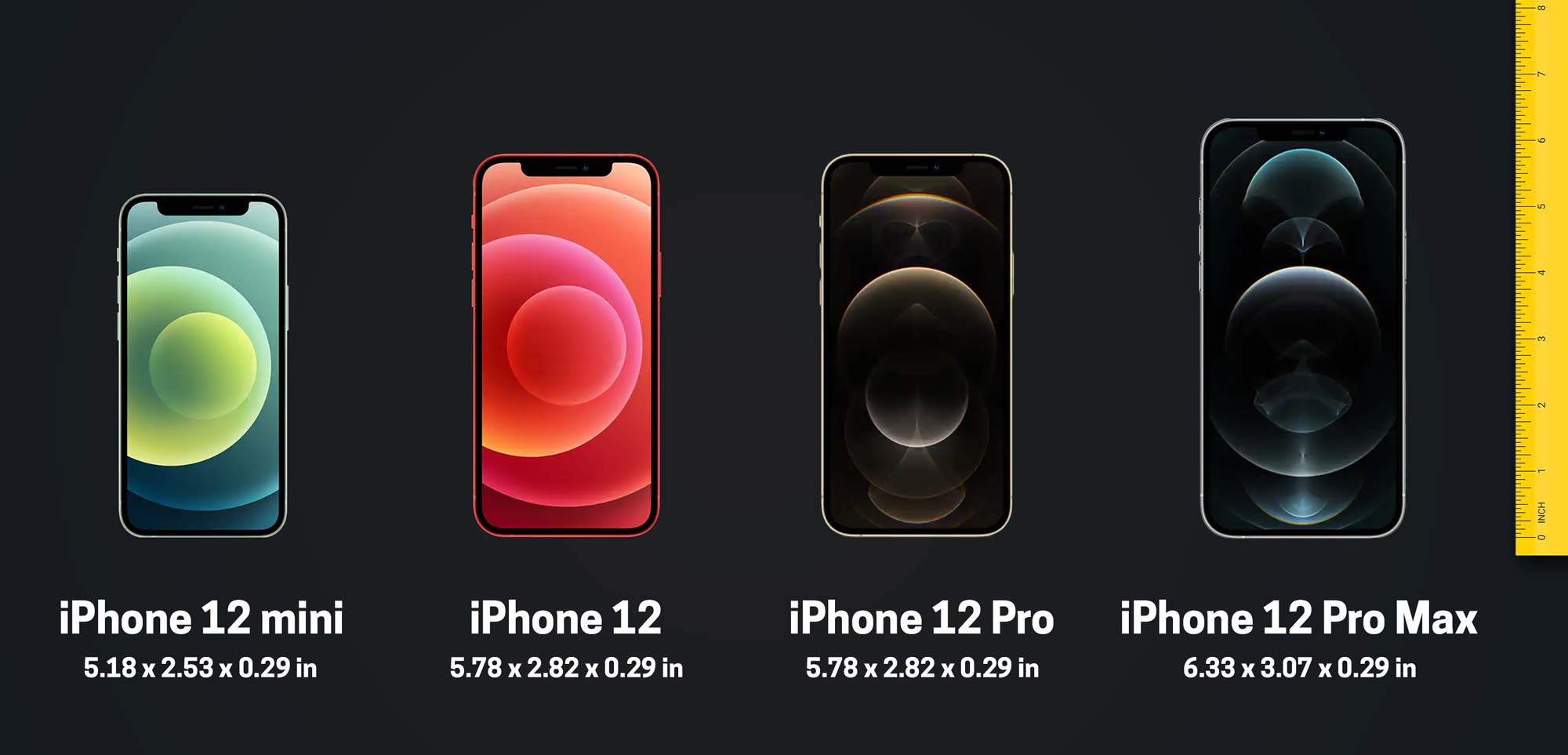
When Apple unveiled the iPhone 12 mini in late 2020, it answered a decade of enthusiast pleas for an uncompromising, pocket-friendly flagship. Engineers packed top-tier silicon, dual cameras, 5G modems, and an OLED panel into an impossibly small frame. Yet consumer sales paint an entirely different picture: buyers overwhelmingly opted for larger screens, leaving the compact smartphone form factor stranded between enthusiast devotion and commercial indifference. As recent market analysis and regulatory tracking in an Apple Report illustrate, modern hardware strategies have decisively shifted toward flexible displays and expansive slab designs, leaving the 5.4-inch form factor as one of the tech sector's most fascinating experiments.
The device stood as a masterclass in packaging efficiency that ultimately ran into the brick wall of consumer screen addiction and thermal limitations. Understanding why the ultra-compact phone died, and how modern foldables attempt to resolve its primary compromises, requires looking closely at the engineering feats and trade-offs embedded in Apple's smallest modern flagship.
📌 Key Takeaways:
- Physical Footprint: Measuring just 131.5 x 64.2 x 7.4 mm and weighing 133 grams, the iPhone 12 mini remains the lightest, most compact 5G OLED flagship Apple ever produced.
- The Battery Compromise: A restricted 2,227 mAh cell struggled under the simultaneous demands of high-draw 5G connectivity and processor-intensive workloads.
- Market Realities: Accounts from sales trackers revealed the mini accounted for less than 5% of total iPhone 12 series sales, leading Apple to substitute the variant with the iPhone 14 Plus.
- The Modern Successor: Instead of monolithic mini chassis, compact hardware has migrated toward clamshell foldables that collapse 6.7-inch screens into sub-90mm squares.
Chassis Architecture: The Exact Metrics of the 131.5 mm Frame
The engineering story of the device begins with its raw footprint. Apple achieved an exceptionally high screen-to-body ratio by shaving internal margins to the millimeter. At 131.5 mm in height, 64.2 mm in width, and a razor-thin 7.4 mm depth, the handset sat noticeably smaller than the physical envelope of the older iPhone 6, 7, and 8 series, despite featuring a significantly larger viewable area.
Its total device weight in grams settled at an astonishing 133 grams. To put that in perspective, the standard iPhone 12 weighed 162 grams, while the iPhone 12 Pro crossed 187 grams. The frame relied on aerospace-grade aluminum edges with flat, squared-off borders, protected by a flat Ceramic Shield front that offered four times better drop performance than prior generations. Inside, the main logic board had to be split and stacked into an ultra-dense sandwich configuration, while the haptic Taptic Engine was scaled down to free up internal volume for antenna lines.
The result was unprecedented structural density. It felt like a solid block of glass and metal rather than a hollow shell. Users could wrap their fingers fully around the chassis without overextending their tendons, providing an ergonomic grip unmatched by any contemporary premium rival.
The Ergonomic Reality of the 5.4-Inch Super Retina XDR Display
The display panel delivered technical parity with larger siblings rather than budget compromises. Apple embedded a 5.4-inch Super Retina XDR display with a resolution of 2340x1080 pixels. That yielded a sharp pixel density of 476 pixels per inch (ppi), which was actually higher than the pixel density of the iPhone 12 Pro Max.
One-handed usability was the primary selling point. On a typical 6.1-inch or 6.7-inch screen, reaching the upper corners requires shifting your palm or triggering software assists like Reachability. On the 12 mini, the thumb's natural sweep could access 95% of the active panel surface without breaking balance. Text input via swipe-typing worked effortlessly with a single hand while walking or holding a subway rail.
True pocketability went beyond marketing slogans. The phone slipped into shallow front pockets, tailored athletic shorts, and small internal jacket compartments without bulging or twisting waistbands. For physical minimalists, it solved the hand fatigue caused by heavy modern slabs. Yet that shrinking footprint brought severe physical limitations that software couldn't fix.
Battery Capacity Trade-Offs and Thermal Realities
The physics of lithium-ion chemistry do not scale with optimism. To fit within the 131.5 mm casing, Apple could only squeeze in a 2,227 mAh battery. By comparison, the baseline iPhone 12 housed a 2,815 mAh pack, giving it nearly 26% more chemical energy reserve.
Under casual use on Wi-Fi, the A14 Bionic processor managed power reasonably well. But mixed daily routines quickly exposed its limits. First-generation 5G cellular modems drained small batteries rapidly. Outdoor brightness spikes to 1,200 nits consumed substantial milliwatts. GPS navigation, mobile hotspots, and background audio streaming frequently drained the battery before late afternoon. Power users found themselves tethered to MagSafe battery packs, which undermined the primary benefit of carrying a lightweight device.
Thermal dissipation presented a secondary hurdle. The compact aluminum enclosure concentrated heat quickly during continuous computational photography or gaming. Once internal sensors hit thermal ceiling thresholds, the phone aggressively throttled screen brightness and CPU clocks to preserve internal components.
Compact Flagships Compared: From 12 Mini to Modern Sizes
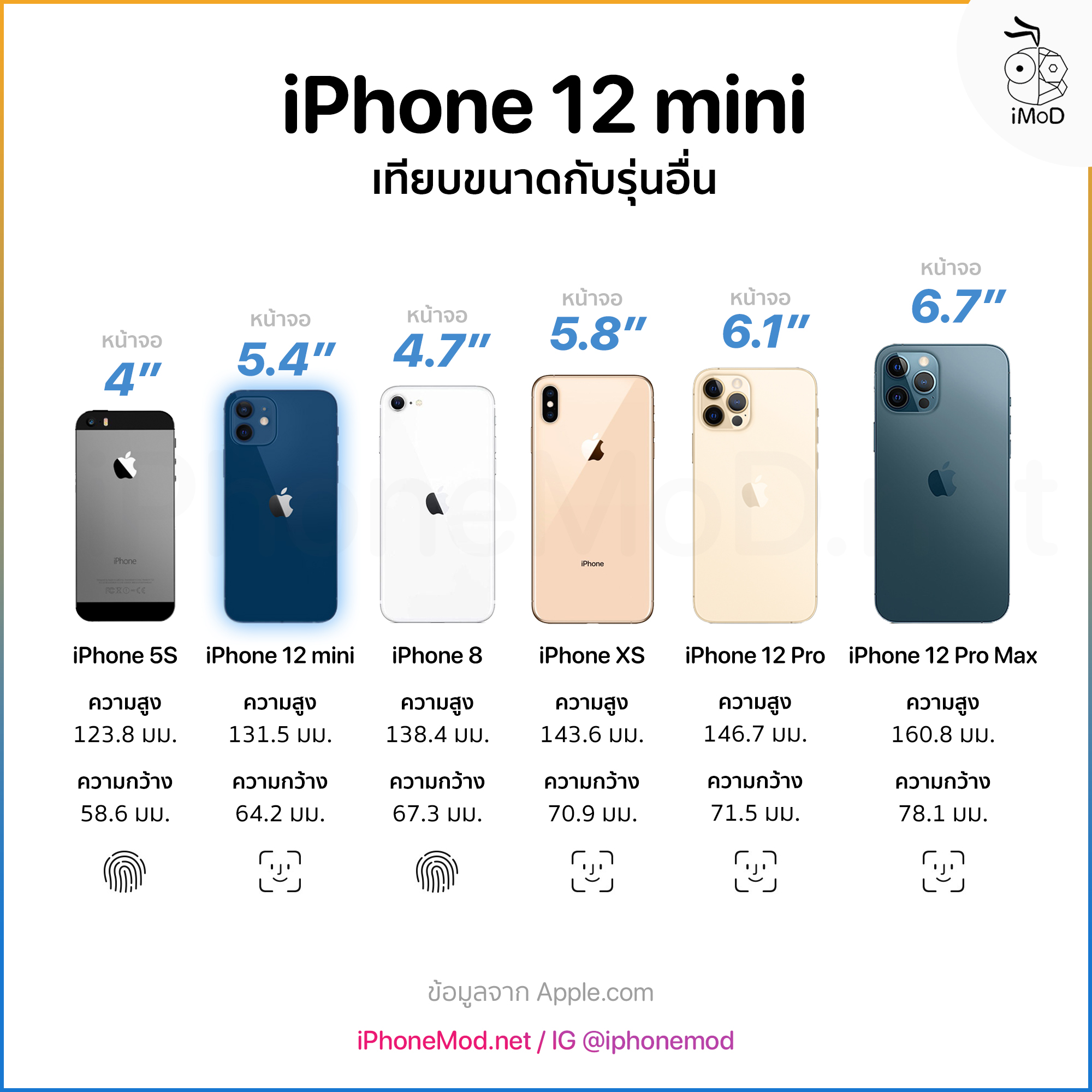
To grasp the scale of the mini form factor, examine how its measurements stack against its immediate successor, entry-tier alternatives, and modern flagship standards.
| Device Model | Dimensions (H x W x D mm) | Weight | Display Size & Tech | Battery Spec |
|---|---|---|---|---|
| iPhone 12 mini | 131.5 x 64.2 x 7.4 mm | 133 g | 5.4-inch OLED (476 ppi) | 2,227 mAh (8.57 Wh) |
| iPhone 13 mini | 131.5 x 64.2 x 7.65 mm | 140 g | 5.4-inch OLED (476 ppi) | 2,406 mAh (9.34 Wh) |
| iPhone SE (3rd Gen) | 138.4 x 67.3 x 7.3 mm | 144 g | 4.7-inch LCD (326 ppi) | 2,018 mAh (7.82 Wh) |
| Modern Baseline Flagship | 147.6 x 71.6 x 7.8 mm | 171 g | 6.1-inch OLED (460 ppi) | 3,561 mAh (13.78 Wh) |
The comparative data reveals why the 13 mini arrived with a thicker 7.65 mm profile and a heavier 140-gram frame. Apple had to sacrifice fractional thickness to fit a 2,406 mAh battery, which addressed the 12 mini's primary flaw. In an iPhone SE comparison, the 12 mini achieved the remarkable feat of delivering a screen that was 0.7 inches larger diagonally while cutting nearly 7 mm off the total chassis height, thanks to uniform, razor-thin bezels.
Commercial Failure: How Consumer Behavior Killed the Small Flagship
The death of the mini line was rooted in digital consumption trends. The small phone was an ideal utility device for communication, rapid messaging, and quick photo captures. But the modern smartphone is primarily a portable cinema, gaming station, and social video terminal.
Short-form vertical video apps, complex mobile gaming interfaces, and text-dense web apps made small screens exhausting over prolonged sessions. At the same time, regional pricing influenced buying decisions. With the iPhone 12 mini priced at $699 and the standard iPhone 12 at $799, consumers viewed the $100 price difference as too small to justify losing display area and battery endurance. Carrier retail promotions also softened price barriers, letting shoppers bundle larger models into nominal monthly installment plans.
Supply chain telemetry gathered by industry monitors quickly confirmed low consumer demand. The mini accounted for roughly 4% to 5% of quarterly iPhone sales in major domestic markets. PhoneArena documented the shift, labeling the small flagship an ideological success for purists that turned into an undeniable commercial flop. By late 2022, Apple discontinued the mini form factor in its newest lineup, replacing it with the 6.7-inch iPhone 14 Plus.
The Evolution Toward Foldable Form Factors
The core promise of the small phone never completely evaporated; it simply migrated into flexible mechanical structures. Consumers who loved the 12 mini did not crave cramped viewing areas. They wanted small, pocket-friendly hardware that vanished inside clothing until needed.
Hardware reporting across 2025 and 2026 documented how display advances caught up with this physical preference. Publications including 9to5Mac detailed early development behind Apple's book-style and clamshell architectures. Industry reporting highlighted projects like the rumored iPhone Duo and foldable concepts designed to offer the ultimate dual-state balance: sub-90mm footprints when folded, unfolding into vast, borderless digital workspaces.
By moving to folding hinges, industrial design solves the 12 mini's unsolvable paradox. A clamshell delivers the exact pocket footprint of a compact phone without forcing users to sacrifice battery surface area or squint at small text. The monolithic small phone may have died with the 13 mini, but mechanical folding designs are now carrying its ergonomics into a more flexible generation of mobile hardware.
Frequently Asked Questions (FAQ)
Q1: What are the exact iPhone 12 mini dimensions and weight?
A1: The iPhone 12 mini measures precisely 131.5 mm in height, 64.2 mm in width, and 7.4 mm in depth (5.18 x 2.53 x 0.29 inches). It weighs exactly 133 grams (4.70 ounces).
Q2: Why was battery life so problematic on the iPhone 12 mini?
A2: The compact physical dimensions forced Apple to use a modest 2,227 mAh battery pack. Combined with power-hungry first-generation 5G modems and high display brightness, the phone struggled to last a full day under moderate to heavy usage.
Q3: Did the iPhone 13 mini fix the problems of the 12 mini?
A3: Yes. The iPhone 13 mini added 0.25 mm of thickness and 7 grams of weight to house a larger 2,406 mAh battery. Coupled with the efficient A15 Bionic processor, it delivered approximately an hour and a half of additional screen-on time per day.
Q4: Is it still worth buying an iPhone 12 mini today?
A4: For secondary usage or light communication, it remains an exceptionally lightweight pocket device. However, its small 2,227 mAh battery has likely degraded over multiple charge cycles, meaning secondary buyers should factor in the cost of an official battery replacement.
The Lasting Legacy of Sub-140mm Pocket Hardware
The iPhone 12 mini remains a high-water mark for minimalist industrial design. In an era dominated by bulky 200-gram glass slabs that stretch pocket seams and strain wrists, its 133-gram aluminum chassis was a reminder that hardware could be lightweight and unobtrusive. It proved that cutting down on physical bulk does not require sacrificing screen sharpness, processing speed, or structural rigidity.
The commercial market ultimately prioritized screen area and all-day battery life over pure pocket ergonomics. While monolithic small phones have stepped out of mainstream production lines, their core philosophy survives in today's clamshell foldables. For purists who prize tactile comfort above all else, the 131.5 mm footprint of the 12 mini stands as an engineering achievement that proved small hardware could deliver uncompromised flagship speed.


