From Police Blotters to Pop Culture: The Rapid Evolution of A.K.A.
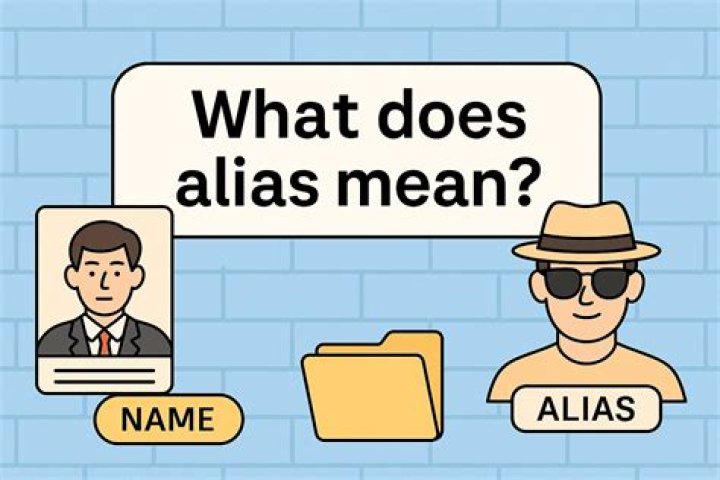
A clerk typing an arrest sheet in a 19th-century municipal court had no intention of shaping modern pop culture. Yet the initialism "a.k.a.", short for also known as, escaped formal legal terminology and established itself as one of the most resilient shorthand devices in global communication. It began as an administrative safeguard designed to track fugitives through municipal booking logs. Now, it operates across music streaming credits, corporate decks, and multiplayer gaming lobbies.
Abbreviations routinely escape their original institutional boundaries. As documented in theSkimm Report tracing the linguistic trajectories of cultural acronyms, practical shorthand often expands far beyond initial bureaucratized definitions to reshape social identity. Understanding what "a.k.a." means today requires examining how an instrument of criminal tracking morphed into a badge of artistic reinvention.
📌 Key Takeaways:
- Core Definition: The abbreviation stands for "also known as," serving as a connector between an entity's primary, legal name and an alternate identifier.
- Institutional Roots: Originating in 19th-century courtroom dockets and police blotter records, the term was engineered to prevent criminal defendants from evading prosecution through false names.
- Modern Versatility: Current style conventions permit both punctuated ("a.k.a.") and unpunctuated ("aka") forms, with the phrase expanding from law enforcement records into stage names, gaming handles, and street slang.
Courtroom Dockets and the Municipal Blotter
Before fingerprint registries and biometric databases, identity was slippery. An individual arrested for larceny in Boston in 1885 might give their name as William Miller, only for a precinct sergeant to recognize them as Charles Smith from a prior conviction in Providence. Police blotter records relied heavily on clerks writing handwritten annotations across physical ledgers to preserve institutional memory.
Criminal records terminology required unambiguous syntax. Court clerks began recording entries such as "William Miller, alias Charles Smith," which soon contracted in docket notes to the phrase "also known as." When mechanical typewriters became standard precinct equipment between 1900 and 1920, typists squeezed names into narrow horizontal lines. The initialism "a.k.a." emerged directly from that spatial constraint.
The label carried immediate legal weight. Indictments that failed to document every documented variant of a suspect's identity risked procedural dismissal if defense counsel argued defective naming. In this era, an a.k.a. was not an aesthetic choice. It was an evidentiary flag signaling potential deception, prior convictions, or flight risk.
Grammar Mechanics, Punctuation Rules, and the Alias Distinction
Deciding how to write the abbreviation depends entirely on which style manual governs your document. The Chicago Manual of Style recommends lowercase letters with periods: a.k.a. The Associated Press (AP) Stylebook, prioritizing space constraints in wire copy, previously mandated lowercase with periods but shifted toward accepting unpunctuated lowercase aka in casual contexts, while preferring the spelled-out phrase in formal news copy. Corporate branding frequently adopts all-caps AKA without periods to match bold graphic displays.
Confusion often surrounds the technical difference between an alias, a pseudonym, and an a.k.a. While people use these terms interchangeably, their legal and literary functions diverge:
An alias is a substitute identity, historically assumed to disguise actual background or criminal history. The word derives from the Latin alias dictus, meaning "otherwise called." A pseudonym, by contrast, is an openly declared pen name chosen by an author or artist to compartmentalize creative output from personal life, such as Samuel Clemens publishing under Mark Twain. The term a.k.a. is the linguistic bridge linking the base name to either category.
From Police Blotters to Pop Culture: The Century-Long Shift
The transformation of "a.k.a." from an indicator of criminal suspicion to an emblem of creative pride occurred in distinct historical phases. As mass media popularized crime reporting, the term migrated from closed precinct basements into everyday public awareness.
| Era | Primary Domain | Dominant Context | Linguistic Function |
|---|---|---|---|
| 1890, 1930 | Municipal Courts & Jails | Warrants, indictments, booking sheets | Tracking aliases to prevent judicial evasion |
| 1935, 1975 | Tabloid Press & Pulp Fiction | Sensational crime reporting, mob coverage | Creating dramatic monikers for notorious figures |
| 1980, 2005 | Hip-Hop & Urban Music | Stage names, mixtapes, liner notes | Signaling complex alter egos and street credibility |
| 2010, 2026 | Digital Media & Everyday Speech | Social bios, gaming handles, workplace humor | Self-curated secondary identities and hyperbole |
Mid-century tabloid editors realized that monikers sold papers. A story about Charles Luciano gained readers when styled as "Charles 'Lucky' Luciano, a.k.a. the Boss of Bosses." Through decades of sensational true-crime print, readers absorbed the abbreviation as a shorthand for intrigue rather than technical court administration.
Hip-Hop, Alter Egos, and Street Slang Evolution
By the late 1980s, hip-hop culture seized the abbreviation and inverted its stigma. Street slang evolution frequently repurposes punitive legal jargon into declarations of creative power. Rappers embraced multiple stage names and alter egos to showcase stylistic range, mythological narratives, and personal history.
Christopher Wallace became the archetype: legal birth certificate bearing Wallace, commercial billing as The Notorious B.I.G., and lyrical references styling him as "a.k.a. Biggie Smalls, a.k.a. Frank White." The late Daniel Dumile took the convention further, constructing independent artistic personas: MF DOOM, a.k.a. Viktor Vaughn, a.k.a. King Geedorah. Each persona carried distinct beats, vocal styles, and lyrical themes.
Rather than hiding an identity from authorities, artists used the term to flaunt versatility. In rhymed cadences, "a.k.a." acted as a rhythmic bridge. It signaled that one title could not contain the performer's complete body of work.
Navigating Identity in the Digital Era
Modern internet culture decentralized the concept of identity. In 2026, virtually every individual maintains multiple digital profiles across messaging platforms, competitive gaming servers, professional registries, and personal feeds.
The abbreviation transitioned naturally into conversational shorthand. In social bios, a user might write: "Marcus Vance, a.k.a. CodeSmith." Among peer groups, it serves as self-deprecating irony: "David, a.k.a. the guy who burns toast every morning." It ranks alongside common acronyms in English like FYI and ASAP as an essential tool for packing maximum descriptive context into minimal characters.
Despite its casual proliferation, formal institutions maintain rigorous guidelines. If you are drafting commercial contracts, civil pleadings, or insurance filings, overusing "a.k.a." without specifying legal validity creates procedural ambiguity. For professional writing, reserve the tag for official trade names or certified corporate entities.
Frequently Asked Questions (FAQ)
Q1: What does "a.k.a." stand for in plain English?
A1: It stands for "also known as." It is an abbreviation used to connect a person, organization, or object's primary name to an alternate handle, stage name, or secondary identifier.
Q2: Should I capitalize and punctuate the phrase as AKA, a.k.a., or aka?
A2: Lowercase with periods (a.k.a.) is standard in formal editing frameworks such as the Chicago Manual of Style. Unpunctuated lowercase (aka) is common in journalistic copy and casual writing. Uppercase (AKA) appears mostly in marketing materials and titles. Avoid mixing formats within the same document.
Q3: How does an a.k.a. differ from an alias?
A3: An alias is the actual alternative name itself, traditionally implying concealment or an unofficial identity. "A.k.a." is the connective conjunction phrase ("also known as") linking the real identity to that alternative name.
The Lingering Power of the Second Name
Language strips away unnecessary syllables over time. Phrases survive only when they serve an immediate, recurring human need. The initialism "a.k.a." has endured for more than a century because it solves a universal linguistic challenge: humans rarely remain confined to a single name.
From the ink-stained booking blotters of late-1800s precincts to the profile bios of modern networks, the term provides instant context. It reconciles who the state says you are with who you choose to be. As identity fragments across digital and physical spheres, those three letters remain our fastest way to bridge the divide.


