From Stiletto Fatigue to Bestsellers: How Aldo Pillow Walk Revived Heel Sales

When corporate dress codes returned and wedding calendars exploded after years of remote work, shoppers faced a collective physical shock: high heels hurt. After months spent in house slippers and supportive sneakers, the sudden return of rigid pumps sparked severe stiletto fatigue across global markets. Rather than abandoning formal silhouettes altogether, consumers demanded comfortable dress shoes that looked sleek on the dance floor without triggering excruciating foot pain by midnight.
Aldo saw this cultural shift coming. The Montreal-based footwear giant engineered Pillow Walk, an internal initiative designed to bring athletic-shoe ergonomics directly into formal occasion wear. As highlighted in a recent graziamagazine.com Report tracking the brand's expansive occasion-wear storytelling, the focus across major global collections has centered firmly on celebration without physical sacrifice. By embedding proprietary foam beds into high-glamour silhouettes, the label tapped into a retail goldmine that continues to reshape evening footwear.
📌 Key Takeaways:
- The Core Tension: Returning to formal events triggered acute stiletto fatigue, prompting buyers to reject traditional, unpadded construction in favor of ergonomic heels.
- The Engineering Shift: Aldo developed dual-density foam cushioning and molded high heel arch support to absorb strike impact while maintaining razor-thin profiles.
- The Market Outcome: Pillow Walk rapidly became the backbone of Aldo's dress shoe business, driving triple-digit growth in occasion wear searches between 2022 and 2026.
The Post-Pandemic Pushback Against Painful Footwear
The dress shoe market was facing an existential threat by late 2021. Consumers wanted to dress up again, but their pain tolerance had cratered. Podiatrists reported an influx of metatarsal stress fractures and plantar fascia inflammation as people stepped out of cushioned athletic shoes straight into stiff, unyielding occasion wear. The industry responded with polarized offerings: ultra-flat slides or punishing platforms with little in between.
Aldo identified an open space in the middle market. Shoppers still wanted the clean lines of sharp pointed-toe pumps and minimalist strappy heels, but they refused to slip their feet into unpadded cardboard lasting boards. Footwear designers realized that aesthetic compromises were a non-starter for partygoers, yet pain was no longer considered a mandatory badge of glamour.
By framing comfort as an essential engineering component rather than a niche orthotic feature, the brand repositioned the conversation. Instead of hiding orthopedic soles in clunky silhouettes, designers worked backward from classic runway shapes, creating internal cavities capable of housing supportive materials without expanding exterior proportions.
Inside the Mechanics: Dual-Density Foam and Arch Support
The fundamental issue with traditional high heels is mechanical weight distribution. In a four-inch stiletto, up to 75 percent of the wearer's body weight shifts onto the metatarsal heads. Without shock absorption, every step sends jarring impact through the ball of the foot and up the leg.
To counter this pressure, Aldo comfort technology abandoned flat foam inserts in favor of dual-density foam cushioning. The design layers two separate polyurethane compounds inside the padded footbed:
- High-Density Foundation Layer: Sits directly over the structural shank, providing rigidity and preventing bottoming-out over hours of sustained walking.
- Low-Density Memory Foam Top Layer: Sits flush against the foot to mold instantly to unique pressure points and relieve targeted strain on the forefoot.
- Engineered High Heel Arch Support: A molded contour that fills the gap beneath the arch, redistributing body mass backward toward the heel cup.
- Shock-Absorbing Insole Core: Dampens kinetic vibration across hard surfaces like concrete, tile, and ballroom dance floors.
This multi-tiered system ensures that pointed-toe pumps keep their sharp, tapered profile while absorbing upward ground force. The foam bounces back after pressure releases, preventing the permanent compression that typically degrades cheap party shoes after just two wears.
Timeline: From Experimental Pop-Ups to Core Market Dominance
Building consumer faith in comfortable dress shoes required aggressive demonstration. Retail shoppers had heard promises of "wearable heels" for decades, only to find thin latex pads that flattened out within an hour. Aldo tackled this skepticism with real-world pop-up activations and coordinated campaign pushes, proving the mechanics directly on consumers' feet.
| Phase & Date Range | Strategic Milestone | Measurable Market Impact |
|---|---|---|
| Phase 1 (2022, 2023) | Pillow Walk launch; high-traffic experiential pop-ups in major metropolitan centers. | Early product trials showed over 80% positive fit retention among bridal shoppers. |
| Phase 2 (2024) | Fall 2024 campaign deployment; expansion across all high-volume pump and strappy block heels lines. | Glossy reported substantial margin lifts as comfort technology expanded to over 60% of the brand's dress inventory. |
| Phase 3 (2025, 2026) | Integration into high-season celebrations and global cultural collections, including the Ramadan campaign. | Pillow Walk becomes a standard customer search criterion, reducing returns tied to sizing and foot fatigue. |
The transition was rapid. Pop-up stores in fashion capitals invited shoppers to walk down obstacle runways, showcasing how the internal components stabilized the foot across uneven surfaces. By late 2024, the initiative had expanded from a seasonal pilot into the default manufacturing standard for the majority of the brand's formal line.
The Rise of Strappy Block Heels in Wedding Guest Fashion
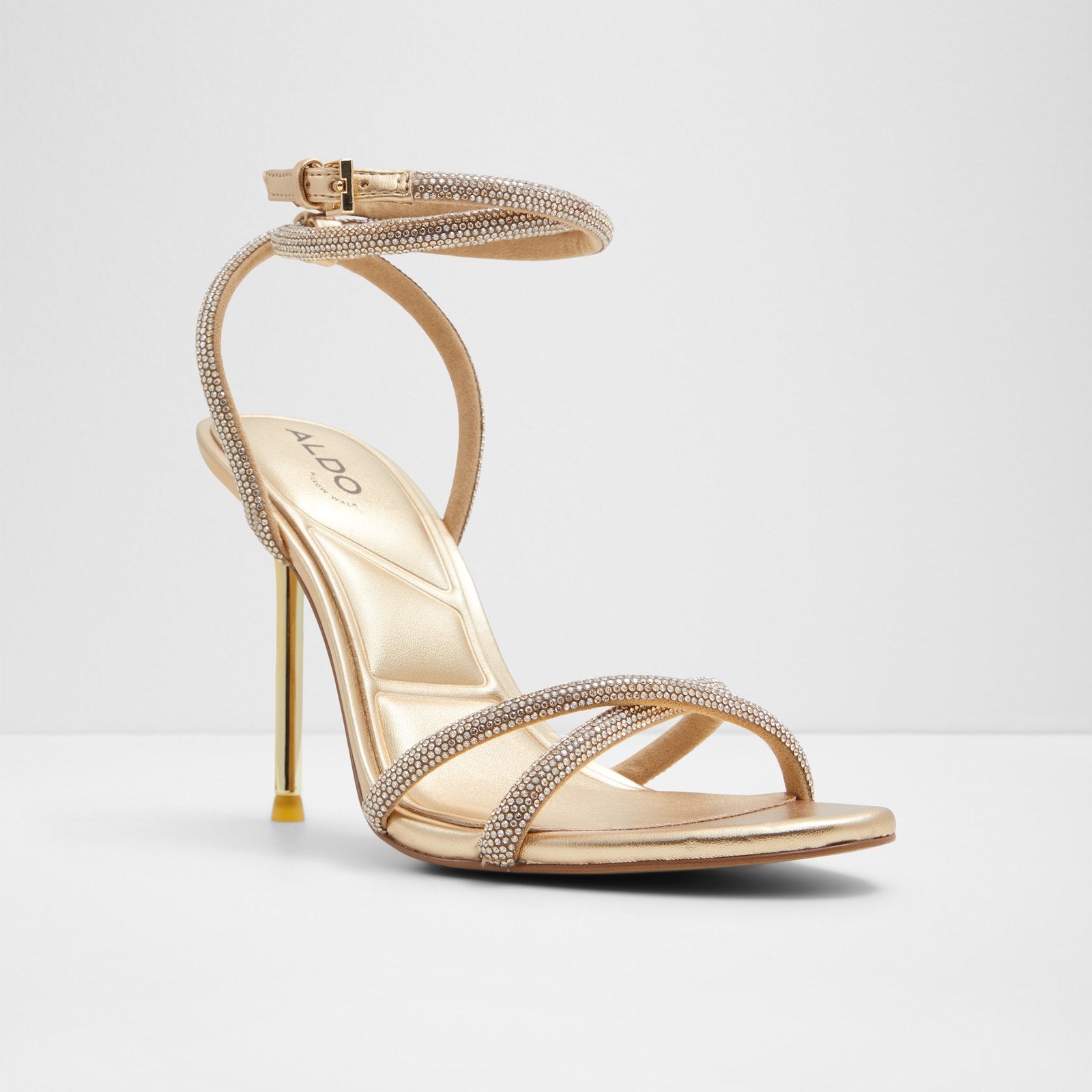
While stilettos captured advertising billboards, wedding guest heels emerged as the primary sales engine behind the collection. Modern weddings often demand eight to twelve hours of continuous wear: outdoor ceremonies on grass, cocktail hours standing on stone terraces, and hours of dancing on polished wood.
Strappy block heels became the breakout silhouettes within the range. Combining a wide heel base with the shock-absorbing insole solved two practical problems simultaneously: it stopped heels from sinking into grass and reduced lateral ankle wobble.
Real-world community feedback on platforms like Reddit's r/WeddingAttireApproval frequently highlights specific models, such as the Stessy pump and various cylindrical block sandals, as reliable solutions for marathon events. By keeping retail pricing squarely in the $85 to $130 range, the line undercut luxury comfort competitors by hundreds of dollars while delivering comparable structural support.
Evaluating the Trade-Offs: Performance Limits and Fit Considerations
Despite positive reception, ergonomic high heels cannot completely overcome basic physics. Consumers shopping for occasion footwear should evaluate their specific foot mechanics before buying.
The dual-density foam layer occupies volume inside the shoe. In narrow pointed-toe pumps, this padding can occasionally tighten the toe box, requiring buyers with broader feet to size up by half a size. Furthermore, while the shock absorption significantly lowers strike fatigue, wearers tackling four-inch heights will still experience calf strain and pelvic tilt after extended periods.
For standing-only events longer than five hours, models with heel heights between 2.5 and 3.25 inches deliver the best balance of aesthetic height and biomechanical sustainability.
Frequently Asked Questions (FAQ)
Q1: What makes Pillow Walk heels different from regular high heels?
Unlike standard dress shoes built on unyielding boards, these shoes feature dual-density memory foam padding, an impact-absorbing core, and targeted arch contours designed to disperse weight evenly across the entire foot bed.
Q2: Do these comfortable dress shoes require a break-in period?
Most models feel soft upon initial wear because of the top foam layer, but the structural base and heel counters often require one or two short wears to mold naturally to the wearer's foot shape and eliminate heel slippage.
Q3: How durable is the cushioning over multiple wedding seasons?
The high-density polyurethane foundation resists compression far better than standard EVA foams. Under typical occasion wear conditions of 10 to 15 outings a year, the shock-absorbing insole maintains its rebound properties for multiple seasons without bottoming out.
The Evolution of Event Footwear
The success of ergonomic occasion footwear signals a lasting change in how modern consumers evaluate style. Pain is no longer viewed as a necessary toll for wearing elegant evening clothes. By investing in mechanical foam density and anatomical weight distribution, mainstream brands have demonstrated that runway aesthetics can coexist with physical endurance. As shoppers continue to demand all-day wearability across every wardrobe category, the expectation of cushioned performance has transformed from an occasional luxury into a basic retail requirement.


