Gorilla Tag Modding Evolution: From Monkey Mod Manager to Modern VR Tools
For years, launching custom lobbies in Gorilla Tag began with a single executable: Monkey Mod Manager. Developed by community engineer DeadlyKitten, the lightweight installer turned what was once a fragile, multi-step process into a clean series of checkboxes. Players ticked off cosmetics, movement tweaks, and map loaders, hit install, and hopped into their headsets. Yet as virtual reality shifted from experimental indie releases to multi-million-dollar live-service ecosystems, the tooling underneath had to change. When independent mod networks and PC game modifications expanded across platforms, a trend analyzed in depth by technical coverage like the Wccftech Report, community developers faced a recurring challenge: keep pace with official studio patches or watch their tools disintegrate.
In 2026, the modding environment for Gorilla Tag looks fundamentally different from its 2021 origins. Developer Another Axiom moved the game through major engine updates, tightened networking protocols, and implemented stricter anti-cheat protections. These shifts altered the relationship between players and third-party code. Tracking the trajectory of Monkey Mod Manager reveals how a community-run pipeline adapted when studio updates repeatedly dismantled its foundation.
📌 Key Takeaways:
- Core Utility: Monkey Mod Manager served as the primary GUI wrapper for installing BepInEx and foundational libraries onto PCVR installations of Gorilla Tag.
- Breaking Point: Routine updates from developer Another Axiom frequently broke critical dependencies like Utilla, causing widespread game crashes and directory failures.
- Current Landscape: Modding now relies on modern open-source toolchains, direct manual directory management, and vetted repository downloads rather than legacy, unmaintained one-click scripts.
DeadlyKitten’s Utility and the Rise of PCVR Modding
When Gorilla Tag exploded in popularity, players were drawn to its novel locomotion system. Running, leaping, and climbing required only arm swings and physics interactions. Naturally, tinkerers wanted more. They wanted custom textures, ambient soundtrack swaps, and brand-new parkour environments. Because the game ran on Unity, modders quickly zeroed in on BepInEx, a modular plugin framework built to patch Unity games at runtime.
Early installation was clumsy. Users had to extract zip archives, drag directories into root folders, and verify command-line arguments. Monkey Mod Manager automated this entire pipeline. Operating as a simple C# utility hosted on GitHub, the manager scraped community repositories, identified updated .dll files, and placed them into the target game folder. If a player ran a desktop tether via Oculus Link compatibility or an open SteamVR setup, the tool injected the necessary code with one click.
The manager established standardized conventions for the entire player base. By packaging foundational components like Newtonsoft.Json and custom configuration handlers, it spared players from corrupting their clean installs. For nearly two years, grabbing the GitHub latest release of Monkey Mod Manager was mandatory reading in every Discord troubleshooting channel.
Why Official Studio Patches Fractured the Toolchain
Modding communities inevitably run into live-service realities. Another Axiom never launched an official mod developer kit; they tolerated modifications under a strict caveat: keep custom scripts out of public lobbies. When malicious scripts surfaced, most notably unauthorized fly hacks and disruptive client modifications, the developers deployed aggressive security updates and altered their networking libraries.
Every title update shook the mod ecosystem loose. Unity engine updates shifted internal memory offsets, instantly neutralizing existing plugins. Whenever this occurred, the manager’s manifest failed to reflect the broken state of the modules it was distributing. Unsuspecting players would check every box, launch their games, and find themselves staring at a black screen or stuck on an infinite loading loop. The automated installer had become an inadvertent delivery system for outdated software.
The linchpin of this instability was the Utilla dependency. Designed as a safety layer to isolate modded players into private lobbies, Utilla prevented modified clients from joining public matches. When an official patch broke Utilla, the game refused to launch altogether to prevent anti-cheat bans. Because Monkey Mod Manager pulled from static URLs that were not always maintained in real time, thousands of users found their installations broken after every studio hotfix.
The Structural Evolution of Gorilla Tag Modding
Between 2021 and 2026, the toolchain migrated away from simple web-scraped GUI installers toward resilient repository management, community-driven package builders, and manual installation practices.
| Evolution Era | Dominant Toolchain | System Vulnerability |
|---|---|---|
| Early Era (2021, 2022) | Monkey Mod Manager (DeadlyKitten), automated webhooks, base BepInEx 5. | Hardcoded paths, dead download mirrors, absence of dynamic compatibility checks. |
| Transition Era (2023, 2024) | Forked community managers, manual file injection, direct GitHub asset fetching. | Utilla library mismatches, Photon networking shifts, frequent anti-cheat disconnects. |
| Modern Era (2025, 2026) | Decentralized package manifests, containerized BepInEx setups, sandboxed private instances. | Engine API deprecation, hardware-level runtime conflicts, Meta Quest link shifts. |
Cosmetics, Custom Maps, and Community Protection
Modding wasn't just about utility; it was about culture. Two projects drove the adoption of mod installers more than any others: Gorilla Cosmetics and custom environment loaders. Gorilla Cosmetics allowed players to break free from the standard seasonal store items, equipping custom hats, badges, and materials visible to anyone else running the mod. Alongside it, a dedicated custom maps installer let parkour purists download massive, user-created vertical playgrounds that dwarf the vanilla forest environment.
Yet this creative freedom drew bad actors. Modified executables and injectables began appearing in unmoderated corners of YouTube and TikTok. Pre-packaged archives claimed to offer a "haunted mod menu," promising invulnerability, long-range tag radiuses, and room-crashing mechanics. These malicious tools violated Another Axiom’s terms of service and frequently concealed credential stealers aimed at Discord tokens and browser data.
The community responded through self-policing. Major modding Discords disavowed mod menus built for griefing, configuring their automated filters to delete mentions of unauthorized cheat suites. The emphasis shifted toward creative preservation: ensuring cosmetics and maps remained functional while shutting out exploits that could attract wider developer bans.
Resolving Directory Path Errors and Installation Failures
The most persistent headache for PCVR users remains the dreaded game directory path error. When players install Gorilla Tag via the Meta Quest desktop app rather than Steam, the folder structure diverges completely. Monkey Mod Manager often defaults to the standard Steam path (C:\Program Files (x86)\Steam\steamapps\common\Gorilla Tag). If the software finds nothing there, the installer stalls or throws an unhandled exception.
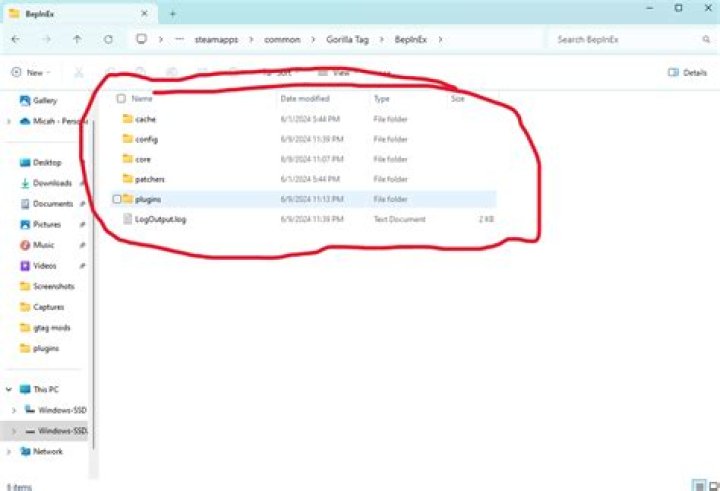
Effective broken mods troubleshooting requires understanding where files actually belong. When relying on modern BepInEx setups, all community extensions reside inside the Gorilla Tag\BepInEx\plugins directory. If a modded game crashes on startup, the fix rarely involves running an automated installer again. Instead, it demands systematic diagnostics:
First, players must clear out obsolete plugins that fail to initialize. Removing the legacy Utilla build and checking community hubs for hotfixed builds restores stability in most instances. Second, users operating through Oculus Link compatibility need to ensure the game directory inside the Meta Quest desktop folder contains an untampered UnityPlayer.dll file. When an automated installer overwrites core runtime components without matching the current game patch version, the only path forward is verifying integrity through the platform launcher and re-applying plugins manually.
Frequently Asked Questions (FAQ)
Q1: Does Monkey Mod Manager still work on modern Gorilla Tag builds?
The original legacy version developed by DeadlyKitten is largely unmaintained and often fails to retrieve updated mods due to changed GitHub API configurations and broken download URLs. While community forks exist, most modern players rely on updated open-source package utilities or manually copy verified .dll files directly into their plugins folder.
Q2: Can I install mods directly on a standalone Meta Quest without a PC?
Native Quest modding has become extremely restricted due to Android scoped storage policies and the migration of Gorilla Tag away from older mod-friendly Android runtime layers. While early Quest builds supported basic asset patching, modern modding is almost exclusively a PCVR activity executed via SteamVR or Quest Link cable.
Q3: Will using mods get my account banned from Gorilla Tag?
Using visual modifications, custom maps, or utility tools in private rooms with consenting players does not violate community standards. However, joining public matches with gameplay-altering scripts, cheats, or cracked clients will trigger automated anti-cheat flags, resulting in hardware-linked bans.
The Reality of Modern Virtual Reality Modding
The transition away from automated, one-click mod managers toward more disciplined installation practices marks a natural maturation for virtual reality software. Early VR communities operated like hobbyist test benches, where software was small enough that a lone developer could build an installer to bridge the gap for thousands of users. As titles reach massive commercial scale, game updates roll out weekly, and security becomes paramount, those casual bridges break.
Monkey Mod Manager proved that frictionless accessibility drives creative adoption. Even if the original software now stands as an artifact of an earlier era, the architectural principles it popularized, centralized plugin management, community dependency safety, and open-source distribution, remain the foundation of PCVR customization today.

