How Acquired Style's Bachelorette Party Sent This Smart Mirror Viral on TikTok
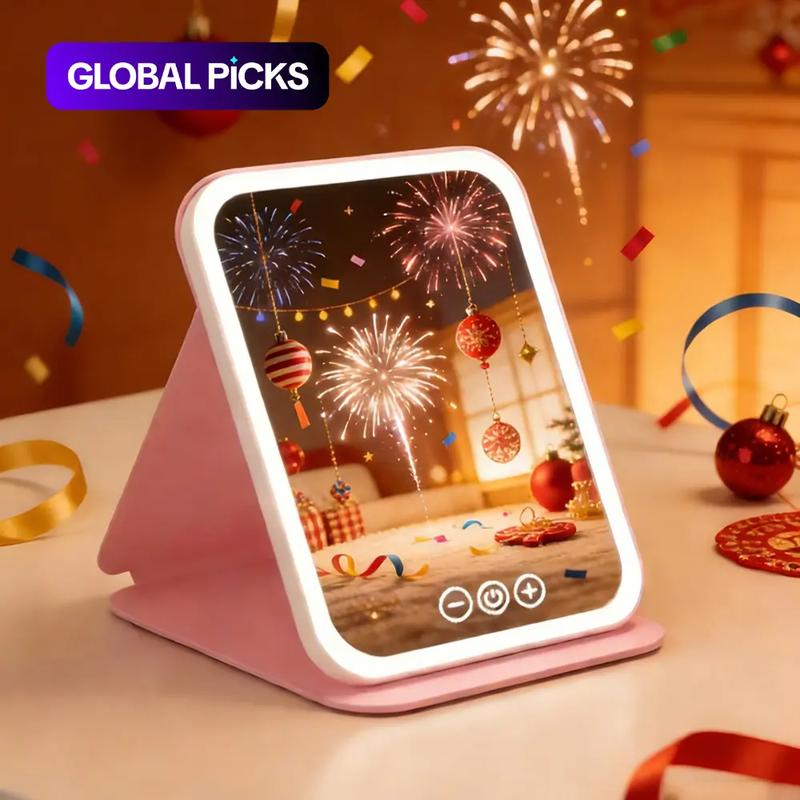
When lifestyle creator Brigitte Phelan, known online as Acquired Style, gathered her bridal party in late April 2026, the guest suite welcome bags skipped the usual embroidered robes and monogrammed flasks. Instead, bridesmaids unwrapped a high-end, tablet-integrated smart vanity screen that instantly dominated social feeds. As detailed by an E! News report, the device was the SWAN Beauty AI mirror, an ambitious hardware project that bypassed traditional PR agency mailers to bet entirely on a single bridal weekend.
Within seventy-two hours, the unboxing clips flooded the platform. Millions of viewers watched attendees test its motorized camera angles, diagnostic facial scans, and adjustable lighting settings against hotel vanity backdrops. The device leapfrogged standard vanity mirrors to become a top-searched gadget across lifestyle communities, demonstrating a calculated shift in how hardware makers build organic demand.
📌 Key Takeaways:
- The Viral Catalyst: SWAN Beauty skipped conventional influencer gifting runs to furnish an entire high-profile bachelorette party, generating tens of millions of views organically across wedding-prep vlogs.
- The Hardware Shift: Unlike standard LED cosmetic mirrors selling for $30 to $50, this generation combines high-CRI diffused lighting panels with local machine-vision cameras and custom shade-matching software.
- The Market Reality: Early adopters praise the professional illumination, but privacy advocates and budget-conscious buyers question whether embedded diagnostic cameras belong inside bedroom vanities.
The Bachelorette Suite That Sparked a Social Feed Phenomenon
Standard beauty campaigns follow a predictable formula: send hundreds of identical acrylic boxes to agency rosters and hope five percent post an Instagram story. SWAN Beauty took the opposite route. By supplying Brigitte Phelan's bridal party with full-sized production units, the brand positioned its hardware inside one of the most intensely documented social events of the season.
The staging felt natural to viewers. Bridesmaids sat side by side at twin vanities, testing contouring routines and adjusting color temperatures while chatting in matching pajamas. There was no teleprompter script. Because each creator had a distinct audience across beauty, wellness, and fashion, the content fractured into dozens of angles across the platform. One creator showcased the daylight balanced ring; another tested the skin texture analysis tool after an evening out.
The timing coincided with rising fatigue over traditional brand trips. Audiences frequently scroll past sponsored tropical excursions that feel disconnected from everyday life. A bridal suite prep session, by contrast, mirrors real social rituals that viewers already watch for hours. The organic setting converted passive scrolling into intense product curiosity.
From Basic LED Strips to Machine Vision on the Vanity
The cosmetic mirror category spent years stuck in a cycle of cheap iteration. Discount storefronts offered hundreds of identical plastic frames with underpowered ring lights, poor color rendering indexes (CRI), and micro-USB ports that failed within months. SWAN Beauty designed its unit around computer vision hardware rather than basic reflective glass.
The unit features a full-surface touchscreen LED mirror framed by adjustable studio diodes capable of cycling from 2,700K warm tungsten to 6,500K cool daylight. Behind the glass sits a micro-lens camera array paired with on-device processing. Instead of simply reflecting light, the mirror executes a personalized beauty analysis by assessing skin hydration patterns, redness, and foundation color matching in real time.
Users tap the display to run automated skincare checks, follow step-by-step application tutorials overlaid directly onto the surface glass, or record hands-free tutorials with studio-grade illumination. It bridges the gap between home vanity and creator production studio.
The Evolution of Vanity Technology: 2022 to 2026
The shift from budget bedroom accessories to premium smart home beauty tech reflects broader hardware upgrades across the personal care industry. Below is a breakdown of how the product category developed over recent product cycles.
| Hardware Category | Standard Market Tier (2022, 2024) | Next-Gen Smart Tier (2025, 2026) |
|---|---|---|
| Lighting Source | Fixed single-strip diodes, CRI | Full-spectrum edge-lit diffusion, CRI 96+, continuous kelvin dimming |
| Smart Processing | None; analog capacitive touch button on bottom glass | On-device neural engine, diagnostic skin tracking, facial topology mapping |
| Connected Ecosystem | Stand-alone battery or micro-USB cord | Wi-Fi 6 syncing, cross-platform app profiles, dynamic tutorial streams |
| Retail Price Point | $25, $65 | $299, $499 |

Why Brands Are Ditching Traditional Trips for Targeted Sponsorships
Business publications took notice of the campaign mechanics. As analysis from Inc. Magazine pointed out, funding an intimate influencer bachelorette weekend delivers dramatically higher return on investment than hosting a generic company junket. A typical corporate retreat requires flying twenty creators to an island resort, renting luxury villas, and catering private dinners, often exceeding $250,000 to $400,000 in logistical overhead.
Sponsoring a life milestone costs significantly less while tapping into authentic excitement. The creators are already committed to filming their routines, outfits, and morning preparations. The product naturally enters the foreground of every video without interrupting the narrative.
Platform dynamics reward this approach. Algorithms on short-form platforms favor raw, contextual lifestyle footage over polished studio advertisements. When multiple accounts post from the exact same hotel suite using the same mirror over an entire weekend, recommendation engines recognize the cluster and push the content onto millions of discover feeds simultaneously.
Diagnostic Vanity Screens: Utility Versus Privacy Realities
Behind the sleek aesthetic sits a complex piece of consumer hardware. Beauty enthusiasts praise the lighting accuracy. Makeup artists frequently note that standard domestic bathroom fixtures cast downward shadows, leading people to over-apply concealer or pick incorrect foundation undertones. A high-CRI, neutral-daylight mirror eliminates that guesswork entirely.
The diagnostic camera features face sharper scrutiny. Community threads on Reddit and product comment sections highlight recurring user hesitations. Vanity mirrors live in bedrooms and bathrooms, spaces where consumers are understandably sensitive about internet-connected cameras. While manufacturers emphasize that local machine-learning chips handle facial analysis on-device without uploading raw footage to cloud servers, consumers burned by previous smart-home data breaches remain cautious.
There is also the durability question. Standard glass mirrors last decades without maintenance. A mirror powered by proprietary operating software, touchscreen panels, and wireless radios depends entirely on ongoing software updates and battery health. Buyers must decide whether they want a permanent furniture staple or a piece of consumer electronics that may require an upgrade every four to five years.
Who Should Invest in Smart Vanity Tech and Who Should Skip It
Investing in a high-end smart lighted vanity mirror makes sense for specific daily routines, but remains unnecessary for casual users.
Ideal Profiles:
- Content Creators and Digital Broadcasters: The integrated camera placement and broadcast-grade lighting simplify filming tutorials without requiring separate softboxes or tripods.
- Skincare Tracking Enthusiasts: Users who want consistent lighting to monitor hyperpigmentation, dermatological treatments, or morning hydration levels benefit from repeatable photo conditions.
- Professional Makeup Artists: Precise kelvin adjustments prevent color-matching disasters across varying venue lighting environments.
Risk Flags and Profiles That Should Skip:
- Privacy-Conscious Consumers: Anyone uncomfortable with front-facing optical sensors in private bedrooms or en-suite bathrooms should choose a premium non-connected illuminated mirror instead.
- Budget Shoppers: At prices ranging from $300 to over $450, the diagnostic features command a heavy premium over high-quality manual LED mirrors that cost under $80.
- Minimalist Households: The device requires dedicated desk space, proximity to power outlets, and periodic software synchronization.
Frequently Asked Questions (FAQ)
Q1: What makes the SWAN Beauty AI mirror different from ordinary lighted mirrors?
A1: Traditional vanity mirrors use basic warm or cool LED borders. The SWAN mirror incorporates calibrated studio-grade diodes (96+ CRI), a center-integrated touchscreen, and an optical sensor that runs algorithmic skin texture scans and foundation shade analysis directly on the glass.
Q2: How much does the viral AI mirror cost?
A2: Smart diagnostic mirrors in this category retail between $299 and $499, depending on panel dimensions, motorized mounts, and processing specifications, positioning them well above standard vanity mirrors.
Q3: Does the mirror store private photos or videos on cloud servers?
A3: Most manufacturers in this high-tech vanity category utilize edge computing, meaning facial scanning data is processed locally on internal hardware chips rather than uploaded to remote storage servers. However, users should always review individual device privacy policies before connecting them to home Wi-Fi networks.
The Road Ahead for Connected Vanity Tech in 2026
The sudden rise of the smart vanity mirror confirms that personal grooming spaces are absorbing the same smart-device upgrades that reshaped kitchens and home gyms. SWAN Beauty succeeded by recognizing that hardware goes viral not through technical specification sheets, but through organic peer proof inside culturally resonant moments.
As competitors scramble to launch similar touchscreen units across social shopping channels, the battle will center on software utility. Hardware makers must prove that diagnostic facial assessments offer lasting personal value rather than momentary social novelty. For now, the bachelorette suite experiment remains a blueprint for how lifestyle brands turn high-end home tech into an internet sensation overnight.


