How to Achieve the Glassy Tanghulu Crunch: The Exact Temperature Secret
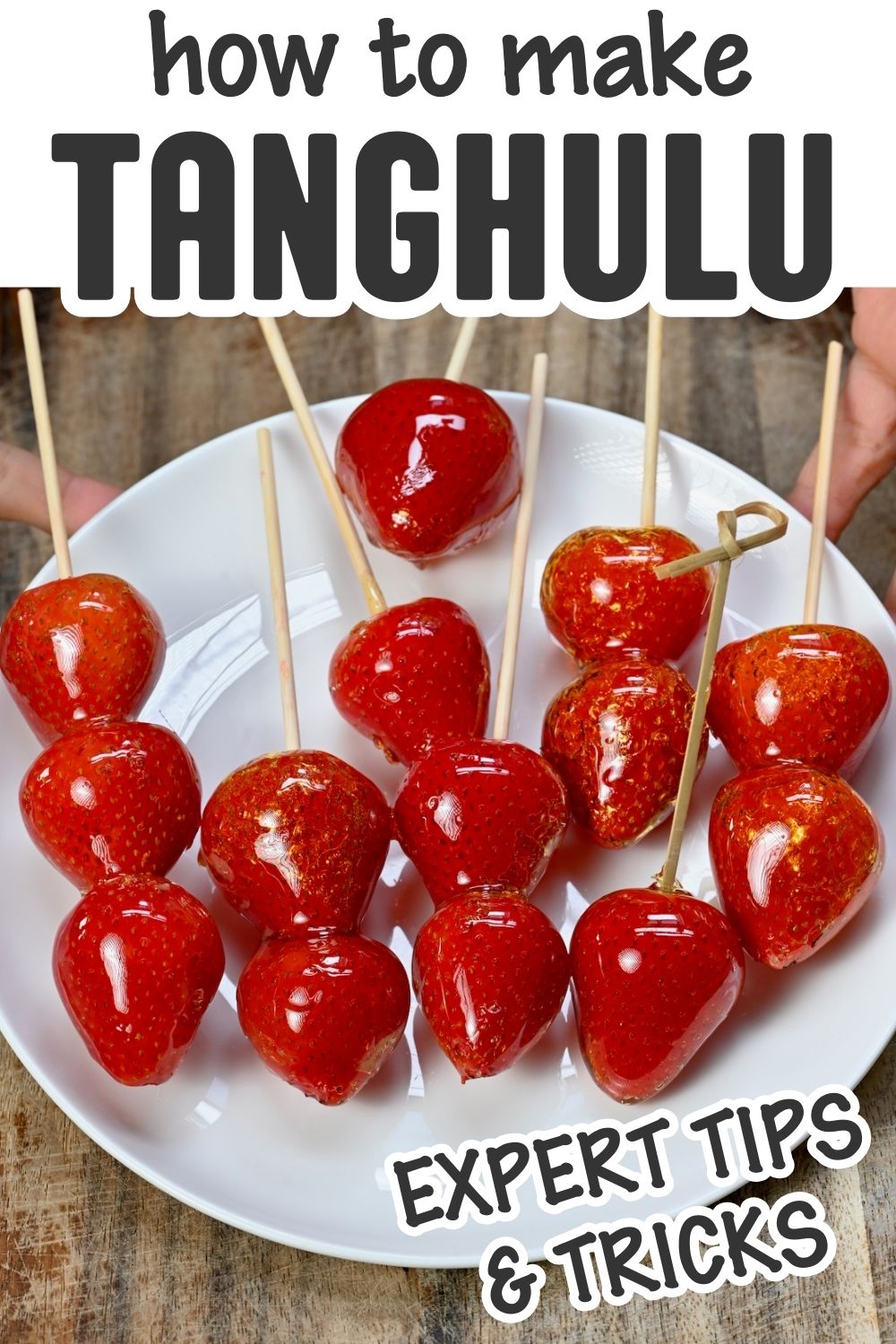
That sharp, audible snap of a wafer-thin sugar shell yielding to cold, juicy fruit is the defining signature of authentic tanghulu. When executed properly, this northern Chinese street snack coats crisp fruit in a crystal-clear glaze that shatters instantly between your teeth without sticking to your enamel. Yet home cooks frequently encounter a frustrating failure: a chewy, tacky syrup that welds itself to molars and leaves fruit leaking warm juice inside a cloudy coat.
Achieving street-cart perfection requires treating sugar cooking as precise food chemistry rather than a casual simmer. As detailed in the recent Serious Eats Report on mastering the glossy treat, the difference between sticky syrup and an immaculate glass shell comes down to boiling sugar paste past its water-retention threshold to hit the hard crack stage at an exacting 300°F to 310°F.
📌 Key Takeaways:
- The Temperature Rule: The sugar syrup must reach 300°F, 310°F (149°C, 154°C) to snap cleanly instead of clinging to your teeth.
- The Golden Ratio: Maintain a 2:1 sugar-to-water ratio by weight or volume, leaving the pot untouched by spoons once boiling starts to stop crystallization.
- Surface Dryness Matters: Any droplet of ambient water on the fruit skin will dissolve the hot coating instantly from the inside out.
From Northern Chinese Street Carts to Global Kitchens
Tanghulu (traditionally bīngtánghúlu) originated during the Song Dynasty across northern China, where street vendors threaded tart Chinese hawthorn berries onto slender bamboo skewers before dipping them into boiling sugar. During freezing Beijing winters, the sugar cooled instantly in the dry air, creating a translucent, ice-like crust. Hawthorn berries, naturally packed with pectin and bracing acidity, provided the ideal sharp counterpoint to pure sucrose.
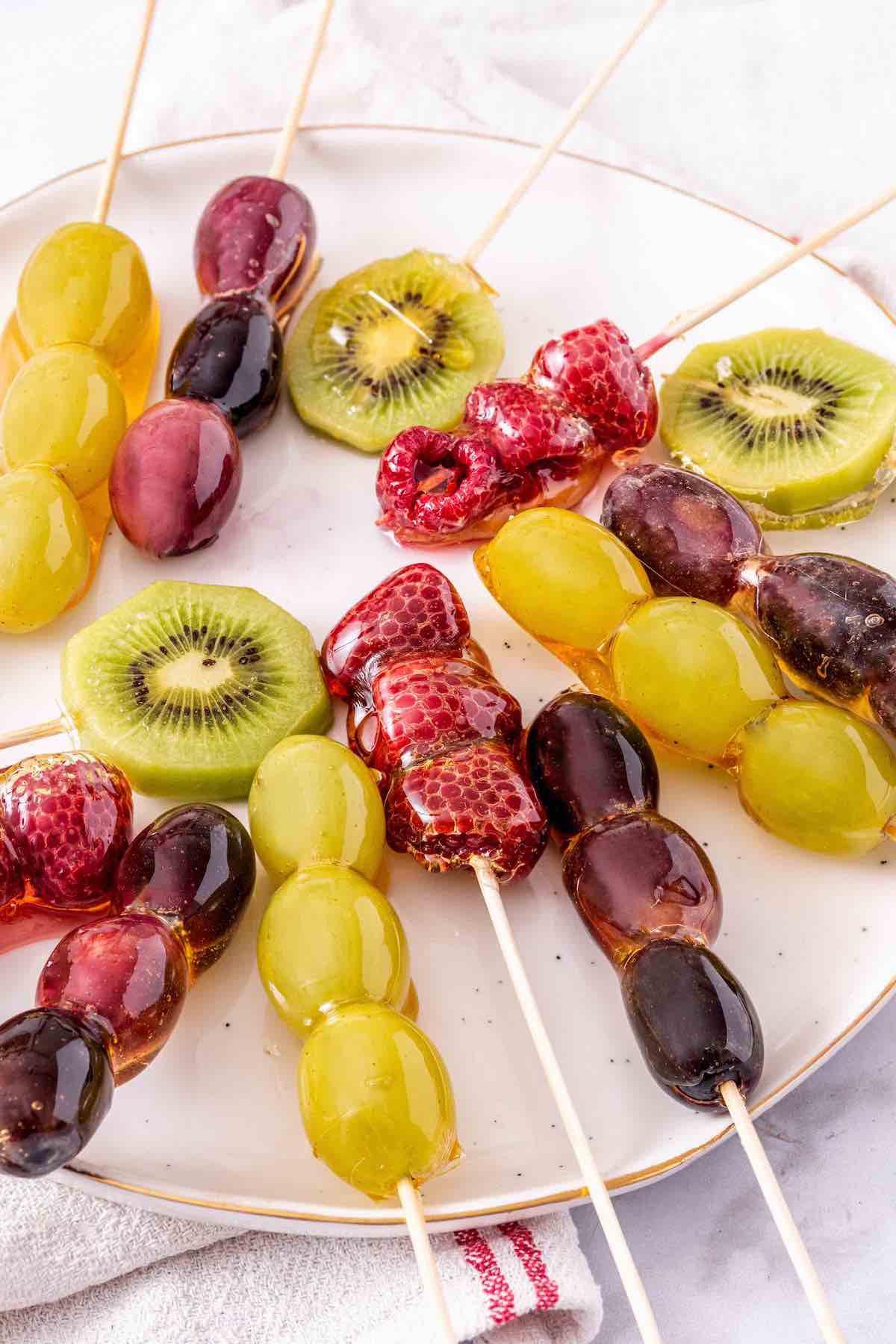
Over decades, the tradition evolved. Modern vendors and home cooks expanded the repertoire across East Asia, skewering shine muscat grapes, mandarin segments, cherry tomatoes, and candied strawberries. The worldwide craze that surged across digital channels transformed this historic winter comfort into an all-season obsession. Skewers now command upwards of $5 to $8 at night markets in New York and London, prompting enthusiasts to master the technique on their own stovetops.
The Hard Crack Stage: Hitting 300°F Without Guesswork
Sugar cookery is a battle against moisture. Table sugar dissolves into water, but as the mixture boils, water evaporates and the concentration of sucrose climbs rapidly. Each stage corresponds to an exact syrup concentration and temperature range.
If you pull the syrup at 270°F, you are trapped in the soft crack stage; the coating will cool into a bendable, taffy-like layer. To get that signature brittle fracture, the syrup must hit the hard crack stage between 300°F and 310°F (149°C and 154°C), where water content drops to roughly 1%. At this exact threshold, sucrose vitrifies into an amorphous solid upon cooling, essentially edible glass.
| Candy Stage | Temperature Range | Physical Behavior in Cold Water | Suitability for Tanghulu |
|---|---|---|---|
| Soft Ball | 235°F, 240°F (113°C, 116°C) | Forms a soft, pliable ball that flattens | Unusable (liquid syrup) |
| Firm Ball | 245°F, 250°F (118°C, 121°C) | Forms a stable ball that yields to pressure | Unusable (caramel chews) |
| Soft Crack | 270°F, 290°F (132°C, 143°C) | Forms pliable threads that bend | Failed (sticky, ruins teeth) |
| Hard Crack | 300°F, 310°F (149°C, 154°C) | Forms brittle threads that snap instantly | Ideal Target |
| Light Caramel | 320°F, 335°F (160°C, 168°C) | Turns deep amber; sugar begins breaking down | Overcooked (burnt, bitter profile) |
A calibrated digital candy thermometer provides the most reliable readout. Clip the probe so it rests suspended in the bubbling center without touching the scorching bottom of your stainless steel saucepan. Keep a close watch once the bubbling slows; the temperature rises at a sluggish pace toward 260°F before rocketing upward rapidly past 290°F.
The Ice Water Test and Preventing Sugar Crystallization
If you lack a specialized probe, rely on the classical ice water test. Keep a small bowl filled with ice water and a pair of wooden chopsticks next to your burner. Once the bubbling turns dense, slow, and pale golden, dip the tip of a skewer into the syrup and plunge it straight into the ice water for three seconds.
Remove the skewer and test the bead with your fingertips or bite into it gently. If it yields like stiff gummy candy, boil for another 60 to 90 seconds. If it shatters into crisp, glass-like shards with a sharp snap, take the pot off the heat immediately.
The primary chemical pitfall during this process is premature sugar crystallization. When sucrose molecules attach to an undissolved grain or rough edge, a chain reaction turns your clear liquid into an opaque, gritty paste. Guard against this with three strict rules:
- Use the correct sugar-water ratio: Mix 2 parts white granulated sugar to 1 part water (such as 200g sugar to 100g water). This gives the crystals enough liquid to dissolve fully before evaporation starts.
- Never stir once heat is applied: Gently combine sugar and room-temperature water off the heat until wet. Once placed on medium-high heat, drop the spoon. Agitation forces sucrose molecules together.
- Add an interfering agent: Incorporating 1 tablespoon of light corn syrup (or 1/4 teaspoon of lemon juice) introduces glucose and fructose chains. These irregularly shaped molecules block sucrose crystals from locking into a rigid lattice, preserving that clean mirror shine.
Fruit Preparation and the Hidden Pitfalls of Moisture
Sugar syrup repels standing water. The single most common cause of sweating, sliding tanghulu is surface dampness on the fruit. If skin retains moisture, steam forms the second the 300°F syrup touches it, separating the candy shell from the fruit and liquefying the interior layer within ten minutes.
Wash your strawberries, grapes, or kumquats thoroughly, but leave stems attached until cleaning is finished to keep water from seeping into internal cavities. Lay the fruit across paper towels and air-dry for at least 45 to 60 minutes at room temperature until the outer skins feel completely dry and slightly tacky.
When threading fruit onto bamboo skewers, pierce through firm central cores without puncturing all the way through the top. Puncturing the outer wall releases fruit juice that ruins the dip. Work in small batches of two to three pieces per skewer to keep the center of gravity low and coating motions swift.
Molten Sugar Safety and Why Doctors Warn Against Microwave Shortcuts
The explosive popularity of tanghulu on short-form video apps sparked an influx of fast-track tutorials, particularly microwave tanghulu methods using paper cups. Medical professionals have sounded alarms over the trend. In late 2024, emergency room physicians and pediatric burn specialists warned through broadcasts like NBC 6 that molten sugar behaves identically to culinary napalm.
At 300°F (149°C), supersaturated sugar syrup clings tightly to living tissue, delivering devastating full-thickness burns before it can be rinsed away. Microwaving sugar mixtures inside lightweight paper or plastic cups creates concentrated thermal hot spots. When users remove the cup or tilt the skewer, the vessel can collapse, splashing scalding syrup over hands and forearms.
Always practice strict molten sugar safety:
- Work in a clutter-free kitchen, keeping young children and pets out of the immediate splash zone.
- Use a heavy-bottomed, high-sided saucepan that will not tip when tilted.
- Keep an oversized bowl of cold water nearby to immerse fingers instantly in the event of an accidental droplet.
- Avoid microwave short-cuts. A small saucepan gives you visual feedback, precise temperature monitoring, and a stable base for dipping.
When coating, tilt your saucepan at a 45-degree angle so the syrup pools deep on one side. Roll each skewer through the top surface in a single, fluid rotation taking no more than two seconds. Let excess glaze drip back into the pan for three seconds, then transfer the skewer onto a parchment-lined baking sheet or a silicone mat. In ambient room conditions, the candy shell sets rock-hard in under two minutes.
Frequently Asked Questions (FAQ)
Q1: Why is my tanghulu sticky and sticking to my teeth?
A1: The syrup never reached the hard crack stage (300°F, 310°F). It was likely pulled at the soft crack stage (270°F, 285°F). You must boil the syrup longer until a test drop snaps cleanly in ice water.
Q2: Can I store homemade tanghulu in the refrigerator overnight?
A2: No. Refrigerators are humid environments, and sugar is naturally hygroscopic, meaning it absorbs moisture from the air. Within two to three hours, a crisp shell will turn syrupy and weep. Tanghulu should be enjoyed within an hour of dipping.
Q3: What can I use as a corn syrup substitute if I don't have any?
A3: Add 1/4 teaspoon of freshly squeezed lemon juice, rice syrup, or a pinch of cream of tartar per cup of granulated sugar. The acid breaks sucrose down into invert sugars, which prevents crystallization.
Q4: Why did my hot sugar turn cloudy and grainy while boiling?
A4: The mixture was stirred while boiling, or stray sugar crystals along the rim seeded premature crystallization. Dissolve the sugar thoroughly before heating, brush the inside walls of the pot with a wet pastry brush if needed, and never stir boiling syrup.
Mastering the Perfect Glaze in 2026
The timeless appeal of tanghulu rests on elemental culinary science: managing evaporation, suppressing unwanted crystals, and respecting thermal thresholds. Bypassing shortcuts in favor of a reliable candy thermometer and properly dried fruit eliminates guesswork entirely. Once you master the snap of the hard crack stage, you can transform simple market fruit into glossy, street-cart confections that shatter cleanly on every bite.