Inside the Archives: What Marie Antoinette's Real Death Mask Actually Looks Like

When the blade fell on October 16, 1793, the French Republic did not merely execute a deposed queen; it set off a scramble to document, monetize, and politicize her severed features. Public fascination with the fallen monarch has surged anew following major European retrospectives, including the Victoria & Albert Museum's high-profile curation chronicled in a Prestige Online - Singapore Report. Yet behind the silk gowns and porcelain luxury lies a far grimmer artifact: the purported Marie Antoinette death mask, an unsparing plaster impression allegedly taken minutes after her decapitation.
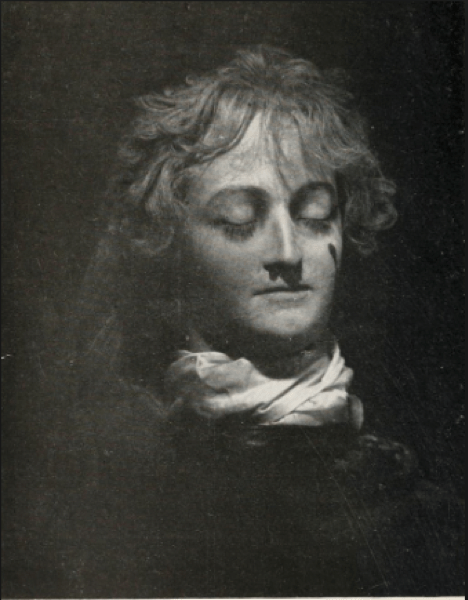
Stored across select European archives and wax museum vaults, these casts present a startling counter-narrative to royal portraiture. The features are sharp, hollowed by months of confinement, and frozen in rigorous trauma. Unraveling what this plaster relic actually shows requires separating sensational showmanship from the documented realities of the Reign of Terror.
📌 Key Takeaways:
- The Provenance: Marie Grosholtz (later Madame Tussaud) claimed revolutionary authorities forced her to cast the severed head immediately after the guillotine execution at the Place de la Révolution.
- The Anatomical Truth: The surviving plaster cast displays genuine trauma markers, sunken orbital sockets, collapsed buccal tissue, and severe jaw clenching consistent with rapid post-mortem plaster application.
- The Curatorial Reality: Museum conservators and historians view the Marylebone wax museum archives not as immaculate forensic crime records, but as a blend of authentic late-18th-century casts and strategic exhibition modeling.
The Madeleine Cemetery and Marie Grosholtz’s Harrowing Task
The story of the death mask begins in the limestone mud of the Madeleine cemetery. Minutes after the guillotine blade severed Marie Antoinette’s neck at 12:15 PM on October 16, 1793, executioners dumped her remains into an unpainted pine trunk and carted them north from the Place de la Révolution.
Enter Marie Grosholtz, the skilled thirty-one-year-old modeler who had learned wax sculpture from Dr. Philippe Curtius. In her published 1838 memoirs, Grosholtz stated that the National Convention ordered her to take plaster impressions of high-profile victims to verify their executions and preserve their likenesses for public displays. She wrote of sitting on the cemetery grass with the bleeding head resting in her lap, mixing liquid plaster of Paris, and applying it directly over the queen's cooling skin.
Cemetery grave diggers worked rapidly to cover corpses with quicklime to accelerate decomposition and prevent royalist sympathizers from stealing remains. Securing permission to extract a severed head required direct sanction from the Committee of Public Safety. Grosholtz had already taken impressions of Louis XVI following his January execution, as well as radical journalist Jean-Paul Marat. The regime required undeniable visual proof that the monarchy was dead, and Grosholtz possessed the exact technical skill required to capture it.
Plaster, Bone, and Trauma: Reading the Facial Impression
The original plaster cast attributed to Marie Antoinette measures roughly 21 centimeters in height, capturing the face from the hairline to just beneath the chin. It departs radically from the courtly oil portraits painted by Élisabeth Vigée Le Brun.
| Facial Feature | Versailles Court Portraits (Pre-1789) | Surviving Plaster Death Mask (Post-1793) |
|---|---|---|
| Habsburg Jaw & Lower Lip | Softened prognathism; discreetly painted lower lip. | Prominent, asymmetrical lower mandible with thinned, compressed lips. |
| Cheekbones & Orbital Area | Plump, luminous, rounded facial contours. | Deeply recessed sockets, hollowed cheeks showing advanced weight loss. |
| Nasal Bridge | Straight, delicate, idealized aquiline curve. | Prominent, slightly hooked cartilage structure showing natural asymmetry. |
| Muscle Tone & Expression | Serene, sovereign confidence; poised detachment. | Rigid post-mortem spasm; mouth lines pulled downward by gravity and shock. |
Forensic pathologists who have reviewed photographic plates of the mask point to the flattened nose tip and uneven pressure along the left cheek, artifacts typical of a direct plaster cast poured over a face resting horizontally on a makeshift work surface. The Habsburg jaw, a distinct genetic marker of the Austrian imperial house, is unmistakable. In court portraits, painters softened this forward projection to maintain classical aesthetic proportions. The plaster mold offers no such flattery.
Survival Records Across the Wax Museum Archives
Tracking the original cast requires navigating fires, international border crossings, and commercial myth-making. In 1802, facing financial ruin during the Napoleonic economic blockade, Grosholtz left her estranged husband François Tussaud in France and sailed for Britain with her traveling exhibition of heads.
Her touring displays drew massive crowds in London, Edinburgh, and Dublin. The public paid one shilling each to enter the "Separate Room" (later named the Chamber of Horrors), where the wax effigies molded from these casts stood alongside the authentic blade used in the executions.
Archival records at Madame Tussauds London confirm that early iterations of the Louis XVI death mask and the Marie Antoinette cast were held in Baker Street by 1835. A disastrous fire in March 1925 destroyed huge portions of the museum’s inventory, including hundreds of historical wax figures. However, critical early plaster casts survived inside fire-resistant storage vaults. Secondary casts and early plaster positives also exist within French national institutions, including items housed in the Musée Carnavalet and regional archaeological collections.
The primary debate among museum curators concerns whether the London display represents the primary matrix, the actual plaster inverse peeled from her face, or a secondary positive reworked by Grosholtz to build realistic glass-eyed wax duplicates. Physical indicators, such as seam lines from multi-piece waste molds, suggest the surviving London object is an early generation cast taken directly from the original mold before the quicklime destroyed the biological subject.
The Brutal Decline Inside the Conciergerie Prison
To understand the severe emaciation visible on the mask, historians examine the queen's final seventy-six days inside the Conciergerie prison. Transferred from the Temple fortress in August 1793, Marie Antoinette was designated "Prisoner No. 280" and placed in a damp, subterranean cell overseen by armed guards around the clock.
Deprived of privacy, fresh air, and proper nutrition, her health deteriorated rapidly. Contemporary accounts from her jailer’s wife, Rosalie Lamorlière, document that the thirty-seven-year-old former queen suffered from persistent hemorrhages, likely caused by advanced uterine fibroids or early-stage cervical cancer. She lost dramatic amounts of weight within two months. Her hair turned prematurely white, cut short with dull shears on the morning of her trial.
The death mask reflects this physical degradation. The cheek tissue clings closely to the zygomatic arches, and the skin around the temples appears tight and sunken. The cast captures a body ravaged by illness, confinement, and psychological terror, dismantling the persistent myth that the queen remained untouched by the physical privations that gripped Paris during the Terror.
Evaluating the Authenticity of French Revolution Relics
The late 18th and early 19th centuries saw a booming market for morbid relics. Fabricated locks of hair, counterfeit splinters from the scaffold, and forged letters flooded collectors' cabinets. Separating genuine historical items from post-revolutionary marketing requires strict provenance testing.
First, Marie Grosholtz’s presence at the Madeleine cemetery is verified through police records and municipal registry notations from the Paris Commune. The revolutionary government systematically employed Curtius’s workshop to make death masks as forensic documentation. Grosholtz was a registered artisan operating under strict civic surveillance. Failing to perform a state-ordered mold could lead directly to accusations of royalist sympathies, and a trip to the scaffold herself.
Second, the dimensional accuracy of the mask matches surviving personal artifacts. Measurements of Marie Antoinette’s silk slippers, bonnets, and velvet bodices preserved in French archives correspond to the petite cranial dimensions documented in the plaster cast. If Grosholtz had fabricated the face from memory, the cast would mirror the generalized, neoclassical facial templates popular in 1790s sculpture. Instead, the mask displays raw, asymmetrical flaws that point to a direct facial impression.
Frequently Asked Questions (FAQ)
Q1: Did Madame Tussaud really cast Marie Antoinette's head immediately after her execution?
A1: Yes. Historical records and police archives confirm that Marie Grosholtz (later Madame Tussaud) worked for the revolutionary authorities to cast prominent victims directly after their executions in the Madeleine cemetery, producing forensic proof of death for the National Convention.
Q2: Where is the original Marie Antoinette death mask kept today?
A2: The primary surviving plaster impressions remain in the secure historical archives of Madame Tussauds in London, with period-accurate secondary casts and related revolutionary artifacts preserved at the Musée Carnavalet in Paris.
Q3: How does the death mask differ from contemporary portraits of the queen?
A3: The death mask reveals a far more pronounced Habsburg jaw, an asymmetrical nose, deeply sunken eye sockets, and severe emaciation resulting from her brutal imprisonment in the Conciergerie, whereas court portraits heavily idealized her appearance.
Q4: Did the 1925 Madame Tussauds fire destroy the original death mask?
A4: No. While the March 1925 fire destroyed hundreds of wax figures, key historical plaster molds and casts, including those of Louis XVI and Marie Antoinette, were stored in reinforced lower-level vaults and survived intact.
Q5: Why did the French Revolutionary government order death masks to be made?
A5: The Committee of Public Safety used plaster casts as definitive visual documentation to prevent rumors that royal family members had escaped, while also providing sculptors with precise anatomical templates to produce political propaganda.
The True Face Behind the Guillotine Legend
The plaster cast of Marie Antoinette remains one of the most sobering artifacts of late-18th-century Europe. Stripped of high-fashion curation, towering powdered coiffures, and flattering court portraiture, the mask documents the reality of a political prisoner caught in the violent machinery of revolutionary transformation.
Examining this physical record strips away centuries of revisionist myth. The artifact reveals neither a detached villain nor an idealized martyr, but an exhausted, ailing human face bearing the undeniable trauma of her final hours. As modern archival methods and 3D surface scanning continue to examine these surviving casts, the death mask stands as an unvarnished physical bridge to the bloody birth of modern Europe.