Inside the NeeDoh Shortage: Why Nice Cream Squishies Are Sold Out Everywhere

Walk into a neighborhood specialty toy store or scan the shelves of major retailers this season, and employees will likely offer the same tired response before you even finish speaking: they have zero in stock. The mania surrounding Schylling NeeDoh reached an unprecedented level throughout early 2026, driven by a pint-sized, swirl-topped novelty known as the NeeDoh Nice Cream. Following the explosive run of the translucent NeeDoh Nice Cube, this latest sensory stress ball has vanished from store displays nationwide. As detailed in a New York Magazine Report, the inventory drought has forced boutique shopkeepers to ration incoming boxes and turned everyday consumers into cross-county hunters tracking delivery trucks.
📌 Key Takeaways:
- The Scarcity Trigger: Unprecedented viral TikTok squishies trends paired with production bottlenecks at Schylling created an absolute nationwide stockout for the NeeDoh Nice Cream in early 2026.
- The Formula Evolution: Unlike standard water- or gel-filled balls, Nice Cream features an ultra-dense, slow rise texture that feels remarkably like frozen soft-serve dough, creating an addictive tactile feedback loop.
- The Market Consequence: The ongoing toy shortage pushed retail prices from their standard $9.99, $11.99 MSRP to scalper valuations exceeding $45.00, $60.00 on secondary marketplaces, forcing indie shops to enforce strict purchase caps.
The Sensory Physics That Made Nice Cream an Overnight Phenomenon
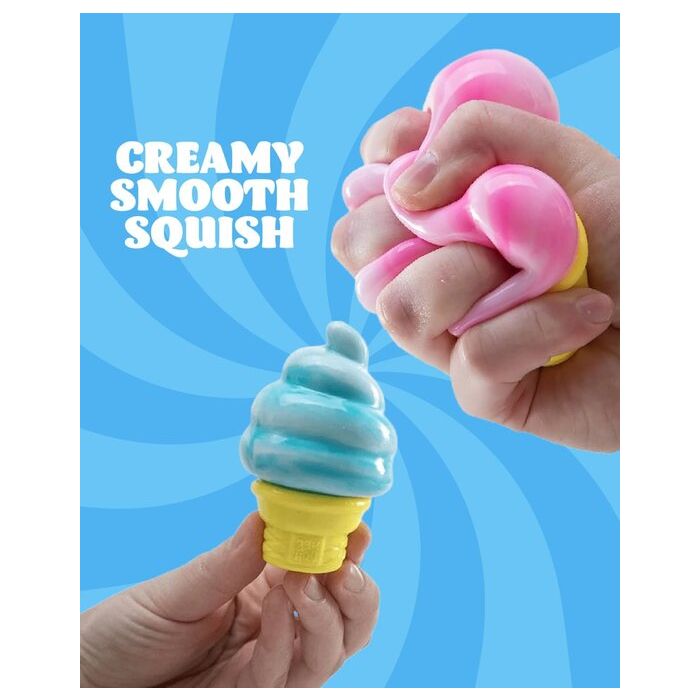
The runaway popularity of the Nice Cream did not happen by accident. Toy manufacturer Schylling tapped into a distinct neurochemical response when designing the product's resistance profile. Traditional foam squishies compress instantly and snap back too fast. Water-filled stress balls feel unpredictable and run the constant risk of bursting in a consumer's hands. The Nice Cream, shaped like an ice cream cone with a textured swirl cap, uses a modified high-density elastomeric shell filled with a patented micro-aerated semi-solid dough.
When compressed, the toy resists firmly before yielding smoothly under thumb pressure. The internal compound creeps outward through the mold, holding an indentation for three to four seconds before creeping back to its baseline shape. That deliberate, slow rise texture delivers intense proprioceptive input. Occupational therapists have long utilized firm tactile sensory play to regulate nervous systems under sensory overload. Schylling packaged those clinical mechanics inside a pastel dessert aesthetic that speaks directly to adults coping with workspace fatigue as much as children trading novelties at recess.
The sensory response feeds directly into short-form media. Close-up microphones capture the muffled, matte crunch of the exterior casing during compression, producing pure audio triggers. Within weeks of release, ASMR creators had uploaded tens of thousands of silent squish clips to social platforms. Each clip garnered hundreds of thousands of views, transforming a simple mass-market novelty into a coveted mental escape hatch.
How Short-Form Video Algorithms Crushed Specialty Retail Inventory
The digital engine behind this product run caught supply chain planners completely flat-footed. When previous viral fidget toys took off during the early 2020s, retail distribution networks had time to adjust over several quarters. In contrast, the algorithmic surge behind the Nice Cream ignited over a window of roughly three weeks between January and March 2026.
A specialized subculture of squishy collectors began posting comparison videos ranking the resistance of different production batches. Content creators pitted the dense ice cream swirl against the firm gelatinous pull of the earlier Nice Cube. Sound bites highlighting the satisfying "plop" of a freshly unboxed Nice Cream achieved sound-trend status across TikTok and Instagram Reels. Billions of impressions hammered an audience far wider than the typical elementary school demographic.
College students bought them to keep their hands busy during lectures. Remote tech workers bought them as desktop anxiety relief toys to survive back-to-back video calls. Because these demographic groups possess discretionary income that young children do not, price resistance evaporated instantly. When local neighborhood gift stores received single cartons containing 12 to 24 units, entire shipments were cleaned out within thirty minutes of opening.
The Evolution of NeeDoh: Data, Materials, and Secondary Resale Dynamics
The current frenzy represents the culmination of a multi-year shift in how sensory items are developed, priced, and collected. The timeline below illustrates how Schylling's product architecture evolved from basic carnival-grade items into highly engineered tactile collectibles that command significant premiums on resale markets.
| Product Line | Core Material Composition | MSRP vs. Scalper Price (2026) | Average Shelf Life Before Stockout |
|---|---|---|---|
| Classic NeeDoh Ball (2018, 2022) | Maltose gel inside thin thermoplastic rubber skin | $3.99 / Resale: $4.00, $6.00 | 14, 30 Days (Predictable supply) |
| NeeDoh Nice Cube (2023, 2024) | Ultra-dense solid polymer with geometric memory | $7.99 / Resale: $22.00, $35.00 | 2, 4 Days (Intermittent shortages) |
| NeeDoh Nice Cream (2025, 2026) | Micro-aerated dough inside frosted dual-layer mold | $9.99, $11.99 / Resale: $45.00, $65.00 | Under 45 Minutes (Total inventory wipeout) |
The escalation visible in this table highlights the widening structural deficit facing toy retail buyers. While the original maltose-filled stress balls suffered from seal punctures and inconsistent viscosities, the engineering refinements in the Nice Cream line created an asset that collectors believe retains its tactile integrity for years without degrading.
Behind the Production Bottlenecks at Factory Level
The manufacturing complexity of the Nice Cream explains why factory floors cannot simply double production output overnight. The product relies on a multi-stage molding process that proves tricky to scale quickly without sacrificing tensile reliability.
The outer shell requires a dual-durometer molding system. The bottom cone portion demands a firmer exterior wall to serve as a supportive handle, while the soft-serve swirl up top requires a micro-thin, frosted skin capable of surviving millions of high-pressure stretches. The internal filler compound cannot be poured at ambient temperatures. It must be injected into the casing under controlled thermodynamic conditions so that the internal air micro-bubbles remain suspended evenly throughout the paste. If the internal paste cools unevenly, the unit develops dead spots that refuse to rebound.
Industry observers tracking overseas freight note that rejection rates at safety and quality assurance checkpoints run noticeably higher for this specific SKU than for traditional foam goods. Because Schylling built its brand equity on durable, non-toxic materials that avoid the messy explosions common in low-tier knockoffs, the company has refused to bypass inspection protocols to flood store shelves faster. The trade-off is clear: product safety stays protected, but the global supply chain remains bone-dry.
Frontline Chaos at Specialty Toy Stores and the Rise of Hunting Runs
For independent retail merchants, the Nice Cream mania is both an enormous foot-traffic driver and an administrative nightmare. Staff members at specialty toy stores report fielding dozens of phone inquiries daily, diverting worker hours away from floor sales just to answer inventory questions.
As documented by regional reporting in the Charlotte Observer, dedicated hunting circles now map out retail corridors across major metropolitan areas. Shoppers organize coordinate drops inside community Discord servers and subreddit channels, tracking restocking trucks heading to regional learning-toy distributors, Barnes & Noble outlets, and independently owned hobby boutiques. Some retailers have instituted strict rationing policies, capping purchases at two units per family to deter predatory resellers.
Despite these safeguards, arbitrage scalpers continue to skirt checkout rules. Armed with automated inventory crawlers, secondary market operators clear out online stock notifications in seconds. Within twenty minutes of an indie store posting an announcement that a delivery has arrived, lines routinely wrap around the block. For local owners, the spectacle recalls the historical frenzy of Beanie Babies or Cabbage Patch Kids, updated with modern digital logistics.
Differentiating Authentic Compound from Counterfeit Clones
Predictably, the yawning supply gap gave rise to an influx of low-grade counterfeit squishies across unregulated online marketplaces. Buyers desperate to test the viral sensation frequently fall prey to third-party merchant listings that use stolen marketing photos to ship substandard imitations.
Counterfeit versions regularly fail on multiple functional fronts:
- Chemical Odor and Plasticizer Leaks: Clones often rely on industrial PVC plasticizers that omit the food-grade safety standards Schylling enforces. These toys release strong solvent smells and leave a greasy residue on hands during prolonged use.
- Poor Tensile Thresholds: Fakes lack the reinforced internal neck seam that connects the cone to the swirl. Under standard pulling pressure, the swirl portion frequently tears off at the seam, discharging sticky, unrefined cornstarch slurry across clothing and carpets.
- Rapid Memory Failure: Instead of demonstrating the authentic slow rise texture, imitations typically use cheap expanded polyurethane foam that rebounds instantly or stays collapsed after a single deep squeeze.
Authentic packages feature clean, color-accurate die-cut packaging with official Schylling copyright stamps, embossed batch codes on the plastic casing, and a distinct velvet-matte skin texture that remains dry to the touch even after weeks of heavy use.
Frequently Asked Questions (FAQ)
Q1: Why is the NeeDoh Nice Cream consistently sold out while other NeeDoh balls remain in stock?
A1: The Nice Cream uses a complex, multi-density injection manufacturing process that requires longer cycle times and stricter quality control than standard maltose or liquid-filled balls. Combined with viral ASMR traction on short-form video platforms, demand simply outstripped manufacturing capacity across late 2025 and 2026.
Q2: How can shoppers track legitimate restocks without overpaying on resale platforms?
A2: Rather than relying on primary e-commerce giants that fall victim to inventory scalping bots, check directly with local independent toy stores and specialty bookshops. Many neighborhood retailers offer in-person reservation lists or issue localized NeeDoh restock alerts through their private email newsletters and shop social pages.
Q3: How does the tactile feel of the Nice Cream compare directly to the Nice Cube?
A3: The Nice Cube offers a firm, geometric resistance that feels similar to dense chilled gummy candy, requiring noticeable grip pressure. The Nice Cream features a softer, micro-aerated interior paired with a dual-textured outer shell, yielding a pillowy, slow-rise squish that takes longer to return to its original form.
The Structural Trajectory for Sensory Novelties Past 2026
The runaway success of the Nice Cream confirms that tactile products are no longer confined to the children's toy aisle. Adults facing chronic screen exhaustion and attention fragmentation increasingly seek out analog, screen-free tactile anchors. Schylling managed to capture that need by pairing deliberate material science with an accessible, pop-art visual package.
As production pipelines gradually scale up through late 2026, inventory backlogs will eventually normalize. Yet the underlying retail mechanism that sparked the shortage remains intact. When advanced tactile engineering meets short-form visual and auditory algorithms, consumer goods companies can suddenly encounter five years' worth of demand in five weeks. For now, the NeeDoh Nice Cream remains a benchmark case study in how material formulation and algorithmic desire can empty retail shelves across an entire country.


