Is Buying Mahjong Tiles on Alibaba Safe? Factory Vetting, Scams, and Quality Control
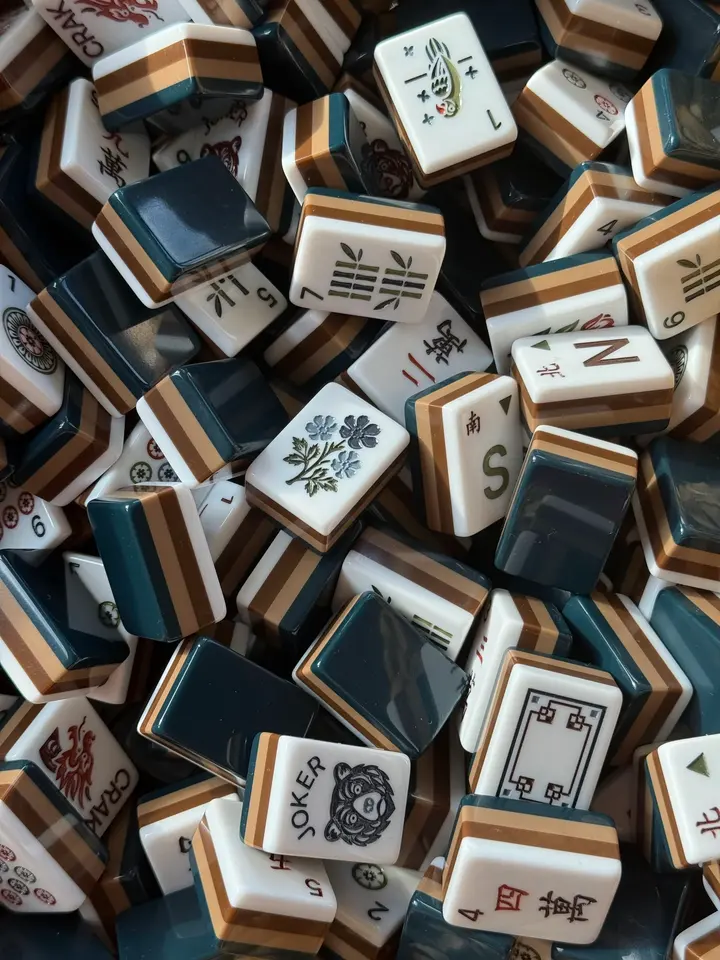
Across American living rooms and country clubs, mahjong has shed its reputation as a niche parlor game, morphing into a cutthroat lifestyle commodity where boutique designer sets command retail tags north of $350. Behind this aesthetic boom lies an industrial reality: thousands of indie brands, Amazon storefronts, and private collectors bypass domestic distributors to source directly from Chinese industrial hubs. As detailed in a recent Sixth Tone Report tracking how specialized factory towns in Zhejiang and Guangdong retool their assembly lines for foreign demand, the cross-border pipeline is operating at full throttle. Yet navigating wholesale platforms to secure high-grade tiles remains fraught with hidden chemical risks, catalog deception, and devastating specification errors.
Sourcing directly from overseas digital directories promises margins upwards of 60%, but the factory floor does not forgive careless buyers. A single shipment of custom mahjong tiles can easily arrive with unplayable dimensional variances, rancid resin off-gassing, or missing National Mah Jongg League (NMJL) configurations. Unpacking the industrial mechanics of wholesale marketplaces reveals the exact safeguards required to separate certified manufacturing powerhouses from high-risk trading brokers.
📌 Key Takeaways:
- Material Hazards: Low-grade unsaturated polyester resins and unbaked melamine emit volatile organic compounds (VOCs) and warp under minor thermal shifts; certified PMMA acrylic remains the gold standard for tactile durability.
- Rule Pitfalls: Traditional Chinese sets feature 144 tiles, whereas American mahjong sets mandate 166 tiles with specialized jokers and blank spares, a standard many regional suppliers botch without explicit technical drawings.
- Verification Imperatives: Relying on digital platform badges is insufficient; buyers must run independent on-site audits, enforce multi-stage sample testing, and anchor milestone payouts to third-party pre-shipment inspections.
The Factory Floor Pivot Behind America's Mahjong Appetite
The supply chain feeding today's tabletop craze traces back to dense manufacturing clusters in Pinghu, Dongguan, and Yiwu. Historically, these facilities pressed uniform, emerald-backed tiles calibrated exclusively for domestic rules or export to Hong Kong and Taiwan. When Western demand surged, industrial workshops faced an unexpected challenge: re-engineering heavy compression molds to handle pastel palettes, custom typography, and the intricate multi-layer sandwiches favored by upscale Western labels.
Factory direct sourcing offers access to genuine primary manufacturers, yet wholesale search listings are frequently flooded with trading intermediaries masquerading as production facilities. These intermediary brokers rent small storefronts, license glossy marketing photography, and mark up goods produced by unvetted subcontractors. Dealing with a middleman strips away technical accountability. When an order of two hundred sets shows up with mismatched paint fills or chipped edges, the middleman has already transferred funds down the chain, leaving the buyer holding thousands of dollars in unsellable stock.
Direct communication with true original equipment manufacturers (OEMs) requires speaking the language of industrial tolerances. Legitimate factory managers want vector CAD files, Pantones matched against international physical swatch books, and explicit hardness requirements. When a vendor accepts complex custom requests within minutes without asking for technical tolerance bands or mold tooling fees, they are almost certainly farming out the job to the lowest bidder.
Melamine vs Acrylic: Chemical Safety and Resin Degradation
The core tactile experience of mahjong hinges on tile density and acoustic resonance, the crisp "clack" when tiles strike the table. Achieving that sound requires high-density polymers, but the chemistry used on factory lines varies wildly in quality and safety.
Standard melamine mahjong production uses thermosetting aminoplast resins cured under extreme hydraulic pressure. When handled properly, food-grade melamine creates a dense, scratch-resistant tile with substantial hand-feel. Budget manufacturers, however, cut costs by cutting pure melamine compound with cheap urea-formaldehyde fillers. These compromised tiles fail to cure completely. Upon opening an airtight shipment container, buyers are often greeted by an overpowering chemical stench, a telltale sign of formaldehyde off-gassing that violates US Consumer Product Safety Commission (CPSC) standards and causes severe skin irritation during play.
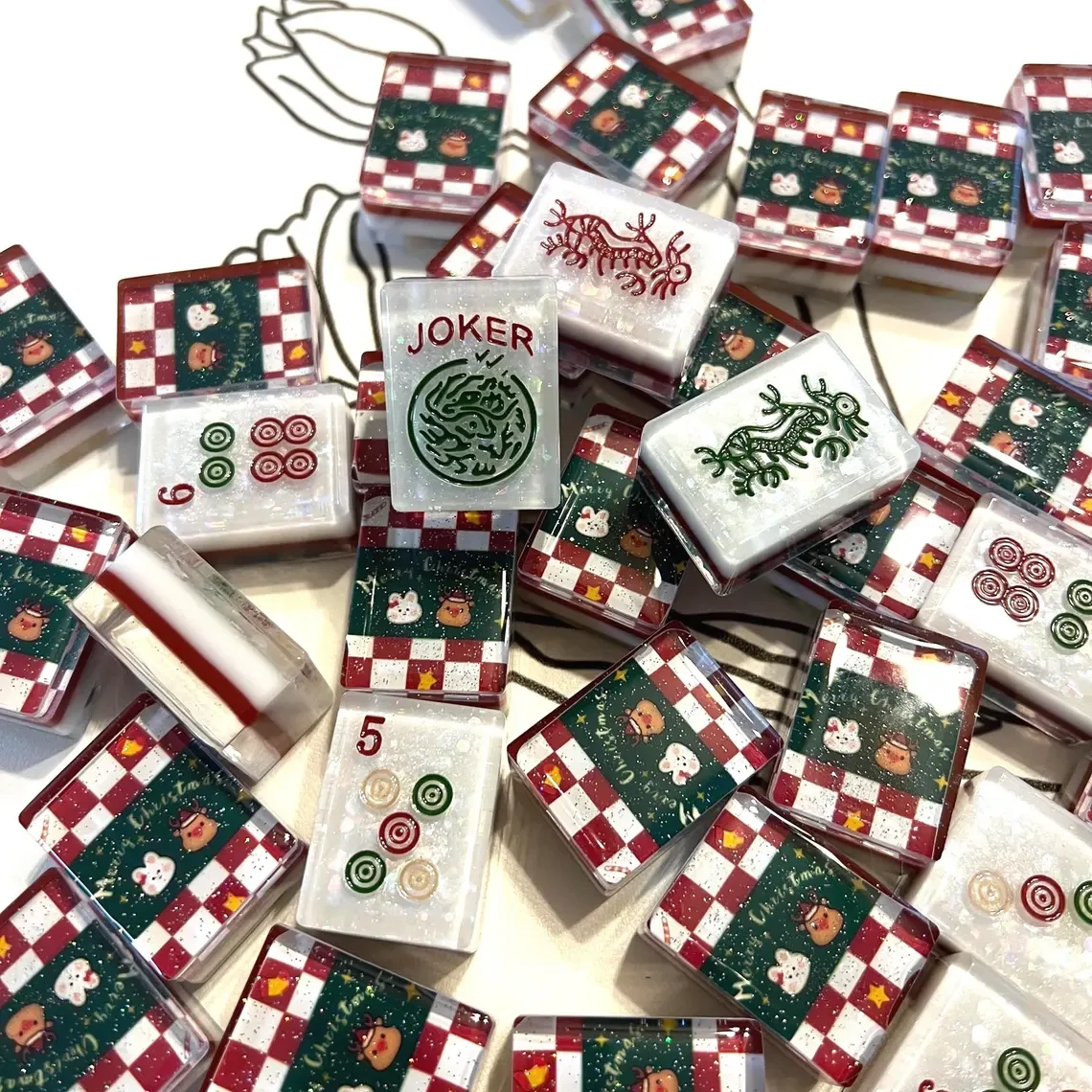
For custom artisan sets, acrylic tile quality control demands even stricter scrutiny. Transparent, glitter-infused, or dual-color pastel tiles generally rely on polymethyl methacrylate (PMMA) or unsaturated polyester resin. Substandard polyester resins suffer from internal micro-bubbling, uneven weight distribution, and brittle edges that chip after a dozen games. High-grade PMMA acrylic resists UV yellowing, avoids toxic off-gassing, and holds crisp laser-engraved lines, though it requires longer mold annealing times that cut-rate suppliers routinely skip to rush delivery.
Specifications, MOQ Realities, and Production Metrics
The steepest hurdle for Western buyers is the 166-tile requirement of American Mah Jongg. Standard Chinese sets run 144 tiles, while Japanese Riichi variants operate on 136. Suppliers accustomed to regional production frequently print standard blanks, haphazardly tack on eight Jokers, and mislabel the run as export-ready. American gameplay demands eight Jokers, four blank spares, eight flowers, and exacting dimensional thickness (often 30mm to 32mm) to ensure tiles stand upright on wooden or acrylic racks without tipping.
Navigating factory minimum order quantity (MOQ) boundaries requires understanding production setups. Changing ink pigments or engraving molds halts factory lines, costing facilities hundreds of dollars in downtime. The following breakdown maps common factory options, associated costs, and standard production thresholds across wholesale tiers:
| Production Tier | Material & Tile Count | Typical Unit Cost | Standard MOQ |
|---|---|---|---|
| Stock Wholesale Run | Melamine (144 tiles; Asian standard) | $7, $12 per set | 20, 50 sets |
| Modified American Semi-Custom | Melamine/Urea Blend (166 tiles) | $15, $24 per set | 100, 300 sets |
| Full OEM Custom Boutique | Pure PMMA Acrylic (166 custom engraved tiles) | $32, $55 per set | 500, 1,000 sets |
| High-End Hand-Carved Resin | Multi-layer Cast Resin (166 tiles + custom cases) | $65, $95 per set | 300, 500 sets |
Securing low MOQs under 100 sets for custom designs usually forces buyers into silkscreen surface printing rather than deep engraving. Silk-screened inks rub off after a few months of play. True OEM board game manufacturing requires physical mold creation or multi-axis CNC laser carving, investments that only become cost-effective at volumes above 500 sets.
Auditing Alibaba Wholesale Suppliers and Enforcing Contracts
Distinguishing reliable operations from fly-by-night operations requires looking past marketplace badges like "Gold Supplier" or "Verified Supplier." Those credentials confirm business registration, basic facility existence, and membership fees, but they do not guarantee quality control standards.
Every commercial engagement should start with a comprehensive supplier verification audit. Demand their unified social credit code, ask for recent ISO9001 quality management records, and request third-party chemical safety sheets (such as RoHS or REACH compliance documentation for heavy-metal pigments). When suppliers claim their products are safe, insist on verified lab reports from international testing firms like SGS, TÜV SÜD, or Intertek.
Financial risk can be mitigated using Trade Assurance protection, but only if the contract is written correctly. Most disputes fail because the purchase contract contains vague, generic descriptions like "166-piece acrylic mahjong set." If tiles arrive with crooked engravings, faint ink fills, or a nauseating chemical smell, arbitration panels often dismiss the claim because no explicit metrics were violated.
Contracts must include explicit quality standards: exact dimensional tolerances (e.g., 30mm x 23mm x 13mm ±0.2mm), specific shore hardness ratings, exact Pantone color codes, and a zero-tolerance clause for toxic VOCs or paint-peeling during cross-hatch adhesion testing. All communication must remain strictly inside the marketplace’s official messaging portal; off-platform chats on WeChat or WhatsApp leave buyers without recourse during formal arbitration.
Sample Order Testing and Logistics Management
Never commit to full production without a rigorous, two-stage sample order testing process. The first step involves an "off-the-shelf" sample to confirm basic material density and resin purity. Once the factory confirms it can meet those baselines, commission a fully customized pre-production sample using final artwork, colors, and packaging.
Put pre-production samples through thorough stress tests:
- The Solvent Rub Test: Rub engraved, painted surfaces aggressively with an isopropyl-alcohol-soaked swab. If the pigment smears, the factory used cheap air-dry paints instead of oven-baked enamel or UV-cured resin inks.
- Dimensional Caliper Checks: Use a digital micrometer to measure across twenty separate tiles. Variations exceeding 0.3mm will cause tiles to snag or wobble when slid along gaming racks.
- The Drop and Impact Test: Drop tiles repeatedly from a height of four feet onto hardwood floors. Low-grade polyester tiles will show chips along their sharp perimeters within five impacts.
Once mass production clears final inspection, shipping and freight logistics present a major cost trap. Mahjong tiles are dense, heavy freight; a standard 166-tile acrylic set complete with racks, chips, and a protective carrying case weighs between 9 and 12 pounds. Shipping 500 sets adds up to over 5,000 pounds of cargo.
Novice importers often make the mistake of accepting simple air freight or unvetted door-to-door express couriers, which can wipe out profit margins with surprise customs clearance surcharges. For commercial volume, partner with a dedicated freight forwarder using Delivered Duty Paid (DDP) ocean freight or Free on Board (FOB) terms, ensuring the factory remains legally responsible for transit to the port of origin. Plan for six to eight weeks of transit time during peak seasons to account for port congestion and customs inspections.
Frequently Asked Questions (FAQ)
How can I confirm an Alibaba supplier will deliver genuine 166-tile American Mahjong sets?
Provide a complete vector production sheet showing every individual tile: 36 Dots, 36 Bams, 36 Craks, 16 Winds, 12 Dragons, 8 Flowers, 8 Jokers, and 4 blank spares. Require the supplier to confirm this exact count in the official Trade Assurance contract, and hire a third-party inspector to open cartons and count tiles on the factory floor before clearing the final balance payment.
Why do some newly arrived mahjong sets smell like chemicals?
The smell usually comes from incomplete curing of low-grade melamine-formaldehyde resin or cheap industrial paints used on budget production lines. These materials off-gas volatile organic compounds, posing potential health and regulatory risks. Always specify high-grade PMMA acrylic or certified non-toxic, oven-cured melamine backed by REACH or Prop 65 compliance reports.
Does Alibaba Trade Assurance protect me if the colors do not match my designs?
Only if your purchase order explicitly references official physical color standards like the Pantone Matching System (PMS). If your contract lists subjective descriptions like "pastel pink," dispute arbitrators will deny the claim. Tie the contract to specific Pantone codes, dimensional tolerances, and clear pass/fail criteria to ensure Trade Assurance covers any manufacturing deviations.
Strategic Sourcing Guidelines for Commercial Buyers
Sourcing mahjong tiles directly through wholesale factory networks provides attractive margins for independent brands, but it removes the safety net of domestic distributor warranties. Success requires stepping into the role of a meticulous quality controller. Treat every supplier engagement as an engineering partnership governed by explicit technical specifications, third-party chemical safety verifications, and tightly managed freight channels.
Focus your supplier outreach on facilities that actively welcome third-party inspections and readily provide verifiable compliance documentation. Pay the upfront tooling fees for deep engraving rather than accepting cheap silkscreen printing, and insist on strict milestone contracts tied to pre-shipment quality audits. Approaching overseas procurement with clear standards protects your capital, your customers' health, and your brand reputation on the table.


