Is Kimchi Too Spicy or Fishy? The Food Science Behind Its Distinctive Tang
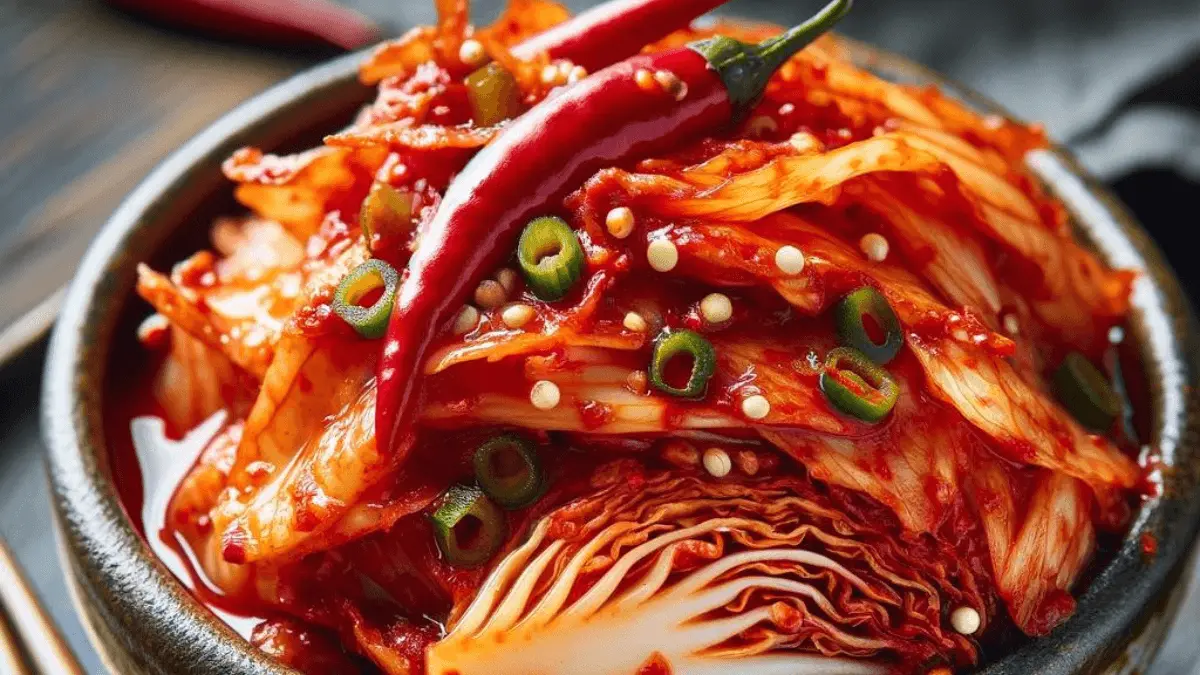
Twist the metal lid off a fresh jar of cabbage kimchi, and you will likely hear a faint, audible hiss. Tiny bubbles rise through the crimson paste as carbon dioxide escapes the brine. For newcomers, that initial sensory introduction can be jarring. A wave of sharp garlic, salted ocean brine, and pickled vinegar scent fills the air before a fork even enters the jar. Yet the assumption that kimchi is simply an intensely spicy Asian coleslaw misses the complex chemistry at play. According to a recent consumer evaluation by the Taste of Home Report, modern commercial varieties run a wide spectrum from sweet and carbonated to assertively funky, challenging long-held assumptions about whether the staple is too pungent for everyday tables.
Kimchi has crossed decisively into mainstream Western food culture. Across the United States, grocery chains stock multiple brands in produce coolers alongside kombucha and sauerkraut. In late 2025, food writers at The Korea Times reported on shoppers modifying cafeteria staples by loading chopped onions, mustard, and relish into improvised "Costco kimchi" condiments. Understanding the flavor profile requires looking beyond heat levels to unpack microbial biology, sodium ratios, and regional curing traditions.
📌 Quick Summary:
- The Taste Profile: Kimchi tastes sour, savory, garlicky, and mildly sweet, carrying a gentle tongue prickle from active carbonation rather than sharp vinegar acid.
- The Heat Factor: The spice from Korean chili powder imparts a slow, fruit-forward warmth rather than the stinging burn found in jalapeño or habanero hot sauces.
- The Fermentation Factor: Time transforms crisp, brined cabbage into an umami bomb as beneficial microbes consume sugars and drop the pH balance over several weeks.
The Flavor Chemistry of Lactic Acid Fermentation
Kimchi does not contain vinegar. The tart, bright acidity that defines the dish stems entirely from lactic acid fermentation. Wild bacteria, primarily strains of Leuconostoc mesenteroides and Lactobacillus plantarum naturally present on raw vegetable leaves, break down simple carbohydrates into lactic acid, acetic acid, and carbon dioxide.
During the opening week of fermentation at cool temperatures (between 35°F and 45°F), Leuconostoc species dominate the jar. They generate carbon dioxide along with lactic acid. This process produces a natural effervescence, creating a subtle fizzy sensation on the palate that can catch first-time eaters off guard. The natural fizz is not spoilage. It signals active, living cultures multiplying inside the brine.
As the batch matures over two to four weeks, Lactobacillus takes over, driving the pH level down to a tart 4.2 or lower. The sugars in the vegetables diminish, muting natural sweetness while the sour backbone sharpens. This sourness balances the rich lipids in grilled meats, which explains why pork belly and aged kimchi have coexisted on Korean tables for centuries.
Why Gochugaru Chili Flakes Build Warmth Instead of Blistering Heat
The bright red paint of traditional baechu kimchi often signals scorching danger to the uninitiated. In reality, the primary pepper agent, gochugaru, behaves differently than cayenne or Thai bird's eye chilies. Gochugaru consists of sun-dried Korean red peppers that are seeded and coarsely ground into vibrant flakes.
On the Scoville heat scale, standard gochugaru registers between 1,500 and 10,000 SHU. By comparison, raw jalapeños reach up to 8,000 SHU, and serrano peppers easily climb past 20,000 SHU. Gochugaru delivers smoky, sun-dried fruitiness and subtle sweetness alongside manageable capsaicin levels.
The chili works in tandem with high concentrations of crushed garlic and fresh ginger. The raw aromatics hit the nasal passages first with sharp sulfurous compounds, creating the perception of stronger heat than the chili actually delivers. Once the fermentation runs its course, the sharp edges of the alliums mellow, folding into the red pepper to form an earthy, warming undercurrent that lingers without blistering the mouth.
How Ocean Brine and Salted Seafood Construct Deep Umami
The defining element that separates kimchi from European lacto-fermented pickles like German sauerkraut is its deep, savory baseline. Kimchi relies heavily on jeotgal, fermented seafood condiments that supply dense concentrations of free glutamates. Traditional recipes call for myeolchi-aekjeot (fermented anchovy sauce) and saeujeot (tiny, salt-fermented whole shrimp).
During curing, natural enzymes break down fish proteins into amino acids. This biochemical breakdown creates an unmistakable umami taste profile. When newcomers describe an initial taste as "fishy," they are reacting to poorly integrated or heavily dosed raw seafood extracts that have not fermented long enough to harmonize.
In high-grade or mature jars, that overt marine aroma recedes. What remains is a rounded, meaty foundation that anchors the sharp sour notes. For plant-based eaters, modern commercial producers frequently replace fish sauce with concentrated kombu kelp broths, dried shiitake mushroom stock, and fermented soy bean pastes to replicate that essential savory depth without animal products.
Napa Cabbage Texture: The Line Between Crisp Crunch and Soft Tang
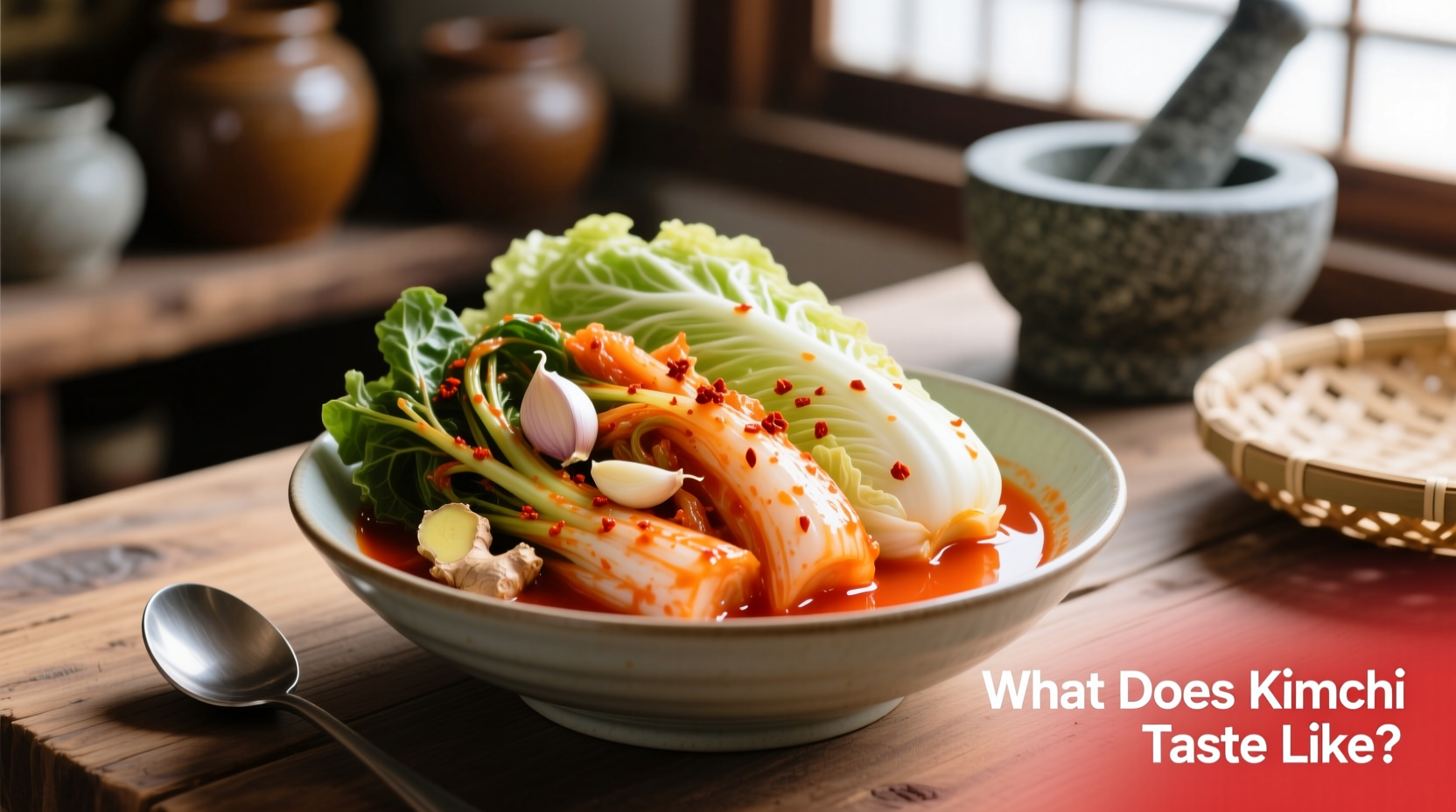
Texture determines whether a batch of kimchi succeeds or fails. Baechu kimchi relies on mature Napa cabbage, a vegetable composed of thick, water-dense white ribs and tender leafy green tips. Achieving the coveted probiotic crunch depends entirely on the initial salting stage.
Coarse sea salt pulls excess moisture out of the vegetable cell walls through osmosis. If salted too briefly, the cabbage leeches water into the paste later, diluting the flavor and turning limp. Salted properly, the cellular structure retains crisp rigidity even after weeks submerged in lactic acid.
Every bite delivers a structural contrast. The thin green leaves absorb the gochugaru paste like a sponge, delivering an immediate hit of concentrated garlic, chili, and sour liquid. The thick white ribs, meanwhile, release sweet, refreshing vegetable juice when crushed between your teeth, washing over the palate and resetting the tongue.
Fermentation Stages and Flavor Evolution
Kimchi changes flavor weekly. A jar consumed three days after packing offers an entirely different sensory experience than the same jar sampled two months later. The following breakdown illustrates how time alters the dish across key benchmarks:
| Aging Phase | Typical Age (Refrigerated) | Dominant Taste Profile | Physical Texture |
|---|---|---|---|
| Geotjeori (Fresh) | 1, 5 days | Sweet, sharp raw garlic, mild salt, zero acid | Crisp, rigid, fresh salad snap |
| Prime Table Banchan | 2, 4 weeks | Balanced tangy and sour flavor, effervescent, deep umami | Snappy stem with tender leaves |
| Shin-Kimchi (Well-Aged) | 2, 3 months | Pungent fermented aroma, pronounced sourness, low sugar | Supple, slightly translucent cabbage ribs |
| Mukeunji (Long-Aged) | 6, 12 months | Complex, biting tartness, sharp funk, mellowed chili | Soft, ideal for slow-simmered dishes |
Supermarket Brands Versus Traditional Homestyle Jars
When food editors at Serious Eats conducted broad retail kimchi evaluations, they identified a clear divide between Western supermarket brands and traditional heritage producers. Mainstream grocery jars sold across North America often alter formulation to avoid scaring away first-time buyers.
Commercial grocery variants frequently eliminate raw seafood paste, relying instead on sugar, rice vinegar, and higher sodium levels to simulate preservation without triggering gas expansion in shipping containers. These varieties taste noticeably sweeter, milder, and less effervescent. They function much like a spicy pickled salad.
Traditional Korean market brands, such as Jongga or locally packaged jars from H Mart, embrace full fish-sauce curing and active live fermentation. These jars require breathable lids to let carbon dioxide seep out. The resulting taste features higher acidity, a pronounced funk from seafood enzymes, and considerably more nuanced savoriness.
From Cold Banchan to Simmering Kimchi Jjigae Stew
Kimchi changes character when heat is applied. While fresh or medium-aged kimchi serves as a cold banchan side dish to cut through grease, aged kimchi acts as a cooking ingredient. Overfermented jars that taste unpleasantly sour straight from the fridge transform under high cooking heat.
When seared in sesame oil or simmered into kimchi jjigae stew, the high cooking temperature caramelizes the residual sugars and softens the sharp lactic acid bite. The pungent fermented aroma shifts into a comforting, savory base broth. A culinary feature published by The New York Times in May 2025 highlighted how a garlicky, gingery kimchi soup revives the senses through warm, restorative acidity.
Cooking kimchi also melds the softened cabbage leaves into broths, imparting rich body to stews without requiring hours of reduction. The sourness balances fatty meats like pork shoulder, tofu blocks, and tuna steaks, turning assertive aged preserves into balanced comfort food.
Frequently Asked Questions (FAQ)
Q1: What is the very first flavor you taste when eating kimchi?
A1: Most eaters first encounter bright garlic, fresh ginger, and a brisk, citrus-like sour tang, immediately followed by savory salt and a gentle, tongue-tingling fizz from fermentation gases.
Q2: Does kimchi taste overwhelmingly fishy?
A2: No. High-quality kimchi uses fermented anchovy sauce or salted shrimp strictly to provide background umami. The fish components harmonize into a savory, brothy richness rather than a sharp seafood taste.
Q3: Why does store-bought kimchi sometimes fizz or pop when opened?
A3: That fizz indicates active lactic acid bacteria converting sugars into lactic acid and carbon dioxide. The natural effervescence proves the kimchi is alive, unpasteurized, and actively fermenting rather than spoiled.
Q4: How can beginners start eating kimchi without feeling overwhelmed?
A4: Pair small bites of cold, young kimchi with warm plain white rice, grilled cheese sandwiches, or fried eggs. The dietary fats and carbohydrates temper the garlic, chili, and acidity while highlighting its refreshing crunch.
Navigating Kimchi on the Modern Table
Approaching kimchi with the expectation of a sweet American pickle or a fiery hot pepper mash inevitably leads to confusion. Its character rests entirely on lactic acid fermentation, where sour, salty, garlicky, and umami elements balance simultaneously across the tongue. The effervescent carbonation and probiotic crunch make it one of the most dynamic staples in global food culture.
Whether scooped straight from an active, bubbling jar beside grilled meat or simmered into a rich broth on a cold evening, kimchi rewards curious eaters. Once your palate identifies the harmony between savory seafood glutamates, warm gochugaru pepper, and lactic sourness, the dish stops feeling intimidating and becomes an indispensable kitchen essential.


