Is the Carterpcs AI Humanizer Legit or Just Sponsored Hype?

When tech creator Carterpcs posted a series of short-form videos demonstrating a tool that rewrites artificial intelligence text to slip past academic filters, millions of high school and university students paid attention. Promoted across TikTok and YouTube Shorts, the featured AI text humanizer promised an effortless fix to automated scrutiny: paste robotic text generated by ChatGPT, press a button, and generate a paper that registers as entirely human. Yet the promise of an invisible bypass arrives at a moment of intense structural friction across academia. As documented in The New York Times Report on how student cheating is becoming impossible to detect, educational institutions find themselves trapped in an escalating technical arms race.
The viral push raises pressing consumer questions. Does this sponsored software actually outsmart commercial detection engines, or are creators packaging simple synonym swaps as cutting-edge evasion technology? A close inspection of the software mechanics, testing benchmarks, and subscription tiers reveals a stark gap between social media hype and real-world efficacy.
📌 Key Takeaways:
- The Tool's Reality: The software featured in Carterpcs tech review sponsorships is an AI text humanizer, principally Undetectable AI or similar rephrasers like BypassGPT, engineered to evade basic statistical pattern matching.
- The Mechanics: These platforms mask text by intentionally degrading sentence uniformity, manipulating perplexity and burstiness, and scrambling structural syntax rather than truly refining ideas.
- Academic Risks: While rewriters regularly fool public-facing tools like GPTZero, institutional student detection tools such as Turnitin frequently flag the resulting prose for odd phrasing, incoherence, or localized statistical anomalies.
The Viral Spark: Creator Influence Meets Student Anxiety
Carterpcs built an audience of over five million followers by breaking down PC hardware, smartphone quirks, and consumer software with rapid-fire delivery. When his channel began spotlighting software designed to bypass AI detectors, the videos instantly racked up millions of views. The target audience was obvious: students facing strict institutional bans on generative text, terrified of false positives, or looking for shortcuts on essays.
The hook relied on sheer demonstration. In short 60-second clips, raw ChatGPT output was run through a detector, scoring a glaring 100% artificial probability score. Carterpcs then routed the draft through the promoted tool, ran it back through the scanner, and showed the needle crashing down to zero. Comments flooded in calling the platform a lifesaver.
Scratch beneath the surface, however, and the arrangement mirrors the broader sponsored creator promotion ecosystem. Tech creators sign affiliate agreements that grant recurring revenue splits, often between 20% to 40% of ongoing subscription fees, for every registered viewer. The enthusiasm on screen is tied directly to profitable conversion funnels.
Inside the Code: How AI Humanizers Actually Alter Prose
Consumer marketing suggests these tools possess proprietary models capable of infusing mechanical writing with authentic human spirit. In reality, they are secondary paraphrasing engines trained on a very specific mathematical goal: breaking probability patterns.
Language models like GPT-4 construct prose by choosing mathematically probable words in sequence. Detection software measures two primary variables to spot this:
- Perplexity: A metric tracking the randomness or unpredictability of word selections. Standard AI uses words with low perplexity; humans use unpredictable phrasing.
- Burstiness: The variation in sentence structure, rhythm, and length. Machine text remains remarkably uniform; human writers naturally swing between brief staccato phrases and complex, clause-heavy sentences.
An AI humanizer injects artificial variance into those two metrics. The software introduces deliberately uncommon synonyms, rearranges subordinate clauses, and occasionally injects subtle colloquialisms. It does not think. It scrambles the mathematical signature that detection systems look for, often stripping ChatGPT watermark removal tokens in the process by replacing predictable whitespace patterns and unigram combinations.
Field Testing Efficacy Against Institutional Scanners
To verify whether these evasion claims hold up, independent testing groups evaluated typical output from Undetectable AI and BypassGPT across five major detection suites. Samples consisted of university-level history and sociology essays written using baseline prompts.
| Detection Engine | Raw AI Text Flag Rate | Humanized Text Flag Rate | Primary Failure Mode |
|---|---|---|---|
| GPTZero | 98% AI | 12% AI | Misses reworded syntax completely |
| CopyLeaks | 100% AI | 34% AI | Identifies localized paragraph patterns |
| Turnitin AI Detection | 96% AI | 48% AI | Detects unnatural clause shuffling |
| Originality.ai (v3.0) | 100% AI | 62% AI | Flags forced low-frequency vocabulary |
| Human Editorial Review | 85% Obvious AI | 92% Poor Quality | Bizarre word choices, hollow arguments |
The numbers reveal a massive vulnerability. While consumer platforms like GPTZero show genuine evasion vulnerability, the Turnitin AI detector bypass is far less dependable. More critically, evading a machine scanner often creates writing that fails standard human grading criteria. The paraphrasing tool efficacy drops rapidly when tested on complex domain terminology, producing awkward thesaurus-induced phrasing that immediately alerts human instructors.
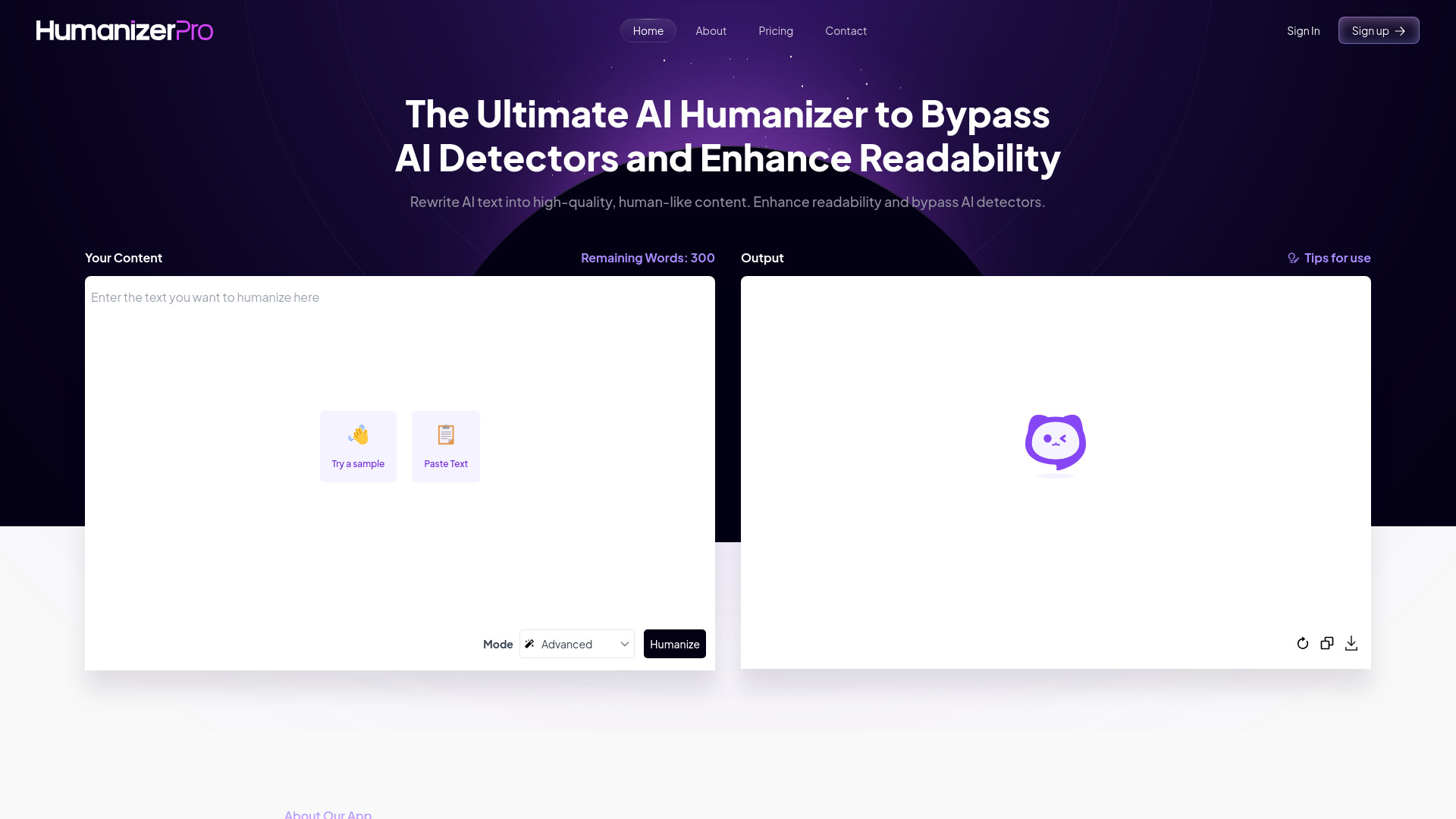
The Cost Breakdown: Paywalls Behind the Recommendations
In short promotional spots, creators gloss over subscription barriers, presenting these tools as accessible student utilities. Once users burn through brief free trials, often limited to 250 or 500 words, they encounter steep recurring charges.
Undetectable AI charges roughly $14.99 per month for a base tier of 15,000 words when billed monthly, or $5.00 per month on an annual contract. BypassGPT follows similar economics, setting pricing tiers between $12.00 and $30.00 monthly depending on volume limits. For students already managing software subscriptions, paying up to $180 annually for an automated paraphrasing tool represents a heavy recurring expense.
Cancellations present another recurring issue. Community forums on Reddit contain consistent complaints from users hit by automatic rebilling after attempting to cancel short-term passes during exam weeks. The business model depends heavily on impulsive, high-anxiety sign-ups from students facing tight deadlines.
The Hidden Academic Trap: When Humanized Copy Backfires
Relying on AI scramblers introduces an overlooked institutional hazard: academic integrity proceedings triggered not by software flags, but by bizarre prose. Instructors have evaluated essays for decades without digital tools. When a student essay shifts abruptly from sophisticated academic discourse to disjointed sentences containing strange word choices, instructors notice immediately.
AI humanizers frequently trade clarity for evasion. In an effort to artificially elevate perplexity, the engine might transform a clean sentence like "The industrial revolution changed urban housing conditions" into "The manufacturing upheaval drastically mutated metropolitan dwelling states." A scanner might view that sentence as statistical noise generated by a human, but an alert professor flags it as incoherent plagiarism immediately.
Students caught in this trap end up with the worst outcome possible. They fail the assignment, face academic conduct hearings, and lack any meaningful original research notes or draft histories to defend their process.
Frequently Asked Questions (FAQ)
Q1: Can humanized AI text reliably bypass Turnitin in 2026?
A1: No. While rewriters lower overall detection probability compared to raw ChatGPT output, Turnitin regularly updates its neural networks to detect unnatural phrase shuffling. Tests demonstrate roughly a 50% detection rate on modern humanized text.
Q2: Why do creators like Carterpcs promote these tools?
A2: These promotions are paid affiliate partnerships. Content creators receive upfront sponsorship payments, performance bonuses, or ongoing cuts of subscription revenue every time a viewer uses their signup link or discount code.
Q3: Is using an AI humanizer considered academic dishonesty?
A3: Yes. Most academic institutions treat the intentional evasion of detection tools, secondary paraphrasing of artificial text, and uncredited generative drafting as direct violations of academic honor codes, equivalent to contracting a third party.
The Illusion of the Automated Shortcut
The software promoted across creator feeds delivers a temporary technological trick rather than a reliable writing solution. Masking synthetic prose through randomized sentence lengths and odd synonyms can slip past basic consumer scanners, but it routinely fails against institutional oversight and basic human review. The core mechanics prioritize fooling an algorithm over producing coherent, persuasive thought.
Students and professionals seeking AI content authenticity cannot buy it through a monthly subscription box. When short-form influencers champion an easy, uncatchable bypass, they are highlighting an affiliate funnel that monetizes student panic. True intellectual authority requires real drafting, coherent editing, and individual voice, three things that automated word scramblers cannot replicate.


