Monolids vs Double Eyelids: Visual Breakdown, Anatomy, and Application Differences
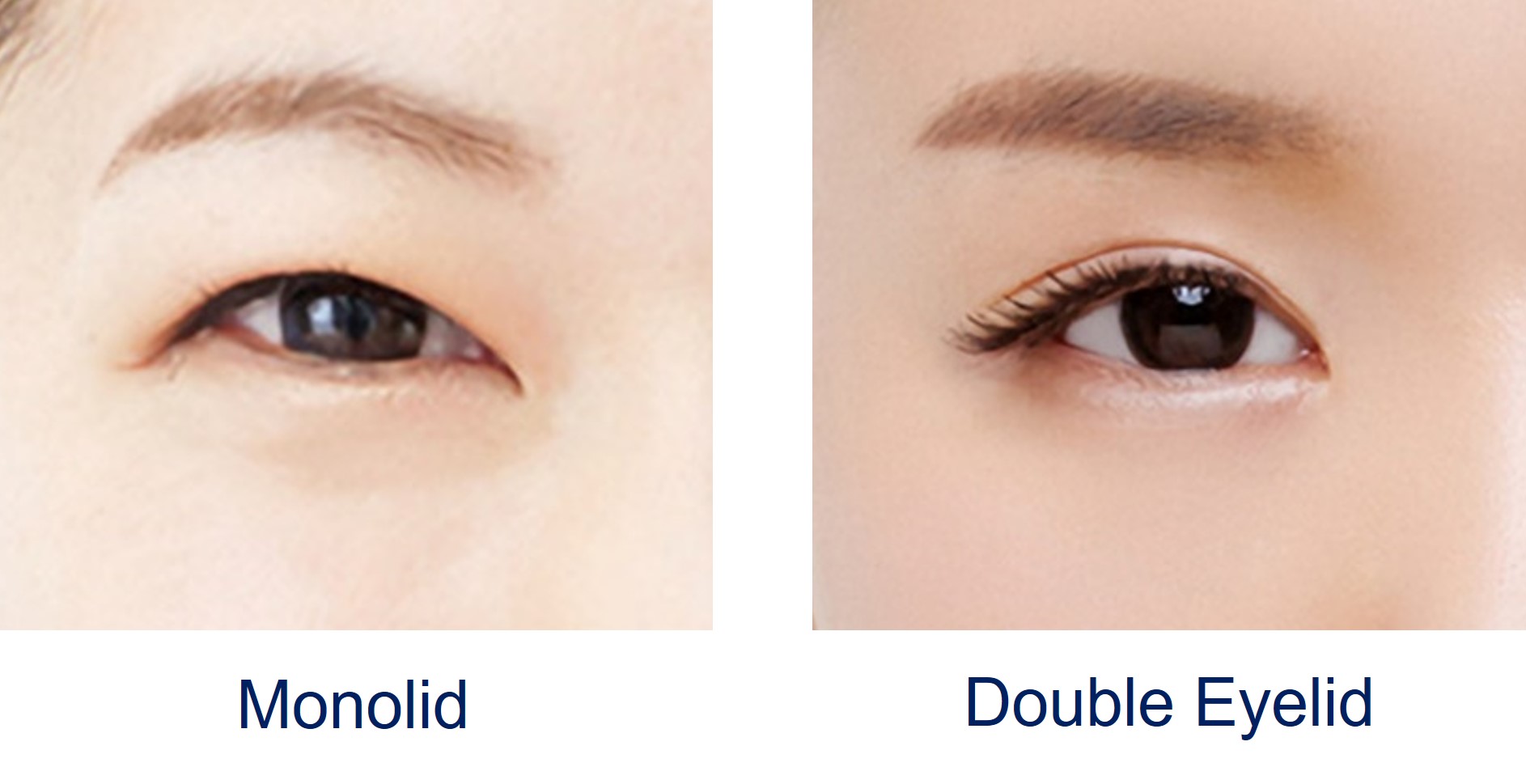
For decades, the visual distinction between single and double eyelids occupied a fraught intersection of genetic biology, commercial beauty standards, and surgical intervention. Across East Asian communities and the global beauty industry, the presence or absence of a distinct upper eyelid fold dictates cosmetic application, product engineering, and aesthetic perception. As highlighted in a detailed Byrdie Report featuring celebrity makeup artist Sir John, working with these eye shapes requires ditching universal makeup templates in favor of direct anatomical customization.
Understanding these eyes requires dismantling long-standing cosmetic myths. A monolid is not an eyelid waiting for an artificial crease, nor is a double eyelid an emulation of Western facial architecture. Each structure represents a specific mechanical configuration of muscle fibers, skin attachments, and fat deposits that respond differently to light, color, and adhesive friction.
📌 Key Takeaways:
- Anatomical Root: The visual presence of a supratarsal crease is determined by whether terminal fibers of the levator palpebrae superioris muscle attach to the dermal layer of the upper eyelid.
- Cosmetic Realities: Monolids offer an uninterrupted canvas requiring vertical gradient shading and strategic eyeliner placement, whereas double eyelids feature an organic ledge that catches pigment and product differently.
- Adhesive Hazards: Repeated use of eyelid tape and glue to manufacture temporary creases carries documented clinical risks, including skin elasticity loss and chronic contact dermatitis eczema.
The Biomechanical Divide: Levator Aponeurosis and Orbital Fat
The fundamental difference between a monolid and a double eyelid sits beneath the surface of the skin. Every eyelid relies on the levator palpebrae superioris, the primary muscle responsible for lifting the upper lid to open the eye. In individuals with double eyelids, microscopic terminal fibers from this muscle’s tendon (the levator aponeurosis) extend forward through the orbicularis oculi muscle and anchor directly into the deep surface of the eyelid skin. When the muscle contracts upward, it tugs that anchored skin inward, producing a distinct horizontal fold known as the supratarsal crease.
In a monolid (medically termed an absence of the supratarsal crease), these fibrous connections do not extend into the dermis. The levator muscle attaches cleanly to the tarsal plate, the stiff band of connective tissue along the lash line, without tethering the overlying skin. When the eye opens, the skin moves as a single, smooth plane without tucking inward.
Subcutaneous architecture plays an equally decisive role. Monolids typically feature a distinct orbital fat distribution. The preseptal fat pad descends lower along the eyelid, and suborbicularis orbital fat is generally thicker. This internal padding creates a fuller, smoother surface that sits directly above the lash line. Furthermore, monolids frequently co-occur with a pronounced epicanthic fold, a skin fold that covers the medial canthus (the inner corner of the eye). This anatomical configuration influences everything from tear trough visibility to the angle at which eyelashes sit, pointing hairs straight outward or slightly downward rather than curling naturally toward the brow bone.
Structural Contrasts: Comparing Monolid, Double Eyelid, and Hooded Anatomy
Public discussions often conflate monolids with hooded eyes, yet the two configurations reflect entirely different physical dynamics. A hooded eye possesses a supratarsal crease, but redundant brow bone tissue or loose skin overhangs and obscures the crease when the eye is at rest. Monolids, by contrast, lack the internal muscular attachment entirely.
| Physical Metric | Monolid Structure | Double Eyelid Structure | Hooded Eyes Comparison |
|---|---|---|---|
| Levator Skin Insertion | Absent; muscle attaches solely to the tarsus. | Present; fibers extend into the dermal layer. | Present; crease forms internally upon lifting. |
| Orbital Fat Position | Lower descent of preseptal fat; fuller upper lid. | Fat contained higher within the orbital septum. | Varies; often exacerbated by age-related laxity. |
| Epicanthic Fold Prevalence | High; inner canthus frequently shielded. | Variable; may be present or absent. | Independent of folding; found across all ethnicities. |
| Visible Mobile Lid Space | Continuous flat plane from lash to brow. | Divided into mobile lid platform and brow space. | Mobile lid concealed by overhanging skin fold. |
| Lash Angle Tendency | Downturned or horizontal; often tucked by skin. | Outward to upward projection. | Pushed downward by encroaching fold pressure. |
Double eyelids in individuals of Asian heritage exhibit distinct variations based on where the fold originates. A parallel crease runs alongside the lash line at an even distance without touching the corner. An in-fold (tapered crease) originates beneath the epicanthic fold and gradually widens as it approaches the outer corner. These variations highlight that double eyelids are not a singular archetype, but a continuum of muscular and tissue interactions.
Architectural Makeup: Eyeliner Placement and the Gradient Eyeshadow Technique
Traditional Western makeup tutorials prioritize placing a dark contour shade inside the eye socket crease. For someone with a monolid, this approach makes little functional sense; there is no hollow recession where an artificial shadow would naturally rest. Attempting to draw a faux socket often results in harsh, misplaced lines that collapse when the face moves.
Instead, professional makeup artists deploy the gradient eyeshadow technique (frequently called the vertical smokey eye or ombré technique). Pigment is applied with maximum saturation directly along the lash line, then blended vertically upward in diffusing layers toward the brow bone. This method creates depth without relying on an indentation that does not exist. Sir John noted that working with monolids provides an expansive, uninterrupted surface that allows graphic lines and metallic washes to read clearly without being swallowed by a fold.
Eyeliner placement for monolids requires mapping with the eyes wide open. When an individual with a monolid closes their eye, a traditional 2-millimeter line looks wide; upon opening, the lower fullness of the lid frequently folds over that boundary, rendering the pigment invisible. To counter this, practitioners use "floating eyeliner", marking the lash-adjacent graphic line just above the point where the skin folds, or extending the wing horizontally past the lateral canthus.
Tightlining tips serve as a baseline for both morphologies. Monolids often conceal the hair roots beneath the skin barrier, leaving a bare strip of flesh visible along the waterline. Pressing a waterproof, transfer-resistant gel pencil directly into the intermarginal space beneath the lash roots, rather than sketching across the top of the skin, grounds the eye shape and creates the optical illusion of denser lashes without eating into visible surface area.

The Toll of Temporary Creases: Adhesives, Tapes, and Contact Dermatitis
The drive to achieve double eyelids without surgery produced a massive global market for eyelid tape and glue. Available in fiber strips, double-sided tapes, and liquid latex adhesives, these products mechanically force the skin to fold onto itself throughout the day.
While marketed as harmless, short-term cosmetic tools, consistent usage exacts a documented physical toll on periocular tissue. The skin of the upper eyelid is the thinnest on the human body, measuring less than 1 millimeter thick. Exposing this delicate barrier to daily mechanical pulling and synthetic bonding polymers creates chronic inflammation.
In a widely shared first-person account for Teen Vogue, writer Jessica Wang detailed how chronic reliance on cosmetic eyelid adhesives triggered severe, painful eczema and periocular swelling, transforming an aesthetic preference into a dermatological crisis. Repeated exposure to methacrylate-based glues and industrial adhesive chemicals routinely sparks contact dermatitis eczema.
The physical mechanics of daily tape removal stretch the delicate skin fibers. Over months and years, this mechanical stress degrades collagen elasticity, inducing premature ptosis (drooping) or pseudo-blepharochalasis. Instead of forming a permanent natural fold, the eyelid often develops multiple disorganized, micro-wrinkles that make both cosmetic application and eventual corrective surgery far more complicated.
Surgical Reshaping and Cultural Reckoning: Asian Blepharoplasty in 2026
Asian blepharoplasty, colloquially called double eyelid surgery, remains among the most commonly performed aesthetic surgical procedures worldwide. The modern surgical approach, however, has distanced itself from early mid-century methods that aggressively removed orbital fat and excised muscle to mimic Caucasian orbital architecture.
Contemporary plastic surgery recognizes that attempting to erase unique anatomical traits produces hollow, unnatural results. Board-certified oculoplastic surgeons primarily use two approaches:
- The Non-Incisional (Suture) Method: Suited for younger patients with minimal excess skin and thin eyelid tissue. Microscopic sutures are threaded through tiny punctures to artificially anchor the levator aponeurosis to the tarsal plate, forming an internal bond without external skin excision.
- Essential for patients with excess skin, pronounced epicanthic tension, or significant orbital fat distribution. An incision across the marked fold allows the surgeon to selectively sculpt preseptal fat, release specific muscular tensions, and mechanically stitch the dermis to the underlying levator structures.
The procedure operates alongside deep shifts in East Asian beauty standards. While double eyelids were long elevated across regional media, from South Korean entertainment to East Asian advertising, as the primary marker of an expressive face, the aesthetic climate has diversified. The prominence of monolid-identifying actors, global supermodels, and athletes has reframed single eyelids not as a structural deficit, but as a distinct facial feature. Patients seeking surgery in 2026 increasingly request low, subtle in-folds that maintain ethnic anatomical identity rather than dramatic, wide parallel folds.
Frequently Asked Questions (FAQ)
Q1: Can using eyelid tape or glue permanently train a monolid to turn into a double eyelid?
A1: No. Reliable scientific evidence shows that adhesives cannot create internal muscular attachments between the levator palpebrae superioris and the skin. Any apparent permanent line left behind after prolonged use is typically the result of broken skin elasticity, stretched tissue, or superficial scarring, rather than a true anatomical crease.
Q2: Why does eyeliner continually smudge on monolids?
A2: Monolids feature an eyelid surface that rests closely against the lash roots when the eye is open. Blinking creates constant friction between the skin fold and the lash base, transferring oils and wet pigments. Setting gel or liquid liners with an identical shade of powder shadow, or shifting to waterproof formulas applied only outside the folding margin, stops this friction transfer.
Q3: What makes an epicanthic fold distinct from an eyelid crease?
A3: An eyelid crease (supratarsal fold) runs horizontally across the upper lid. An epicanthic fold is a vertical or semi-vertical skin flap located at the medial canthus (inner corner) of the eye, which partially or fully obscures the tear duct. While monolids often present with epicanthic folds, either feature can exist entirely independent of the other.
Q4: How do lash applications differ between single and double eyelids?
A4: Due to the orbital fat distribution on a monolid, natural lashes are often pushed downward by the overlying lid skin. Using an intense curl (such as D-curl or L-curl lash extensions or lifting treatments) provides clearance past the skin overhang, while double eyelids typically require gentler bends (like J-curl or C-curl) to avoid brushing directly against the brow bone.
The Evolution of Eyelid Aesthetics and Visual Expression
The conversation surrounding monolids and double eyelids has moved past the simplistic paradigm of correction. Understanding the physical biology behind each eye structure reveals why universal makeup methods frequently fail when applied blindly to different facial architectures. A monolid requires respect for smooth surface continuity, vertical shading, and intentional liner placement; a double eyelid requires precise pigment management within its structural recess.
Acknowledging these mechanical differences eliminates the frustration of trying to force one eye shape into the cosmetic framework of another. Moving through 2026, makeup artistry and cosmetic science continue to expand toward technical specificity, celebrating ocular diversity as a foundation for genuine creative expression.


