North Sentinel Island Contact Attempts: From Bows and Arrows to Modern Drones

North Sentinel Island Drone Incursions: The Threat to Earth’s Most Isolated Tribe
Off the western coast of the southern Andaman Islands, a low ridge of jungle rises out of the Bay of Bengal, ringed by shallow coral reefs and guarded by an unyielding hail of iron-tipped arrows. For decades, the Indian government enforced a strict hands-off policy toward North Sentinel Island, relying on naval gunboats and coastal radar to keep the outside world at bay. Yet the barrier protecting this isolated hunter-gatherer community is fracturing under a different kind of pressure. Cheap consumer quadcopters, long-range remote telemetry, and social media clout-chasing have pushed rogue voyagers to launch unmanned flights into the island's airspace, threatening an ecosystem and a people preserved in near-total isolation for millennia. According to an extensive investigation by the indigenous rights organization Survival International, modern technological incursions pose the greatest existential threat to the Sentinelese since colonial punitive raids swept the archipelago in the nineteenth century.
📌 Quick Summary:
- The Airborne Threat: Remote operators launch high-end commercial quadcopters from clandestine fishing skiffs outside the maritime perimeter, attempting to capture viral aerial footage of the uncontacted tribe.
- Lethal Biological Risk: The Sentinelese possess no immunological defenses against common external pathogens; a physical drone crash on the beach could introduce microbes capable of wiping out the entire population.
- Legal Reality: Navigating inside the five nautical mile buffer zone or conducting unauthorized aerial photography carries severe multi-year prison sentences under Indian federal law.
The Mechanics of Modern Drone Incursions Over the Exclusion Zone
Flying a drone over North Sentinel Island is not an accidental navigational error. It is a calculated, criminal enterprise. Reaching the island requires chartering private wooden craft from Wandoor or Port Blair, slipping past radar surveillance stations operated by the Indian Navy, and navigating the treacherous, razor-sharp reef shelf that lines the shore.
Long-range enterprise and consumer drones boast operational radii extending beyond 12 to 15 kilometers. Operators sit in low-profile motorized fishing skiffs idling just beyond visual range of coastal patrol boats, deploy remote control transceivers, and send aircraft inland over the dense jungle canopy.
The incentives driving these operations are almost entirely digital. Video clips claiming to show uncontacted people hunting, setting fires, or firing bows at mechanical quadcopters generate millions of views across video platforms and monetize quickly through algorithmic discovery feeds.
These operations disregard the fundamental physical reality of small-craft flight over open water. Tropical microclimates around the Bay of Bengal produce intense, sudden thermal updrafts, marine squalls, and aggressive coastal wind shears. A dead battery, a loss of signal, or a rotor strike against the canopy sends the drone spiraling down into the sand or undergrowth. The moment that piece of plastic and metal hits the dirt, it becomes a biological and psychological weapon.
What Illicit Aerial Missions Reveal About Contact History
Hostility toward outsiders on North Sentinel Island is not unprovoked aggression. It is a rational defense mechanism honed by historical trauma.
In 1880, British colonial naval officer Maurice Vidal Portman led an armed expedition ashore, kidnapping an elderly Sentinelese couple and four young children to display them at Port Blair. The elderly couple quickly sickened and died from exposure to unfamiliar pathogens. Portman hurriedly dumped the surviving, sickened children back onto the island's beaches, likely triggering an epidemic that devastated their small society. The tribe never forgot the encounter.
Subsequent contact expeditions run by the Anthropological Survey of India throughout the 1970s and 1980s, led by anthropologist T.N. Pandit, established tense, unilateral gift-giving encounters. Anthropologists floated coconuts ashore while armed guards watched from motorized launches. The Indian government suspended these visits in 1996, recognizing that prolonged contact offered no benefit to the tribe and exposed them to deadly demographic collapse.
Tragedy struck again in November 2018 when 26-year-old American missionary John Allen Chau paid local fishermen 25,000 Indian rupees (roughly $350 at the time) to illegally ferry him to the island. Chau landed in a kayak, seeking to convert the islanders. His journal entries revealed that on his first approach, a Sentinelese youth shot an arrow through his waterproof Bible. Chau returned to the island the following morning; the Sentinelese killed him on the beach and buried his body in the sand.
The incident underscored the limits of physical enforcement on the high seas. While maritime authorities can intercept slow-moving wooden fishing boats, managing remote-controlled aerial platforms launched from miles away presents an entirely different tactical challenge.
| Timeframe | Expedition Type | Encounter Outcome & Historical Impact |
|---|---|---|
| 1880 | Colonial Kidnapping (Portman Expedition) | Two adults died of illness in captivity; children returned sick, seeding generational hostility toward outsiders. |
| 1967, 1991 | Anthropological Gift-Giving (T.N. Pandit) | Brief, non-violent exchanges of coconuts and metal tools; official policy shifted to total non-interference by 1996. |
| 2004 | Indian Coast Guard Tsunami Assessment | Helicopter survey confirmed tribal survival after the Indian Ocean earthquake; met with arrows fired from the beach. |
| 2006 | Poaching Incursion (Sunder Raj & Pandit Tiwari) | Two illegal crab fishermen drifted ashore while asleep; both were killed on the beach. |
| 2018 | Unlawful Proselytization (John Allen Chau) | Chau bypassed naval cordons via fishing skiff and was killed; his body remains unrecovered to avoid conflict. |
| 2020, 2026 | Clandestine Aerial Drone Surveillance | High-resolution remote flights for social media content create biological contamination hazards and trigger state crackdowns. |
The Biological Catastrophe Behind Airborne Trespassing
The primary argument made by digital voyeurs is that flying a remote device avoids bodily contact, eliminating the risk of disease transmission. Medical epidemiologists and indigenous advocacy groups reject this claim.
Pathogens survive on hard composite surfaces. Respiratory viruses, bacterial spores, and influenza variants can remain viable on plastic airframes, carbon fiber rotors, and camera glass for days in humid, shaded jungle conditions.
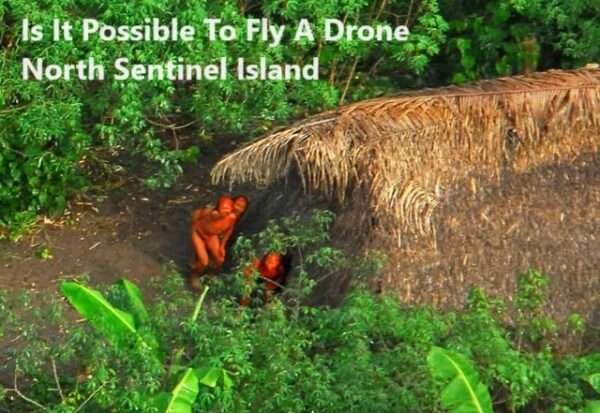
If a drone suffers a mechanical failure or runs out of battery over the island, the wreckage falls into the hands of the Sentinelese. The tribe routinely inspects shipwrecks and debris washed up on their shores to salvage iron and tools.
Handling an unsterilized device contaminated with saliva, sweat, or respiratory droplets from an operator carries immense risk. The Sentinelese have lived in complete geographic isolation for tens of thousands of years. They lack herd immunity to common illnesses like the common cold, measles, or influenza. An infection that causes mild discomfort in an urban population could trigger a fatal outbreak on North Sentinel Island, extinguishing an entire culture within weeks.
Beyond disease, aerial incursions cause severe psychological disruption. Low-altitude buzzing from high-speed quadcopter blades mimics predatory threats or territorial intrusions, triggering panic and driving tribes away from coastal foraging grounds, fishing reefs, and established base camps.
The Legal Quarantine: Exclusion Zones and Aviation Directives
Operating an unmanned aircraft anywhere near North Sentinel Island violates Indian and international law across multiple jurisdictions.
The Indian government enforces a five nautical mile exclusion zone around the entire perimeter of North Sentinel Island. Entering this zone without explicit clearance from the Ministry of Tribal Affairs and the Andaman and Nicobar Administration violates the Andaman and Nicobar Islands (Protection of Aboriginal Tribes) Regulation of 1956. This statute carries mandatory prison terms of up to seven years and heavy fines.
Aviation laws impose additional penalties:
- Under the Directorate General of Civil Aviation (DGCA) regulations, the airspace over North Sentinel Island is designated as an absolute "No-Fly Zone" (Red Zone).
- Unauthorized drone flights within Red Zones violate the Aircraft Act, empowering maritime authorities to seize vessels and confiscate electronic equipment.
- Indian coastal radar arrays, coordinated by the Indian Coast Guard maritime patrol and naval installations in Port Blair, actively monitor the waters for unauthorized vessels.
- Local boat operators who transport tourists or photographers near the buffer zone face criminal charges, immediate vessel impoundment, and revocation of fishing licenses.
Content creators who post aerial imagery of the island risk prosecution upon landing in Indian territory. Authorities also pursue legal mutual assistance treaties to target illegal footage hosted online.
Enforcement Hurdles: Counter-Drone Technology in Remote Archipelagos
Preventing drone incursions over a 60-square-kilometer island surrounded by open ocean is an operational challenge for Indian maritime authorities. North Sentinel Island sits roughly 50 kilometers west of the main Andaman chain. Patrolling this expanse requires continuous deployments of fast interceptor craft, offshore patrol vessels, and Dornier 228 maritime surveillance aircraft.
Electronic counter-drone systems face geographical hurdles. Standard radio-frequency jammers and anti-drone spoofing guns require line-of-sight targeting from stationary ground installations or large naval decks. Installing fixed electronic warfare stations on North Sentinel Island itself would violate the policy of non-interference.
As a result, enforcement efforts focus on the perimeter:
- Coast Guard patrols monitor staging anchorages around South Andaman, tracking fuel purchases and boat departures.
- Undercover surveillance operations watch Port Blair’s marine supply shops, where rogue tourists rent fishing skiffs.
- Intelligence-sharing agreements with the local Karen and fishing communities help identify illicit excursions before boats leave port.
Stopping aerial incursions ultimately comes down to deterring the demand for content. Several indigenous rights campaigns pressure major social platforms to de-index and demonetize any imagery captured within protected tribal reserves.
Frequently Asked Questions (FAQ)
Q1: Why doesn't the Indian government allow scientists to survey the island using high-altitude drones?
A1: Official policy focuses strictly on "eyes-on, hands-off" observation from safe ocean distances. Low-altitude aerial surveillance disrupts daily tribal life and risks accidental crashes that could introduce fatal pathogens. Even scientific observation is heavily restricted to honor the tribe's right to complete self-determination.
Q2: How many Sentinelese people are alive on the island today?
A2: Population estimates range between 50 and 150 individuals. Because outsiders cannot land on the island, Indian demographic surveys rely on long-distance counts conducted through binoculars from naval ships, meaning precise figures cannot be determined without disrupting the community.
Q3: What happens to someone caught flying a drone over North Sentinel Island?
A3: Perpetrators face arrest by the Andaman and Nicobar Police and prosecution under the Protection of Aboriginal Tribes Regulation and the Indian Aircraft Act. Punishments include multi-year prison sentences, large fines, the confiscation of all boats and gear, and permanent bans on entering India.
Defending the Island's Right to Isolation
North Sentinel Island is not an open-air museum, a tourist destination, or an untamed wilderness waiting for aerial documentation. It is the sovereign, ancestral home of a self-sufficient hunter-gatherer society that has clearly chosen to remain left alone.
The shift from wooden landing parties to remote-controlled drones does not make intrusion any more acceptable. Dropping a motorized plastic camera into the heart of an isolated jungle to generate internet views carries the same hazards as the colonial incursions of the past. Protecting the Sentinelese requires respecting their borders in the air just as on the sea, leaving one of the last undisturbed corners of humanity completely alone.