Playalinda Beach Access Alert: Artemis II Closures, Winter Hours, and What to Expect
Playalinda Beach Access Alert: Artemis II Closures, Winter Hours, and What to Expect
Travelers heading toward Florida’s Space Coast are encountering significant access shifts along the pristine sands of the Canaveral National Seashore. A convergence of heavy aerospace activity at Kennedy Space Center and seasonal gate adjustments has turned the Playalinda District into a moving target for locals and tourists alike. According to a recent National Park Service (.gov) Report, federal authorities have altered daily gate operations and enacted rolling shutdowns to accommodate NASA's crewed Artemis II processing alongside high-frequency commercial launch profiles.
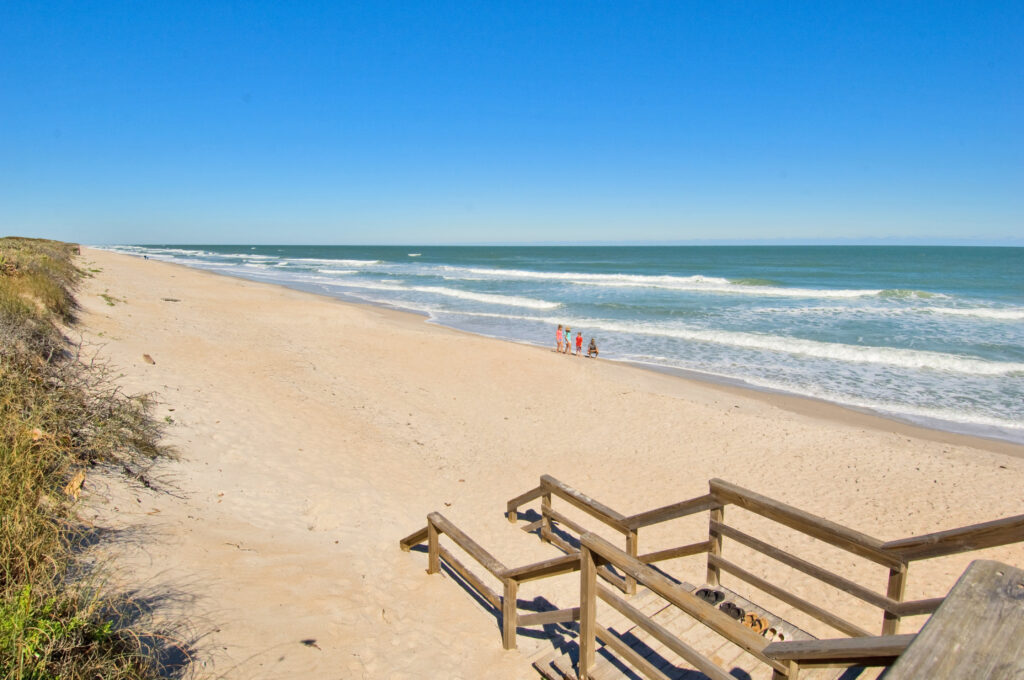
For decades, this undeveloped barrier island north of Titusville offered an untouched sanctuary from commercial boardwalks and high-rise condominiums. Now, beachgoers face locked gates, congested access corridors through Merritt Island National Wildlife Refuge, and expanding federal safety perimeters. Getting across the boardwalks today requires tactical timing, real-time tracking, and a firm grasp of multi-agency jurisdiction.
📌 Key Takeaways:
- Operational Shifts: The National Park Service has instituted strict early closures and rolling gate restrictions at the Playalinda District during wet dress rehearsals and launch preparations for Artemis II.
- Expanding Perimeter Footprint: Federal Aviation Administration environmental assessments indicate proposed Starship operations at Launch Complex 37 could shutter Playalinda access for up to 60 days annually.
- Visitor Planning: Standard winter gate hours cut off vehicle entry at 6:00 PM EST, with routine lot closures occurring by 9:30 AM on high-demand launch days across all 13 parking boardwalks.
How Artemis II Preparations Trigger Federal Gate Shutdowns
Playalinda Beach occupies a precarious geographic footprint. The northern boundary belongs to Canaveral National Seashore, but its southern boundary terminates right against Launch Complex 39B, the launch pad for NASA’s Space Launch System (SLS) rocket. When NASA rolls the Artemis II stack onto the pad, the federal safety exclusion arc sweeps directly across the Playalinda District access corridor along State Road 406 and Florida State Road 402.
During hazardous propellant loading, cryogenic testing, and integrated crew walk-throughs, the National Park Service must clear the seashore completely. The Brevard County Sheriff’s Office and federal wildlife officers seal off the park gates miles west of the shoreline, turning away hundreds of day-trippers. When an SLS wet dress rehearsal spans several days, beach access remains entirely suspended. Visitors attempting to park along the refuge shoulders face active towing operations and steep federal fines.
Park rangers warn that schedule slips are routine in aerospace testing. A valve anomaly or scrub can push gate re-openings back by 24 to 72 hours with minimal advance notice. Anyone staging a coastal outing must monitor real-time aerospace scheduling rather than relying on standard park operating calendars.
Playalinda District Operating Hours and Winter Gate Rules
Beyond rocket operations, seasonal transitions dictate daily vehicle movements. The National Park Service enforces winter gate hours across the Playalinda District, opening the entrance booths at 6:00 AM and shutting the egress gates promptly at 6:00 PM EST. Visitors remaining past curfew risk contact with law enforcement and automatic citations.
Traffic patterns along the narrow barrier access road follow predictable surges. The district maintains 13 distinct parking boardwalks, but capacity is hard-capped at roughly 1,200 total passenger vehicles. Parking Lot 1 fills first due to its proximity to restroom facilities and accessible boardwalks. On launch days and sunny weekends, Lots 1 through 13 hit peak capacity before mid-morning, triggering a mandatory "one vehicle out, one vehicle in" metering policy at the entrance toll booths.
Storm-related dune maintenance also alters access. Recent Atlantic storm swells periodically strip sand beneath dune crossings, forcing the Park Service to temporarily close individual boardwalks between Lots 7 and 12 for structural repairs.
Timeline of Closures, Hours, and Multi-Agency Restrictions
Navigating access to this stretch of coastline requires tracking different federal and county agencies, each exercising authority over overlapping zones of the shoreline.
| Timeframe / Phase | Governing Agency | Access Impact & Conditions |
|---|---|---|
| Standard Winter Season | National Park Service | Gates operate 6:00 AM, 6:00 PM. Strict evening closures; zero overnight parking permitted. |
| Artemis II Pad Operations | NASA / NPS / Brevard County | Full district closures during fueling, pad rollouts, and final countdown phases. |
| Commercial Falcon 9 Launches | U.S. Space Force / NPS | Beach remains open for daylight flights outside blast arcs; lots reach capacity 2, 3 hours pre-launch. |
| Starship Flight Trajectories | FAA / Space Force | Projected expanded exclusion zones shuttering park access for an estimated 60 days per year. |
The FAA Starship Proposal and Looming Multi-Week Blackouts
While NASA missions capture international headlines, private aerospace operations pose the largest structural risk to ongoing public access. An environmental evaluation conducted by the Federal Aviation Administration (FAA) regarding proposed SpaceX Starship-Super Heavy launches out of Cape Canaveral Space Force Station revealed disruptive projections. The explosive blast yield and acoustic energy produced by the 33-engine booster necessitate massive safety perimeters.
According to regulatory impact assessments published by regional news outlets, establishing these required safety clear zones would block beach access for an equivalent of 60 days annually. The economic and recreational fallout falls directly on Titusville merchants, surf communities, and outdoor recreational users who rely on the barrier island year-round.
Local community organizations and recreational advocates have pushed back during public comment periods, emphasizing that Canaveral National Seashore exists under a congressional conservation mandate established in 1975. Balancing national aerospace priorities against the statutory purpose of public public recreation remains a contentious legal friction point across Brevard County.
The Launch Viewing Experience: What to Expect on Site
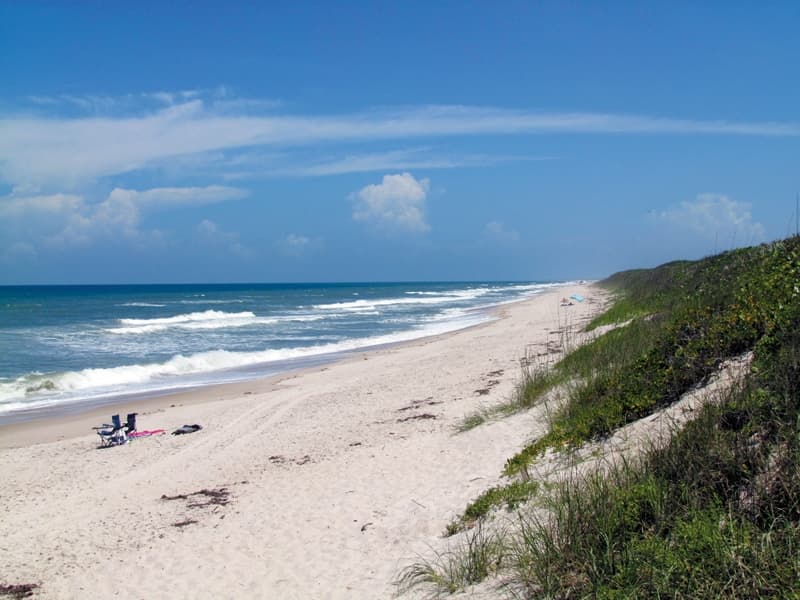
Viewing a launch from Playalinda Beach is visceral. At Parking Lot 1, spectators sit approximately 4.5 miles from Pad 39B and five miles from Pad 39A. You feel the acoustic shockwave in your chest before the rolling roar echoes across the Mosquito Lagoon. The visual sightline remains clear of commercial clutter, offering an unobstructed view over coastal palmettos and low sand dunes.
Surviving the experience requires self-reliance. Playalinda provides no potable water, no food concessions, and no shade structures. The district relies exclusively on solar-ventilated composting toilets positioned at individual parking lots. Cellular service drops precipitously past the entry gate, preventing real-time mission scrub alerts from reaching visitors waiting on the sand.
Pack a dedicated VHF scanner or AM radio to track countdown nets. Bring twice the water you anticipate needing. If NASA aborts a mission deep in the countdown, egress is agonizingly slow: thousands of visitors funneled simultaneously onto a single two-lane roadway heading back toward Titusville.
Navigation, Vehicle Prep, and Navigating Wildlife Corridors
Reaching the shoreline requires passing through the core of the Merritt Island National Wildlife Refuge. This 140,000-acre sanctuary supports hundreds of protected species, from manatees and American alligators to bald eagles. Speed limits along SR 402 drop from 45 mph to 25 mph near the entrance booths, and federal game wardens enforce those limits strictly to prevent vehicle strikes on wildlife.
Drivers must also prepare for environmental extremes. The barrier island road is susceptible to sea-spray corrosion and blowing sand drifts. During high wind events, coastal dunes migrate onto outer parking aprons, creating hazard pockets for low-clearance vehicles. Four-wheel drive is not mandatory for paved areas, but driving off designated asphalt or parking on undisturbed roadside vegetation is illegal under Brevard County seashore rules and federal park mandates.
If you intend to explore north past Parking Lot 13, expect a shifting demographic. Lot 13 marks the historical, unofficial boundary for nude sunbathing along the remote northern sands. While nudity is officially prohibited under federal regulation and Brevard County ordinances, enforcement concentrates primarily on the immediate boardwalk area, leaving the remote northern stretches quietly self-policing.
Frequently Asked Questions (FAQ)
Q1: What happens if a rocket launch occurs after park operating hours?
A1: The Playalinda District gates remain firmly closed. If a launch is scheduled after the winter cutoff time of 6:00 PM EST or summer cutoff of 8:00 PM EDT, the public cannot enter or stay on the beach. Launch viewing shifts entirely to mainland parks along the Indian River in Titusville, such as Space View Park or Parrish Park.
Q2: How much does it cost to enter the Playalinda District?
A2: The standard vehicle entrance fee is $20 per private vehicle for a seven-day pass. The park accepts cash and credit, but valid America the Beautiful National Parks passes, Senior passes, and Military passes grant free entry.
Q3: Are pets permitted on the beach boardwalks and sand?
A3: No. In order to protect endangered shorebird nesting sites and sea turtle habitats, pets are prohibited on all Playalinda beaches and boardwalks. Dogs are only permitted on a short leash inside parking lot pavement perimeters.
Q4: How far in advance do lots fill up for major launches?
A4: For major daytime launches such as Falcon Heavy or Artemis operations, the outer parking lots (Lots 1 through 4) often fill completely four to five hours prior to the opening of the launch window. Once all 1,200 parking spots fill, the entrance road closes at the park boundary.
Strategic Takeaways for 2026 Space Coast Planning
The transformation of Florida's Space Coast has rendered passive, casual visits to Playalinda Beach a relic of the past. As commercial flight cadences climb beyond 100 missions a year and NASA pushes the crewed Artemis program through its operational phases, access windows will tighten further. The barrier beach remains one of the wildest, most stunning stretches of nature on the Atlantic seaboard, but enjoying it now requires treating a visit like an expedition.
Verify the status of the National Park Service gates the morning of your trip, check real-time FAA airspace restrictions, and always carry an exit strategy for when the federal safety perimeters drop into place.