Side-by-Side Test: The Secret to Restaurant-Quality Jasmine Rice You Can See
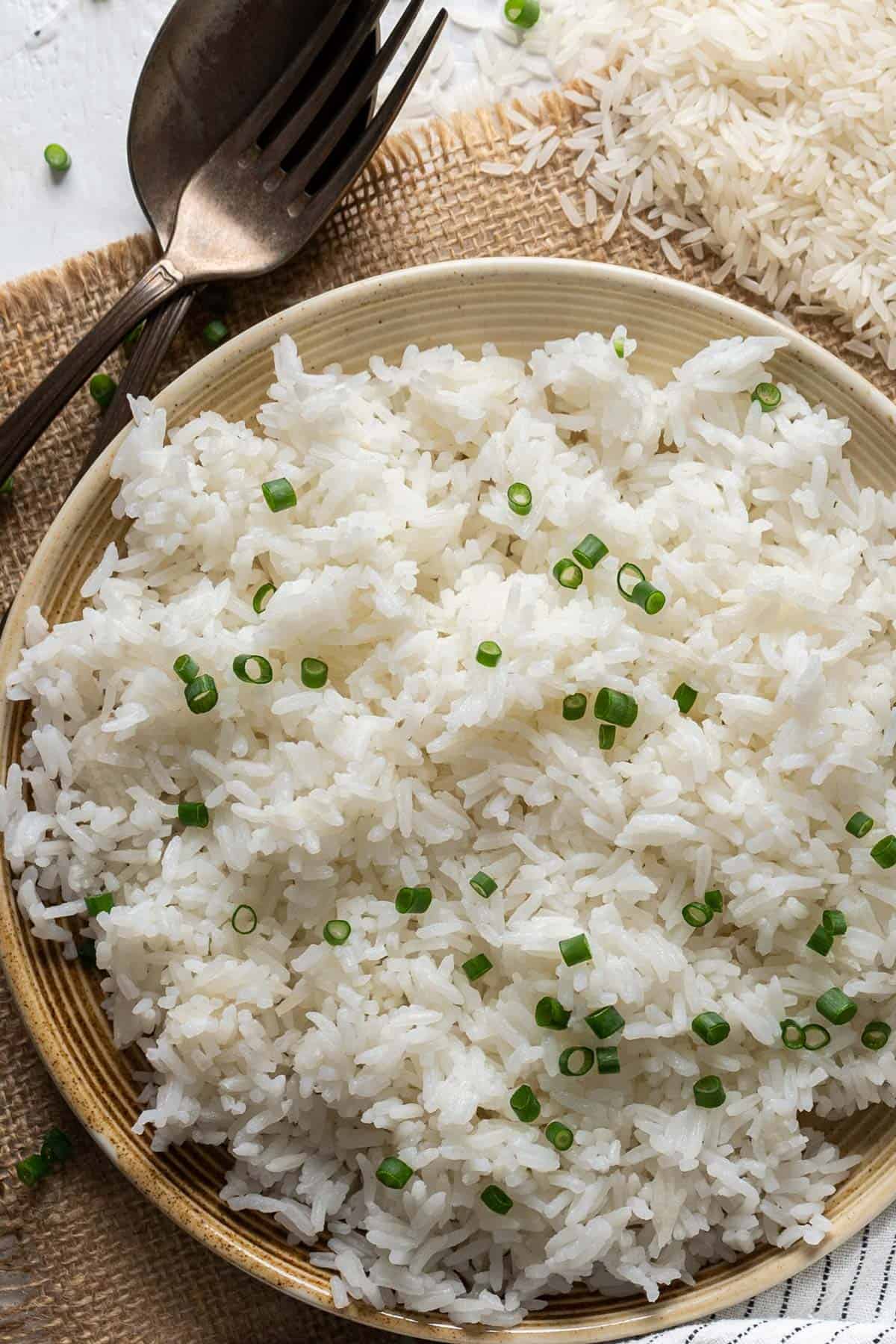
Most home cooks ruin jasmine rice before the burner even warms up. The standard printed instructions on commercial rice bags recommend a two-to-one water ratio, a formula guaranteed to turn fragrant grains into a sodden, gelatinous paste. In culinary testing documented by analysts and detailed in a recent Serious Eats Report on variety dynamics and kitchen habits, improper liquid metrics and folk tricks consistently sabotage kernel integrity, often scorching the pan bottom in the process.
Getting restaurant-quality jasmine rice requires understanding how heat, moisture, and starch interact in long-grain aromatic cultivars. Jasmine rice carries distinct chemical and physical properties that demand a gentler touch than standard long-grain white or basmati. When executed properly, every grain emerges plump, lightly clinging, and distinctly defined.
📌 Key Takeaways:
- The Golden Ratio: Stovetop cooking demands a strict 1:1.25 water-to-rice volume ratio, while electric rice cookers perform best at a leaner 1:1 to 1:1.1 measurement.
- The Starch Factor: Rinsing rice three to four times strips loose surface amylose, keeping kernels distinct rather than fusing into heavy mush.
- The Rest Phase: A mandatory 10-minute off-heat rest allows trapped moisture to redistribute evenly through the rice bed before fork fluffing.
The Starch Profile of Long-Grain Thai Jasmine
Long-grain Thai jasmine, known domestically as Khao Dawk Mali 105, contains an amylose content hovering between 12% and 19%. For comparison, traditional Indian basmati contains upwards of 24% amylose. Amylose gives grains structural rigidity during boiling. Low amylose, coupled with high amylopectin, produces soft, clingy textures that can turn gummy when over-hydrated.
This distinct starch profile explains why standard long-grain cooking directions fail. Jasmine kernels absorb liquid rapidly through micro-fissures in their outer aleurone layer. If excess water enters those fissures before the outer starches gelatinize, the rice matrix ruptures. You end up with a swollen, soggy mass instead of light, tender kernels.
Freshness also plays an operational role. Newly harvested "new crop" jasmine contains significantly more intrinsic moisture than aged stock. If your bag carries a current-year harvest stamp, trim your cooking water by roughly 5% to 8% to prevent the grains from softening past their ideal threshold.
Rinsing Jasmine Rice and Stripping Excess Surface Starch
The boundary between sticky vs mushy rice begins at the sink. Authentic jasmine rice should cling softly to chopsticks, but it should never dissolve into paste. That difference comes down to removing free surface starch created by kernel friction during industrial milling and shipping.
Place your raw rice into a fine-mesh strainer set inside a deep mixing bowl. Fill the bowl with cold tap water and gently swirl the grains with your fingers for 15 seconds. The water will turn an opaque, milky white as loose amylose washes free. Lift the strainer, dump the milky water, and repeat this cycle three to four times until the runoff runs clear.
Never scrub or grind the grains aggressively against the wire mesh. Thai jasmine kernels are delicate and fracture easily when wet. Fractured grains release internal starches during boiling, creating the gummy texture you are actively trying to avoid. Once the water clears, drain the rice thoroughly in the strainer for two full minutes so unaccounted moisture does not throw off your cooking ratio.
The Water to Rice Ratio: Side-by-Side Lab Testing
To pinpoint the ideal formula, culinary laboratories have run controlled absorption trials varying water volumes across identical batches of rinsed jasmine rice. The results demonstrate how narrow the margin for error remains across stovetop pots and automated appliances.
| Water-to-Rice Ratio | Cooking Environment | Kernel Firmness | Texture Profile |
|---|---|---|---|
| 1:1.00 | Sealed Rice Cooker | Firm / Al Dente | Separated, dry exterior; optimal for fried rice preparation. |
| 1:1.25 | Stovetop Heavy Pot | Balanced / Tender | Restaurant standard; soft cling, distinct shape, fully aromatic. |
| 1:1.50 | Stovetop Heavy Pot | Soft / Wet | Kernels split open along structural lines; damp mouthfeel. |
| 1:2.00 | Standard Package Baseline | Degraded / Mushy | Total cellular breakdown; porridge-like texture. |
The visual evidence from these batches reveals that a 1:1.25 ratio provides the exact liquid volume required for complete starch gelatinization while compensating for minor steam loss through the lid. At 1:1.5, the grain's exterior softens prematurely before the center finishes cooking. Anything approaching 1:2 floods the pot, turning individual grains into a continuous starch mass.
:max_bytes(150000):strip_icc()/how-to-make-jasmine-rice-3217510-ADD-V1-BIG-FINAL-V2-6ad75cb18e604ae486f113e1d1c356dd.png)
Mastering the Stovetop Absorption Method
Executing the stovetop absorption method requires a heavy-bottomed saucepan with a tight-fitting lid. Thin-gauge aluminum pans create localized hot spots that scorch the base before ambient steam reaches the top layers of rice. A cast iron or multi-ply stainless steel vessel distributes heat uniformly across the base.
Combine 1 cup of thoroughly drained, rinsed jasmine rice with 1 ¼ cups of cold water and a half-teaspoon of kosher salt in your pan. Place the uncovered pot over medium-high heat and watch it closely. Do not leave the stove. You want a rapid, rolling boil across the entire liquid surface, which generally takes 3 to 4 minutes.
The second the boil establishes itself, drop the burner to its lowest possible setting and clamp the tight-fitting lid securely onto the pot. This initiates the simmer and steam technique. Set a kitchen timer for 12 minutes. Never lift the lid to check progress. Cracking the lid releases vaporized moisture, dropping internal pressure and forcing you to guess how much cooking liquid was lost to the kitchen air.
Rice Cooker Instructions and Automated Cycle Precision
Electric rice cookers simplify the process by relying on internal thermal sensors rather than manual timing. As water boils, pot temperatures remain clamped near 212°F (100°F). Once the free water is completely absorbed by the grains, the pot interior rises past boiling, triggering the thermostat to switch from cook to keep-warm.
Because quality rice cookers feature tightly sealed gaskets that lose negligible steam compared to stovetop cookware, the water-to-rice ratio shifts downward. For every 1 level plastic measuring cup of rinsed jasmine rice (standard 180 ml cup), add clean water precisely up to the internal "1" water line marked on the inner bowl. If measuring by standard kitchen cups, use a lean 1:1 ratio.
If your cooker offers distinct programming modes, select the "White Rice" or "Quick" setting rather than a extended cycle designed for brown or GABA rice. Long soak periods make jasmine kernels waterlogged, dulling the signature 2-acetyl-1-pyrroline compounds that give fresh jasmine its characteristic buttery, pandan-like aroma.
Post-Cook Resting Time and the Fork Fluffing Method
The cooking process does not finish when the timer sounds or the appliance clicks off. At this stage, the bottom layer of rice holds excess moisture while the top remains slightly dry. Diving straight into the pot guarantees uneven, clumpy servings.
Remove the stovetop pot from the burner, leaving the lid undisturbed. Let the rice sit in its trapped vapor for a 10-minute post-cook resting time. In an electric cooker, let the machine stay on "Keep Warm" with the lid closed for that same 10-minute window. This resting phase equalizes internal vapor pressure, softening the upper layer while allowing the wet bottom layer to absorb its remaining water.
Once rested, open the lid and immediately deploy the fork fluffing method. Never drag a heavy metal spoon flat against hot grains, which crushes them into dough. Instead, insert the tines of a table fork down along the edges of the pot and lift gently upward toward the center. This separates individual kernels, lets trapped steam escape, and leaves you with light, fluffy, fragrant rice ready for plating.
Frequently Asked Questions (FAQ)
Q1: Why does my jasmine rice turn out sticky even after measuring water carefully?
A1: Unrinsed surface starch is almost always the culprit. Skipping the washing step leaves loose amylose powder around each grain, which gelatinizes into a sticky glue during cooking. Rinse your rice in cold water three to four times until the drainage runs clear.
Q2: Can I substitute chicken broth or coconut milk directly at the same ratio?
A2: Thin stocks can be swapped at an identical 1:1.25 ratio. Heavy liquids like canned coconut milk contain fats and solids that alter heat transfer and water absorption. For coconut jasmine rice, use a split ratio of ¾ cup coconut milk and ½ cup water per cup of rice to prevent uneven cooking.
Q3: How do I save jasmine rice if the grains are still hard after cooking?
A3: If the kernels have a chalky, crunchy center after your 12-minute simmer, your lid lost too much steam. Drizzle 2 tablespoons of boiling water evenly across the surface, seal the pot tightly, and let it steam on the absolute lowest burner setting for another 3 minutes before resting.
Consistent Results on Every Burner in 2026
Fluffy jasmine rice is a matter of moisture control and starch management, not kitchen luck. Moving away from arbitrary two-to-one volume guidelines and embracing the proven 1:1.25 stovetop standard eliminates mushy textures entirely. Rinse away excess starches, trust a heavy pot with a tight seal, and let residual steam finish the job during an undisturbed rest. With these precise cues in place, your home kitchen will match the clean, fragrant quality of your favorite Southeast Asian restaurants every single time.
