T-Bone vs Porterhouse Side-by-Side: Visual Anatomy and Butcher Specs

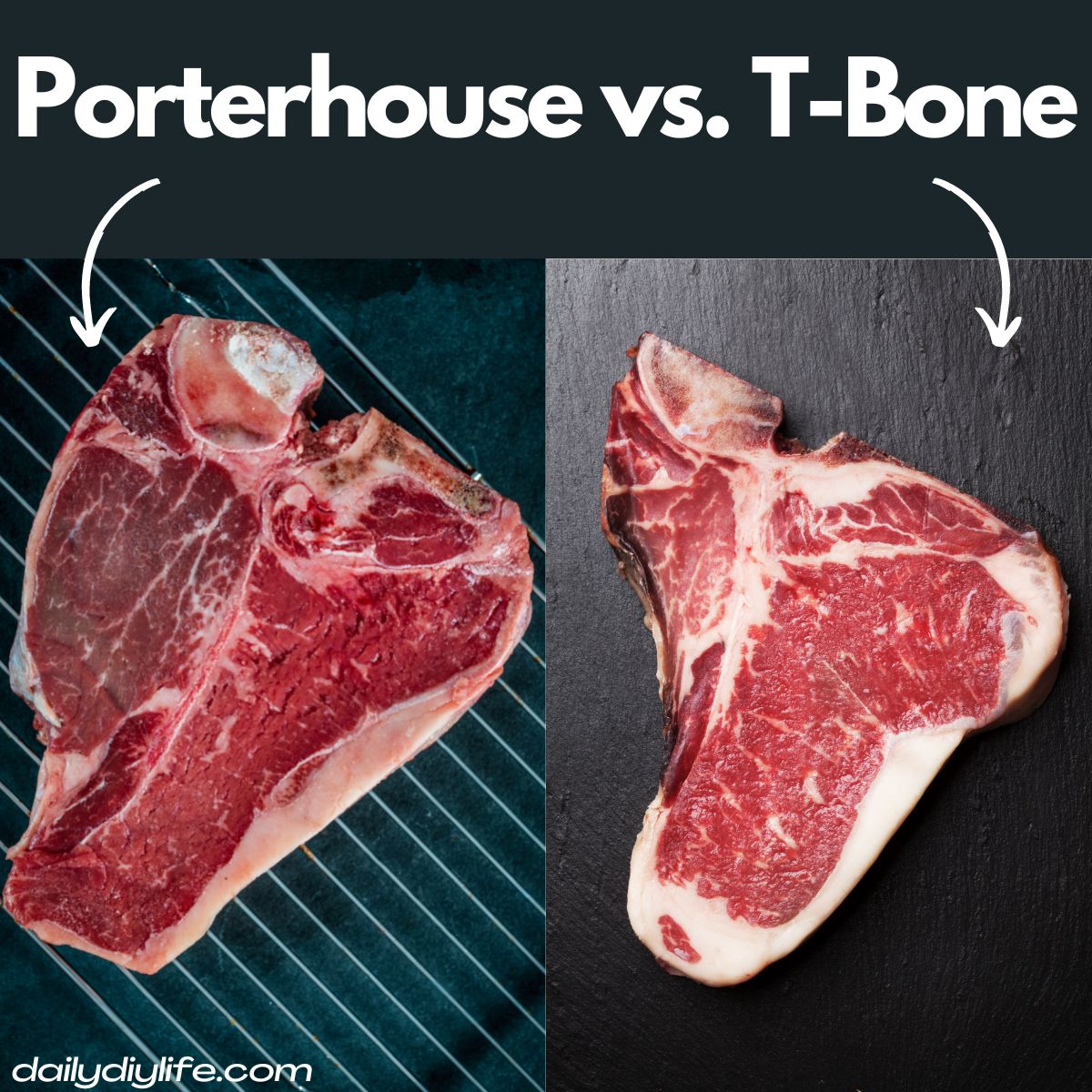
Walk up to any butcher counter or high-end steakhouse display, and you will see two nearly identical steaks cut from the exact same subprimal: the T-bone and the porterhouse. Both feature a prominent T-shaped lumbar bone separating two distinctly textured muscles, yet their price tags and dining profiles differ substantially. As diners increasingly scrutinize value and meat grades across premier steakhouses, a trend highlighted by an Eat This Not That Report assessing top chain cuts, the technical distinction between these two cuts remains widely misunderstood.
The difference comes down to precise caliper measurements enforced by federal butchery standards. While both cuts deliver a strip loin and a tenderloin section bound together by bone, the actual cut identification hinges entirely on the diameter of the filet mignon portion. Misjudging that difference can cost home cooks and restaurant diners $8 to $15 per pound without delivering the dining experience they intended.
📌 Key Takeaways:
- The USDA Metric: A porterhouse requires a tenderloin width measurement of at least 1.25 inches across, while a standard T-bone requires only 0.5 inches.
- Primal Origin: Both steaks originate from the short loin primal cut; butchers yield T-bones from the anterior (front) end and porterhouses from the posterior (rear) end.
- Culinary Trade-Off: Cooking either cut demands dual-temperature thermal management because the lean tenderloin finishes cooking substantially faster than the well-marbled strip loin.
The Short Loin Primal Cut and How Butchers Divide It
Every T-bone and porterhouse begins in the short loin primal cut, positioned directly behind the rib primal and ahead of the sirloin. Within this section run two major muscle groups: the longissimus dorsi (which forms the New York strip loin) and the psoas major (the tenderloin, or filet mignon). Separating these muscles is the lumbar vertebra, an interior section of bone that forms the signature T-shaped lumbar bone.
The tenderloin is a tapered, cone-shaped muscle. At the front of the short loin, closest to the animal's ribs, the tenderloin narrows down to a slender point. As the butcher moves backward toward the sirloin end of the carcass, the tenderloin expands significantly in girth.
Because of this anatomical taper, slicing the short loin sequentially yields very different steaks:
- The first 3 to 5 steaks sliced from the front have minimal tenderloin surface area. These are sold as classic T-bones.
- The final 2 to 4 steaks cut from the rear carry the widest cross-section of the tenderloin. These qualify as porterhouses.
- Steaks falling immediately between the two can easily trigger consumer confusion if meatcutters do not measure accurately before labeling.
Butchers follow strict fabrication sequences to minimize waste. Cutting through the lumbar vertebrae requires an electric bandsaw to maintain a flat, uniform face across both muscles, preventing ragged edges that can ruin surface searing.
USDA Butcher Specifications and the Tenderloin Caliper Rule
Meat labeling in the United States is governed by the Institutional Meat Purchase Specifications (IMPS) maintained by the USDA Agricultural Marketing Service. The federal guidelines leave no room for subjective guesswork when categorizing Item 1174 (Porterhouse) versus Item 1173 (T-Bone).
The decisive metric is the tenderloin width measurement. To qualify as an official USDA porterhouse, the steak must measure at least 1.25 inches (32 mm) across the tenderloin portion at its widest point, measured parallel to the central backbone. If the tenderloin measures between 0.5 inches (13 mm) and 1.24 inches, federal rules mandate that the steak must be labeled a T-bone. Any cut yielding less than 0.5 inches of tenderloin cannot legally carry the T-bone designation; it is sold as a bone-in strip steak or club steak.
Inspectors apply this measurement across the entire thickness tolerance of the cut. If a steak measures 1.3 inches on top but narrows to 1.1 inches on the bottom due to an angled saw cut, it forfeits the porterhouse label under rigorous wholesale audits.
| Butchery Specification | USDA T-Bone (Item 1173) | USDA Porterhouse (Item 1174) |
|---|---|---|
| Minimum Tenderloin Width | 0.50 inches (13 mm) | 1.25 inches (32 mm) |
| Primal Location | Anterior (closer to rib) | Posterior (closer to sirloin) |
| Typical Weight Range | 12, 20 ounces | 24, 40 ounces |
| Average Price Per Pound (Choice) | $14, $19 / lb | $19, $26 / lb |
| Primary Kitchen Utility | Single-diner pan/grill sear | Multi-diner shared carving roast |
Price Per Pound Realities Across Retailers and Steakhouses
Wholesale pricing reflects consumer preference for the tenderloin. Because tenderloin is the most expensive subprimal muscle on the steer, beef processors charge a premium for wholesale boxes of porterhouses. Retail grocers and specialty butcher shops routinely maintain a spread of $3 to $7 per pound between the two cuts within identical marbling grades (such as USDA Choice or Prime).
For restaurant cut selection, the economics shift further. High-end establishments often list a 32-ounce dry-aged beef porterhouse for two people at $135 to $185, compared to an individual 16-ounce T-bone priced around $55 to $75.
The markup on porterhouses accounts for higher bone mass and aggressive trimming. When dry-aging beef for 30 to 45 days, moisture loss and exterior mold development shrink the overall muscle mass by 15% to 22%. Because the porterhouse has a large surface area exposed along both the strip and tenderloin sides, trimmings run higher during final fabrication, inflating menu prices.
A deceptive retail practice involves labeling a steak with a 0.75-inch tenderloin as a "baby porterhouse." This marketing term carries zero legal weight under USDA regulations. Shoppers paying porterhouse rates for such cuts are paying a premium for ordinary T-bone yields.
Managing the Dual-Temperature Cooking Challenge
Cooking a bone-in composite steak exposes cooks to a difficult thermodynamic puzzle. The strip loin features coarse muscle grain and moderate-to-high intramuscular fat, requiring prolonged heat exposure to render internal fat and develop flavor. The tenderloin is exceptionally lean and soft, drying out quickly once its internal temperature crosses 135°F.
Compounding the problem, the bone acts as a thermal barrier. Heat travels into the meat fibers through conduction, but the bone transfers heat at a much slower rate. Meat immediately adjacent to the bone stays 5°F to 8°F cooler than the outer edges, often resulting in rare meat clinging to the bone while exterior edges reach medium-well.
Professional kitchens overcome this with dual-temperature cooking strategies:
- Directional Heat Placement: On a charcoal or gas grill, the strip loin should face direct, intense thermal zones, while the delicate tenderloin faces cooler, indirect zones.
- Reverse Searing: For steaks cut 1.5 to 2.5 inches thick, gentle indirect baking at 225°F brings both muscles to 115°F internal temperature before finishing with a 90-second high-heat sear in a cast-iron skillet.
- Thermal Shielding with Butter: Basting foaming butter exclusively over the tenderloin section during the final minute forms a crust quickly without driving deep, gray heat rings into the core of the muscle.
Thin steaks under 1.25 inches thick exacerbate this thermal imbalance. High heat blasts through the tenderloin before the strip develops an acceptable Maillard reaction crust, which is why premium butcher counters rarely cut either steak below 1.5 inches.
Evaluating Marbling Grade and Butcher Quality Flags
When inspecting meat in display cases, marbling grade dictates eating quality more than steak nomenclature. A USDA Prime T-bone with extensive flecks of intramuscular fat will consistently outperform a lean, under-marbled USDA Select porterhouse.
Beyond standard grading stamps, examining structural butcher traits prevents buyers from wasting money on poorly cut loins:
- Identify the Sirloin Inclusion (Vein Steak): Avoid porterhouses cut from the absolute end of the short loin where the gluteus medius begins to appear. This muscle introduces a tough, gristly connective tissue line (often called the "nerve" or "vein") through the top of the strip loin, yielding a chew that feels rubbery.
- Inspect Thickness Consistency: Reject steaks cut with an uneven wedge taper. Uneven thickness guarantees one edge will overcook before the opposite edge develops a crust.
- The saw cut should be clean and smooth. Shattered bone fragments or pulverized bone dust left on the meat surface promote rapid oxidation and off-flavors during cooking.
Dry-aged beef selections require additional scrutiny. Look for a deep mahogany hue rather than bright cherry red, along with firm exterior fat that resembles dry wax rather than moist grease. Properly aged loins carry a rich, earthy aroma rather than sour or ammonia-tinged notes.
Frequently Asked Questions (FAQ)
Q1: Why do some steakhouses serve T-bones instead of porterhouses?
A1: Steakhouses frequently select standard T-bones because their 14-to-18-ounce size creates a practical single-diner portion. Porterhouses cut to proper thickness typically weigh 24 to 40 ounces, which works better as a shared menu item for two guests.
Q2: Can I get a true porterhouse cut from an all-grass-fed steer?
A2: Yes, but the tenderloin diameter is generally smaller due to the lower overall slaughter weights of grass-finished cattle. Verifying the 1.25-inch width measurement before purchase is essential on smaller grass-fed carcasses.
Q3: Does the T-shaped bone actually add flavor to the meat during cooking?
A3: The bone does not transmit savory marrow compounds through intact muscle tissue during brief cooking times. However, it insulates the surrounding meat from intense direct heat, retaining moisture along the bone margin and reducing structural shrinkage.
Choosing the Right Cut for Your Table
Selecting between these two classic cuts comes down to portion size and culinary intent. For a solo diner seeking a manageable portion that delivers the distinct chew and concentrated beef flavor of a New York strip, alongside a small taste of tender filet, the standard T-bone offers the most practical value per pound.
When cooking for two people or executing a celebratory reverse-sear roast, the porterhouse justifies its price tag. The generous filet portion ensures both diners receive ample servings of soft tenderloin alongside the rich, marbled strip loin. By measuring the tenderloin diameter and matching cooking zones to the different muscle compositions, you can extract peak performance from either short loin cut.


