Tacos de Papa Deconstructed: Heritage, Regional Variants, and Common Myths
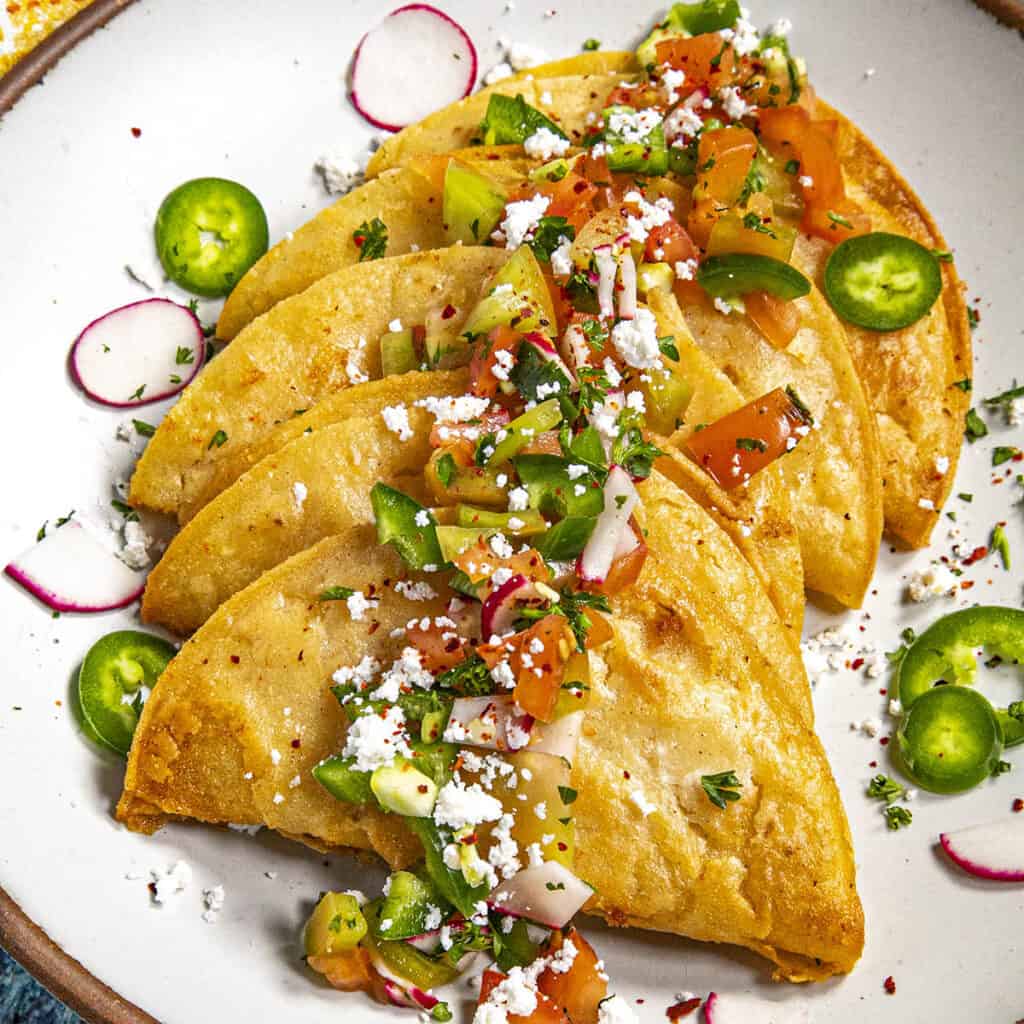
Sizzling oil, blistering corn dough, and the earthy aroma of spiced tubers define street corners across central Mexico before dusk. While global diners obsess over spit-roasted pastor or slow-simmered suadero, tacos de papa remain the unsung cornerstone of everyday Mexican foodways. According to field reporting highlighted in the Will Fly for Food Report on must-try Mexico City tacos, the capital’s intricate taquería network thrives just as much on these starch-filled, golden-fried staples as it does on heritage cuts of meat.
The dish sounds deceptively modest: mashed tubers pressed into fresh corn rounds and fried crisp. Yet mastering tacos dorados de papa requires balancing moisture control, fat temperatures, and architectural crunch. This food bridges seventeenth-century convent kitchens with working-class metro stops, providing a rich study in how simple sustenance evolved into an iconic antojito.
📌 Key Takeaways:
- Origins and Culture: Rooted heavily in Lenten culinary traditions (Cuaresma), tacos de papa provided a satisfying, meatless centerpiece for observant Mexican families across social strata.
- The Structural Science: Perfect crispy potato tacos hinge on starch dehydration; wet mashed potatoes create steam pockets that rupture tortillas during the shallow frying technique.
- Regional Transformations: While Mexico City street food showcases minimalist rolled versions bathed in pungent salsa, borderland adaptations rely on shredded cabbage, hard folded shells, and mild tomato sauces.
Lenten Kitchens and the Catholic Roots of Cuaresma Comfort Food
Tacos de papa did not enter Mexican gastronomy as casual fast food. Their prominence tracks directly back to the strict liturgical calendar of the Catholic Church. During the forty days of Lent, meatless Fridays prompted domestic cooks to lean hard into indigenous staples and affordable Andean tubers. Potatoes, cultivated in Mexico since early colonial transshipment from South America, offered caloric density when beef and pork were off-limits.
Homemakers combined indigenous maize nixtamalization with Spanish-introduced shallow pan-frying. In family kitchens across Jalisco, Michoacán, and the State of Mexico, cooking these crispy parcels became an intergenerational ritual. Grandmothers mashed Russet or white Alpha potatoes while warm, adding little more than salt, softened onions, and a splash of milk or lard. The resulting texture sat midway between velvety purée and coarse smash, offering a clean, comforting base for pungent external garnishes.
Even as dietary habits secularized throughout the late twentieth century, the dish retained its sacred association with springtime. Walk into any residential neighborhood in Puebla or Cuernavaca on an Ash Wednesday or Good Friday, and home cooks are still pressing and rolling dozens of corn tortillas around warm potato hash.
The Physics of Shallow Frying: Preventing Tortilla Ruptures
Home cooks frequently hit an irritating barrier: tortillas that split open in hot oil, spilling filling into the skillet and creating violent grease splatters. Professional taqueros circumvent this disaster through moisture control and starch management. A watery potato filling creates pressurized steam inside a sealed tortilla. When steam cannot escape, the corn dough rips.
To avoid this, boil potatoes skin-on to reduce water absorption, peel them steaming hot, and mash them without excess liquid. The mashed potato filling seasoning must remain simple: salt, cracked white pepper, softened onion, and occasionally a beaten egg yolk or a spoon of dry cotija cheese to bind the matrix. The filling should feel stiff and moldable, not runny.
Tortilla handling matters just as much. Cold, stale corn tortillas snap immediately upon folding. Street vendors warm thin, pliable tortillas on a hot flat-top griddle (comal) for several seconds, brushing them lightly with moisture or fat before rolling. When lowered into vegetable oil or clean pork lard held at precisely 350°F to 365°F (177°C, 185°C), the outer skin seals instantly. Shallow frying requires flipping after 90 to 120 seconds, yielding an audible crunch while preserving a tender, steaming core.
Taquería Evolution: From CDMX Metro Corners to Borderland Drive-Thrus
The presentation of tacos de papa changes as one travels from the Central Valley of Mexico toward the US borderlands. In Mexico City, these items frequently appear as tightly rolled cylinders called flautas or tacos dorados, fried in wide, oil-sheened steel discs known as comales de bola. Diners consume them standing on busy street corners for 15 to 25 Mexican pesos (roughly $0.80 to $1.30 USD each in 2026), swallowed down between sips of fresh horchata or tepache.
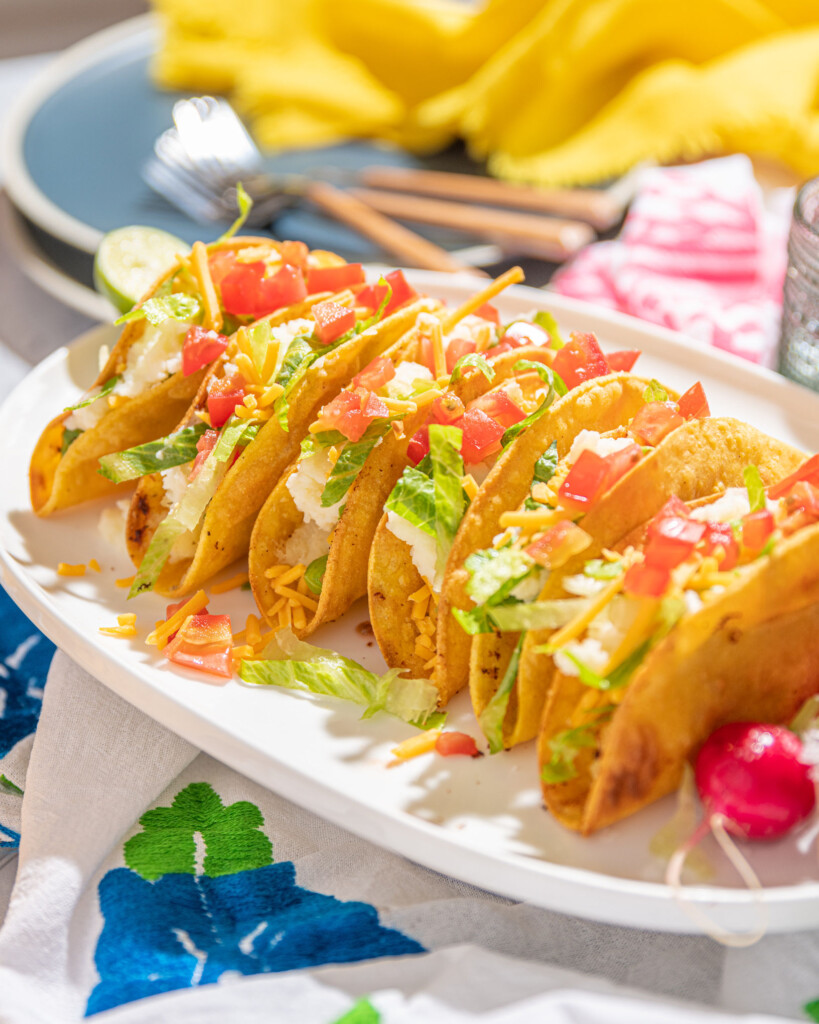
Move north through Sonora, Chihuahua, and into the American Southwest, and the shape shifts. In Tucson, El Paso, and San Diego, the preparation adapts to a half-moon, folded-pocket form. Migrant communities blended traditional preparation with commercial, mass-produced corn tortillas, turning the taco de papa into a lunch-counter staple. Instead of thin green sauces, borderland taquerías often top them with mild, cooked tomato caldillo and bright, pickled red onions.
| Regional Variation | Tortilla Format & Style | Frying Medium & Method | Traditional Finishes |
|---|---|---|---|
| Central Mexico (CDMX / Puebla) | Thin, pliable white or yellow corn; rolled tightly or gently folded flat | Vegetable oil or manteca (lard) in comal de bola; shallow-to-medium fry | Salsa verde cruda, crema Mexicana, shredded romaine, and crumbled queso fresco |
| Jalisco & Bajío Style | Yellow corn; folded into half-moons, pinned occasionally with toothpicks | Deep-fried until thoroughly rigid and deeply golden | Warm spiced tomato broth (caldillo) poured over the taco, raw cabbage, pickled pig skins |
| Borderland / Cal-Mex | Standard commercial corn; folded envelope shape, heavy crunch | Commercial deep fat fryer in neutral vegetable oil | Finely shredded cabbage, cheddar or jack cheese mix, chunky pico de gallo, sour cream |
The Condiment Balance: Cutting Starch with Salsa Verde Cruda and Crema
Because potatoes are rich in starch and absorb cooking fats, an ungarnished potato taco can taste heavy. The Mexican pantry solves this via high-acid toppings. Cold, sharp salsas and crisp produce transform fried carbohydrates into a vibrant dish.
The benchmark pairing remains salsa verde cruda. Blending raw tomatillos, serrano chiles, fresh cilantro, raw garlic, and sea salt introduces unheated malic and citric acids. This sharp green purée cuts straight through hot cooking oil. A thick drizzle of cultured crema Mexicana brings gentle tang and dairy richness, while finely crumbled queso fresco provides salty punctuation.
Texture requires equal attention. In central markets, cooks spread thinly sliced romaine lettuce across the top. In northern states and across the border, cooks favor finely shredded cabbage. Cabbage stays crisp longer against the heat of fried corn, offering a clean, peppery snap that survives take-out boxes and street-side eating alike.
Dispelling the "Poverty Filler" Myth in Modern Mexican Cooking
Culinary discourse outside Mexico sometimes reduces tacos de papa to a budget shortcut, a cheap way for taquerías to stretch margins when meat prices climb. This perspective ignores indigenous farming histories and domestic tradition. In rural Mexico, native potatoes (papas criollas) have long held agricultural value alongside heirloom corn and squash.
Online home-cooking communities on platforms like Reddit's r/MexicanFood frequently debate whether an authentic taco de papa should incorporate cheese inside the mash. While modern cooks often fold in Oaxaca or Monterey Jack for a cheese-pull effect, traditionalists push back. They note that melted internal cheese compromises the pure potato-corn contrast, turning an antojito into an oily quesadilla hybrid.
Chefs across Mexico City are reclaiming the dish using heritage ingredients. They seek out single-origin heirloom corn varieties, such as Bolita or Cónico, to encase puréed yellow papas from the volcanic soil of Toluca. Far from being a frugal compromise, a well-executed potato taco proves that three or four basic elements, handled with precise heat and seasoning, deliver exceptional flavor.
Frequently Asked Questions (FAQ)
Q1: Why do corn tortillas split open during frying?
A1: Tortillas burst when cold or filled with wet mashed potatoes. Warm the tortillas on a hot griddle until completely limp before rolling, and avoid adding excess liquid, cream, or melted butter to the potato filling.
Q2: What is the ideal frying oil and temperature for tacos de papa?
A2: Neutral oils with high smoke points (such as corn, peanut, or canola) work well, though clean lard yields classic taquería flavor. Maintain oil temperatures between 350°F and 365°F (177°C, 185°C). Cooler oil soaks into the tortilla, while hotter oil burns the exterior before warming the potato.
Q3: Are traditional tacos dorados de papa vegetarian?
A3: They are naturally meatless, making them a staple for Lent. However, verify the cooking medium and binding ingredients; some traditional vendors fry in lard (manteca) or mix animal broth or cotija cheese into the potato mash.
Preserving the Corn and Potato Legacy in Modern Food Culture
The appeal of tacos de papa endures because they strip street food back to its foundational pleasures: warm corn, salted tubers, raw heat, and cold dairy. Modern food media frequently chases elaborate proteins, yet the technical skill required to craft a crisp, un-ruptured taco dorado showcases true kitchen mastery. Whether purchased from an early-morning commuter stand in Mexico City or assembled from leftover boiled potatoes on a weeknight, these humble tacos highlight the quiet brilliance of regional Mexican home cooking.