The Best 'It's Gonna Be May' Memes Flooding the Internet and the Proof Behind the Trend

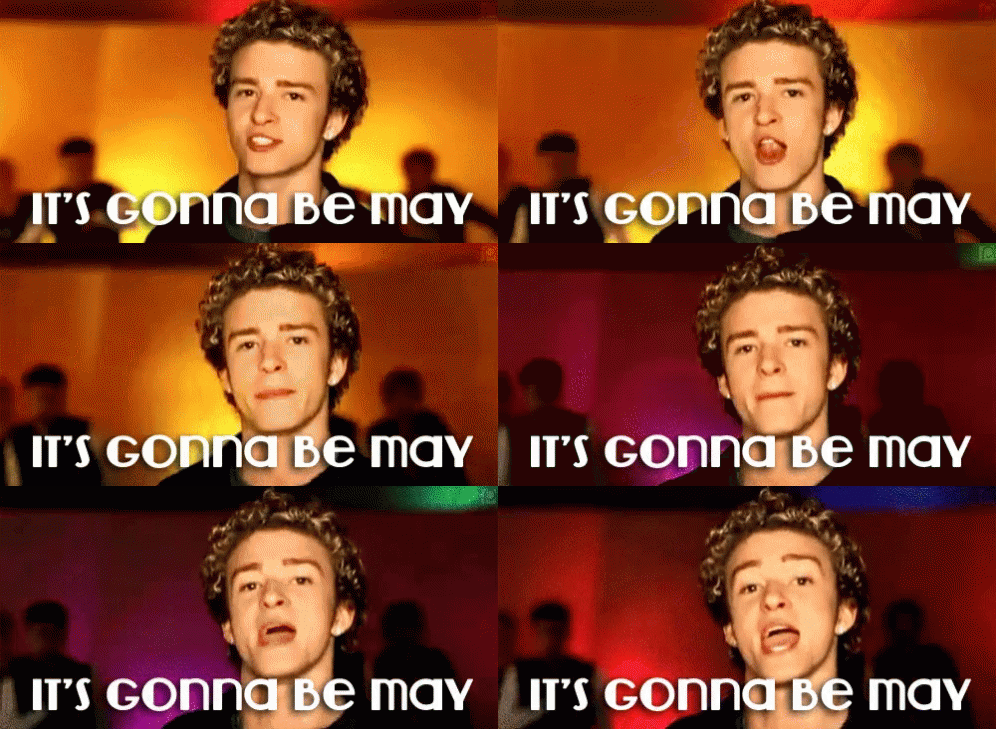
Every year on April 30, social media feeds quietly surrender to a synchronized wave of curly blonde hair, late-nineties pop hooks, and calendar pages flipping forward. The ritual requires no central coordination. Millions of users spontaneously circulate the same frozen frame of a nineteen-year-old Justin Timberlake from the year 2000, his stylized vocal inflection turning a simple pronoun into an annual holiday greeting. What began as an early microblogging joke has solidified into one of the most reliable calendar beats on the English-speaking web.
The staying power of the gag catches casual observers off guard every spring. As documented in a recent USA Today report on seasonal internet traditions, the punchline consistently spikes global search volumes and streaming plays every single spring, pulling millions of younger listeners back toward early-millennium pop archives. It operates like an unwritten calendar notification. The joke outlived Vine, navigated the visual shifts of Tumblr and Instagram, and now commands hundreds of millions of short-form video views across modern feeds.
📌 Key Takeaways:
- Linguistic Origin: Swedish super-producer Max Martin specifically instructed Justin Timberlake to pronounce the final word of "It's Gonna Be Me" with a harsh, diphthongized vowel sound to give the vocal track rhythmic bite.
- The Spark: A 2012 Tumblr post featuring a printed calendar kicked off the visual trend, which transitioned from a fan-led joke into an official brand marketing staple.
- Modern Impact: The surviving members of *NSYNC, including Timberlake and Lance Bass, now actively participate in the joke each spring, turning nostalgic self-deprecation into massive annual engagement spikes.
How a 2000 Pop Vocal Quirk Became an Inescapable April 30 Ritual
The origin of the phrase tracks back to Cheiron Studios in Stockholm during the recording sessions for *NSYNC’s blockbuster album No Strings Attached. Songwriters Max Martin, Andreas Carlsson, and Rami Yacoub built the track around a clipped, syncopated rhythm. Swedish pop architecture demanded aggressive phonetic articulation. Timberlake later confirmed that Martin explicitly directed him to hit the final syllable with an exaggerated, drawn-out vowel so the track could punch through radio compression.
Singing the lyric as written felt flat across the beat. Martin wanted percussive energy. Timberlake stretched the sound into an open, abrasive diphthong that sounded unmistakably like "May." When the single hit airwaves in June 2000 on its way to the top of the Billboard Hot 100, listeners simply absorbed the styling as turn-of-the-millennium teen-pop flair. Nobody predicted that the vocal quirk would lie dormant for twelve years before finding a second life as an internet fixture.
The visual component arrived via Tumblr in early 2012. A user named Kiam Hollingworth printed out a desktop calendar sheet for April, taped a cutout photograph of Timberlake's frosted, perm-curled head across the 30th square, and wrote the famous lyric underneath. The post collected thousands of reblogs within forty-eight hours. By 2014, the single image had multiplied across Twitter and Facebook, establishing April 30 as an unofficial digital holiday celebrating the changing season.
The Best Viral Iterations Keeping the Meme Alive Across TikTok and Instagram
The original calendar photograph remains the gold standard, but the joke reinvents itself across formats every spring. Content creators continually remix Timberlake's styling, leaning heavily into his era-defining frosted tips, which the internet universally compares to instant ramen noodles.
Every April 30 brings distinct waves of remixing:
- The Grocery Aisle Tributes: Shoppers routinely place laminated portraits of 2000-era Justin Timberlake directly inside grocery store displays of dried instant ramen, photographing the uncanny resemblance between the noodles and his bleached curls.
- The Countdown Video Clips: Video creators time the original music video so that Timberlake belts the climactic title phrase exactly at midnight on May 1, treating the vocal transition like a digital New Year's Eve ball drop.
- High-Production Parodies: TikTok creators film intricate sketches building dramatic romantic suspense, only to reveal the punchline through an unexpected burst of the synth bassline.
- Corporate and Civic Adoptions: Transit authorities, regional meteorologists, public libraries, and multinational consumer brands post customized calendar templates to announce May schedules and weather shifts.
These variations succeed because the setup requires zero explanation. Anyone online recognizes the image instantly. The visual simplicity makes it effortless to participate, ensuring fresh generations pick up the bit without needing to remember the original radio cycle.
From Tumblr Stills to Algorithmic Royalty: The Multi-Decade Evolution
The joke survived multiple platform generational shifts, transforming from a static visual into an interactive multimedia event. Understanding this transition highlights how internet culture handles aging boy-band nostalgia.
| Era | Dominant Format | Cultural Footprint |
|---|---|---|
| 2000, 2011 | Radio airplay and MTV rotation | Billboard No. 1 pop hit; vocal quirk treated as standard production style. |
| 2012, 2016 | Tumblr stills and static Twitter macros | Grassroots fan trend; the calendar image establishes an annual April 30 tradition. |
| 2017, 2021 | Brand adoptions and celebrity acknowledgments | Band members publicly validate the joke; Spotify tracks show massive single-day stream spikes. |
| 2022, 2026 | TikTok lip-syncs, short-form remixes, brand collabs | Established calendar tentpole; official digital merchandise and organic algorithm surges. |
The progression shows a shift from bottom-up consumer humor to an institutional social media event. While many early memes quickly decayed under corporate adoption, this seasonal gag remained insulated from audience fatigue. Its narrow twenty-four-hour window shields it from everyday overexposure.
The Max Martin Production Secret Behind the Unmistakable Vowel Shift
To understand why the lyric morphed into an internet staple, examine the sonic mechanics of late-nineties pop production. Max Martin’s legendary run at Cheiron Studios relied on heavy vocal manipulation and distinct phonetic adaptations designed to capture international audiences.
Martin approached the human voice as an auxiliary drum. Natural English vowel sounds frequently swallow percussive energy. When an American singer delivers the word "me," the mouth tightens, causing sound frequencies to decay quickly. By shifting the vowel from the soft "ee" to a hard, open "ay," Martin ensured Timberlake’s vocal hit the downbeat with maximum presence. Britney Spears received identical vocal coaching on tracks like "...Baby One More Time," where "baby" morphed into an emphasized "bay-beh."
The trick paid commercial dividends. It also injected an unnatural phonetic twist into pop radio history. Timberlake delivered the line with earnest commitment inside the dollhouse-themed video directed by Wayne Isham. That vocal delivery supplied the foundation for millions of social media jokes decades later.
Lance Bass, Justin Timberlake, and the Art of Owning Your Past
Many legacy pop acts bristled when social media poked fun at their vintage music videos. *NSYNC took the opposite path. The group leaned into the joke, neutralizing potential ridicule by joining the chorus.
Lance Bass turned the seasonal tradition into an annual comedy series across his social channels. In 2024, Bass posted a viral clip showing his husband asking what month follows April, prompting a cutaway to Bass lip-syncing to his former bandmate with deadpan seriousness. He routinely references the frosted-noodle hairstyle, turning boy band history into high-engagement content.
Timberlake adopted a similar stance. On April 30, 2020, he shared an image of himself wearing a protective face mask with the caption: "Spring has sprung. Stay safe and... you already know." He periodically responds to viral clips across TikTok, cheering on users who recreate the track's choreography.
By embracing the punchline, *NSYNC transformed potential late-career derision into an annual marketing engine. Streaming royalties surge like clockwork. On April 30 and May 1 each year, Spotify and Apple Music report exponential single-day spikes for "It's Gonna Be Me," funneling millions of passive catalog streams right back to the group's discography.
Frequently Asked Questions (FAQ)
Q1: Why does Justin Timberlake pronounce "me" as "may" in the song?
A1: Swedish producer and songwriter Max Martin directed Timberlake to pronounce the lyric with an open, hard vowel sound. The adjustment gave the vocal track a sharper rhythmic edge, helping the line punch clearly through the dense pop production.
Q2: When did the meme actually start circulating on the internet?
A2: The joke first gained traction in spring 2012 when a Tumblr user shared an image of an April calendar featuring Timberlake’s photo taped over the 30th date. The visual quickly went viral and evolved into an annual spring tradition.
Q3: How does the meme affect *NSYNC's streaming numbers today?
A3: Every April 30, streaming plays for "It's Gonna Be Me" jump significantly across platforms like Spotify, Apple Music, and YouTube. The twenty-four-hour surge introduces the catalog to new listeners and boosts annual digital royalty streams.
The Enduring Power of Calendar-Driven Pop Culture Nostalgia
Few early internet artifacts survive platform shifts and corporate commercialization intact. The durability of the April 30 phenomenon lies in its narrow lifecycle: it arrives abruptly, peaks for roughly twenty-four hours, and vanishes for an entire year. That built-in scarcity prevents overexposure, keeping the seasonal gag fresh where other pop culture jokes quickly grow stale.
The phenomenon thrives as an effortless collective ritual across the modern web. In a fragmented digital ecosystem driven by personalized feeds and algorithmic separation, an earnest vocal delivery from an old boy band single still brings millions together for a harmless, shared laugh every single spring.


