The Complete Dale’s Pale Ale Guide: Flavor Profile, ABV, Awards, and Curling Sponsorship
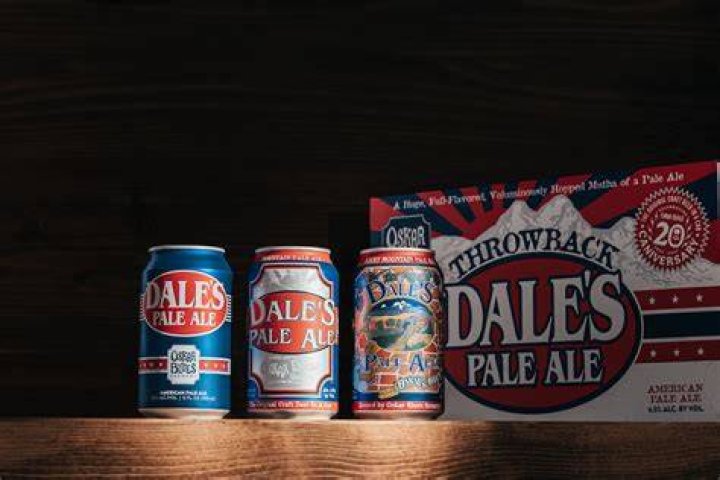
When Dale Katechis sealed the first batch of Dale’s Pale Ale inside an aluminum can at a small brewpub in Lyons, Colorado in 2002, the craft brewing establishment treated the move as an amateur stunt. Cans were reserved for mass-market adjunct lagers, while serious microbrewers bottled their beer in dark brown glass. Katechis ignored the skepticism. He hand-crimped each aluminum container on a tabletop seamer, betting that active outdoors enthusiasts wanted bold hops they could pack into river canyons and up mountain passes without shattering glass.
That contrarian decision sparked a fundamental shift in the craft beverage sector. The beer inside challenged expectations just as aggressively as its packaging. Long before hazy, low-bitterness IPAs flooded supermarket shelves, Dale’s Pale Ale established an unapologetic standard for the American Pale Ale style, balancing sharp citrus and pine bitterness against a sturdy caramel base. Industry evaluations, including The Spruce Eats Report on the traits that elevate a pale ale, demonstrate how balance, hop expression, and carbonation dictate a brew's staying power. Two decades later, Oskar Blues Brewery maintains that foundational profile while expanding into higher-gravity spinoffs and high-profile winter sports campaigns.
📌 Key Takeaways:
- The Historic Precedent: Debuted in 2002 in Lyons, Colorado, Dale's Pale Ale proved that high-end craft beer could thrive in an aluminum can, kickstarting the modern canned craft beer movement.
- The Technical Profile: Formulated at 6.5% ABV and 65 IBUs, the beer straddles the boundary between an assertive American Pale Ale and an early West Coast IPA, powered by Centennial, Cascade, and Columbus hops over a pronounced malt backbone.
- The Modern Brand Expansion: Beyond its standard release, the Dale's portfolio now features Double Dale's Imperial IPA and partnerships across winter athletics, highlighted by promotional alignment with USA Curling ahead of the 2026 Winter Games.
The Lyons Colorado Roots and the Canned Craft Rebellion
The origins of Dale’s Pale Ale belong to a specific moment of frustration with industry orthodoxy. In the late 1990s, microbreweries treated glass as an ironclad mark of quality. The logic seemed sound on the surface: cheap domestic lagers came in cans, so premium beer had to come in bottles. The problem was physics. Clear and green glass admitted ultraviolet rays that rapidly skunked isohumulones, while traditional bottle crowns permitted slow micro-oxidation over long shipping routes.
Katechis founded Oskar Blues Grill & Brew in Lyons in 1997, serving Cajun fare alongside small-batch ales. By November 2002, he purchased a manual, one-can-at-a-time seam system from a Canadian supplier named Cask Brewing Systems. Katechis and his team hand-filled and labeled cans at a rate of roughly 10 cans per minute. Retailers initially balked, refusing shelf space to what they assumed was cheap swill.
Consumer habits soon dismantled that resistance. Hikers, kayakers, and ski patrollers across Colorado embraced a package that cooled twice as fast as glass, weighed a fraction of the cargo load, and left zero broken shards on trails. Within three years, Oskar Blues expanded out of its cramped brewpub into dedicated production plants in Longmont, Colorado, later opening facilities in Brevard, North Carolina, and Austin, Texas. The canned craft revolution had shifted from a mountain-town anomaly into the dominant packaging method for independent beer in North America.
Dissecting the Hop Profile, Malt Backbone, and Tasting Notes
Dale’s Pale Ale defies modern categorization because brewing trends moved around it. When introduced, classic American Pale Ales hovered between 5.0% and 5.5% ABV with moderate bitterness around 35 IBUs. Dale’s pushed into territory previously reserved for West Coast IPAs: 6.5% ABV paired with an intense 65 IBUs of bitterness.
The hop architecture leans heavily on classic Pacific Northwest cultivars. Centennial hops supply the central sensory engine, generating aromas of cut grapefruit peel, dried orange rind, and pungent resin. Cascade hops add floral and light citrus notes, while Columbus provides an earthy, dank bitterness that cuts sharply across the palate.
Unlike modern hazy iterations that rely on late-boil whirlpooling and massive dry-hop charges to eliminate perceived bitterness, Dale’s maintains a pronounced kettle boil addition. That gives the beer an assertive, clean, lingering snap.
A thick malt backbone keeps that bitterness in check. Oskar Blues brews Dale’s using an ample grist of Pale two-row barley alongside British crystal malts. The resulting beer pours a deep, radiant copper with amber flashes under an off-white, persistent foam head. On the first sip, waves of toasted biscuit, bread crust, and medium caramel arrive before the hops take over, finishing clean, resinous, and dry without syrupy residue.
Comparing the Dale's Lineup Across Metrics and Formulations
To address changing consumer palates and shifts in alcohol-by-volume preferences, Oskar Blues transformed Dale's into a family of beers. The lineup ranges from low-calorie session offerings to high-gravity imperial versions.
| Variant | Style Classification | ABV (%) | Bitterness (IBU) | Core Flavor Profile |
|---|---|---|---|---|
| Dale’s Pale Ale | American Pale Ale | 6.5% | 65 | Pine needles, grapefruit peel, sweet caramel malt, clean resin |
| Double Dale’s | Imperial IPA | 9.0% | 65 | Candied orange, tropical fruit punch, dense malt, warming ethanol |
| Dale’s Light Ale | American Light Ale | 4.2% | 15 | Cracker malt, light floral hops, ultra-crisp finish, low lingering bitterness |
Double Dale’s, launched in 2022 to commemorate the brand’s 20th anniversary, leverages modern dry-hopping techniques with El Dorado and Talus alongside traditional Centennial hops. The result amplifies the original recipe's sweet-bitter balance to 9.0% ABV without increasing the perceived harshness, answering retail demand for high-gravity single-serve cans.
Critical Acclaim and Enduring Industry Honors
Long before consumer review apps dominated taprooms, Dale’s Pale Ale collected major praise from traditional food and beverage critics. In March 2005, The New York Times held a blind tasting of 33 American pale ales led by dining critic Eric Asimov. The panel ranked Dale’s Pale Ale number one, noting that a beer from an unheralded aluminum can surpassed legendary bottled pioneers like Sierra Nevada Pale Ale. The paper described it as deep amber, briskly carbonated, and bursting with fresh, leafy hop aromatics.
The brewing industry validated that assessment at international competitions. Dale’s earned a bronze medal at the 2012 Great American Beer Festival in the American-Style Strong Pale Ale category, a competitive division created largely because beers like Dale’s had outgrown traditional pale ale guidelines. The World Beer Championship repeatedly awarded the beer scores of 93 to 95 points, classifying it as exceptional. The critical legacy rests not on ephemeral trends, but on consistent production metrics across multiple manufacturing hubs.
Sweeping the Sheet: The USA Curling Winter Campaign
Brewery sports sponsorships historically belonged to multinational macro-breweries purchasing stadium naming rights. Oskar Blues charted an unconventional marketing path by partnering with USA Curling throughout their Olympic winter campaigns.
Curling combines blue-collar camaraderie with pinpoint tactical accuracy. It mirrors the self-aware, active-lifestyle ethos Oskar Blues has cultivated since its days hosting mountain-bike trail crews in Lyons. The campaign, which ramped up ahead of the 2026 Winter Games cycle, positioned Dale’s Pale Ale as the official beer of national curling tournaments, club championships, and Olympic trial broadcasts.
Instead of polished, corporate athletic imagery, promotional materials leaned directly into curling subculture: sweeping the sheet, "broomstacking" (the long-standing tradition where opponents share a drink together after a match), and celebrating cold-weather competition. Custom Dale’s Pale Ale curling stone tap handles appeared in dedicated curling clubs from Minnesota to Maine, proving that authentic community alignment outperforms generic regional sports marketing.
Food Pairing Recommendations: Cutting Through Richness and Spice
The bold profile of an American Pale Ale like Dale’s demands food pairings that either complement its caramelized grains or cut through heavy fats. Subtle seafood or delicate creams will be overwhelmed by the 65 IBUs; hearty, spice-driven fare thrives alongside it.
- Smoked Barbecue Brisket and Ribs: The British crystal malt backbone locks into the charred crust and caramelized sugars of hickory-smoked beef brisket. Simultaneously, the sharp Centennial hop bitterness slices cleanly through rendered animal fat, cleansing the tongue after every bite.
- Nashville Hot Chicken and Spicy Buffalo Wings: The pine and citrus oils accentuate capsicum heat, while carbonation scrubs the palate. The residual malt sweetness keeps fiery cayenne sauces from overwhelming the palate.
- Aged English Cheddar and Blue Cheese: Fatty, crumbly cheeses need bold structure. The strong hop character cuts right through the dense lipids of a two-year-aged cheddar, while the caramel malt coordinates with the savory umami of Stilton.
- Cast-Iron Burgers with Caramelized Onions: A charred beef patty seasoned generously with black pepper matches the peppery, dank Columbus hop notes, with the malt carrying the sweet sweetness of slowly browned onions.
Frequently Asked Questions (FAQ)
Q1: Is Dale's Pale Ale an IPA or an American Pale Ale?
A1: Dale's Pale Ale is officially classified as an American Pale Ale, though its specs, 6.5% ABV and 65 IBUs, align it closely with early West Coast IPAs. Oskar Blues designed it intentionally to push the upper limits of bitterness and strength within the traditional pale ale category.
Q2: What is the shelf life of a can of Dale's Pale Ale?
A2: Dale's Pale Ale stays freshest within 90 to 120 days of its packaging date, which is stamped clearly on the bottom of each can. While aluminum cans shield the beer entirely from ultraviolet light and oxygen ingress, hop aroma oils naturally diminish over time. Keep it refrigerated to preserve peak aromatics.
Q3: How many calories and carbohydrates are in a standard 12-ounce can?
A3: A standard 12-ounce serving of Dale's Pale Ale contains approximately 200 calories and roughly 15 to 17 grams of carbohydrates, reflecting its robust grain bill and 6.5% alcohol content.
Q4: Why did Oskar Blues choose cans over bottles in 2002?
A4: Dale Katechis chose cans because they eliminate UV light damage and provide a zero-oxygen hermetic seal, both of which protect delicate hop oils. Cans are also lightweight, shatterproof, chill rapidly, and travel easily on trails and rivers, fitting the outdoor Colorado lifestyle.
The Enduring Standard of Independent American Brewing
The craft brewing industry has spent the last decade chasing transient product cycles: pastry stouts, milkshake sours, cold IPAs, and low-calorie seltzers. Many labels that defined the initial microbrew boom vanished under shifting consumer tastes or consolidation pressures. Dale’s Pale Ale survived that churn by remaining true to its original specifications. It never stripped out its caramel malt to mimic dry brut trends, nor did it dial back kettle hops to soften its profile for mass appeal.
By combining rigorous packaging physics with an aggressive hop profile, Oskar Blues created an industry archetype. Dale’s Pale Ale proved that craft beer did not need the ceremony of a cork and cage or the fragility of amber glass to command respect. It required only fresh hops, pristine water, quality grain, and an airtight aluminum shell designed to go everywhere.


