The Complete Guide to 'Ellos' in English: Meaning, Pronunciation, and Sentence Examples

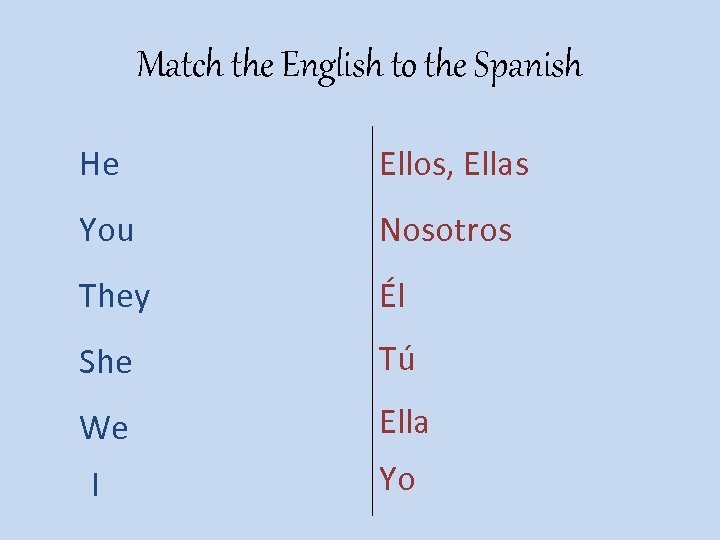
At its most direct translation, the Spanish word ellos means "they" in English. Specifically, it functions as the third person plural masculine subject pronoun. While English uses a single, gender-neutral word, they, to refer to any group of people or things, Spanish grammar requires speakers to categorize plural subjects by gender. When native English speakers first study Spanish, this distinction often triggers hesitation in casual conversation, especially when navigating mixed-gender crowds or deciding whether to drop the pronoun entirely.
Understanding how ellos operates requires looking at how Romance languages structure agreement, verb stems, and conversational emphasis. According to the foundational documentation compiled in the Wikipedia (en) Report on Spanish grammar, personal pronouns frequently change their syntactic behavior depending on whether they serve as the grammatical subject, follow a preposition, or take an active verb ending. Grasping this single pronoun unlocks essential mechanics across the entire language.
📌 Key Takeaways:
- Core Definition: Ellos translates directly to "they" in English and represents masculine plural pronouns or groups containing at least one male.
- Pronoun Dropping: Because Spanish verb conjugation explicitly signals the subject ending, speakers routinely omit ellos unless clarifying ambiguous third-person references or adding deliberate emphasis.
- Structural Flexibility: Unlike English subject pronouns that change form when following prepositions, ellos functions identically as both a subject pronoun and a prepositional pronoun.
Translating Ellos into English: The Third Person Plural Baseline
In standard English, the third-person plural pronoun does heavy lifting. "They" refers to three men, three women, an automobile fleet, or an abstract concept. Spanish handles this task differently through explicit grammatical gender in Spanish. When you refer to a collective entity in Spanish, the baseline masculine form is ellos.
Spanish subject pronouns exist primarily to pinpoint who executes an action. If you point across a room at a group of male colleagues, ellos is the precise term. If those colleagues leave their coats behind, English speakers say, "They forgot their coats." A Spanish speaker says, "Ellos olvidaron sus abrigos," or more commonly, simply "Olvidaron sus abrigos." The English counterpart never changes based on biological sex or grammatical gender, whereas Spanish ties the pronoun to the lexical gender of the group members.
This structural gap creates an immediate adjustment for English speakers. English eliminated grammatical gender centuries ago, retaining only natural gender in singular pronouns like he, she, and it. In Spanish, every noun carries gender, and pronouns mirror that reality. Whenever you refer to multiple masculine entities, whether men, boys, or masculine nouns like books (libros) or dogs (perros), ellos acts as the default English equivalent of "they".
The Mechanics of Grammatical Gender: Ellos vs. Ellas
The distinction between ellos and ellas is categorical. While ellos designates masculine subjects, ellas refers strictly to exclusively female groups. There is no middle ground in standard prescriptive grammar.
Consider the classic collective rule: if a group consists of ten women, the correct pronoun is ellas. The moment a single male joins that group, standard Spanish shifts the collective pronoun to ellos. A room containing ninety-nine women and one man becomes ellos in traditional syntax. Linguists classify this as the "unmarked" masculine plural, where the masculine form serves as the default umbrella term for mixed-gender groups.
While modern socio-linguistic discussions across Latin America and Spain experiment with non-binary alternatives such as elles, international regulatory bodies like the Real Academia Española (RAE) continue to endorse ellos as the grammatically standard plural for mixed company. For learners navigating standardized testing, academic environments, or workplace translation, using ellos for any group containing mixed genders remains standard practice.
Spanish Verb Conjugation and the Pro-Drop Phenomenon
Spanish is a pro-drop language. This means sentences do not require an explicit subject pronoun if the verb ending already identifies the subject. In English, dropping the pronoun results in broken speech: saying "Went to the market" leaves listeners asking who went. In Spanish, verb inflection supplies that information automatically.
In the present tense, third person plural verbs carry distinct suffixes: -an for -ar verbs and -en for -er and -ir verbs. If you want to say "they speak," you conjugate hablar into hablan. Adding ellos is structurally optional. Linguists note that Spanish speakers introduce ellos primarily for two reasons: contrast and disambiguation. For instance, because the verb form vieron can refer to ellos, ellas, or ustedes, an author might write "Ellos vieron el accidente" to make clear that a specific group of men saw the crash, rather than the people being addressed directly.
| Grammatical Function | Spanish Form | English Equivalent | Example Sentence |
|---|---|---|---|
| Subject Pronoun (Masculine/Mixed) | Ellos | They | Ellos viven en Madrid. (They live in Madrid.) |
| Subject Pronoun (Feminine) | Ellas | They (all-female) | Ellas trabajan juntas. (They work together.) |
| Direct Object Pronoun | Los | Them | Yo los escucho. (I listen to them.) |
| Indirect Object Pronoun | Les | To them / For them | Les di el informe. (I gave them the report.) |
| Prepositional Pronoun | Ellos | Them (after preposition) | Viajamos con ellos. (We travel with them.) |
In subordinate subjunctive clauses, pronoun placement matters for rhythm. For example, expressions like "ellos hablen" (that they speak), "ellos coman" (that they eat), or "ellos vivan" (that they live) demonstrate regular subjunctive endings. Writers include the pronoun when moving between subjects across complex clauses to keep the narrative focus transparent.
Prepositional Uses and the "Con Ellos" Meaning
One major advantage for English speakers studying ellos is its stability behind prepositions. In English, subject pronouns shift into objective pronouns following a preposition: "they" becomes "them" (we walked with *them*, not with *they*). Spanish does not alter ellos in these contexts.
When placed after common prepositions like para (for), de (of/from), sin (without), or con (with), the pronoun retains its exact spelling and sound. The expression con ellos translates directly to "with them". Unlike the first-person singular pronoun which mutates into the irregular conmigo, the third-person plural creates no irregular compounds. You simply place con before ellos.
Consider an authentic conditional sentence illustrating this structure: "En el caso de que no puedas ir con ellos, ¿quieres ir con nosotros?" Here, con ellos clearly translates to "with them," functioning smoothly within a complex inquiry. The word maintains its identity whether initiating a clause as an active agent or trailing at the end of a prepositional phrase.
However, you must never confuse prepositional pronouns with Spanish object pronouns. If you are acting directly upon a group without a preposition, ellos is incorrect. Saying "Yo veo ellos" is ungrammatical. The direct object pronoun must be used instead: "Yo los veo" (I see them). Similarly, when delivering something to them, the indirect object pronoun les takes over: "Les envié una carta" (I sent them a letter).
Spanish Pronunciation and Regional Phonology
Mastering Spanish pronunciation for ellos requires understanding the double L digraph (ll). English speakers often mispronounce the word by vocalizing the standard English "L" twice or treating it like the single "L" in "elbow." That produces an immediate foreign accent.
Phonetically, ellos is transcribed as [ˈe.ʝos] in standard varieties. The initial "e" is a short, tense mid-front vowel, sounding close to the "e" in the English word "pet." The primary stress lands on this first syllable. The terminal "s" is crisp and unvoiced, avoiding the buzzing "z" sound frequent in English plurals.
The middle sound, the double L, varies heavily across the Spanish-speaking world:
- Standard Latin America and Spain: In most regions (including Mexico, Colombia, and central Spain), the double L sounds like the English consonant "y" in "yellow" or "yes." Thus, ellos sounds roughly like EH-yohs.
- Rioplatense Spanish (Argentina and Uruguay): Speakers in Buenos Aires and Montevideo use a phonological trait known as žeísmo or šeísmo. In these regions, the double L produces an English "sh" sound (like "shoe") or a soft "zh" sound (like the "s" in "measure"). In Argentina, ellos sounds distinctly like EH-shohs.
- Traditional Castilian: Historically, parts of northern Spain and the Andes maintained a palatal lateral approximant [ʎ], similar to the "lli" in the English word "million." While this sound has largely merged into the "y" sound among younger demographics via the linguistic shift known as yeísmo, it remains present in traditional pockets.
Ustedes vs. Ellos: Avoiding the Second-Person Plural Trap
One of the most persistent operational errors among intermediate Spanish students involves confusing ustedes and ellos. Both pronouns trigger the exact same third-person plural verb conjugations, yet they represent entirely different communicative directions.
Ustedes is a second-person pronoun; it translates to "you all" or "you guys." You use ustedes when you are standing face-to-face with a group of people and speaking directly to them. By contrast, ellos is a third-person pronoun; it translates to "they." You use ellos when you are talking about an external group that is not part of the active conversation.
Because verbs like estudian, comieron, or trabajarán pair identically with both pronouns, conversational context determines the meaning. If you enter a conference room and ask, "¿Ustedes terminaron el proyecto?", you are asking the colleagues sitting before you if they finished. If you turn to a colleague and ask, "¿Ellos terminaron el proyecto?", you are asking about an outside team. Confusing the two alters the social dynamic of the room, turning direct engagement into a third-party reference.
Frequently Asked Questions (FAQ)
Q1: Does ellos always refer exclusively to men?
No. While ellos refers to groups of men, it also serves as the default grammatical pronoun for mixed-gender groups containing both men and women. Only when a group consists solely of women do speakers use ellas.
Q2: Can ellos refer to inanimate objects in Spanish?
Yes, grammatically, though native speakers rarely use subject pronouns for objects. While masculine plural objects (like los libros) have the grammatical profile of ellos, speakers simply drop the pronoun and let the conjugated verb or definite article do the work.
Q3: Why don't Spanish speakers say ellos in every sentence?
Spanish verb conjugations contain built-in person and number markers. Suffixes like -aron, -ieron, or -en already tell the listener that the subject is plural. Including ellos repeatedly sounds redundant to native ears unless needed for emphasis or contrast.
Q4: What is the difference between ellos and los?
Ellos is a subject pronoun or prepositional pronoun ("they" or "them" after prepositions like con). Los is a direct object pronoun representing "them" when the group directly receives the action of a verb (e.g., Yo los conozco / "I know them").
Mastering the Third-Person Plural in Daily Spanish
Navigating the transition from the English "they" to the Spanish ellos comes down to tracking grammatical gender and understanding when to omit unnecessary words. English relies on word order and explicit subject nouns to anchor every clause. Spanish embeds that data into the verbs themselves, treating the explicit pronoun as an editorial tool for clarity or emphasis rather than a mechanical requirement.
Once you train yourself to evaluate group composition, reserving ellas for all-female gatherings and deploying ellos for male or mixed collectives, the mental friction disappears. Pair that gender awareness with the proper pronunciation of the double L, and your command of Spanish third-person plurals will sound natural across any dialect.


