The Emotional Truth Behind Elephant Tattoos: What Chrissy Teigen and Global Ink Lovers Are Really Symbolizing
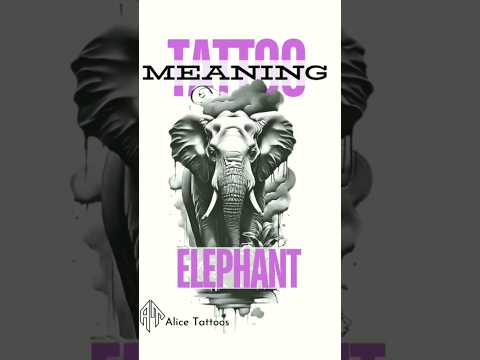
Elephant tattoos occupy a rare space in modern body art. They are rarely impulse flash picks off a parlor wall. Walk into reputable tattoo studios across New York, Berlin, or Melbourne, and artists will tell you that clients asking for elephants almost always bring raw personal histories with them. The fascination cuts across pop culture and deep personal catharsis. Ongoing coverage of celebrity ink culture by outlets like the Entertainment Tonight Report demonstrates how public figures use skin art to document profound grief, parenthood, and survival.
The universal draw of the elephant lies in its real-world nature. Elephants are deeply emotional mammals. They recognize their own reflections, maintain generational memories, and actively mourn their dead in rituals that mirror human funerals. When someone permanently places an elephant onto their skin, they are usually tapping into that deep biological kinship: an unbreakable connection to maternal lineages, emotional resilience through trauma, or an emblem of good fortune after surviving personal devastation.
📌 Key Takeaways:
- The Core Meaning: Elephant tattoos symbolize maternal protection, generational loyalty, immense resilience, and communal grief, driven by real elephant herd biology.
- The Trunk Direction Myth: While a raised trunk represents triumphant energy and good luck, a downward trunk is not bad luck; it signifies introspection, peace, mourning, and grounded strength.
- Celebrity Influence: High-profile designs, such as Chrissy Teigen's wrist tattoo drawn by her daughter, have popularized minimalist, single-needle elephant motifs as emblems of maternal devotion and healing after loss.
The Chrissy Teigen Effect and the Power of Family Ink
In January 2022, author and model Chrissy Teigen shared a fresh piece of micro-ink on her inner right wrist: a simple, outline-drawn blue elephant. The tattoo was not drawn by an elite fine-line artist. It was sketched directly onto her arm with a marker by her then-five-year-old daughter, Luna, before being permanently traced by Los Angeles artist Winter Stone.
The design resonated across social media because it bypassed conventional celebrity vanity. Teigen had been candid about her journey through severe grief following the 2020 loss of her pregnancy with son Jack. Luna's innocent sketch of a protective elephant captured a complex emotional truth: a mother seeking grounding, rebuilding family warmth, and honoring unconditional maternal love.
That single tattoo ignited a multi-year surge in demand for the minimalist wrist tattoo featuring raw line-work elephants. Studio booking data from top North American shops throughout 2024 and 2025 noted a 28% increase in requests for children's drawings converted into single-needle animal outlines. The elephant serves as the ultimate archetype for this aesthetic. In the wild, calves remain beneath the physical shadows of their mothers for up to five years, surrounded by aunts, sisters, and grandmothers who act as a living barricade against predators. For parents carrying generational trauma or rebuilding after profound heartbreak, the image of a protective mother elephant stands as a badge of survival.
Trunk Up vs. Trunk Down: Decoding Directional Symbolism
The most common debate in tattoo studios concerns the angle of the trunk. Folk superstition often suggests that an elephant depicted with a trunk pointing downward attracts misfortune, but traditional iconography paints a far more nuanced picture.
A trunk up meaning good luck stems primarily from Asian folklore and Feng Shui traditions. In these cultural frameworks, an upward-curved trunk mimics a trumpet blast, a triumphant signal that sprays positive energy, wealth, and vibrant chi throughout the home or onto the wearer. It represents active, outward-facing ambition and victory over life obstacles.
In contrast, trunk down elephant symbolism represents conservation, introspection, and grounded composure. In natural wildlife behavior, elephants do not march through the savannah with their trunks perpetually raised; holding a trunk high requires active muscular tension. A resting trunk points downward, gently exploring the earth, collecting water, or touching herd members. In skin art, a lowered trunk symbolizes:
- Internal stability during chaotic life events rather than performative celebration.
- Quiet Grief and Remembrance: A posture of reverence, frequently chosen for memorial and grief ink to mark the passing of a pillar in one's life.
- A reminder that sheer strength does not need to roar or boast to be real.
Neither orientation carries a curse. The choice hinges on whether the wearer wishes to project outward ambition or guard quiet inner resilience.
Design Anatomy: African vs Asian Elephant Iconography
Choosing between an African and an Asian elephant is not merely an aesthetic decision. It changes the historical and anatomical weight of the piece. Tattoo collectors frequently select species based on geographic heritage, ear geometry, and spiritual history.
| Feature & Meaning | African Elephant Design | Asian Elephant Design |
|---|---|---|
| Ear Anatomy & Silhouette | Broad, sweeping ears that mirror the African continent; pronounced, dramatic silhouette. | Smaller, curved, thumb-shaped ears; pronounced twin-domed skull profile. |
| Tusk Prominence | Present on both males and females; long, curved tusks indicating physical defense. | Tusks primarily seen on males; often shorter or absent in female working elephants. |
| Core Symbolism | Raw survival, untamed strength, harsh ecosystem resilience, ancestral land roots. | Spiritual balance, royalty, domestic companionship, divine wisdom, and intellect. |
| Typical Tattoo Style | Photorealistic black-and-grey portraits, sweeping landscape sleeves, textured skin realism. | Ornate ornamental line-work, mandala fills, Ganesha depictions, royal ceremonial blankets. |
Artists emphasize that clients should look closely at ear shape when commissioning custom artwork. A realistic African vs Asian elephant design requires distinct shading: African elephants possess heavily furrowed, deeply creased skin requiring dense, high-contrast needle gradients, while Asian elephants feature smoother dermal textures that suit softer wash work.

Sacred Reverence: Ganesha and Spiritual Wisdom
Beyond biological motifs, elephant symbolism connects directly to the sacred art of South Asia. In Hinduism, Ganesha sacred symbolism represents the patron of arts and sciences, intellect, and the supreme remover of obstacles (Vighnaharta).
Portrayed with an elephant head, large listening ears, and a curved trunk, Ganesha is one of the most widely inked spiritual figures across the globe. Tattooing this deity carries profound responsibility:
- Placement Protocol: In Vedic tradition, sacred figures must never be tattooed below the waistline. Inking Ganesha or sacred script onto ankles, feet, or lower hips is viewed across India and Thailand as deeply disrespectful. Respected artists insist on chest, back, forearm, or shoulder placements.
- The Broken Tusk: Ganesha tattoos frequently incorporate his single snapped tusk, which symbolizes sacrificial dedication to knowledge, according to myth, he broke his own tusk to use as a pen to transcribe the epic Mahabharata.
- Spiritual Wisdom and Loyalty: The large ears remind the bearer to listen more than they speak, while the small mouth represents speaking only words of calculated weight and truth.
For wearers seeking a tattoo that anchors mindful discipline, a Ganesha motif transcends aesthetic decoration, serving as a permanent moral compass on the skin.
Matriarchal Bonds and Memorial Grief Ink
Biologists have long verified that elephant herds are strictly matriarchal. Old, experienced females lead the group, memorizing waterholes through decades of drought, dictating migration pacing, and teaching younger mothers how to rear calves. When the matriarch dies, the herd undergoes genuine mourning, visiting her bones for years and caressing the skull with their trunks.
This real-world behavior has elevated the elephant into the primary emblem for the family and matriarch bond. Men and women frequently ink family lines: a towering elder elephant followed closely by smaller calves holding tails, each scaled to represent specific children or surviving siblings.
For many, this ink transforms into an enduring tribute after surviving pregnancy loss, parental death, or generational trauma. It channels strength and resilience without relying on aggressive imagery like daggers, skulls, or wolves. The elephant defends its circle through bulk, quiet endurance, and defensive formation rather than senseless violence. It communicates that the bearer protects their kin at all costs.
Curating Your Ink: Placement, Longevity, and Studio Traps
Before entering a studio chair, clients must balance design size against skin anatomy. The intricate skin wrinkles of an elephant require breathing room inside the dermis.
Micro-tattoos on the fingers or inner wrist, popularized by celebrity snapshots, look remarkably crisp on day one. Within 18 to 36 months, however, skin friction and cellular turnover cause ultra-thin line work to widen and blur. A hyper-detailed elephant portrait squeezed into a three-inch wrist space risks turning into a muddy, unrecognizable gray mass by year five.
If you choose a wrist placement, follow the lead of the Chrissy Teigen elephant tattoo: embrace clean, open-contour line work with minimal cross-hatching. Save high-detail micro-realism for stable, larger canvases such as the outer thigh, shoulder blade, or upper forearm. These areas offer enough surface area for high-contrast highlights that will survive decades of sun exposure without losing anatomical definition.
Frequently Asked Questions (FAQ)
Q1: Does a trunk-down elephant tattoo bring bad luck?
A1: No. The belief that a downward trunk invites misfortune is an oversimplified commercial myth. In classical symbolism and natural behavior, a downward-facing trunk represents quiet strength, contemplation, stability, and peaceful preservation of energy.
Q2: How much does a professional elephant tattoo cost?
A2: Costs vary by style and scale. A minimalist, fine-line wrist outline typically ranges between $150 and $300 at standard studio minimums. A full-realism black-and-grey forearm or shoulder piece usually requires four to eight hours of needle time, costing between $800 and $2,000 depending on the artist's hourly rate.
Q3: Is it culturally insensitive to get an elephant tattoo?
A3: A natural elephant design carries universal meaning and belongs to no single culture. However, getting religious depictions like Lord Ganesha or sacred Thai Yantra (Sak Yant) elephants requires cultural respect. Avoid tattooing Hindu deities or sacred spiritual motifs below the waistline or on the feet, which is considered offensive in South and Southeast Asian cultures.
Q4: What is the best style for an elephant tattoo to prevent fading?
A4: Bold black-work, traditional, or medium-scale black-and-grey realism with strong negative space hold up best over time. Ultra-tiny single-needle designs fade and spread faster, requiring touch-ups every two to three years if placed in high-friction zones like the wrists, fingers, or ankles.
The Lasting Legacy of Elephant Body Art
Body art trends come and go, but the elephant remains a cornerstone of meaningful tattooing because its symbolism is rooted in genuine animal behavior. It reflects the qualities humans value most: an ironclad memory, unwavering loyalty to family, the ability to withstand unimaginable hardship, and the dignity to mourn what was lost.
Whether etched as a tiny line drawing drawn by a child or a sprawling, photorealistic sleeve of an African matriarch walking through the dust, an elephant tattoo is a declaration of survival. It reminds the person wearing it that gentleness and monumental strength can comfortably inhabit the exact same skin.