The Evolution of Chappell Roan’s Stage Wardrobe: A Complete Red Carpet and Tour Timeline

Pop music has not witnessed a visual reckoning this jarring since the late 2000s. Kayleigh Rose Amstutz, known globally as Chappell Roan, constructed her performance identity outside the traditional luxury pipeline. Instead of relying on house stylists from Paris or Milan, she leaned into garage-sale tiaras, hot-glue guns, and the theatrical grit of regional queer nightlife. By the time she stepped onto the red carpet at the 68th Annual Grammy Awards in February 2026, her subversive, skin-baring ensemble ignited instant pushback across television commentary networks. Roan dismissed the commotion directly through reports from the BBC and Newsweek, insisting the silhouette was hardly "that outrageous." Her aesthetic was never designed to play it safe.
Her transformation from indie singer to stadium headliner rests entirely on structural world-building. As detailed in The Zoe Report Report, pivotal costume designer collaborations with independent visionaries like Project Runway alumnus Gunnar Deatherage helped bridge the chasm between Midwestern thrift culture and grand runway camp. Roan treats getting dressed as physical theatre, forcing an industry dominated by safe corporate minimalism to reckon with genuine spectacle.
📌 Key Takeaways:
- Stylistic Genesis: Chappell Roan built her stage persona around Missouri pageantry, thrifted prom flips, and regional drag culture rather than high-end fashion label sponsorships.
- Artisan Synergy: Custom garments created with designers like Gunnar Deatherage merged historical boned corsetry with camp subversion for the Midwest Princess tour outfits.
- The 2026 Grammy Reaction: Her sheer, tattoo-framing red carpet gown triggered an award show dress controversy, which Roan defended as ordinary creative expression rather than calculated shock value.
The Thrift-Store Roots of the Midwest Princess Persona
Before festival fields swelled to 40,000 attendees screaming every lyric, Amstutz operated on a shoestring budget in local thrift shops. The early visual language of Chappell Roan came from dollar bins, clearance bridal racks, and rhinestone fringe ordered in bulk. She altered garments by hand in cramped apartments. Skirts were hemmed with safety pins, and plastic crowns were spray-painted gold on back patios.
This was necessity masquerading as creative liberty. Major labels frequently expect emerging pop acts to project effortless street-style luxury. Roan took the opposite route. She leaned heavily into small-town Americana pageantry gone wrong: sash-wearing homecoming queens suffering nervous breakdowns, synchronized swimmers caught in rainstorms, and southern beauty contestants in tattered synthetic satin. These DIY concert costumes established a direct, tactile bond with her audience. Fans did not need thousand-dollar styling budgets to replicate her world on tour stops; they simply needed glitter glue, plastic pearls, and vintage slips.
How Drag Culture Shaped Her Theatrical Stage Wardrobe
The core engine behind Roan’s aesthetic is drag. She has repeatedly acknowledged local drag performers as her primary artistic mentors, hiring local drag queens as opening acts throughout her breakout club dates. Rather than borrowing queer aesthetics as a superficial marketing veneer, Roan adopted the structural foundations of drag performance: exaggerated proportion, deliberate absurdity, and emotional defiance.
Her performance wigs and makeup borrow directly from classic cabaret and pageant traditions. Thick clown white foundations, hyper-saturated blue eyeshadow swept upward to the hairline, razor-sharp pencil brows, and heavy, architectural hairpieces transformed Amstutz into an untouchable camp caricature. Her shows became participatory masquerades. By publishing specific, campy dress codes for each tour stop, such as "Pink Pony Club," "My Kink is Karma," or "Midwest Princess", she transformed audiences into an extension of the stage set itself.
The Gunnar Deatherage Partnership and Camp Fashion
As venues grew from intimate clubs to massive amphitheaters, Roan required garments sturdy enough to withstand athletic, ninety-minute vocal sets without losing their theatrical scale. Enter Gunnar Deatherage. The Louisville-based designer and Project Runway veteran brought an obsessive focus on historical tailoring, corsetry, and dark fantasy to Roan’s technicolor world.
Deatherage specialized in dramatic construction: boned bodices, exaggerated hips, distressed leather, and ornate hardware that felt equal parts Renaissance fair and vintage burlesque styling. Their partnership produced some of her most durable stage garments, including heavily embellished doublets and armored corsets that maintained structural integrity under blazing festival lighting. Deatherage’s garments gave Roan physical presence on massive festival stages, allowing her tiny frame to register visually from several hundred yards away.
Chronology of Roan's Stage and Carpet Transformations
The visual progression of Roan’s stage wear illustrates a steady escalation from handmade folk-theatre pieces to daring editorial silhouettes.
| Timeframe | Era & Landmark Appearance | Key Wardrobe Architecture | Styling Collaborators |
|---|---|---|---|
| 2022, 2023 | Midwest Princess Club Dates | Thrifted prom gowns, plastic tiaras, craft-store rhinestone trims, white clown-paint faces. | Self-styled, local thrift curation |
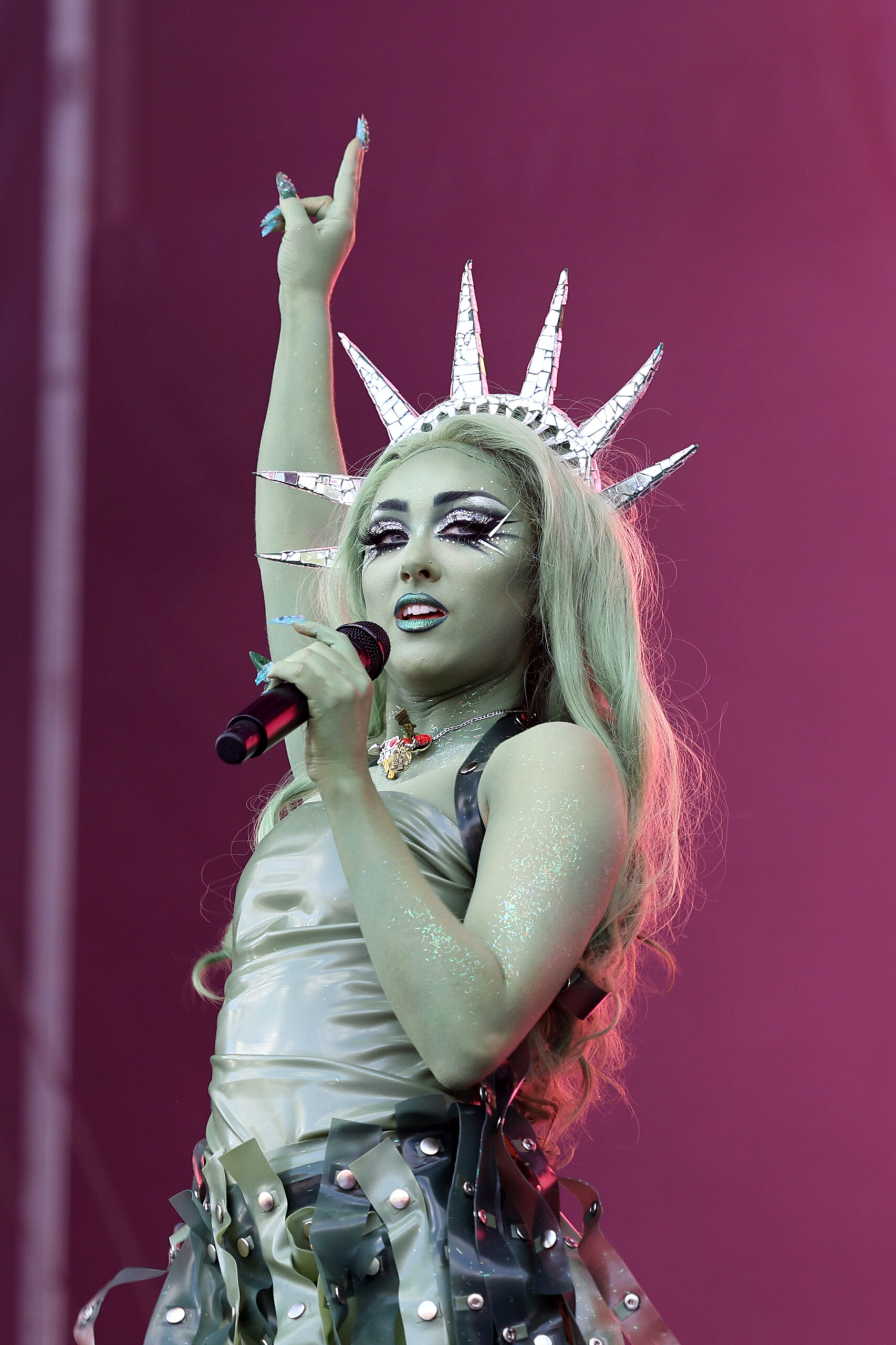
| 2024 | Gov Ball & NPR Tiny Desk Debut | Full-body green Lady Liberty latex, oversized cigarette prop, giant wig packed with butterfly clips. | Genesis Webb, local indie builders |
| 2024, 2025 | Midwest Princess Amphitheater Tour | Custom boned corsetry, renaissance chainmail detailing, Western leather fringe, pageant sashes. | Gunnar Deatherage, specialized costumers |
| 2026 | 68th Annual Grammy Awards | Sheer illusion gown, exposed vintage foundation wear, unretouched tattoo framing, gothic headpiece. | Independent atelier team |
The 2026 Grammys Red Carpet Look and Public Backlash
When Roan arrived at the 2026 Grammy Awards alongside contemporaries like Sabrina Carpenter, Bad Bunny, and KATSEYE, her silhouette instantly dominated live broadcasts. Eschewing the conventional beaded column dresses favored by heritage fashion houses, Roan stepped out in a daring, near-translucent ensemble that exposed the full architecture of her skin, undergarments, and physical form.
Fashion editors at Marie Claire observed that her unretouched personal tattoos were the true visual center of the garment. The dress served as a raw canvas for her body rather than an instrument to disguise it. Conservative media commentators quickly labeled the piece indecent, sparking an intense social media dispute over the boundaries of prime-time dress codes. Roan showed zero interest in making a public apology. Speaking to BBC and Newsweek reporters shortly after the broadcast, she dismissed the uproar, stating plainly that the garment was never intended as an incendiary stunt and reflected her personal standard of costume art.
Disrupting the Celebrity Red Carpet Pipeline
For decades, major label pop stars have followed a predictable trajectory: gain popularity, sign an exclusive multi-million-dollar ambassador deal with a European luxury conglomerate, and abandon idiosyncratic stage wear in favor of safe runway samples. Roan’s costume trajectory rejects that entire playbook. Her choices remind audiences of pop music's essential ties to counterculture, queer history, and visual parody.
By bringing drag principles to the Grammys and festival main stages, Roan refuses to soften her Midwestern eccentricities for corporate approval. Her style remains loud, slightly sweaty, meticulously built, and inherently disruptive. today red-carpet styling has become risk-averse and focus-group tested, Roan treats clothing as high-stakes performance art.
Frequently Asked Questions (FAQ)
Q1: Who designs the majority of Chappell Roan’s custom stage outfits?
A1: While Roan initially created her own stage pieces using thrifted items, she frequently collaborates with independent costume designers such as Gunnar Deatherage, alongside her core stylist Genesis Webb, to construct durable, custom stage corsetry and dramatic gowns.
Q2: Why was Chappell Roan’s 2026 Grammy Awards dress controversial?
A2: Her 2026 Grammy Awards look featured an extremely sheer silhouette with exposed vintage-inspired undergarments that openly framed her tattoos. The daring nature of the gown drew criticism from conservative commentators, prompting Roan to defend the garment publicly as routine performance art.
Q3: How does drag culture influence Chappell Roan’s makeup and wardrobe?
A3: Roan works directly with regional drag performers and draws from classic drag techniques, including heavy white pancake foundation, sharp upward eye lines, synthetic theatrical wigs, and camp parodies of traditional femininity such as beauty queens and showgirls.
The Trajectory of Theatrical Costuming in Pop Music
Costuming in modern music has long oscillated between ultra-polished luxury minimalism and raw theatrical drama. Chappell Roan has pushed the needle firmly toward theatrical chaos. Her refusal to abandon hand-stitched historical silhouettes, exaggerated stage paint, and provocative red carpet choices proves that audiences still crave artists who view personal styling as a creative battleground. As her arena footprints expand throughout 2026, Roan continues to challenge industry expectations, one boned corset and tattered sash at a time.