The Evolution of HappyMod: From Android Modding Giant to Persistent iOS Myth
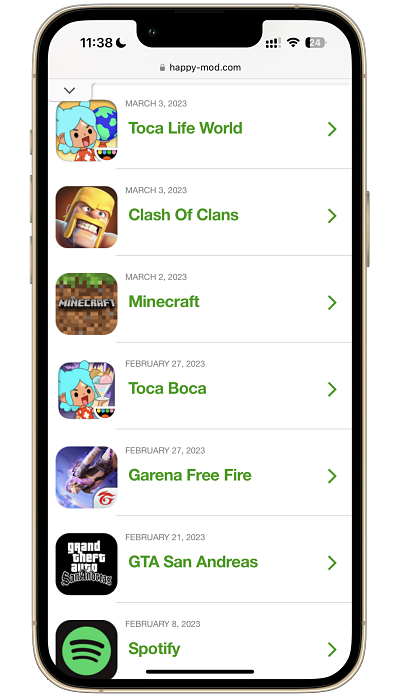
Search engines process millions of queries each month for a software package that does not exist: HappyMod for iOS. Across the Android ecosystem, HappyMod operates as a bustling digital bazaar for modified application packages (APKs), serving games with unlimited currency and software stripped of paywalls. On an iPhone, however, searching for that same catalog leads straight into a minefield of deceptive configuration profiles, verification lockers, and credential harvesters. While independent hardware tinkerers routinely push device boundaries, exemplified by a recent 9to5Mac Report tracking custom physical phone adaptations, Apple’s software gates remain locked down tight against rogue modding platforms.
📌 Key Takeaways:
- The Core Reality: HappyMod functions exclusively on Android; any website claiming to offer an official iOS client delivers web-shortcut wrappers, ad schemes, or phishing files.
- Architectural Barriers: Apple sandbox security, mandatory cryptographic code signing, and closed file systems prevent the automated patching common in Android modded APKs.
- Legitimate Alternatives: Users seeking modified apps in 2026 rely on desktop-assisted IPA installer platforms like AltStore and Sideloadly, or localized European third-party marketplaces.
The Mechanics Behind a Persistent Phantom Search Trend
The demand for modified applications did not emerge by accident. For years, Android users have downloaded modified games through platform catalogs documented by outlets like TechGuide and Nerdbot. These catalogs index pre-patched binaries that skip microtransactions or unlock premium features. When teen gamers switch from cheap Android handsets to an iPhone, they expect that same friction-free piracy to carry over.
It does not. Instead, a sprawling network of SEO-optimized landing pages exploits their expectations.
Search algorithms in 2026 still surface hundreds of clickbait portals promising a one-click installation of HappyMod on iOS. As confirmed in testing by The Mac Observer, every single one of these links leads to a dead end or a scam. The landing pages usually display convincing mockups of an iOS interface alongside glowing user testimonials generated by marketing bots.
Once a visitor clicks install, the scam reveals its playbook. Users are instructed to download sponsored mobile games from the App Store or install an untrusted mobile device management (MDM) profile to complete human verification. The promised mod library never arrives. The site operator pockets an affiliate payout through Cost-Per-Action (CPA) ad networks, leaving the user with bloatware, battery drain, or exposed browser tokens.
| Era & Method | Primary Mechanism | Vulnerability or Bottleneck | 2026 Ecosystem Viability |
|---|---|---|---|
| Enterprise Signing (2016, 2020) | Leaked corporate developer certificates (TutuApp, AppValley) | Aggressive enterprise certificate revokes by Apple within hours | Completely obsolete; certificates revoked in near real-time |
| Kernel Jailbreaking (2018, 2022) | Checkm8 and tfp0 exploits injecting Cydia/Sileo runtimes | Hardware patches and Page Protection Layer (PPL) mitigations | Marginal; restricted to legacy hardware running older iOS versions |
| CoreTrust Exploits (2022, 2024) | TrollStore bypassing AMFI signature validation permanently | Patched by Apple across modern firmware builds (iOS 17+) | Active only on un-updated, legacy devices maintained by collectors |
| Self-Signing Utilities (2020, 2026) | AltStore and Sideloadly using personal Apple IDs via local daemon | Three-app limit and compulsory seven-day re-signing cycle | Standard cross-border workaround for individual modders |
| EU Alternative Marketplaces (2024, 2026) | DMA-mandated third-party app stores (AltStore PAL, Epic Store) | Geofenced to EU, requires Apple Notarization, bars outright piracy | Fully operational legal channel; useless for pirated game mods |
Why Apple's Architecture Rejects Modded APKs and Auto-Injectors
HappyMod succeeds on Android because of Google's package structure. Android applications compile into APKs that can be downloaded through any browser, unpacked via basic tools, adjusted with modified DEX code, and re-signed using basic debugging certificates. With Android's "Install Unknown Apps" permission enabled, anyone can load a modified APK in seconds.
Apple builds iPhones on a fundamentally different philosophy.
At the base level sits Apple sandbox security. Every iOS application executes in an isolated container. An app cannot inspect another app’s directories, alter its memory stack, or inject arbitrary dynamic libraries (dylibs) without root access. Android games often store asset values and currency counters in accessible directories. On iOS, modifying those local variables requires either runtime debugging entitlements or an unpacked, decrypted binary signed with a valid cryptographic identity.
Furthermore, Apple enforces kernel-level signature verification through the Apple Mobile File Integrity (AMFI) daemon. If an iPhone encounters a binary whose cryptographic hash does not match an approved signature from Apple’s servers or an authenticated developer profile, the operating system halts execution instantly.
HappyMod’s entire business model relies on automated community patching. Translating that model to iOS would require developers to crack FairPlay DRM on every single app, inject dylibs, re-sign the entire payload, and distribute custom IPA packages. Apple’s architecture turns a simple script into a technical marathon.
The Anatomy of Fake HappyMod Installers and Phishing Vectors
Because genuine iOS modding requires manual technical work, bad actors make money selling shortcuts. Fraudulent distribution hubs employ several distinct vectors to compromise iPhone users.
The most common tactic involves custom Apple Configuration Profiles (`.mobileconfig` files). Fraudulent download portals ask users to permit a configuration download in Safari, pointing them toward device Settings. Once installed, these profiles can redirect network traffic through malicious proxy servers, inject root certificates, or monitor web activities.
User visits fake site -> Requests "HappyMod iOS" -> Downloads .mobileconfig
│
▼
Prompts user to install Root Certificate -> Network routed through rogue proxy
│
▼
Adware delivered -> Credentials harvested -> Zero actual game mods delivered
Other sites rely on Progressive Web Apps (PWAs) and Safari WebClips. These create an icon on the iPhone home screen that mimics a native application, using HappyMod's familiar green imp logo. When opened, the WebClip displays an embedded browser showing an ad-stuffed web storefront.
Beyond adware, these portals expose users to genuine malware and phishing risks. In pursuit of cracked gems or game skins, users frequently hand over Apple ID credentials, give away corporate single-sign-on tokens, or install provisioning profiles that leave company networks vulnerable through personal devices.
The Reality of iOS Sideloading: AltStore, Sideloadly, and TrollStore
Real iOS application modification does happen, but it looks nothing like HappyMod's one-click storefront. It requires intent, software literacy, and tolerance for administrative friction.
Power users who want tweaked apps, such as YouTube clients with ad blockers, retro console emulators, or productivity utilities with custom patches, rely on specific sideloading tools:
- AltStore (Standard): Created by developer Riley Testut, this utility links a desktop computer to an iPhone. It uses a personal Apple ID to compile and sign up to three applications at a time, requiring a Wi-Fi or USB sync every seven days to refresh the cryptographic certificates.
- A streamlined desktop IPA installer that injects dylibs directly into decrypted application binaries during the signing process, giving users control over tweak insertion without a jailbreak.
- A specialized tool built on the CoreTrust bug discovered by security researcher Linus Henze. TrollStore granted permanent app installations without certificate expiration, but Apple patched the exploit; the tool does not work on modern iOS versions.
- While projects like Dopamine keep jailbreaking alive for niche firmware revisions, mainstream jailbreaking has slowed significantly. Advanced hardware defenses like Page Protection Layer (PPL) and CoreOS read-only root volumes make persistent kernel exploitation extraordinarily difficult on modern devices.
None of these methods involve a simple store that downloads modified games directly to an unmanaged phone. Every working method requires users to locate decrypted IPA files manually, verify community patches, and handle their own code-signing logistics.
The EU Regulatory Shift: Marketplaces Versus Modded Content
The regulatory battles between Apple and global antitrust authorities have changed the software landscape. Under the European Union’s Digital Markets Act (DMA), Apple introduced support for alternative app marketplaces in early 2024. European users can now install third-party platforms like AltStore PAL directly from the web without desktop tethering.
Yet this regulatory opening does not clear a path for HappyMod.
Marketplace operators in the EU must still submit every hosted application to Apple's automated Notarization review. This process screens for malware, privacy abuses, and basic security standards. An app modified to bypass in-app purchases or steal licensed intellectual property fails notarization immediately.
Outside the EU, Apple retains absolute gatekeeping power over native storefronts. While users can install developer builds for personal testing, automated systems detect and revoke misused enterprise certificates within hours. The corporate developer accounts that sustained early pirated app stores like TuTuApp and vShare have been effectively neutralized.
Frequently Asked Questions (FAQ)
Can I download a working version of HappyMod on iOS without a jailbreak?
No. There is no official or functional HappyMod application for iOS. HappyMod only builds software for Android APK architectures. Any portal claiming to offer an iOS version provides fraudulent wrappers, ad trackers, or dangerous configuration files.
What should I do if I installed a HappyMod configuration profile on an iPhone?
Open your device Settings immediately, navigate to General > VPN & Device Management, locate the downloaded profile, and tap Remove Profile. Afterwards, clear your Safari history and restart the device to close any active network intercepts.
How do enthusiasts actually run modified or tweaked applications on modern iOS?
Users source clean, decrypted IPA files and install them using desktop-assisted tools like AltStore or Sideloadly. This process requires signing the software with a personal Apple ID and refreshing the certificates every seven days, or buying an annual Apple Developer account to bypass the weekly limit.
Navigating the Boundaries of iPhone Customization
The persistence of the HappyMod iOS myth shows how broad the gap remains between Android’s open operating model and Apple’s guarded architecture. Where Android allows easy file modifications, iOS treats software integrity as a non-negotiable security baseline.
Users searching for shortcuts will keep finding bad actors ready to take advantage of them. The modern iPhone ecosystem offers plenty of legitimate ways to customize workflows, from desktop sideloading utilities to regional alternative marketplaces in Europe. But one-click clearinghouses for pirated apps are not part of that reality. HappyMod remains firmly rooted in the Android world, and every web link claiming otherwise is simply looking for its next target.


