The Evolution of Ombré Nails: How Summer Brights Shifted Into Moody Black Sets
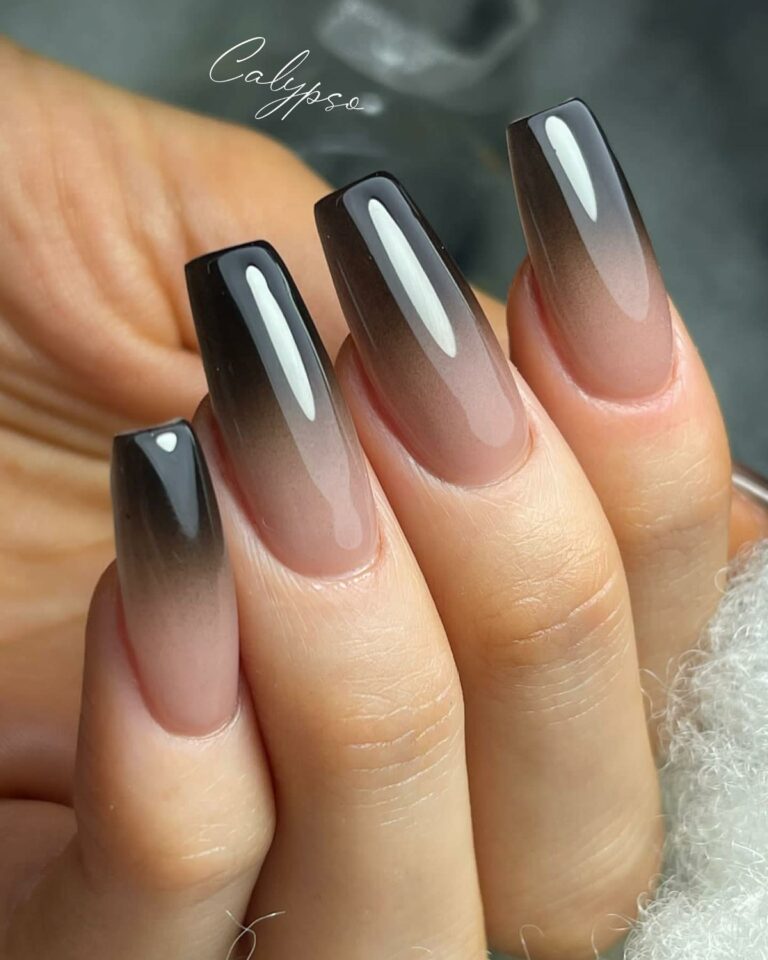
For several consecutive seasons, salon appointment books across major metropolitan centers were dominated by milky strawberry glazes, chrome sheens, and pastel sunset fades. That chromatic saturation reached an exhaustion point. A stylistic correction swept across treatment tables, replacing sugary optimism with deep, atmospheric gradations. A comprehensive industry analysis in the Byrdie Report confirms that gradient manicures retain immense cultural staying power, yet client requests have skewed dramatically toward darker aesthetic nail art. What was once relegated to niche subcultures or late-October novelty appointments has anchored itself as a primary, seasonless uniform.
The transformation reflects shifts in personal styling. Heavy leather trenches, deconstructed wool tailoring, and muted monochrome wardrobes require nail styling with structural weight. Black ombré nails answer that need by marrying the severity of obsidian pigments with the soft, negative space of bare skin. Rather than masking the nail plate beneath an opaque coat of black enamel, the gradual fade introduces tension, depth, and precision that flat lacquer cannot replicate.
📌 Key Takeaways:
- The Palette Reversal: Demand has rotated away from bright pastel fades toward high-contrast dark aesthetic nail art that integrates seamlessly with minimalist tailoring.
- The Mechanical Shift: Nail technicians have widely adopted miniature cordless airbrush compressors, replacing labor-intensive sponge tapping to produce smoke-fine color diffusions.
- Functional Longevity: Grounding the cuticle in sheer pink or neutral nude conceals natural nail regrowth, stretching salon maintenance intervals from two weeks out to four.
The Seasonal Migration Away from Dopamine Brights
The manicured hand serves as an accessible barometer of broader fashion sentiment. Between 2021 and 2023, the rise of "dopamine dressing" filled social feeds and salon stations with buttercup yellows, lilac fades, and citrus accents. By late 2024, the novelty of neon gradients had faded. Fashion houses from Paris to New York turned their attention toward somber luxury, brutalist silhouettes, and Victorian undertones. The shift caught on instantly with salon clientele seeking a clean palette cleanser.
Moody manicure trends gained momentum as high-fashion houses reintroduced stark gothic influences across their fall winter nail colors. The appeal lies in contrast. Solid black nails often deliver an aggressive, countercultural statement that clashes with corporate dress codes or soft knitwear. Softening that same dark pigment into a black to nude gradient pulls the visual edge into balance. The edge of the free edge maintains architectural sharpness, while the base preserves the gentle translucence of natural keratin.
Stylists noted this migration in client demographics. High-end salons in Manhattan and London observed corporate professionals and luxury retail buyers who historically wore sheer pinks opting for smoke-tipped gradients. The look reads as intentional, modern, and disciplined rather than rebellious. It bridges counterculture edge with white-collar sophistication.
Deconstructing the Black to Nude Gradient
Executing an effective dark gradient requires a firm understanding of color theory and opacity. Carbon black carries the heaviest pigment load in professional nail chemistry. If an artist attempts to blend wet black gel directly over an unset beige layer, the black pigment easily contaminates the neutral base, creating a muddy, grey band across the center of the nail plate.
Modern nail artists bypass this pitfall by building the set from the bed outward. The process begins with a semi-opaque camouflage base, typically a neutral blush, milky taupe, or soft bisque that matches the client’s undertone. Technicians then layer the black pigment through gradual dispersion, ensuring the cuticle gradient transition remains completely sheer. The darkest saturation settles exclusively along the free edge.
Silhouette fundamentally alters how the eye reads the color transition:
- Almond Nail Shape: The tapering contour elongates the finger, lending the black fade a soft, smoky look reminiscent of spilled ink on water.
- Coffin Black Ombre Nails: The sharp geometric lines and blunted, square edges frame the dark tip, producing a crisp, architectural look favored by long-enhancement clients.
- Short Squoval: For natural nails, keeping the gradient tight, with black covering just the top 25% of the plate, mimics an edgy evolution of classic french ombre nails.
The Mechanics of Dispersion: Airbrush Tools Versus Sponge Blending
The sudden perfection of contemporary ombré sets is the direct result of hardware evolution behind the salon desk. Historically, technicians created gradients using dense makeup sponges, stippling semi-cured gel polish gradient layers onto the plate. This approach frequently produced visible micro-texture, uneven banding, or stubborn air bubbles that required aggressive buffing to level out.
The widespread introduction of handheld, rechargeable airbrush compressors changed salon workflows. By loading specialized water-based or alcohol-thinned nail lacquers into a 0.2mm nozzle, artists atomize black pigment into microscopic mist. The dispersion falls on the nail in uniform layers, creating smoke-level transitions without adding bulk to the nail enhancement.
| Application Method | Service Duration | Visual Transition Quality | Average Salon Surcharge |
|---|---|---|---|
| Handheld Airbrush Mist | 15, 25 minutes | Hyper-diffused, zero visible lines | $25, $40 |
| Dual-Density Sponge Stippling | 25, 35 minutes | Slight stipple texture, medium blend | $15, $25 |
| Wet-Gel Ombré Brush Blending | 30, 45 minutes | Artisanal, prone to streak lines | $20, $30 |
The chemistry must be managed carefully. Airbrushed lacquer requires total moisture evaporation before sealing; sealing damp solvent under gel traps pockets that cause delamination within 48 hours. When using builder gels or acrylics, technicians rely on high-output LED lamps operating at 365+405nm wavelengths to cure dense black pigments completely down to the base layer.

Topcoat Alchemy: High-Gloss Glass Against Velvet Matte
A black ombré design takes on dramatically different attitudes depending on its finishing coat. The surface reflection dictates how light interacts with the transition point where dark pigment dissolves into nude nail beds.
A high-gloss top coat acts as a magnifying lens. Clear, dense polymers trap ambient light, giving the black tips a wet, obsidian look reminiscent of blown glass or patent leather. The reflective sheen deepens the optical contrast between the rich pigment and the natural flesh tones underneath. This high-shine finish remains the standard recommendation for clients who want their nails to match gold or silver jewelry.
Conversely, a matte black finish transforms the gradient into a suede or frosted-glass effect. Matte sealants contain microscopic silica particles that scatter light rather than bouncing it back. This softens the transition, giving the black fade a hazy, charcoal appearance. Clients frequently request matte treatments on almond silhouettes to dial back the shine in favor of a soft, understated mood.
Longevity, Wear Patterns, and Maintenance Economics
Beyond aesthetics, practical salon economics explain why dark ombré sets remain staples across salon menus. Full-cover dark manicures show regrowth almost immediately; as little as 1.5mm of natural nail growth at the eponychium creates an obvious gap after ten days. That clear boundary compels clients to rebook quickly or pick at lifting edges.
By starting with a sheer base that mirrors the client's nail bed, the dark ombré eliminates visible lines of separation. The set grows out cleanly, extending the wearable life of an expensive gel-x or builder gel overlay from two weeks to nearly four weeks without looking neglected.
Clients are happy to pay a premium design surcharge of $20 to $40 over a baseline manicure because the service delivers longer wearable mileage. Stylists gain dependable profit margins on these appointments, while clients receive high-concept styling that outlasts standard block-color treatments.
Frequently Asked Questions (FAQ)
Q1: Why does black gel polish sometimes wrinkle during curing on ombré designs?
A1: Black gel polish contains exceptionally high concentrations of carbon black pigment, which absorbs UV light rays and prevents them from reaching the deeper layers of the gel. If the dark tip is applied too thick during the gradient process, the surface skins over and contracts while the gel underneath stays wet. This imbalance causes visible surface wrinkling. Technicians prevent this by curing the design in ultra-thin, semi-sheer layers or using an airbrush system.
Q2: Can a black to nude ombré work well on short natural nails?
A2: Yes, but the balance of color must be adjusted for the available surface area. On short nails, the deep black tone should cover only the top 20% to 30% of the tip. Keeping the rest of the nail in a sheer nude base visually lengthens the nail plate rather than cutting it in half horizontally.
Q3: How do technicians keep airbrushed black pigment from chipping at the free edge?
A3: Because airbrushed paints are thinner than structural gels, they do not bond directly to natural keratin. Experienced technicians lightly file the free edge perimeter to remove any overspray, apply an acid-free primer along the tips, and cap the entire nail with a rubberized base coat before applying the final high-gloss or matte top layer.
The Lasting Influence of Modern Noir Manicures
The rise of black ombré nails marks a lasting departure from fleeting seasonal gimmicks. It represents a mature synthesis of street style, subcultural history, and modern salon engineering. By trading high-saturation pastels for dark, disciplined gradients, nail wearers have elevated manicures from simple color coats into nuanced fashion accessories. The style endures because it balances drama with practicality, offering a dark edge while maintaining the effortless, low-maintenance grace of negative space.


