The Fake Seatbelt Shirt Meme: Pure Genius Hack or Fatal Stupidity?

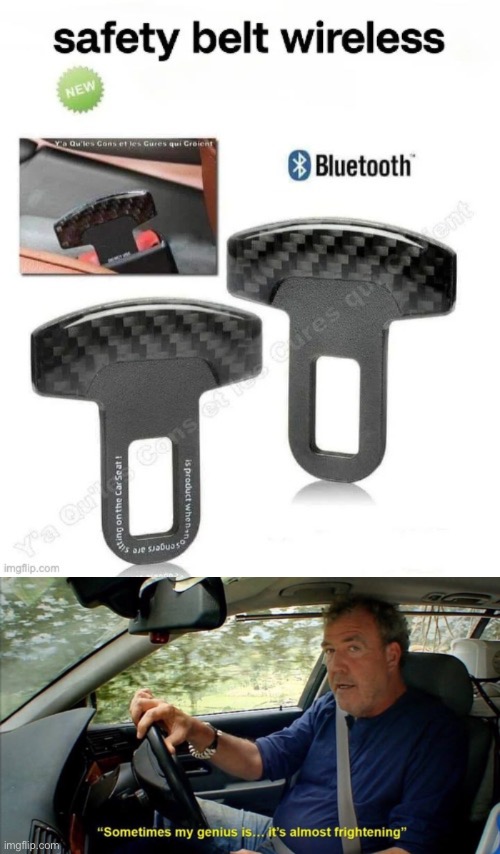
A plain white crewneck printed with a single, diagonal black stripe running from the left collarbone to the right hip has resurfaced across social feeds for over a decade. Every few months, the image reappears on Reddit, X, and TikTok, hailed by automated meme pages as a "200 IQ life hack" designed to outsmart highway patrol officers and automated surveillance systems. Commenters laugh, dropshippers list the apparel for $18 on fast-fashion storefronts, and the internet moves on.
Yet behind the recurring laughter sits an alarming reality. What began as a subversive gag gift has repeatedly crossed the line into actual highway use. Drivers across several continents have genuinely bought and worn these shirts in attempts at traffic ticket evasion. In doing so, they gamble their lives and bank accounts against rapid advancements in automated traffic police enforcement and the unyielding laws of kinetic physics.
📌 Key Takeaways:
- The Viral Illusion: The diagonal black stripe shirt originated as an Italian and Chinese novelty gag gift before transforming into an enduring internet meme celebrated as an anti-surveillance hack.
- Technological Failure: Contemporary AI seatbelt detection cameras use multi-angle infrared and photometric stereo analysis, rendering flat two-dimensional fabric prints completely useless under automated scrutiny.
- Severe Legal Escalation: Using a fake seatbelt t-shirt turns a standard non-moving traffic violation into intentional fraud, triggering license suspensions, criminal charges, and automotive safety fines exceeding $500.
From Italian Gag Gift to Dropshipping Sensation
The concept of a garment designed to mimic automotive safety gear predates algorithmic social media. Street vendors in Naples, Italy, sold printed white shirts featuring diagonal sashes as early as the late 1980s, shortly after the Italian government mandated front-seat buckle usage in 1989. The novelty resurfaced in China during the early 2010s, where local entrepreneurs sold them on Taobao as a tongue-in-cheek response to expanding municipal surveillance networks.
The garment entered Western internet culture through viral life hack memes. Images of drivers grinning behind steering wheels while wearing the counterfeit strap circulated on early image boards, framed as the ultimate defiance of state control. As global e-commerce logistics simplified, the shirt transitioned from a localized prank to an easily accessible novelty sold on major retail platforms.
Online retailers quickly capitalized on the gag. Product listings on digital storefronts framed the apparel as a "funny gag gift for drivers" to circumvent platform policies that ban products explicitly designed to break traffic laws. Despite the wink-and-nod disclaimers, user reviews on retail forums revealed that a small yet persistent subset of buyers intended to wear the shirts during daily commutes to sidestep driver safety regulations.
Why Modern Detection Cameras Destroy the Optical Illusion
The core premise of the shirt relies on human visual error. At highway speeds, a human officer glancing into a passing car might momentarily mistake a dark diagonal band of cotton for a buckled three-point harness. Modern road safety enforcement, however, no longer relies on the unassisted human eye.
Transportation departments across Australia, the United Kingdom, and multiple American states have deployed automated seatbelt detection cameras equipped with artificial intelligence. Pioneered by transport technology firms such as Acusensus, these systems use multi-flash infrared illumination and high-resolution optical arrays. They cut directly through windshield tint, dashboard glare, and adverse weather conditions.
| Enforcement Metric | Viral Meme Assumption | Real-World Infrastructure Reality |
|---|---|---|
| Sensor Assessment | Camera reads 2D contrast as a legitimate safety belt. | Infrared sensors map depth, fabric texture, and belt tension points. |
| Lap Belt Verification | Ignored entirely by external monitoring. | Secondary camera angles evaluate the lap anchor point at hip level. |
| Legal Repercussion | Standard non-wearing citation ($25, $150). | Escalation to deceptive conduct, fraudulent evasion, and fines up to $1,000. |
| Crash Protection | Assumes personal driving skill negates crash risk. | Zero restraint; ejection likelihood surges by over 3,000% in roll-overs. |
These sensor suites do not look for simple dark stripes. The underlying machine-learning models evaluate physical depth, three-dimensional shadow drop, and the exact geometric angle where a real seatbelt retracts into the B-pillar of the vehicle. A screen-printed graphic on a loose cotton t-shirt produces no structural shadow and stretches awkwardly when the driver shifts posture.
When the automated system detects an anomaly, it flags the image for human verification. A highway monitoring official reviewing the high-resolution frame will see an unfastened driver in a novelty shirt within seconds.
How Attempted Evasion Multiplies Legal Penalties
Motorists who attempt to exploit nonexistent seat belt law loopholes often discover that traffic courts take a dim view of pre-planned deception. Failing to buckle up is typically categorized as an infraction or a non-moving violation, carrying minor automotive safety fines and no criminal record.
Introducing a deliberate counterfeit changes that dynamic entirely. When a highway patrol officer spots a fake seatbelt t-shirt during a roadside stop, the encounter shifts from routine ticketing to an investigation of intentional fraud. Prosecutors and traffic judges have broad discretion to interpret the garment as conscious evidence of willful intent to deceive law enforcement.
In jurisdictions across the United States and Europe, attempting to disguise a safety violation can elevate the offense. Drivers face additional citations for obstruction, altering required vehicle operations, and driving without mandatory safety equipment. In Australia, where mobile phone and seatbelt enforcement cameras issue automated fines ranging from $400 to over $1,000 alongside demerit points, motorists attempting to challenge these automated captures in court with joke clothing routinely face maximum statutory penalties plus mandatory court processing fees.
The Brutal Physics Behind Vehicle Crash Statistics
The legal ramifications pale in comparison to the biomechanical reality of a collision. Believing that a piece of clothing constitutes a harmless prank ignores fundamental automotive safety data compiled over decades of highway monitoring.
Federal regulators and public health agencies track passenger survival rates with surgical precision. Data published by the National Highway Traffic Safety Administration (NHTSA) demonstrates that three-point safety belts reduce the risk of fatal injury to front-seat passenger car occupants by 45%, and reduce the risk of moderate-to-critical injury by 50%.
A screen-printed graphic provides zero tensile strength. During a head-on collision at just 35 miles per hour, an unbelted occupant continues traveling forward at that same speed until their chest strikes the steering column, windshield, or instrument cluster. The body experiences decelerative forces measuring several tons per square inch.
Modern automotive restraint systems function as integrated safety cages. Pretensioners instantly reel in slack milliseconds after impact sensors fire, while load limiters release minute amounts of webbing to manage energy transfer to the human torso. Supplemental Restraint Systems (airbags) are explicitly engineered to operate in tandem with a seated occupant restrained at the pelvis and shoulder.
An unbelted driver sliding forward into a rapidly deploying airbag faces catastrophic neck compression and direct blunt force trauma. In highway roll-overs, unbelted occupants are ejected from the passenger cabin at an alarming rate. According to global motor vehicle crash statistics, approximately 75% of vehicle occupants ejected during a crash die from their injuries. The novelty t-shirt transforms its wearer from an average commuter into an unwitting candidate for a Darwin Award novelty highlight reel.
Traffic Patrols Respond to Anti-Enforcement Merch
Law enforcement personnel are well aware of the meme. Highway safety organizations and regional police agencies regularly showcase captured contraband on social media platforms, turning the tables on online prank culture.
Field reports from traffic divisions indicate that officers view the garment as an immediate red flag. A driver wearing an evasion shirt demonstrates an active, conscious decision to bypass safety regulations before turning the ignition key. That demonstration of premeditation strips away the standard roadside defense of "I just forgot to click it in when leaving the driveway."
Furthermore, modern patrol cruisers are equipped with automated license plate readers and forward-facing dash cams recording in continuous 4K resolution. An officer conducting a pace or moving violation stop inspects the driver through side windows and mirrors. At close quarters, the flat texture of a screen-printed shirt stands out instantly against the three-dimensional weave of industrial polyester seatbelt webbing. The viral life hack collapses the moment the vehicle pulls onto the road.
Frequently Asked Questions (FAQ)
Q1: Are fake seatbelt t-shirts illegal to own or buy?
A1: Owning, manufacturing, or purchasing the shirt as a novelty gag gift is generally legal in most jurisdictions. The illegality occurs the moment a driver wears the shirt while operating a motor vehicle on public roads, which violates mandatory seatbelt laws and can trigger charges of intentional deception or obstruction.
Q2: Can modern AI traffic cameras really spot a fake seatbelt shirt?
A2: Yes. High-speed traffic enforcement cameras do not rely on simple color contrast. They utilize multi-spectrum infrared lighting, edge-detection algorithms, and geometric profiling to verify the actual depth of the belt, the presence of the lower lap harness, and the hardware mounting point inside the vehicle cabin.
Q3: What happens if you crash while wearing an evasion shirt?
A3: From a physical standpoint, the shirt provides zero restraint, leaving the occupant vulnerable to direct windshield impact, severe airbag trauma, or cabin ejection. Legally and financially, insurance adjusters frequently deny or drastically reduce personal injury claims if evidence shows the driver actively evaded safety restraints through premeditated deception.
The True Price of an Online Gimmick
The enduring viral appeal of the seatbelt shirt speaks to a deep-seated human impulse: outsmarting automated systems with cheap, low-tech trickery. The internet celebrates these apparent shortcuts because they feel like harmless acts of rebellion against bureaucratic oversight.
That narrative falls apart completely on the asphalt. Modern traffic infrastructure operates with sensor capabilities that easily penetrate crude visual tricks. More critically, asphalt, steel, and inertia do not negotiate with internet humor.
Treating a foundational safety mechanism as a minor inconvenience to be bypassed with an $18 t-shirt reflects a fundamental misunderstanding of automotive risk. A seatbelt is not an arbitrary tool for police revenue; it is the sole structural link preventing a human body from becoming a projectile. Trading that barrier for a fleeting viral gag is a catastrophic bargain.


