The German Breakfast Beer Guide: Traditions, Etiquette, and the Mallorca Phenomenon

In the quiet morning light of a Munich brewery courtyard, cracking open a tall bottle of cloudy wheat beer at ten o'clock carries none of the stigma typically attached to day-drinking. This is Frühschoppen, an Alpine institution steeped in centuries of culinary decorum, neighborly conversation, and regional pride. While travelers often view drinking before midday as the sole domain of rowdy tourists, German gastronomy treats morning beer with calculated precision.
The cultural meaning of morning alcohol changes drastically depending on geography. A cultural warning shared by the YouTube (La Latina TV) Report underlines how easily visitors misread German public decorum, particularly when contrasting regional traditions with modern metropolitan habits. Grasping the distinction between an authentic Bavarian gathering and an uninhibited resort scene reveals how food history, brewing laws, and local codes continue to dictate what belongs on the table before the noon bells toll.
📌 Key Takeaways:
- The Alpine Tradition: Authentic Bavarian morning drinking revolves around the Frühschoppen, a social mid-morning gathering pairing pale veal sausages with wheat beer.
- The Strict Cutoff: The ancient church bell rule mandates that fresh sausages must be consumed before noon, anchoring the practice to morning hours.
- The Tourism Distortion: The ritual contrasts sharply with the viral morning party scenes in Mallorca, where early drinking serves nightlife rather than cultural heritage.
The Alpine Morning Ritual: Understanding Frühschoppen and the Stammtisch
Bavaria built an entire morning social structure around the concept of Frühschoppen. Originating as a pastoral tradition across southern Germany and Austria, the term historically referred to a morning drink taken after Sunday church service. Villagers gathered at the local tavern to discuss municipal affairs, trade news, and resolve neighborhood disputes before returning home for family dinners.
Central to this gathering is the Stammtisch, the designated regulars' table marked by an ornate metal plaque or wooden sign. Walking into an authentic southern German gasthaus between 9:30 AM and 11:30 AM means stepping into a cross-generational rhythm. Carpenters in work trousers sit beside bank managers, both sipping cloudy ale from tall glassware while brass music hums in the background.
This setting rejects rushed consumption. German breakfast cultural customs in the north prioritize filter coffee, rye breads, and cold cuts, but the south preserves a distinct, savory second breakfast. It serves as an emotional pressure valve where community ties take precedence over morning productivity metrics.
The Anatomy of Weißwurstfrühstück: Mustard, Pretzels, and the Bell Rule
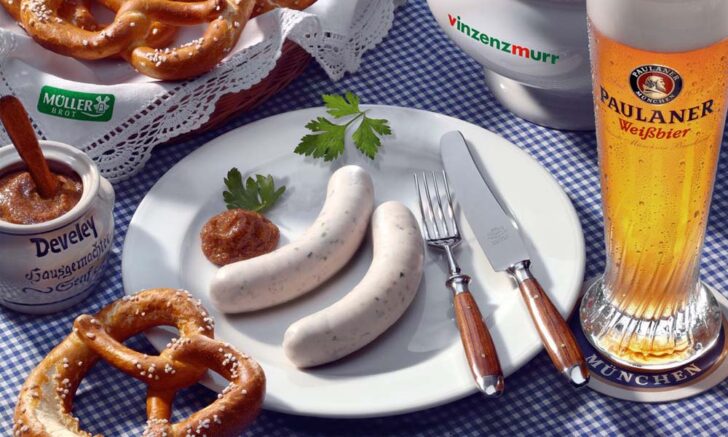
The culinary cornerstone of the morning gathering is the Weißwurstfrühstück. Created accidentally in Munich in February 1857 by innkeeper Sepp Moser when he ran out of sheep casings, the pale sausage consists of minced veal, pork back bacon, lemon zest, onions, mace, and fresh parsley.
Dining etiquette here follows unyielding parameters. The meal requires three non-negotiable accompaniments:
- Sweet Bavarian mustard (Süßer Senf): Coarsely ground mustard seeds sweetened with caramelized brown sugar or apple puree, creating an essential counterpoint to the herbal richness of the veal.
- Fresh Laugenbrezel pretzels: Baked to a deep mahogany crust, generously studded with rock salt, and offering an elastic, chewy crumb.
- Bavarian wheat beer (Weissbier): The carbonation cuts through the dense fats of the emulsion, cleansing the palate with every sip.
Equally famous is the Zwölfuhrläuten, or the twelve-o'clock church bell rule. Long before commercial refrigeration existed, butchers prepared fresh sausage meat at dawn without chemical preservatives. Raw casings spoiled rapidly under afternoon heat. Tradition demanded that the sausage never hear the church bells strike midday. Even in modern kitchens equipped with walk-in freezers, ordering this specialty past noon marks an unmistakable tourist misstep.
Locals eat the sausage using the zuzeln technique: slicing off the tip, dipping it in sweet mustard, and sucking the meat directly from the skin. Those who prefer silverware make a clean longitudinal incision down the center to peel the casing back like a banana skin. Piercing the skin and eating it whole remains an absolute culinary offense across the Free State of Bavaria.
The Perfect Hefeweizen Morning Pour and the Reinheitsgebot Standard
Pouring a morning wheat beer requires deliberate mechanics. Serving a Hefeweizen is a performance designed to activate suspended yeast without triggering an uncontrollable cascade of foam.
The bartender begins by rinsing the tall, vase-shaped 500ml glass in chilled, clean water. This step removes residual sanitizing agents and tempers the glass surface. Holding the glass at a sharp 45-degree angle, the server inserts the bottle neck deep into the vessel, slowly bringing the glass upright as the liquid fills three-quarters of the capacity. With an inch of beer remaining in the bottle, the server swirls the base in tight circles to agitate the settled sediment, pouring the frothy yeast head across the top like thick meringue.
Quality remains guaranteed by the historic Reinheitsgebot, the Bavarian beer purity law codified in April 1516 by Duke Wilhelm IV. The statute originally restricted brewing ingredients strictly to water, barley, and hops, with yeast added centuries later once microbiologists identified its role in fermentation. Top-fermented wheat beers earned royal exemptions, producing the distinctive banana and clove esters that make an early-morning pour uniquely refreshing.
Munich Tradition Versus Mallorca Tourism: Two Faces of the Morning Pint
Online video platforms frequently blur the line between historic culinary customs and unbridled holiday excess. On social media, searches for early-morning German drinking frequently alternate between Munich's serene chestnut trees and the viral beachfront party culture of the Balearic Islands.
Decades of mass package tourism created an enclave on the Spanish island of Mallorca, particularly along Playa de Palma and the strip colloquially dubbed the Ballermann. German visitors frequent venues like the Megapark or the Bierkönig, downing pale lagers alongside breaded pork cutlets before 10:00 AM. While both customs feature German beer consumed early in the day, their cultural frameworks, social expectations, and legal environments share almost nothing in common.
| Attribute | Munich Frühschoppen | Mallorca Strip Scene |
|---|---|---|
| Primary Setting | Historic gasthäuser, village inns, shaded beer gardens | Open-air entertainment complexes, beachfront bars |
| Typical Hours | 09:30 AM, 12:00 PM (Strictly concluded by noon) | 08:30 AM, Late evening continuous party cycles |
| Menu Focus | Steamed veal sausage, sweet mustard, lye pretzels | Morning schnitzels, fry-ups, high-volume bar snacks |
| Beverage Type | Top-fermented Bavarian Weissbier (5.0%, 5.4% ABV) | Draft pilsners, mass-pour pitchers, party cocktails |
| Social Dynamic | Conversational dialogue, family groups, civic regulars | Stag tours, costumed groups, loud electronic music |
| Regulatory Pressure | Protected communal heritage under Bavarian customs | Targeted by Balearic anti-excess tourism laws |
Regional authorities in the Balearic Islands continue enacting tough civil ordinances against open-container drinking and aggressive bar promotions. The Bavarian model faces no such opposition because self-regulation remains embedded in the ritual. Patrons drink slowly, consume warm food, and disperse when church bells sound midday.
Beer Garden Dining Etiquette and Regional Boundaries
Taking part in a mid-morning beer requires understanding municipal hospitality laws that trace back to early nineteenth-century conflicts between Munich brewers and private restaurant owners.
King Maximilian I Joseph issued a historic decree in 1812 granting cellar owners the right to serve beer directly from their storage locations, but prohibiting them from selling prepared food that competed with city taverns. Patrons responded by bringing cold roasts, radishes, and breads from home, buying only liquid refreshment on-site.
That compromise governs contemporary beer garden dining etiquette. Traditional outdoor establishments split seating areas into two operational spaces:
- The Self-Service Area: Identified by bare wooden picnic tables without linen covers. Guests may unpack elaborate picnic baskets containing home-cured meats, cheeses, and pretzels. Buying beer from the service pavilion remains mandatory.
- The Serviced Area: Distinguished by tablecloths, centerpieces, and waitstaff. Bringing outside food here violates house rules; guests must order all meals from the kitchen menu.
Regional boundaries matter just as much as table choice. Attempting to order a morning wheat beer and boiled sausages in Hamburg, Frankfurt, or Cologne will earn bewildered looks from café staff. Northern and western states prioritize sourdough breads, gouda slices, and hot coffee at breakfast, leaving early-morning beer culture strictly to southern valleys and mountain communities.
Frequently Asked Questions (FAQ)
Q1: Is drinking beer for breakfast common across all of Germany?
A1: No. The practice belongs almost entirely to Bavaria and adjacent Alpine regions. In northern and central metropolitan hubs, morning meals mirror standard continental fare, and early alcohol consumption outside weekend festivals carries standard social disapproval.
Q2: Why must Weißwurst be eaten before midday?
A2: The rule dates to nineteenth-century butchery practices. Fresh veal emulsion sausages contained no artificial curing salts or preservatives and spoiled rapidly in ambient temperatures. The noon church bell provided a universal deadline for food safety.
Q3: Can I substitute sweet mustard with regular Dijon or yellow mustard?
A3: Bavarian restaurants consider standard sharp mustard unacceptable for this dish. Sweet mustard is specifically formulated with caramelized sugar to counterbalance the delicate spices and herbal profile of the sausage meat.
Q4: Is non-alcoholic beer accepted during Frühschoppen?
A4: Yes. Non-alcoholic wheat beer (Alkoholfreies Weissbier) has grown into an accepted choice across southern Germany, widely favored by cyclists, drivers, and workers who want the communal morning meal without intoxicating effects.
Navigating Morning Beer Culture with Respect
The German morning beer tradition endures because it prioritizes restraint over indulgence. It is not an invitation to uninhibited intoxication, but a celebration of culinary heritage, disciplined craft brewing, and local community life.
Travelers navigating these cultural waters gain far more by observing local decorum than by chasing sensational holiday stereotypes. Sliding onto an unvarnished beer garden bench, splitting a warm pretzel, and sipping a properly poured Hefeweizen before the church bells strike noon offers a direct window into living European history. When practiced properly, the morning pour is an exercise in taking time to connect with those across the table.