The Great Holiday Glow Backlash: Timeline of the Retro Incandescent Comeback

For nearly two decades, the transition from traditional filament bulbs to solid-state holiday lighting looked like an irreversible technological triumph. Hardware aisles surrendered their shelves to diode spools, utilities offered rebates to retire older strands, and municipal displays slashed kilowatt-hours by the thousands. Yet across neighborhood streets and retail display counters heading into the 2025, 2026 holiday season, millions of decorators staged an unexpected rebellion against sterile blue-white hues. As documented in a recent BBC report on the revival of colorful, tactile holiday decor, households are actively rejecting the harsh optical signatures of modern diodes in favor of the amber warmth and physical texture of mid-century filaments.
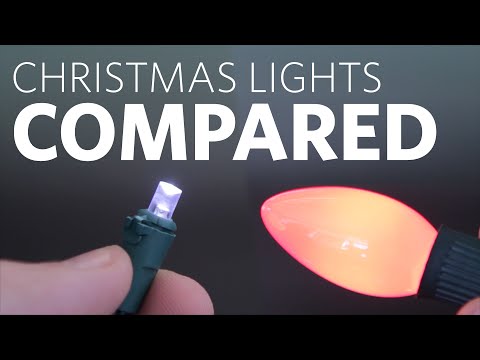
This pushback transformed from a niche design subculture into an undeniable commercial shift. Viral comparisons on TikTok and Instagram laid bare the stark optical divide: clinical, sharp-point diodes on one side, and the diffused, glowing filaments of tungsten and glass on the other. What began as an aesthetic grievance swiftly disrupted retailer supply chains. Department stores, specialty lighting suppliers, and discount chains scrambled to restock classic filament strands, sparking an urgent debate between visual nostalgia and household energy efficiency.
📌 Key Takeaways:
- The Backlash Driver: Dissatisfaction with cold color temperatures, harsh optical flicker, and sharp directional light prompted a massive consumer swing toward the warm nostalgic glow of traditional filaments.
- The Commercial Impact: Retailers across the United States reported mid-decade stockouts of classic ceramic painted glass bulbs and vintage C9 bulb sets, with budget giants pricing retro runs under $15 to capture demand.
- The Hidden Cost: While incandescent filaments provide unmatched visual warmth, running 1,000 feet of traditional C9 bulbs can increase holiday electricity bill costs by roughly $150 to $200 per month compared to less than $15 for equivalent diodes.
How Social Feeds Rekindled the Craze for Tungsten and Glass
The cultural pivot away from early-generation diodes started on video feeds. Content creators began publishing split-screen living room walk-throughs, contrasting the icy, clinical cast of 5000K commercial light strings against the golden radiance of legacy trees. The visual discrepancy was impossible to ignore. Viewers flooded comment sections with memories of childhood living rooms bathed in warm, amber light, identifying modern diode installations as sterile, corporate, and visually aggressive.
The movement caught fire under hashtags dedicated to vintage holiday aesthetics, where younger homeowners documented trips to estate sales and thrift shops to hunt down working boxes from the 1980s and 1990s. As reported by Yale Climate Connections, this online fixation exposed an emotional deficit in contemporary hardware design. While modern engineering delivered unmatched thermal efficiency, it stripped away the atmospheric softness that defined the winter holiday environment for generations.
Retail buyers took notice. By the time design publications like Homes & Gardens and Country Living cataloged the return of 1990s holiday design trends, mass-market retailers like ALDI, Target, and Home Depot were rushing production orders for colorful, retro-inspired strands. ALDI moved hundreds of thousands of budget-friendly vintage-style sets priced under $15 within days of delivery, signaling that nostalgic warmth was no longer just an antique-collector hobby, it was a mainstream purchasing priority.
The Physics of Warmth: Color Temperature and Optical Diffusion
The tension between filament strands and diodes boils down to basic optical physics. Incandescent filaments generate light by running electricity through a tungsten wire until it heats to roughly 2,500 degrees Celsius. This incandescence produces a continuous, full-spectrum blackbody radiation curve. In practical terms, it emits substantial amounts of red and infrared light, registering a color temperature and Kelvin rating between 2200K and 2700K. The human eye perceives this as an inviting, golden hue with a Color Rendering Index (CRI) of a perfect 100.
Standard holiday diodes work completely differently. A tiny semiconductor chip emits a narrow band of blue or ultraviolet light, which passes through a phosphor coating to simulate broader light. Early and budget-grade holiday light strands consistently missed the target, clocking in at 4000K to 6000K. The light feels piercing because diodes are directional point sources. They project concentrated rays out from a single flat surface, while a glowing tungsten wire casts ambient light evenly across 360 degrees.
Then comes the issue of electrical cycling. Budget diodes run on alternating current (AC) without dedicated smoothing capacitors, turning off and on 60 times per second. This imperceptible flicker effect and light softness deficit causes subconscious eye strain, headache complaints, and a frantic strobe effect when captured on smartphone cameras. Tungsten filaments, by contrast, cannot cool down instantly during microsecond AC current dips. The filament retains heat between cycles, delivering a smooth, steady, unwavering pool of light that mimics an open fireplace.
The Operational Divide: Comparing Efficiency, Lifespan, and Costs
While the aesthetic superiority of traditional filaments remains clear to many consumers, their operational profile presents genuine household liabilities. Running traditional filaments requires careful planning regarding circuit loads, power draw, and physical storage. Understanding the trade-offs requires looking directly at operational data across standard seasonal setups.
| Performance Attribute | Traditional Incandescent | Modern Holiday LED |
|---|---|---|
| Power Draw (Per 100 Mini Lights) | 40.8W, 43.5W | 4.8W, 7.2W |
| Roofline C9 Bulb Wattage (Per Bulb) | 7.0W, 10.0W | 0.6W, 1.0W |
| Estimated Bulb Lifespan | 1,000, 2,000 Hours | 25,000, 50,000 Hours |
| Average Operating Temperature | 140°F, 220°F (Hot to touch) | 75°F, 90°F (Cool to touch) |
| Max Connected End-to-End Strings | 3, 5 Strands Maximum | 25, 45 Strands Maximum |
| Seasonal Energy Cost (500 C9 Bulbs) | $75.00, $115.00 (per month) | $6.50, $11.00 (per month) |
The energy efficiency comparison exposes the economic reality of the retro Christmas decor trend. When decorators outline a standard two-story colonial home with 500 traditional C9 sockets, that roofline pulls between 3,500 and 5,000 watts of power continuously. On a standard 15-amp residential circuit breaker, that load requires two to three dedicated circuits just to prevent tripping. The diode alternative runs the entire 500-bulb display on less than 450 watts, easily supported by a single outdoor plug.
Thermal Dynamics, Dry Needles, and Safety Protocols
Aesthetic preferences cannot override thermodynamic realities. Approximately 90 percent of the energy consumed by an incandescent filament converts directly into ambient heat rather than visible light. This heat output and fire safety dynamic becomes critical when threading mini incandescent light strands deeply into natural evergreens.
A standard indoor Douglas fir loses moisture daily after being cut. By late December, branch tips can dry out significantly, lowering their ignition threshold. A cracked filament glass envelope or an overloaded plug cluster generating sustained temperatures above 180 degrees Fahrenheit poses a documented ignition hazard. The National Fire Protection Association (NFPA) notes that heat sources account for roughly two out of every five home holiday tree fires, with electrical distribution equipment serving as a leading contributing factor.
Diodes bypass this thermal risk almost entirely. Operating at barely above room temperature, solid-state strands can remain wrapped around dried foliage or paper ornaments for hours without scorching the contact points. Furthermore, because mini diodes draw a fraction of the amperage, they dramatically reduce the risk of catastrophic arc faults inside vintage household wall outlets. Those choosing traditional glass strings on fresh trees must observe strict safety protocols: check water basins daily, inspect wires for brittle insulation, and install timers to ensure strands never run unattended.
The Evolution of Glass: The Revival of Painted C9 Bulbs
The current market renaissance does not celebrate clear mini-lights alone. The true epicenter of the vintage C9 bulb revival lies in the demand for opaque, ceramic painted glass bulbs. Mid-century holiday facades did not sparkle with tiny, transparent points of light; they glowed with large, heavy glass envelopes dipped in vibrant pastel paints.
Modern plastic diode shells struggled for years to replicate this texture. Early commercial diodes used transparent tinted polycarbonate casings. The internal semiconductor cast a tiny, piercing white pinprick through the shell, creating a jarring, uneven hot spot surrounded by washed-out plastic. Collectors complained that the bulbs looked like warning beacons rather than decorative trim.
Specialty manufacturers cracked the code by developing ceramic-coated diode retrofits. These units hide SMD (surface-mount diode) chips behind dense, porcelain-style glass coatings that scatter light evenly across the entire bulb surface. For purists, however, small manufacturing outfits in Ohio and Pennsylvania saw record pre-orders for genuine, factory-blown incandescent glass lines. The tactile weight of cold glass in the hand, the satisfying clink of bulbs against brickwork, and the gentle warming of the glass envelope remain irreplaceable sensory markers for holiday enthusiasts.
Environmental Calculus: Carbon Accounting in Seasonal Displays
The widespread return to legacy lighting introduces complications for residential decarbonization goals. Lighting researchers analyzing the carbon footprint holiday lighting dynamic emphasize that holiday lighting coincides with the winter peak demand on regional power grids. In regions dependent on coal or natural gas generation, every extra kilowatt-hour pulled by decorative displays converts directly into grid emissions.
According to utility grid modeling, replacing an entire town's diode displays with traditional filaments multiplies peak evening residential lighting draw by a factor of eight. When scaled across tens of millions of American homes, the aggregate power consumption rivals the output of entire regional power stations during the December holidays. For eco-conscious homeowners who still crave nostalgic styling, this creates an undeniable ethical conflict.
Fortunately, the market responded by narrowing the aesthetic gap. High-end solid-state manufacturers now produce "warm dim" diode strings engineered to 2100K color temperatures, built with internal resistor bridges to eliminate AC flicker entirely. These hybrid strands simulate the color spectrum of hot tungsten while keeping household energy draws down by 85 percent, offering a viable compromise between seasonal nostalgia and grid conservation.
Frequently Asked Questions (FAQ)
Q1: Why do retro incandescent holiday lights look warmer than warm-white LEDs?
A1: Incandescent lights emit a continuous thermal spectrum via a heated tungsten wire, producing real infrared and amber light between 2200K and 2700K with a perfect 100 Color Rendering Index. Most warm LEDs rely on blue diode chips filtered through yellow phosphors, which creates a narrower spectrum that can appear slightly greenish or pale to the human eye.
Q2: How much more expensive is it to run traditional incandescent Christmas lights?
A2: Incandescent strands draw approximately eight to ten times more electricity than diodes. For a modest roofline display running 500 C9 bulbs for six hours a night over a 30-day season, incandescent bulbs add roughly $75 to $115 to an electric bill (based on $0.16/kWh), compared to under $10 for equivalent diodes.
Q3: Can I connect my old incandescent light strands directly to modern LED strands?
A3: No. Connecting incandescent and diode strands together on the same circuit run can ruin the lights and create a fire hazard. The heavy electrical current drawn by the incandescent lights will blow the delicate, low-amperage internal fuses built into modern diode plugs.
Q4: How can I eliminate the annoying flicker on outdoor holiday LEDs?
A4: Look for light strands explicitly labeled as "Full Wave Rectified" or commercial-grade sets with integrated AC/DC power adapters. These models convert household alternating current into steady direct current, eliminating the 60-cycle flashing effect that causes eye fatigue.
The Future of Holiday Illumination
The consumer pushback against cold, clinical illumination marks a healthy course correction for home hardware design. It proved that sheer electrical efficiency is not the only metric that matters to consumers. Human comfort, emotional resonance, and optical warmth are foundational qualities of home environments. People do not decorate their living spaces merely to save kilowatt-hours; they decorate to cultivate warmth against the cold winter dark.
Lighting manufacturers have taken this lesson to heart. As 2026 design lines arrive on retail shelves, the boundary between incandescent beauty and solid-state efficiency is rapidly dissolving. Future holiday displays will not require homeowners to choose between exorbitant electric bills and piercing, sterile blue points of light. By demanding that modern engineering respect classic aesthetic craftsmanship, consumers have ensured that the holiday glow of the future looks reassuringly familiar.


