The Hall of Flags Makeover: Fact-Checking the State Department's Diplomatic Shift

Foggy Bottom quietly rearranged its most visible corridor of diplomatic ceremony. For decades, foreign ministers and heads of state walking through the Harry S. Truman Building traversed a hallway defined by international flag displays. That visual signature changed when the U.S. Department of State completed a full visual overhaul of its famous diplomatic corridor, stripping away foreign banners to install the flags of American states, territories, and the District of Columbia.
As detailed by The New York Times Report, the makeover replaced the multilateral procession with an explicitly domestic installation. The transition ignited debate inside the diplomatic corps, among design historians, and across the international vexillological community over foreign policy symbolism and modern diplomatic aesthetics.
📌 Key Takeaways:
- The Renovation: The U.S. Department of State removed international standards from the Truman Building's ceremonial pathway, dedicating the hall exclusively to the flags of American states, territories, and the District of Columbia.
- The Protocol Objective: The redesign introduces visiting international delegations directly to American federalism and regional identities before bilateral talks commence.
- Vexillological Timing: The installation showcases recent state flag redesigns across the country, giving newly adopted state emblems prominent visibility on the world stage.
Foggy Bottom's Visual Pivot: The Harry S. Truman Building Overhaul
The first floor of the Harry S. Truman Building serves as the functional entry point for bilateral diplomacy in Washington. Envoys pass through security checkpoints, advance past the central lobby, and walk the wide promenade toward the elevators serving the eighth-floor diplomatic reception rooms. For decades, the corridor presented visitors with foreign banners arranged according to precise diplomatic protocol, generally ordered alphabetically or structured around reciprocal bilateral summits.
The Hall of Flags redesign completely reorients that physical space. Fifty-six nylon and silk banners now stand mounted along the perimeter walls on polished mahogany staffs topped with brass spearheads. Visitors walk beneath a sequence ordered by statehood ratification date, starting with Delaware and progressing through Hawaii, followed by the Commonwealth of Puerto Rico, Guam, the U.S. Virgin Islands, the Northern Mariana Islands, American Samoa, and the District of Columbia.
The physical transformation required months of planning between the Office of the Chief of Protocol and the State Department's Bureau of Administration. Contractors upgraded overhead directional LED lighting to correct color rendering along the hall, ensuring that historical dyes and modern textile weaves read accurately on official television pool broadcasts.
Federalism at the Front Door: Foreign Policy Symbolism and Protocol
Every element of interior design in a foreign ministry functions as an instrument of statecraft. The decision to strip global flags from the main hall signals a deliberate philosophical pivot: diplomacy conducted on American soil must reflect the republic's constituent states.
Diplomatic reception spaces typically emphasize international consensus. By trading global standards for domestic emblems, the State Department altered how arriving foreign dignitaries mentally contextualize American governance. Envoys from unitary states, such as France, Japan, or the United Kingdom, frequently negotiate trade, climate, and security agreements directly with federal executive officials. Yet those same foreign delegations increasingly interface with individual U.S. state governors on foreign direct investment, semiconductor manufacturing, and agricultural exports.
The architectural shift bridges foreign policy symbolism with domestic reality. Walking past the flags of American states reminds foreign leaders that the administration conducting negotiations derives its authority from 50 separate jurisdictions, each possessing distinct economic engines and legislative frameworks.
A Decadal Transition: How Diplomatic Corridors Evolved from 2016 to 2026
Ceremonial spaces within Foggy Bottom have undergone periodic aesthetic and logistical realignments to reflect shifting geopolitical postures. The hall's current layout marks the sharpest departure from twentieth-century multilateral design conventions.
| Era | Display Configuration | Diplomatic Protocol Purpose | Primary Visual Identity |
|---|---|---|---|
| 2016, 2020 | Rotating bilateral banners and multilateral United Nations displays. | Emphasized treaty alliances, multilateral coalitions, and visiting heads of mission. | International sovereignty and global engagement. |
| 2021, 2024 | Mixed corridor with federal agency seals alongside rotating bilateral flags. | Balanced departmental history with routine visiting diplomat hospitality. | Bureaucratic continuity and inter-agency coordination. |
| 2025, 2026 | Permanent installation of 50 states, 5 territories, and the District of Columbia. | Spotlights American federalism, state-level economic power, and regional identity. | National vs state identity, domestic heritage, modern vexillology. |
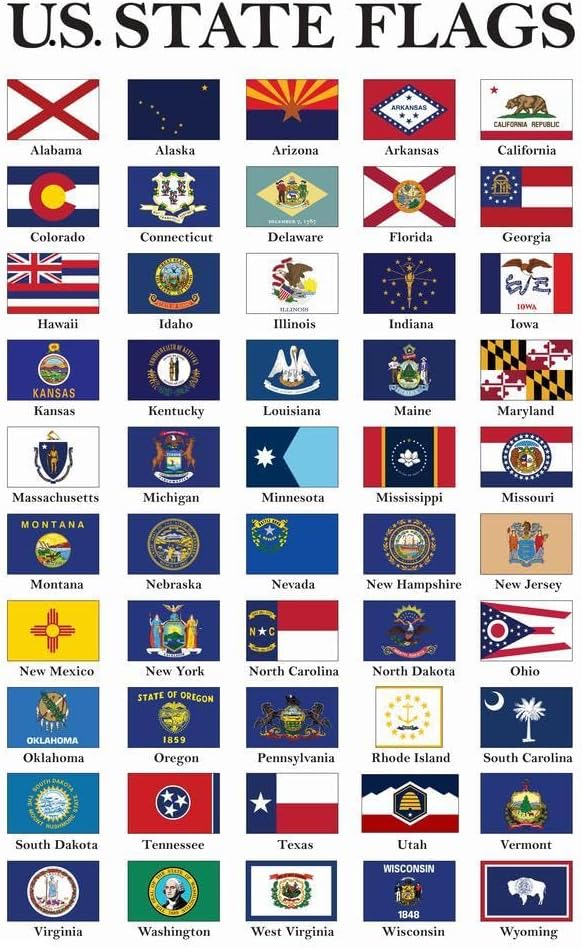
Vexillological Reckoning: How Modern State Redesigns Reshaped the Display
The redesign landed during an unprecedented renaissance in American vexillology. For more than a century, state flag history was notorious for producing what vexillologists dismiss as "seals on bedsheets", intricate, illegible state seals stamped onto solid navy blue fields. When viewed from a distance or hanging limp on an indoor staff, dozens of state flags looked virtually identical.
That uniformity has rapidly dissolved. In 2020, Mississippi retired its Confederate-themed emblem in favor of the magnolia flag. Utah adopted a streamlined design in 2024 featuring a stylized beehive framed by mountain peaks. Minnesota unveiled its minimalist swallowtail-inspired banner the same year, retiring a nineteenth-century seal that had faced decades of criticism. Ongoing legislative debates in Maine and other statehouses continue to push historical pine-tree motifs back into official use.
Because the Truman Building installation demands visual distinction, these modern redesigns radically improve the aesthetic coherence of the corridor. Rather than confronting an impenetrable wall of monochrome blue textiles, visitors encounter distinct graphic emblems: New Mexico’s red Zia sun symbol, Maryland’s striking Calvert and Crossland heraldry, Alaska’s Big Dipper, and Minnesota’s minimalist star.
Diplomatic Reception Rooms and the Mechanics of Soft Power
The physical journey through the Truman Building is deliberately choreographed. Foreign dignitaries do not conduct high-stakes treaty discussions in the lobby. The ground floor exists to establish tone, context, and institutional gravity before guests ascend to the eighth floor, home to the Benjamin Franklin State Dining Room and the Thomas Jefferson Reception Room.
Those upper-floor rooms house one of the world's most significant collections of early American decorative arts, including furniture crafted by Thomas Chippendale and John Townsend. The newly installed state flags on the ground floor function as an thematic overture to that historical collection.
Foreign service officers and protocol specialists acknowledge that visiting delegations frequently look for regional connections. German trade missions identify the flags of Midwest manufacturing states where their automotive conglomerates maintain plants. Latin American dignitaries recognize the emblems of Southwestern states sharing deep cultural and commercial ties across the border. What began as a debate over interior architecture has evolved into a practical icebreaker for diplomatic engagement.
Frequently Asked Questions (FAQ)
What prompted the redesign of the Hall of Flags in the Harry S. Truman Building?
The State Department updated the corridor to project American federalism directly to visiting foreign leaders, while showcasing the diversity of state-level economies and newly modernized official state emblems.
Are foreign national flags still displayed anywhere inside the State Department?
Yes. Foreign flags continue to fly at the exterior diplomatic entrance during bilateral visits, on ceremonial stages inside the Benjamin Franklin State Dining Room, and directly outside conference rooms hosting bilateral and multilateral summits.
How are the flags ordered along the diplomatic corridor?
The display follows strict protocol, arranged chronologically by the date each state ratified the U.S. Constitution or joined the Union, followed by the five permanently inhabited U.S. territories and the District of Columbia.
Did recent state flag redesigns affect the hallway's visual layout?
Yes. Recent changes adopted by states such as Mississippi, Utah, and Minnesota replaced complex seals with bold, minimalist graphics, making individual banners instantly distinguishable on indoor staffs and diplomatic television coverage.
The Evolution of American Diplomatic Architecture
The debate surrounding the Hall of Flags reflects a broader recalculation of how government agencies wield public architecture and civic design. Ceremonial spaces in foreign ministries are never politically neutral; they express an administration's underlying philosophy regarding the nation's standing in global affairs.
By moving the flags of American states into its primary diplomatic thoroughfare, the State Department dismantled a decades-old convention of international visual deference. Visiting envoys traversing Foggy Bottom are met with a pointed visual statement: foreign policy may be negotiated in the capital, but the geopolitical power underwriting those negotiations remains deeply rooted across the American states.