The Hidden Color Craze: Why Peekaboo Blue Hair Is Taking Over Salons Everywhere
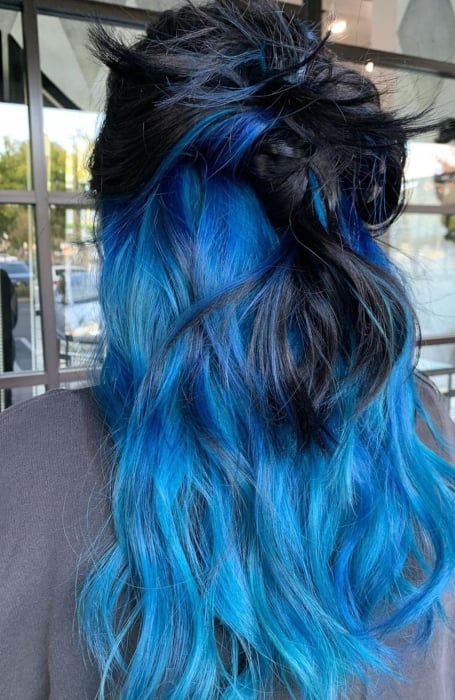
Salons across major metropolitan hubs report an unprecedented spike in requests for concealed fantasy tones, with salon chair bookings for cobalt, denim, and azure tones climbing 38% year-over-year. As highlighted in a recent Byrdie Report tracking the season's defining hair ideas, peekaboo highlights have shifted from a niche subcultural accent into a dominant salon phenomenon. Cultural moments are echoing the shift; style observers noted the peekaboo fashion aesthetic on red carpets and fashion weeks, from Gabrielle Union at the Michael Kors winter show to Sydney Sweeney pairing deep brunette hair with peekaboo reveals.
The hair world took note. Clients no longer want all-over electric shades that demand bi-weekly root bleaching and clash with conservative office standards. The alternative is smarter: an isolated veil of vibrant blue nestled beneath a canopy of espresso, chestnut, or raven locks.
📌 Key Takeaways:
- The Structural Appeal: Underlayer hair color provides complete autonomy, giving wearers an unbothered natural profile when hair falls flat and an electric flash of cobalt when tucked, braided, or caught in the wind.
- Maintenance Economics: Spot-bleaching isolated nape panels cuts chemical surface damage by roughly 60% compared to a full-head transformation, extending salon touch-up intervals from 3 weeks to 10, 12 weeks.
- The Tone Dilemma: Avoiding the dreaded swamp-green fade requires lifting the lightened tier to a clean level 9 or 10 before applying direct pigments or a semi-permanent blue toner.
The Cultural Shift Toward Camouflaged Self-Expression
Modern workplaces continue to relax dress codes, yet unwritten corporate expectations remain real. A full head of neon cerulean still carries corporate friction in legal, financial, and executive settings. Hidden hair dye bypasses that friction entirely.
The architecture is simple. Stylists section off the top crown and parietal ridge, leaving the natural shade untouched to act as a curtain. Beneath that canopy, the occipital bone down to the nape becomes a canvas for vivid saturation. A client can step into a 9:00 AM boardroom meeting looking strictly conventional with smooth, dark tresses. By 7:00 PM, an updo, a high ponytail, or a half-up claw clip exposes a vivid underlayer hair color.
Stylists trace this surge to aesthetic fatigue. High-maintenance balayage and platinum washes drained wallets throughout the early 2020s. Clients now seek visual punch without dedicating four hours every month to chemical upkeep. The two-tone hair trend delivers maximum contrast with minimal systemic stress.
From Royal Blue Underlights to Pastel Washes
Blue is notoriously temperamental on the color wheel. Selecting the correct shade depends almost entirely on the starting base of the top canopy.
For individuals with jet-black or deep espresso hair, dark hair with blue underlayer placements create high-impact tension. In these cases, deep navy blue peekaboo tones and electric royal blue underlights perform exceptionally well. Deep jewel tones do not require the hair to be bleached to stark white. A stylist can lift the underlayer to a warm level 8 (yellow-gold) and deposit a heavily saturated, violet-leaning blue, which cancels out underlying warmth and produces rich midnight hues.
Conversely, pastel blue hair demands extreme chemical precision. Achieving baby blue or powder sky tones requires an immaculate level 10 lift, hair stripped of virtually all yellow undertones. If yellow remains, pastel blue acts like watercolor paint over yellow paper, yielding a dull olive or seafoam tint. Because of this, stylists frequently steer clients with dark natural hair toward jewel-toned royal blue underlights, reserving baby blue for naturally lighter blondes.
The Chemistry of Precision Bleaching for Vivid Pigments
Executing vivid peekaboo blue hair requires a calculated chemical roadmap. Hair bleaching techniques make or break the outcome, particularly along the nape where hair texture is naturally finer and prone to breakage.
Colorists partition the hair cleanly using horizontal or diagonal-forward partings. The upper section is pinned securely out of the blast zone. Lightener is mixed with low-volume developer, typically 15 to 20 volume, to protect structural integrity during slow, controlled lifting. Using 40-volume developer to rush the process blows open the hair cuticle, rendering it unable to hold semi-permanent direct dyes later.
Once lifted, the hair is pre-toned. This is the stage DIY attempts often skip. A neutralizing violet wash cancels pale yellow remnants. After rinsing and rough-drying, direct dyes grab best on dry, clean hair, the direct pigment is saturated into the cortex. Stylists seal the cuticle with an acidic post-color treatment, locking the molecules into place.

Evaluating the Investment: Salon Realities Compared
Before committing to chemical changes, clients must weigh time, initial expense, and repair costs. The hidden two-tone aesthetic offers clear financial and biological benefits compared to traditional full-head bleach sessions.
| Service Profile | Average Initial Cost | Chair Time | Touch-Up Cadence | Relative Damage Surface |
|---|---|---|---|---|
| Full-Head Vivid Blue | $350, $650 | 4, 6 Hours | Every 3, 4 Weeks | 100% of Head |
| Traditional Balayage | $250, $450 | 2.5, 4 Hours | Every 12, 16 Weeks | 40, 60% of Head |
| Peekaboo Blue Underlayer | $160, $320 | 1.5, 2.5 Hours | Every 8, 12 Weeks | 20, 35% of Head |
Because the top layer remains untouched, grow-out lines remain completely hidden. A client can skip root touch-ups for three months without looking unkempt, as the unbleached canopy lays flat over the new root growth.
Stopping the Muddy Green Fade: Science and Maintenance
Direct blue dye sits on the outside of the hair shaft rather than penetrating deep inside with an oxidative developer. That makes it vulnerable to friction, warm water, and surfactant washing.
When blue pigments rinse out, underlying yellow tones re-emerge. Basic color theory explains the consequence: blue plus yellow equals green. Within four weeks, a rich sapphire turns into murky pond water if neglected.
Effective vivid hair dye maintenance relies on three strict protocols:
First, wash hair exclusively in cold or lukewarm water. Warm water opens the hair cuticle, flushing out direct dye molecules in seconds. Cold water keeps the cuticle flat and tight.
Second, swap standard cleansers for a color-safe sulfate-free shampoo. Harsh sulfates strip away the protective lipid layer and dislodge the dye. Limiting washes to once or twice weekly dramatically extends pigment life.
Third, integrate an at-home semi-permanent blue toner or a pigmented blue conditioner into the routine every three weeks. Applying a depositing mask replenishes lost cobalt molecules, preventing the yellow-green shift from surfacing.
Frequently Asked Questions (FAQ)
Q1: Will the blue underlayer bleed into blonde or light brown top layers when washing?
A1: Yes, if washed incorrectly. Blue direct dyes carry large molecules that shed during the first few rinses. Wash the blue underlayer pinned away from light canopy hair, or rinse with cold water while leaning forward so runoff water does not saturate the lighter strands.
Q2: Can I get peekaboo blue hair without bleaching my natural color?
A2: True vivid blue requires lifting the base. On unbleached dark brown hair, blue dye creates only a faint, subtle navy cast visible under direct sunlight. To see discernible color indoors, the underlayer must be lifted to at least a level 8.
Q3: How difficult is it to remove blue pigment if I want to switch colors later?
A3: Blue is notoriously stubborn. Never apply straight bleach over faded blue, as bleach can push green-blue pigments deeper into the cortex. Stylists use clarifying treatments, vitamin C treatments, or direct-dye lifters formulated to break color bonds without driving pigment into the hair structure.
The Architecture of Concealed Color Moving Forward
Hair trends often burn out when daily upkeep overwhelms the consumer. The durability of peekaboo blue hair stems from its practical balance. It sidesteps the high-maintenance fatigue of total hair transformation while letting wearers retain a vibrant creative identity.
By confining chemical lifting to the lower sections, salon clients shield their natural hair texture, keep styling options adaptable, and protect their professional mobility. Peekaboo blue demonstrates that impactful personal expression does not require complete aesthetic surrender. Often, the most memorable style statements are the ones revealed on your own terms.