The Meowbahh Technoblade Controversy Explained: Who Is Meowbahh and Why Does the Internet Care?
On July 1, 2022, the online gaming community was devastated by the death of Alexander, known globally to millions of Minecraft fans as Technoblade, who succumbed to stage four sarcoma at age 23. Tributes flooded YouTube, Twitter, and Reddit, uniting rival factions across gaming subcultures in collective mourning. Within hours, an anonymous TikTok avatar named Meowbahh breached that shared grief, publishing deliberately provocative posts and unauthorized visual edits mocking the creator’s death. The resulting firestorm crossed every corner of gaming culture, exposing how platform algorithms reward weaponized insensitivity.
The incident was not an isolated behavioral lapse. It was a calculated execution of shock-driven audience capture. By leveraging crude artistic edits, synthesized high-pitch voice modulations, and hyper-offensive commentary, the Meowbahh account turned grief into a metric-generating machine. Millions of views piled up as angry viewers took the bait, turning what should have been a temporary online provocation into a case study of performative internet harassment.
📌 Quick Summary:
- The Incident: In July 2022, ragebait PNGTuber Meowbahh published derogatory comments and crudely altered art targeting recently deceased creator Technoblade.
- The Mechanism: The account engineered outrage by violating baseline community decencies to force engagement out of the Dream SMP and Minecraft fandoms.
- The Aftermath: Widespread deplatforming, account suspensions, and commentary videos exposed how short-form video algorithms incentivize cruelty for view counts.
Who Was Meowbahh and How Did the PNGTuber Persona Form?
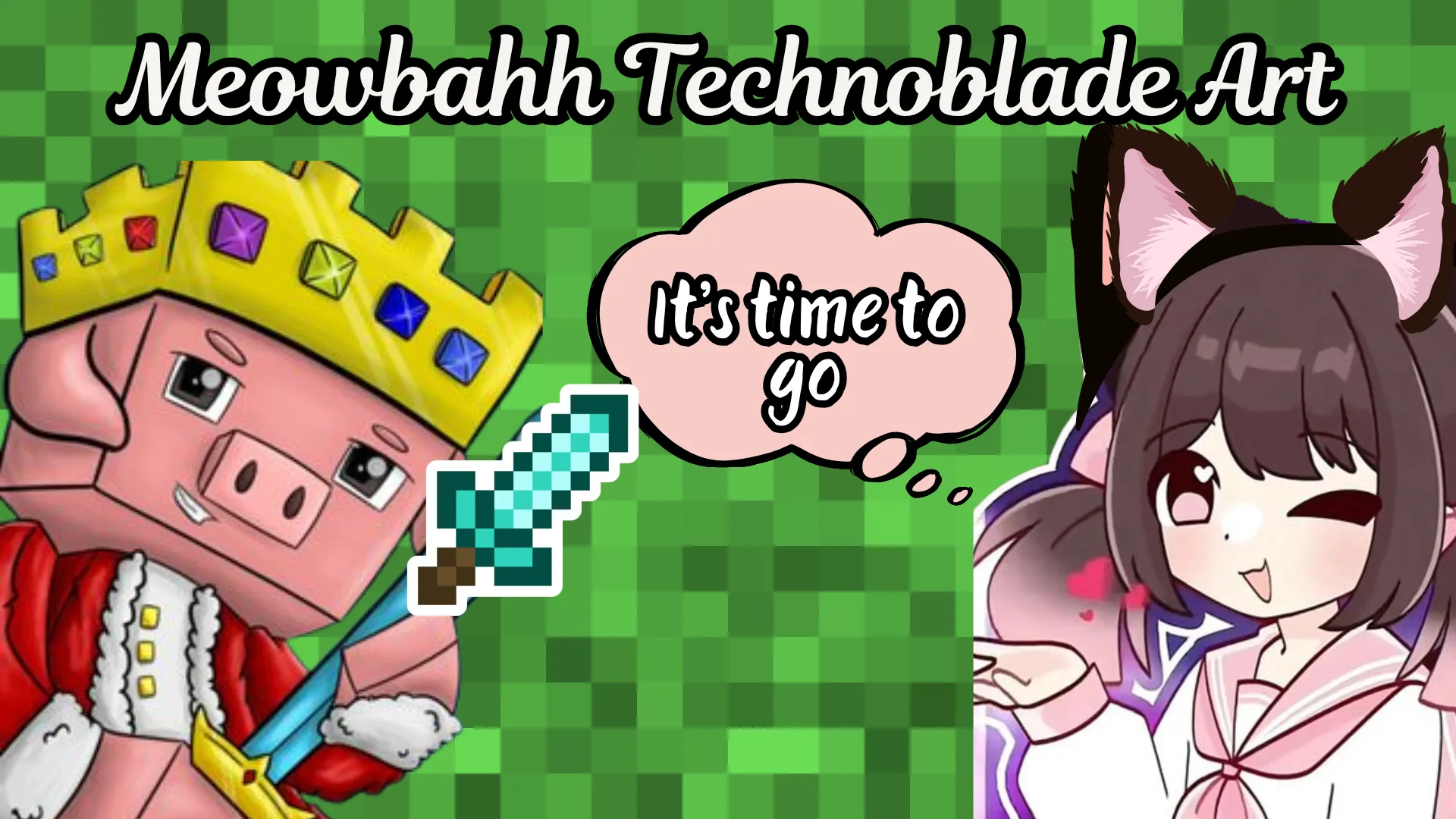
The PNGTuber movement surged across TikTok and YouTube between 2021 and 2022. Unlike full 3D VTubers who rely on complex motion-capture software, PNGTubers use simple two-dimensional sprite drawings that toggle between open and closed mouth states when speaking. Into this niche stepped Meowbahh, an account that debuted in early 2022 featuring a static, pastel-toned anime avatar with purple hair, cat ears, and a hyper-distorted, pitch-shifted voice.
The account quickly veered away from harmless gaming clips. Meowbahh adopted an overtly abrasive personality, declaring superiority over other creators, using slurs, and insulting popular fanbases. The character was designed to provoke anger. Every design choice, from the grating auditory filters to the arrogant persona, pushed viewers toward the comment section to leave furious replies.
By March 2022, Meowbahh had already drawn sharp rebukes from the broader VTuber community, which warned that the account was an intentional troll caricature created to discredit the scene. Viewers frequently debated whether the creator behind the avatar was a young teenager acting out or an experienced adult troll exploiting algorithmic blind spots. Regardless of who operated the account, the strategy succeeded in commanding attention. The channel accumulated hundreds of thousands of followers on TikTok and YouTube purely off algorithmic outrage.
The Mockery of Technoblade and the Disrespectful Fanart Fallout
When Technoblade's father published the farewell video "so long nerds" on June 30, 2022, read-outs of his final message broke global engagement records on YouTube, raising over $500,000 for the Sarcoma Foundation of America within days. The entire gaming world paused to pay respects.
Meowbahh took the opposite path.
On July 1, 2022, posts appeared across Meowbahh-affiliated accounts dismissing the significance of the creator's passing. The troll account claimed Technoblade deserved his fate and asserted that Meowbahh’s content held more cultural value than Technoblade’s entire YouTube legacy. The provocation escalated when the account shared altered fan illustrations of Technoblade. The original tribute art, created by community artists to honor Alexander’s iconic Minecraft avatar (an anthropomorphic pig wearing royal robes and a crown), was defaced with scribbled insults, clown motifs, and degrading captions.
The impact hit the Dream SMP fandom instantly. Reddit forums, Discord servers, and Twitter feeds erupted with demands for platform moderation. Community artists whose work had been appropriated and defaced without permission mobilized mass-reporting efforts. The offensive posts were not an artistic statement; they were calculated digital vandalism aimed straight at a mourning community.
How Algorithmic Outrage Turned Mockery into Millions of Views
Online platforms run on attention, and algorithms rarely differentiate between applause and fury. When users mass-commented "Report this account" or made video responses condemning the posts, TikTok and YouTube systems simply registered massive user retention. Every quote-tweet, stitch, and reaction amplified the very account users wanted eradicated.
The dynamic created a parasitic cycle between the troll and the commentary ecosystem:
| Phase | Troll Action | Community & Platform Reaction |
|---|---|---|
| Initial Provocation (July 1, 2, 2022) | Uploaded mocking videos and defaced memorial art of Technoblade. | Instant fury; thousands of quote retweets and TikTok stitches urging mass blocks. |
| Amplification Loop (July 3, 10, 2022) | Created backup handles and doubled down on inflammatory statements. | Dozens of commentary YouTubers published breakdowns, racking up 1M, 5M views each. |
| Deplatforming Wave (Mid-July 2022) | Attempted migrations to Discord servers, secondary TikToks, and Twitter alts. | TikTok and Twitter permanently banned primary accounts for violating harassment policies. |
| Aftermath & Repercussions (Late 2022, 2026) | Clone accounts emerged; original creator faded into internet obscurity. | Community developed tighter guidelines to starve ragebait personas of engagement. |
Dozens of prominent YouTube commentary channels produced deep dives on the incident. While these creators aimed to criticize the behavior, their coverage generated millions of aggregate impressions. They inadvertently kept the Meowbahh moniker trending for weeks, exposing the central dilemma of internet outrage: exposing a bad actor often feeds them the exact visibility they crave.

The Backlash, Account Terminations, and Moderation Battles
The public response to Meowbahh’s posts crossed from general annoyance into unified action. The Dream SMP fandom, often fractured by internal rivalries, aligned with the wider gaming sphere. Users launched coordinated reporting campaigns, bypassing platform reporting menus to directly contact platform trust-and-safety liaisons.
Within two weeks of the July incidents, TikTok terminated the primary Meowbahh accounts for violating hateful behavior policies. Twitter followed by banning connected alternate handles that tried to evade the initial block. Discord trust teams intervened as well, shuttering community servers that Meowbahh affiliates used to coordinate troll raids.
Attempts to evade these bans fizzled out. Copycat accounts emerged to chase the same engagement spikes, but audiences grew wiser to the tactic. Deprived of the primary TikTok reach engine, the persona lost its audience base. The deplatforming showed that while algorithms struggle to detect nuance, direct violations of hate and harassment policies eventually trigger manual intervention when communities organize their response.
Ragebait Culture: Why Disrespecting Deceased Figures Remains a Troll Strategy
The Meowbahh episode belongs to an ugly lineage of grief-trolling that stretches back to early internet forums. Long before TikTok, trolls raided Facebook memorial pages and created offensive parodies of real-world tragedies on websites like Encyclopedia Dramatica. The underlying psychology has not changed, but the distribution channels have.
In modern creator economies, visibility is the primary currency. A standard content creator spends hundreds of hours learning editing software, voice production, and storytelling to slowly build an audience. A ragebaiter cuts that path down to ten seconds using cheap shock tactics:
- Low Production Cost: A simple PNG sprite paired with an automated text-to-speech filter bypasses the need for high-end animation equipment.
- Guaranteed Reaction: Attacking a beloved, universally respected figure like Technoblade triggers an immediate defense response from loyal fans.
- Engagement Asymmetry: A troll needs only seconds to deface art, while the community spends days making response videos, writing threads, and coordinating moderation requests.
This asymmetry explains why griefing persists across social platforms. By crossing cultural boundaries that normal creators respect, troll personas exploit a structural loophole: outrage travels faster than genuine appreciation.
Frequently Asked Questions (FAQ)
Q1: Was Meowbahh ever confirmed to be a single individual or a trolling group?
A: Digital forensic channels and community investigations suggest the Meowbahh accounts were operated by an individual working alongside a loose network of troll Discord servers. The persona changed ownership claims several times, a common obfuscation tactic used by grief-trollers to avoid individual accountability.
Q2: Did the original artists take legal action over their defaced Technoblade art?
A: No formal legal suits were filed due to the prohibitive costs of international copyright litigation over web fanart. Instead, affected illustrators leveraged DMCA copyright takedown requests on YouTube and Twitter, which expedited the removal of the infringing posts and hastened the termination of the accounts.
Q3: How did Technoblade's family respond to the online trolling?
A: Technoblade's family, through Alexander's father (known online as "Technodad"), consciously chose not to acknowledge troll personas like Meowbahh. Instead, they directed all public attention toward charity fundraisers for the Sarcoma Foundation of America and positive community memorials through the One of Us Global Foundation.
Q4: Why did TikTok take longer to ban the accounts than Twitter?
A: TikTok relies heavily on automated text and audio moderation systems that often struggle to parse subtle offensive speech delivered through pitch-shifted vocal filters. It was only after manual reviews from trust-and-safety personnel following coordinated user reports that the platform issued permanent device-level bans.
Lessons in Digital Hygiene and Combating Online Griefing
The controversy around Meowbahh and Technoblade exposed the vulnerabilities of an algorithm that treats human indignation as commercial fuel. Millions of internet users felt real pain at the loss of an inspiring gaming icon, and bad actors turned that pain into a blunt instrument for view counts.
Online gaming communities learned a harsh lesson in digital hygiene from the episode. The impulse to defend an admired creator is understandable, but public outrage is the exact lifeblood that ragebaiters need to survive. The most effective countermeasure remains the quietest one: starve the account of quote-retweets, deny it stitches, execute swift copyright claims on defaced art, and block the persona without giving it an audience.
When platforms design algorithms around sheer engagement, silence and direct moderation are the only weapons that truly work.