The Secret to State Fair Fried Oreos at Home (Without the Greasy Mess)
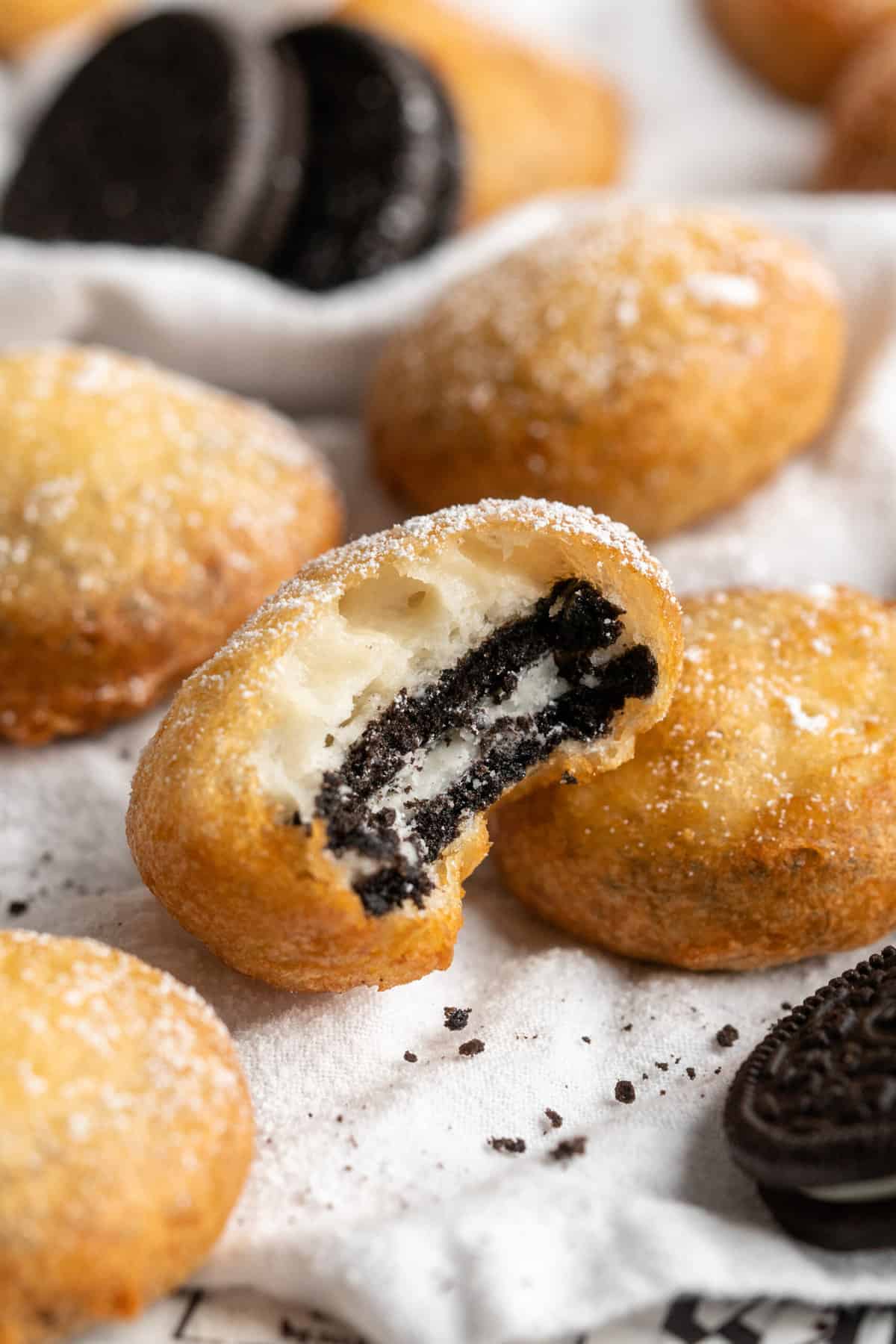
State fair carnival food carries an intoxicating sensory blueprint: paper trays coated in white sugar clouds, the hiss of industrial vats, and fried chocolate treats handed across stainless counters. For decades, the fried Oreo has served as the undisputed champion of the carnival midway. Yet home cooks attempting to recreate the magic routinely produce soggy, grease-logged dough pockets wrapped around disintegrated, watery cream. The culinary shortcuts popularized online often fare even worse; as chronicled in an unforgiving Mashable Report on viral TikTok recipes, air-frying wet batter creates a dry, unappetizing mess that fails to replicate the pillowy luxury of the original.
Engineering the genuine article requires thermal control and an understanding of starch gelatinization. Recreating carnival-quality results in an everyday kitchen does not demand commercial fryers or exotic additives. It comes down to thermal prep, precise dough viscosity, and strict oil management.
💡 Quick Summary:
- The Critical Prep Step: Freezing chocolate sandwich cookies for 45 to 60 minutes prevents the inner creme layer from liquefying before the outer crust sets.
- Thermal Precision: Maintaining a deep frying oil temperature strictly between 365°F and 375°F prevents greasy seepage and builds an immediate steam barrier.
- Batter Dynamics: A dense, lightly sweetened pancake batter mix yields a delicate funnel-cake casing far superior to flimsy biscuit dough or dry air-fryer substitutes.
The Thermal Physics Behind Freezing Chocolate Sandwich Cookies
Home attempts at deep frying store-bought cookies usually fail at the center. The industrial creme inside standard chocolate sandwich cookies consists primarily of sugar, vegetable oil, and high-fructose corn syrup. When subjected to temperatures exceeding 350°F without thermal shielding, that fat emulsion collapses within 30 seconds. The wafer softens into an oily sludge, and the filling bleeds out into the oil.
Solving this failure point relies on a cold-storage preparation method. As culinary outlet Mashed documented when dissecting commercial fair methods, chilling cookies in the freezer before submerging them in hot fat creates the thermal barrier needed for consistent structure. A freezing time of 45 to 60 minutes lowers the cookie's core temperature below freezing without forming internal ice crystals. When dropped into the hot oil, the batter cooks and inflates while the interior cookie merely warms to a tender, cake-like softness. The creme stays intact, turning velvety rather than liquid.
Mastering the Batter: Viscosity and Mix Ratios
The golden exterior of a classic fried Oreo is fundamentally funnel cake batter. Commercial concessionaires rarely mix scratch doughs while managing long lines; instead, they rely on fortified pancake batter mix. Complete pancake mixes contain engineered proportions of flour, leavening agents (such as monocalcium phosphate and sodium bicarbonate), and dry dairy solids that puff rapidly when hitting hot fat.
Consistency determines success. Pourable breakfast batter is too thin; it sheets off the cookie, exposing bare chocolate wafer edges that scorch in the oil. The coating must mimic heavy cream or thick wall paint.
To achieve this texture at home, combine 1 cup of pancake mix, 1 large egg, half a cup of whole milk, and 1 tablespoon of melted butter or canola oil. Whisking just until combined leaves small lumps that expand during frying, generating an airy, tender crumb. Letting the batter rest for 10 minutes at room temperature allows the starches to hydrate, ensuring the batter adheres cleanly to the frozen cookie exterior.
Cooking Methods Compared: Oil Fryer vs. Air Circulation
Online food trends routinely push countertop convection ovens as universal replacements for oil frying. When working with wet, leavened batters, however, physics dictates vastly different outcomes. The table below outlines how common home cooking methods compare when preparing battered cookies.
| Method | Texture Profile | Structural Integrity | Coating Performance |
|---|---|---|---|
| Deep Frying (Peanut/Canola) | Crisp outer shell; pillowy, funnel cake interior | High; creme softens without weeping | Optimal; immediate steam barrier prevents oil seepage |
| Crescent Roll Pan-Fry | Flaky, pastry-like crust; denser chew | Moderate; seam leakage risk | Reliable; dry dough requires no oil submersion |
| Air Fryer (Wet Batter) | Chewy, dry crust; unevenly cooked batter | Poor; batter drips through basket grates | Incompatible; convection airflow cannot set wet liquid batter |
| Air Fryer (Crescent Dough) | Toasted hand-pie texture; lacks carnival flavor | High; dough contains the cookie completely | Functional; resembles baked turnover rather than fried dough |
Liquid batter requires an instant thermal shock that only hot oil can deliver. When wet batter hits oil heated to 370°F, moisture in the coating flashes into outward-moving steam. This positive vapor pressure physically repels the oil while the exterior starches crisp. In an air fryer, convection winds blow the batter downward through the basket holes before it sets, resulting in a rubbery puddle.

The Crescent Roll Dough Method: The Low-Mess Alternative
Cooks looking to bypass deep pots of oil often favor the crescent roll dough method. This technique swaps out wet pancake batter for pre-packaged, refrigerated laminated dough. While it produces a different texture than a carnival treat, it offers a reliable, low-mess alternative for weeknight baking.
To use this approach, unroll a sheet of chilled crescent dough and pinch the perforations closed. Cut the dough into equal squares, place an unfrozen cookie in the center of each, and fold the dough edges over the cookie, pinching every seam shut. Place the wrapped dough in an air fryer basket lined with parchment paper at 350°F for 5 to 7 minutes, flipping once. The result resembles a chocolate-stuffed croissant turnover. It satisfies late-night sugar cravings, even if it lacks the signature crunch of a fried treat.
Execution and the Slotted Spoon Technique
For cooks aiming for genuine carnival quality, standard deep frying remains the gold standard. Achieving a crispy golden crust without excess grease requires strict attention to equipment and timing.
Begin by selecting a neutral cooking medium with a high smoke point. Canola or peanut oil works best; peanut oil offers higher thermal stability, while canola delivers an entirely neutral profile. Fill a heavy Dutch oven with 2 to 3 inches of oil. Never guess the temperature: clip a digital probe or candy thermometer to the side of the pot and heat the oil to exactly 365°F to 375°F.
Retrieve the frozen cookies from the freezer four at a time to prevent premature thawing. Submerge each cookie in the batter until coated. Using a fork or a designated slotted spoon technique, lift the cookie and hold it above the bowl for 3 seconds to allow the excess batter to sheet off.
Gently lower the battered cookie into the hot oil, moving the spoon away from you to prevent hot oil splatters. Fry no more than 3 or 4 cookies simultaneously. Overcrowding drops the oil temperature below 340°F, causing the crust to absorb grease instead of crisping. Fry for 60 to 90 seconds, flip using metal tongs, and cook the reverse side for another 45 to 60 seconds until uniformly golden brown.
Post-cook handling matters just as much as frying time. Never transfer fried Oreos directly to paper towels. Trapping hot fried food against flat paper creates steam, which softens the bottom crust into a greasy sponge. Instead, facilitate excess grease drainage by resting the finished cookies on a stainless steel wire rack set inside a rimmed baking sheet for 2 minutes. Finish with a heavy powdered sugar topping sifted through a fine-mesh strainer while the exterior remains hot enough for the sugar to adhere.
Frequently Asked Questions (FAQ)
Q1: Why did my fried Oreos turn out heavy and greasy?
A1: Grease saturation happens when the frying oil temperature drops below 350°F. When the oil is not hot enough, it fails to produce the rapid steam pressure needed to seal the outer batter, allowing oil to seep directly into the cookie. Keep a thermometer in the pot and let the oil return to 370°F between batches.
Q2: Can I use Double Stuf or flavored varieties?
A2: Double Stuf cookies work well, though they require a full 60 minutes of freezing to ensure the thicker creme center remains solid during frying. Mega Stuf cookies contain too much fat, which frequently ruptures the batter wall during cooking.
Q3: How long do homemade fried Oreos stay crispy?
A3: They are best enjoyed within 15 to 20 minutes of frying. If you need to keep a large batch warm for serving, place the fried cookies on a wire rack in an oven set to 200°F for up to 30 minutes. Reheating them in a microwave will soften the crust, though 2 minutes in an air fryer at 350°F can revive day-old leftovers.
Bringing the Fair Home
Making carnival food in a home kitchen is all about precise temperature control. By using the freezing hack to protect the cookie's structure, mixing pancake batter to the right viscosity, and keeping the frying oil between 365°F and 375°F, home cooks can recreate this boardwalk classic with ease.
Once you dial in the oil temperature and master the slotted spoon drop, you can produce golden, funnel-cake-wrapped Oreos in under ten minutes. Finish with a generous dusting of powdered sugar, serve them hot, and enjoy an authentic taste of the county fair right from your stove.