The Ultimate Filipino Porridge Guide: Authentic Arroz Caldo and Lugaw Recipes Made Simple
The Ultimate Filipino Porridge Guide: Authentic Arroz Caldo and Lugaw Recipes Made Simple
The global culinary spotlight shifted decisively toward Southeast Asian comfort food after culinary guide TasteAtlas updated its international rankings, highlighting traditional Filipino rice porridges among the finest globally. As detailed in the GMA News Online Report, TasteAtlas named arroz caldo, lugaw, and champorado among the top 100 porridges in the world, joining international icons like Cantonese jook and Vietnamese cháo. International home cooks and seasoned diaspora chefs alike are rediscovering these humble street-corner staples, seeking the exact formulas that transform modest grains into deeply restorative meals.
Understanding these dishes requires stripping away culinary ambiguity. Across thousands of carinderias in Manila and provincial markets in Luzon, pots bubble continuously with rich, aromatic grain broths. Yet many home cooks outside the archipelago still confuse a bare-bones rice porridge with its luxurious, chicken-infused sibling. Mastering this cuisine means mastering both foundational simplicity and bold regional variations.
📌 Key Takeaways:
- Culinary Lineage: Lugaw represents the foundational ginger infused congee, while arroz caldo is its Spanish-influenced, chicken-heavy evolution tinted with native safflower.
- The Grain Architecture: A specific 1:1 or 2:1 ratio of long-grain white rice to glutinous rice provides the velvety thickness without turning the pot gummy.
- Aromatics and Finish: Deep-fried garlic, sharp calamansi juice, fish sauce patis, and kasubha safflower provide the non-negotiable contrasts that define authentic Filipino comfort food.
The Cultural Rise of Filipino Comfort Food Across Global Kitchens
Rice is identity across the Philippine archipelago. When Chinese traders brought congee traditions across maritime routes centuries ago, local cooks adapted the technique to fit domestic harvests and native aromatics. The result was lugaw, a plain rice gruel boiled with generous knobs of crushed ginger, garlic, and sea salt. It was cheap, digestible, and practical for feeding large households during rainy seasons or bouts of illness.
During the Spanish colonial period, the basic street bowl took an opulent turn. Colonial households and local cooks incorporated bone-in chicken cuts, steeped native safflower threads for color, and christened the variation arroz caldo, translating directly to "warm rice." Street vendors eventually took the broth further, introducing traditional goto, which swaps chicken for tender beef tripe and offal stewed down for hours.
The recent international attention from culinary databases like the TasteAtlas best porridges showcase confirms what roadside stall operators have known for generations. These bowls are sophisticated balance acts of starch breakdown, pungent aromatics, and bright acid finishes that rival any classic French reduction or East Asian broth.
Deconstructing Lugaw vs Arroz Caldo: Fundamental Differences
The debate surrounding lugaw vs arroz caldo usually stems from casual restaurant menu labeling, but the technical distinctions are pronounced. At its core, lugaw is an umbrella term and a minimalist canvas. It often relies on clean water or a light pork broth, letting smashed ginger take center stage. Cooks view basic lugaw as a vehicle meant to be fortified at the table with fried tokwa (firm tofu), sliced boiled eggs, and fermented condiments.
Arroz caldo, conversely, is an autonomous, standalone dish built on chicken fat, bone-in poultry pieces, and fragrant aromatics browned right in the cooking pot before any liquid enters. The broth cannot be an afterthought; it requires intense chicken collagen to coat the palate.
| Dish Style | Primary Protein Base | Key Flavoring & Color | Traditional Context |
|---|---|---|---|
| Plain Lugaw | None (or light pork bone base) | White hue; intense smashed fresh ginger, garlic, salt | Convalescent food, breakfast baseline, light supper |
| Arroz Caldo | Bone-in chicken thighs or drumsticks | Golden-yellow; kasubha safflower, fish sauce patis | Rainy day centerpiece, festive merienda snack |
| Traditional Goto | Beef tripe, honeycomb offal, intestine | Golden to neutral; deep beef stock, ginger, toasted garlic | Late-night street food, recovery meal, carinderia staple |
A third player, traditional goto, splits the difference by borrowing the rich golden hue of arroz caldo while spotlighting chewy, gelatinous tripe. To mistake one for the other in an authentic Manila neighborhood is to ignore generations of hyper-local culinary evolution.
Pantry Foundations: Grains, Kasubha, and Aromatics
Replicating an authentic pot at home begins with selecting the proper starches. Using purely regular long-grain white rice yields a watery porridge where liquid separates from grain upon resting. Conversely, using 100% glutinous rice (malagkit) produces a sticky paste closer to rice pudding than soup. The sweet spot lies in blending equal parts jasmine rice and glutinous rice. The jasmine lends floral perfume and grain definition, while the glutinous grains burst during the simmer, releasing amylopectin starches that give the pot its signature gloss.
Aromatics must be handled without timidity. Filipino porridges demand aggressive amounts of fresh ginger peeled and sliced into thick matchsticks or crushed whole. Sautéing ginger in neutral oil or rendered chicken skin alongside minced yellow onions and crushed garlic cloves lays down the aromatic foundation.
Next comes the visual calling card of genuine arroz caldo: kasubha safflower. While frequently mislabeled as saffron, kasubha comes from dried safflower petals (Carthamus tinctorius). It does not impart the medicinal, earthy aroma of true Spanish saffron, but it delivers an electric golden-orange hue that stains the rice grains as they swell. A healthy splash of fermented fish sauce patis seasons the pot, offering deep umami notes that table salt simply cannot match.
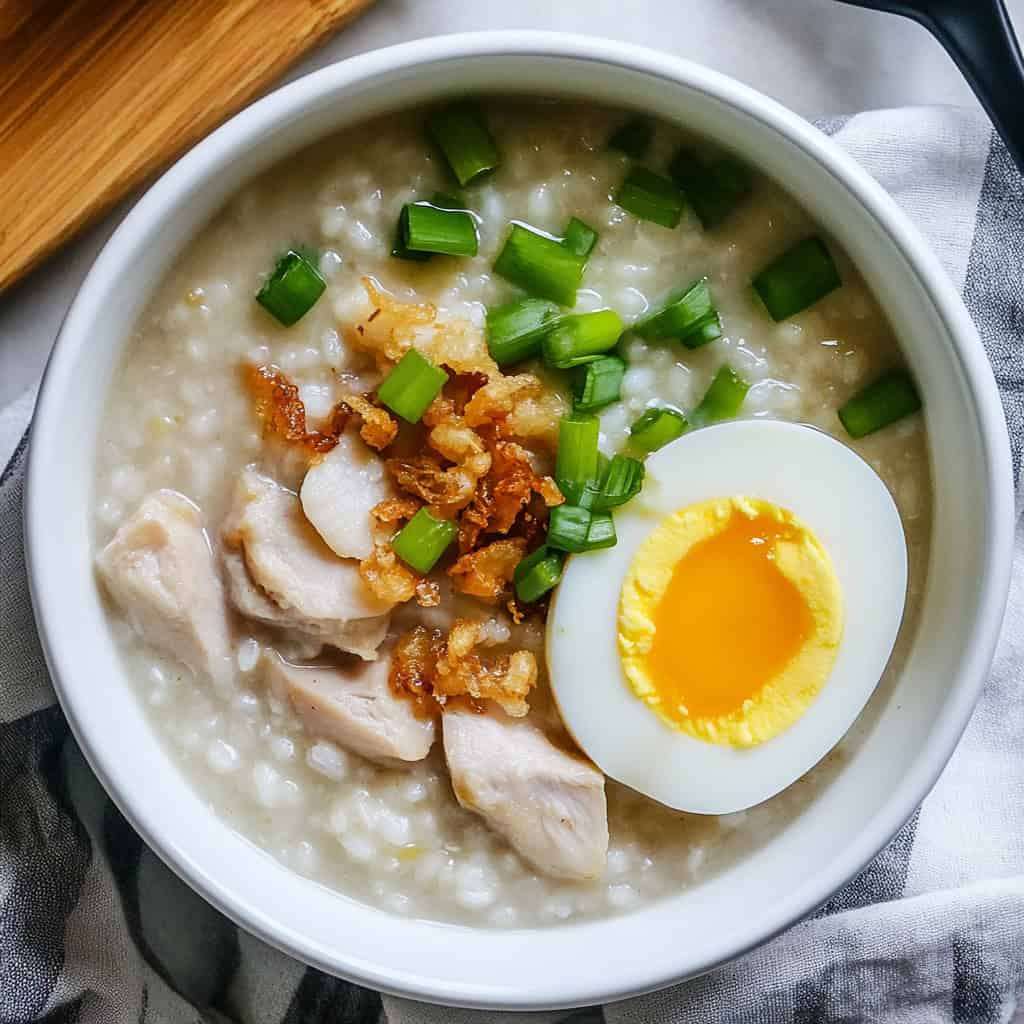
The Master Formula: Step-by-Step Authentic Arroz Caldo
This method yields approximately 4 to 6 hearty servings, balancing rich poultry fat with bright, aromatic aromatics.
Ingredients
- 1.5 lbs (700g) bone-in, skin-on chicken thighs, chopped into bite-sized pieces
- 1/2 cup regular jasmine rice, rinsed
- 1/2 cup glutinous rice (*malagkit*), rinsed
- 6 to 7 cups rich homemade chicken stock or water
- 2 tbsp neutral cooking oil
- 1 whole large yellow onion, finely diced
- 2 to 3 inches fresh ginger root, peeled and cut into thin matchsticks
- 8 cloves fresh garlic, divided (4 minced for the base, 4 thinly sliced for frying)
- 2 tbsp quality fish sauce patis, plus extra for seasoning
- 1 tsp kasubha safflower threads
- 1/4 tsp freshly cracked black pepper
Cooking Method
- Fry the Garlic Topping: In a wide, heavy-bottomed Dutch oven, heat two tablespoons of oil over medium-low heat. Add the four thinly sliced garlic cloves. Cook slowly, stirring constantly, until evenly crisp and golden-brown. Remove immediately with a slotted spoon and drain on paper towels. Reserve the garlic-infused oil in the pot.
- Brown the Aromatics and Poultry: Increase heat to medium. Add the diced onion, minced garlic, and ginger matchsticks to the residual garlic oil. Sauté for 3 to 4 minutes until softened and fragrant. Toss in the chicken pieces. Sear the meat until the exterior turns white and begins rendering fat, roughly 5 to 6 minutes.
- Toast the Grains: Pour the drained jasmine and glutinous rice directly into the pot with the chicken. Stir continuously for 2 minutes, allowing the raw grains to absorb the hot chicken fat and aromatics.
- Deglaze and Simmer: Pour in the fish sauce patis, letting it bubble fiercely against the bottom of the pot for 30 seconds. Pour in 6 cups of chicken stock. Bring the mixture to a rolling boil over high heat, skimming off any gray scum that floats to the surface.
- Emulsify: Reduce heat to low, cover partially, and let simmer for 30 to 35 minutes. Stir every 7 to 8 minutes to prevent the glutinous rice from scorching at the bottom. The grains should break down, thickening the broth into a rich, silky porridge. If the mixture turns too thick, stir in the remaining cup of stock.
- Color and Season: During the final 5 minutes of cooking, stir in the kasubha safflower threads and cracked black pepper. The entire pot will transition into a warm, sunset-gold color. Taste and adjust seasoning with a dash more patis if required.
Building the Street-Style Garnish Bar
In Philippine markets, a bowl pulled straight from the stove is only half-finished. The true character of the dish emerges through table-side customizations. A successful porridge setup requires textures that disrupt the soft, velvety starch:
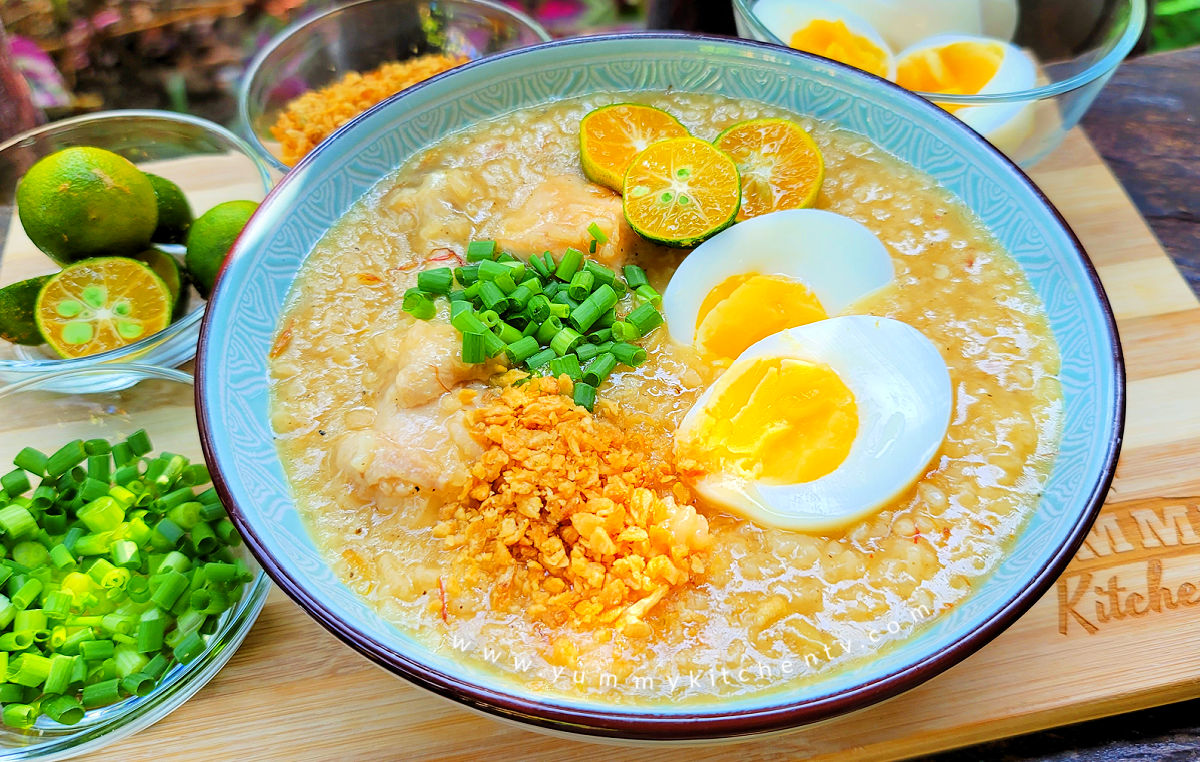
- Fried Garlic Topping: Generous mounds of crispy, slightly bitter browned garlic provide essential crunch against the soft rice.
- Acidic Brightness: Cut fresh **calamansi juice** wedges to squeeze directly over the hot steam. The sharp, citrus-mandarin hybrid cuts through heavy chicken broth far more effectively than standard lemon juice. Fresh calamansi is ideal, but fresh lime wedges work as a dependable substitute.
- Hard-Boiled Egg Garnish: A halved medium-boiled egg with a creamy yolk enriches the porridge, floating atop the golden surface alongside finely snipped fresh scallions.
- Heat and Salt: Provide small dipping saucers containing raw fish sauce patis mixed with crushed red bird's eye chilies (*siling labuyo*) for individuals demanding higher salinity and capsaicin.
Preserving Texture: Reheating and Batch Storage
Cooking rice porridge in bulk introduces a distinct food science challenge: starch retrogradation. As leftover arroz caldo or lugaw cools in the refrigerator, amylose and amylopectin molecules recrystallize, turning a velvety soup into a solid, congealed mass within 12 hours.
To store properly, transfer cooled porridge to airtight glass containers and refrigerate for up to 4 days. When reheating on the stove, never warm it without adding extra liquid. Place the congealed rice over medium-low heat and whisk in 1/4 cup of boiling water or chicken stock per cup of porridge.
Stir gently but continuously as the heat breaks down the gelled starches, returning the meal to its original, supple state. Avoid reheating fried garlic toppings inside the porridge; store the crispy garlic in a dry pantry container at room temperature to preserve its distinct crunch.
Frequently Asked Questions (FAQ)
Q1: Can I make authentic arroz caldo without glutinous rice?
Yes. While an equal mix of jasmine and glutinous rice provides the classic thick body, you can prepare the dish using 100% jasmine or short-grain sushi rice. Simmer the jasmine rice slightly longer and crush a portion of the grains against the side of the pot using a wooden spoon to release additional starches into the broth.
Q2: Is Spanish saffron an acceptable replacement for kasubha safflower?
It works, but sparingly. Kasubha contributes vibrant color with almost no discernible flavor, whereas authentic saffron imparts an intense, bittersweet, floral earthiness. If substituting real saffron, use only a tiny pinch (3 to 4 threads) to prevent the spice from overpowering the delicate chicken and ginger base.
Q3: How do I prevent the rice from burning at the bottom of the pot?
Use a heavy-bottomed enameled cast iron Dutch oven or thick stainless steel stockpot. Once the rice begins to swell around the 15-minute mark, reduce the stovetop flame to low and scrape the base of the pot thoroughly every few minutes with a flat wooden spatula.
Mastering the Craft in Modern Kitchens
The sustained global popularity of Filipino rice porridge highlights a timeless kitchen truth: real comfort food relies on technique over luxury. By honoring the aromatic base of garlic and ginger, understanding how starches bind a broth, and crowning the dish with acidic and crunchy garnishes, anyone can recreate the warmth of a Manila carinderia on their own stove. Pull down a heavy pot, brown your chicken until golden, and let the rice simmer until every spoonful delivers pure restoration.