Then and Now: Transformations of the LazyTown Cast Decades After the Hit Show
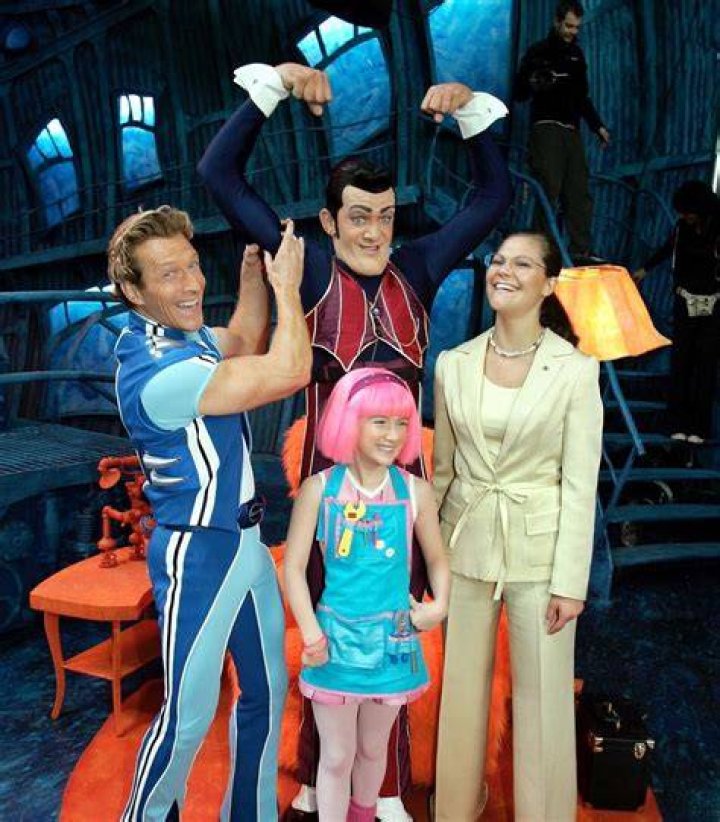
When an energetic, blue-suited superhero backflipped onto global television screens in 2004, nobody anticipated that a children's physical fitness show produced in Garðabær, Iceland, would evolve into a multi-million-dollar broadcast empire and an enduring internet phenomenon. Filmed in an advanced digital studio that blended live human athleticism with intricate puppetry, the production broke every established template for preschool programming. Over two decades after its premiere, the actors of LazyTown have charted wildly different journeys, marked by international entrepreneurship, quiet transitions to clinical careers, tragic health battles, and persistent campaign efforts for a modern screen revival.
The public trajectory of the cast shifted decisively across the late 2010s and early 2020s. While creator and lead athlete Magnús Scheving stepped back from active production to operate hospitality and wellness ventures, co-star Stefán Karl Stefánsson became an icon of web culture before his untimely death from bile duct cancer in August 2018, as confirmed in an official BBC Report. Decades after the broadcast cameras stopped rolling in Iceland, interest in the show’s legacy remains intense, driven by streaming audiences and renewed conversations regarding childhood health.
📌 Quick Summary:
- The Visionary: Series architect Magnús Scheving (Sportacus) sold the franchise to Turner Broadcasting, entered the high-end culinary industry, and in 2024 launched concrete plans for a prospective show reboot.
- A Lasting Tribute: Villain actor Stefán Karl Stefánsson (Robbie Rotten) mobilized global digital communities during his health crisis before passing away in August 2018 at age 43.
- New Life Paths: Original Stephanie actor Julianna Rose Mauriello left public acting for professional healthcare, while her successor Chloe Lang pivoted into music and commercial media production.
Magnús Scheving: From Aerobic Champion to International Media Mogul
Before conceiving the concept of an acrobatic hero who eats "SportsCandy" (fruit and vegetables), Magnús Scheving was already a two-time European Champion in aerobic gymnastics. Frustrated by the absence of media encouraging physical activity among children, he drafted an original Icelandic book series titled Áfram Latibær! (Go LazyTown!) during the 1990s. That small print concept eventually scaled into a broadcast production budgeted at an unprecedented $1 million per episode during its early seasons.
Scheving played Sportacus (originally named Íþróttaálfurinn, or the Athletic Elf) until production wrapped in 2014. Rather than seeking out Hollywood casting calls, he focused on executive enterprise. In 2011, Turner Broadcasting (later WarnerMedia) acquired LazyTown Entertainment in a deal estimated at roughly $20 million, keeping Scheving on as CEO through the production of Seasons 3 and 4.
After stepping down from the character’s trademark blue costume, Scheving shifted focus toward physical brick-and-mortar investments in Reykjavík. Alongside his wife, Hrefna Björk Sverrisdóttir, he established ROK, an acclaimed upscale Nordic restaurant, and pursued boutique residential property developments across Iceland. However, his separation from entertainment proved impermanent. In mid-2024, Scheving publicly confirmed his ambition to mount a comprehensive LazyTown reboot, citing rising global childhood inactivity metrics and expressing a commitment to adapt the franchise's kinetic ethos for contemporary digital audiences.
Stefán Karl Stefánsson: The Cultural Legacy of Robbie Rotten
The theatrical soul of the series belonged to Stefán Karl Stefánsson, whose portrayal of the scheming antagonist Robbie Rotten brought classical commedia dell'arte techniques to Saturday morning television. Trained at the National Theatre of Iceland, Stefánsson spent over a decade contorting his body into impossible physical shapes, imbuing the villain with an operatic, slapstick quality that made him as beloved as the hero he opposed.
In 2016, Stefánsson received a diagnosis of cholangiocarcinoma (bile duct cancer). As medical expenses mounted, the online music community rallied around a surreal musical number from the show's fourth season titled "We Are Number One." The track ignited an unprecedented wave of digital remixes, viral tributes, and charity livestreams. The grassroots effort pushed a dedicated GoFundMe campaign well beyond its $100,000 threshold, offering direct financial relief to the actor and his family during prolonged surgeries.
Stefánsson engaged directly with fans on Reddit and social networks throughout his treatment, frequently thanking supporters for their kindness and urging people to seize daily moments with family. His wife, Icelandic actress and writer Steinunn Ólína Þorsteinsdóttir, documented his journey with unwavering honesty. Stefánsson passed away on August 21, 2018, at the age of 43. His artistic impact remains distinct: a classically trained character actor who elevated children's television into high-concept physical comedy while forging an authentic bond with a global generation of viewers.
The Two Stephanies: Julianna Rose Mauriello and Chloe Lang
The character of Stephanie, the optimistic newcomer with bright pink hair who catalyzed the town's transformation, was brought to life by two distinct young performers across the show's lifespan.
Julianna Rose Mauriello originated the screen role, moving to Iceland at just nine years old to film the pilot and the initial two seasons between 2004 and 2007. Mauriello was an accomplished Broadway child performer, having appeared in productions of Oklahoma! and Gypsy alongside Bernadette Peters. Her rigorous musical theatre background provided the vocal control and dance proficiency required for the show's demanding choreography. When production resumed for Season 3 after a multi-year hiatus, Mauriello had aged out of the character. Rather than remaining in the commercial acting pipeline, she enrolled at Columbia University, where she earned a Master of Science in Occupational Therapy. She has intentionally maintained a private personal life, dedicating her professional career to pediatric occupational development in New York.
Chloe Lang stepped into the role in 2013 for the final two seasons of the original run. Lang had to navigate the immense challenge of replacing a beloved character while working alongside established adult performers. Following the end of the series, Lang transitioned into commercial work, independent film roles, and content creation across digital platforms. She completed university studies in digital media, pursued independent pop music production, and built an organic audience across TikTok and Instagram, frequently acknowledging her childhood tenure in the pink dress with fond nostalgia.
The Unsung Puppeteers Behind LazyTown’s Vibrant Citizens
While the central trio of Sportacus, Stephanie, and Robbie Rotten occupied the center of live-action plots, the supporting residents of LazyTown were brought to life by world-class puppetry talent. The hybrid nature of the show required seasoned performers capable of executing rapid physical comedy underneath elaborate mechanical sets.
Guðmundur Þór Kárason played a foundational role in the show’s aesthetic. Beyond performing Ziggy, the lollipop-obsessed child whose puppet mouth required precise synchronization, Kárason co-founded LazyTown Entertainment and worked as an art director. He designed the original character puppets alongside the renowned Neal Scanlan Studio in the United Kingdom. After LazyTown, Kárason stayed deeply embedded in media engineering, creating visual effects, puppet fabrication systems, and children's content across Northern Europe.
Other central town residents were animated by elite veterans of The Jim Henson Company and British broadcast puppetry:
- Ronald Binion: Performed Pixel, the technology-focused child who rarely ventured outdoors. Binion leveraged his mechanical puppet experience into high-profile production work on Sesame Street, Crank Yankers, and various Muppet productions.
- Sarah Burgess: Controlled Trixie, the town's resident trickster and scooter enthusiast. Burgess continued her voice and puppetry work with the BBC, notably performing in acclaimed long-running CBeebies series such as The Furchester Hotel.
- David Matthew Feldman: Operated Mayor Milford Meanswell, lending the bumbling, sweet-tempered municipal official a genuine theatrical charm rooted in his background as a comedic writer and performer.
- Julie Westwood: Played Bessie Busybody, the bustling town gossip. Westwood, an established British puppeteer with credits across British television, brought sharp comedic timing to scenes opposite Feldman and Stefánsson.
Career Trajectories of the LazyTown Lineup
The following timeline details the production spans, iconic roles, and current public endeavors of the primary personnel behind the production:
| Performer | Primary Role | Active Run | Current Industry / Status |
|---|---|---|---|
| Magnús Scheving | Sportacus / Creator | 2004, 2014 | Restaurateur, property developer, reboot show architect |
| Stefán Karl Stefánsson | Robbie Rotten | 2004, 2014 | Deceased (August 2018); honored across theater and web communities |
| Julianna Rose Mauriello | Stephanie (Original) | 2004, 2007 | Pediatric Occupational Therapist in New York City |
| Chloe Lang | Stephanie (Successor) | 2013, 2014 | Independent musician, digital media producer, commercial actress |
| Guðmundur Þór Kárason | Ziggy / Art Director | 2004, 2014 | VFX supervisor, creative technologist, Nordic media designer |
| Ronald Binion | Pixel | 2004, 2014 | Senior television puppeteer (Sesame Street, Henson properties) |
The 2026 Reboot Push and the Battle Against Screen Inactivity
The core social objective of LazyTown, motivating young children to close screens, run outside, and make healthier nutritional choices, carries even greater urgency today than it did during its initial 2004 debut. With the widespread adoption of algorithmically driven short-form video and declining youth sports participation rates across North America and Europe, Scheving’s original premise has regained widespread relevance among media analysts and public health officials.
When Collider and European trade publications reported in 2024 that Scheving was actively shopping a revived format, the project quickly attracted interest from modern streaming platforms. The central creative challenge for a mid-2020s revival lies in modernization: how to retain the tactile, physical energy of human gymnastics and physical puppets without succumbing to cheap generative CGI visuals.
Any prospective production will also confront the irreplaceable absence of Stefán Karl Stefánsson. Industry observers note that rather than recasting Robbie Rotten directly, a successful relaunch would likely introduce new adversaries representing modern sedentary habits, such as compulsive social media consumption or predatory gaming cycles. Scheving’s continued ownership of the fitness philosophy ensures that should Sportacus return to screen, the character will double down on live acrobatic performance over synthetic digital spectacle.
Frequently Asked Questions (FAQ)
Q1: What caused the death of Robbie Rotten actor Stefán Karl Stefánsson?
A1: Stefán Karl Stefánsson died on August 21, 2018, at the age of 43 following a two-year battle with cholangiocarcinoma, a rare and aggressive form of cancer that forms in the bile ducts of the liver.
Q2: Why did Julianna Rose Mauriello leave her role as Stephanie?
A2: Mauriello aged out of the character during the multi-year production hiatus between Seasons 2 and 3. By the time filming resumed in 2012, she was in her early twenties and pursuing higher education, eventually completing a Master's degree in Occupational Therapy.
Q3: Is LazyTown currently returning to television with a new season?
A3: Creator Magnús Scheving confirmed active development and pitching for a fresh LazyTown reboot aimed at tackling modern screen-time issues. While production development was announced, broadcast agreements and distribution windows continue to progress through development channels.
Q4: Where was the original LazyTown television series filmed?
A4: Despite being dubbed into dozens of languages for global broadcast networks like Nickelodeon and the BBC, the physical production was shot almost entirely on an expansive, custom-built high-definition soundstage located in Garðabær, Iceland.
The Enduring Physical and Digital Imprint of LazyTown
The lasting legacy of LazyTown rests in its refusal to talk down to its audience. At a time when children's media was pivoting toward inexpensive flash animation, Magnús Scheving and his international production crew poured millions of dollars into physical set mechanics, master-class puppetry, and world-class tumbling routines. The resulting visual language was hyperactive, eccentric, and visually magnetic.
The cast’s varied personal outcomes underscore the unusual nature of their creative achievement. While one former star dedicates her days to rehabilitating children in clinical therapy and another built a thriving restaurant empire in the North Atlantic, their collective work remains frozen in vibrant high-definition across streaming vaults. Few children's series achieve a second life as an internet rallying point; fewer still convert that digital currency into lasting admiration for a lost actor. Whether the planned reboot introduces a new generation to the wonders of "SportsCandy" or remains a nostalgic artifact, the original performers transformed an ambitious Icelandic experiment into one of the most innovative physical fitness phenomena ever broadcast.